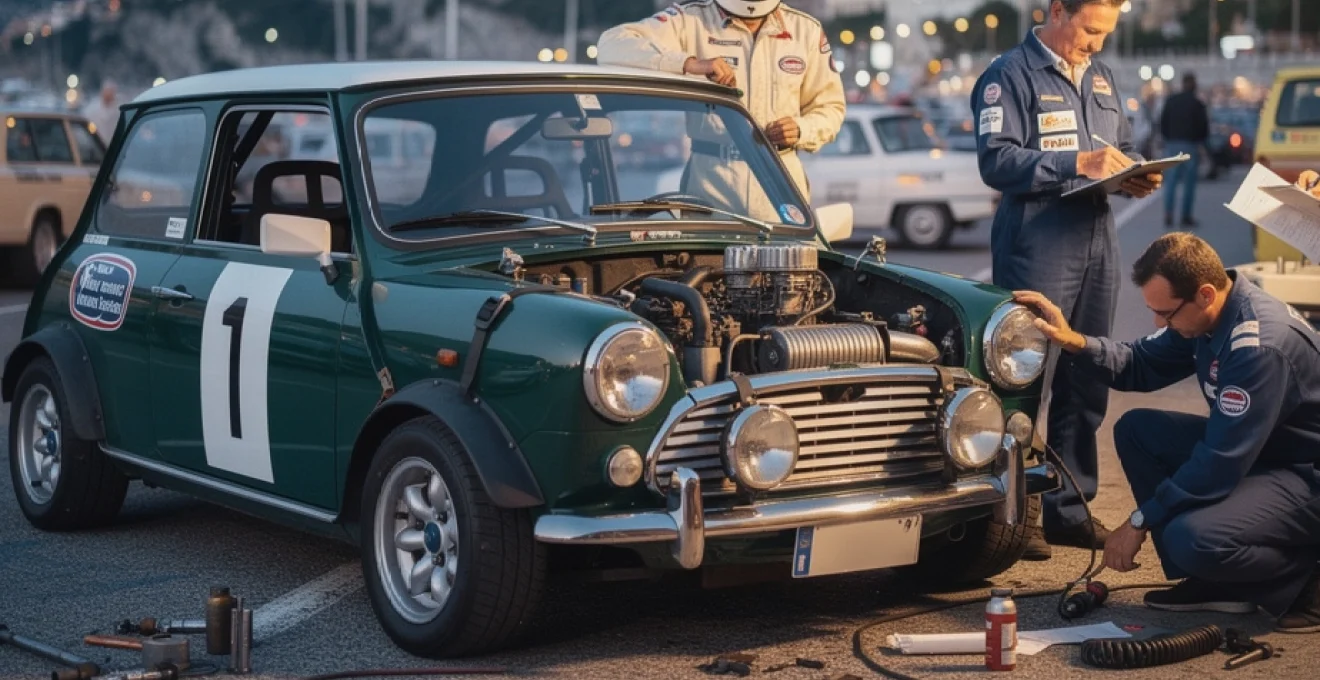
The 1969 Mini Cooper S sits at a crossroads of British motoring history. It marks the high-water line of the original Issigonis design, the maturity of John Cooper’s competition programme and the final glow before the lights dimmed on factory-backed works Minis. If you are looking at a 1969 Cooper S today, you are not just shopping for a small classic car; you are engaging with a competition-bred icon that still feels urgent, agile and relevant more than half a century later. For road use, historic racing or stage rallying, a well-sorted 1969 Mini Cooper S offers a raw, mechanical involvement that modern hot hatchbacks, for all their speed, struggle to replicate.
1969 mini cooper S in context: evolution of the classic mini and the birth of the rally icon
From alec issigonis’ 1959 morris Mini-Minor to the 1969 cooper S MkII: key engineering milestones
The story of the 1969 Mini Cooper S begins in 1959 with Alec Issigonis’ radical Morris Mini-Minor and Austin Seven. The basic recipe – transverse A-Series engine, front-wheel drive and tiny 10-inch wheels pushed to each corner – created packaging efficiency that still feels modern. Early cars were 848cc economy machines, but the chassis was so capable that motorsport soon beckoned. By 1961, the first Mini Cooper appeared with a 997cc engine, close-ratio gearbox and front disc brakes. In 1963, the first Cooper S arrived with 1071cc and beefier running gear, followed by 970cc and 1275cc S variants aimed squarely at different competition classes.
By 1967 the MkII body brought the smaller rear lights, different grille and revised badging, but under the skin the Cooper S programme kept evolving. Valve sizes, cylinder head castings, crankshaft strength and gearbox ratios were refined year on year, and by 1969 the 1275 S had become a sophisticated homologation package. Many 1969 cars were dealer- or specialist-tuned, with outfits like Downton Engineering developing cylinder heads and conversion kits that pushed performance far beyond factory figures while retaining everyday usability.
British motor corporation, british leyland and the production changes affecting 1969 cooper S models
The corporate backdrop to the 1969 Mini Cooper S is more turbulent than many enthusiasts realise. The British Motor Corporation (BMC) that created the Mini merged into British Leyland Motor Corporation (BLMC) in 1968. Under the new structure, the Mini was just one small piece in a vast portfolio, and senior management – famously including Lord Stokes – questioned the profitability of the model. Internal estimates suggested a loss on every Mini sold, even as demand remained strong. That context explains why the sporting Mini, closely associated with John Cooper and specialist tuners, attracted scrutiny.
In 1969, BLMC’s competition strategy shifted. The official works rally team at Abingdon still prepared Minis, but there was tension between the factory and John Cooper’s organisation. Lord Stokes reportedly believed that John Cooper was benefiting more from the Mini’s sporting halo than the manufacturer itself. As a result, the factory moved some programmes in-house, while Cooper and Downton Engineering continued to run highly competitive private entries. For you as a buyer or historian, this period explains why specification can differ subtly between works-built, dealer-prepared and independently-tuned 1969 Cooper S cars.
Cooper versus cooper S: john cooper’s tuning programme and homologation strategy for rallying
The distinction between a Mini Cooper and a Mini Cooper S is not just marketing. The early Mini Cooper used a 997cc, then 998cc version of the A-Series, with higher compression, a sportier camshaft and twin SU carburettors. The Cooper S built on that foundation with stronger blocks, larger bore sizes (970, 1071, 1275), nitrided crankshafts, bigger big-end bearings, improved con-rods and front disc brakes on a larger 7.5-inch pattern. These changes were not purely for showroom appeal; they were part of a deliberate homologation strategy aimed at saloon car racing and international rallying.
Homologation required a minimum production volume with specific components fitted from new. John Cooper and BMC collaborated to ensure that items such as cylinder heads, valve sizes and even carburettor specifications appeared on the homologation papers. The 970 S, for example, was engineered to exploit sub-1.0-litre racing classes, using a short stroke for higher rev capability. By 1969, the focus had shifted mainly to the 1275 S, which provided the best balance of torque and power for gravel, tarmac and snow. That is why a genuine Cooper S from this year feels more muscular and eager than a standard Cooper, even before period tuning is considered.
Identifying a genuine 1969 mini cooper S: chassis codes, FE numbers and factory build records
Authenticity matters hugely with any Mini Cooper S, and 1969 cars are no exception. Values have risen sharply – top examples have reached over £60,000 at major auctions – so accurate identification is vital. Factory records were split between Austin and Morris branding, with different prefix formats used. A genuine 1969 Morris Cooper 1275 S MkII, for example, typically carries a chassis number with the KA2S6 prefix, followed by a unique sequence and suffix letter. The engine block should feature an appropriate 1275 S number, often starting 12A or later 12H, with distinctive casting features such as extra webbing and the familiar tappet chest blanks.
On top of that, body shells have Front End (FE) numbers stamped on a metal tag spot-welded in the engine bay, which can be cross-checked against Heritage build records. A British Motor Industry Heritage Trust (BMIHT) certificate is one of the most reliable documents you can use, as it ties the original chassis, engine, build date and supplying dealer together. When examining a 1969 Cooper S, you should also look carefully at details like the 7.5-inch disc brake setup, twin fuel tank provisions and the correct boot floor pressing. Given the number of reshelled and “upgraded” standard Minis on the market, thorough verification is non-negotiable.
Engine, transmission and chassis specification of the 1969 mini cooper S
1275cc A-Series high-performance engine: cylinder head, camshaft profile and twin SU carburettors
The heart of any 1969 Mini Cooper S is the 1275cc A-Series engine. In factory trim it produced around 76bhp at 5800rpm and 79lb ft at 3000rpm, impressive figures for a sub-800kg saloon. The key components are a strengthened block, a nitrided crankshaft, high-compression pistons and a big-valve cylinder head with improved port shapes. Twin 1¼-inch SU HS2 carburettors feed the chambers via a siamesed inlet port arrangement, with a cast-iron exhaust manifold originally fitted. The camshaft profile is relatively mild by racing standards, balancing tractability with the ability to pull strongly to around 6500rpm.
Many 1969 Cooper S engines were upgraded by specialists. Downton Touring Conversion No. 5, for instance, raised compression to around 10.5:1, used reworked combustion chambers and ports, and added a long centre branch (LCB) manifold with twin pancake filters. Power figures nudged into the 90–100bhp range, with 0–60mph in under 8 seconds – blistering performance in period. For you today, a well-built S engine with sympathetic tuning still feels remarkably quick in real-world conditions, especially on twisting B-roads where the Mini’s compact footprint allows precise placement.
Close-ratio gearbox, remote-change linkage and final drive options used in 1969 competition-spec cars
The 1969 Cooper S used the familiar Mini in-sump gearbox layout, with engine and transmission sharing oil. Standard road cars came with a four-speed synchromesh gearbox and remote-change linkage, which gave a more precise feel than the earlier magic-wand arrangement. Ratios were chosen to keep the engine in its power band, but competition-specification cars often adopted close-ratio gearsets. These reduced the drop in revs between gears, allowing the driver to keep the 1275 S on the boil through tight sequences of bends or hairpins.
Final drive ratios varied depending on intended use. Road cars were typically supplied with around 3.44:1 or 3.76:1, giving relaxed cruising for such a small car. Works and club rally cars might run 4.1:1 or shorter final drives for hillclimbs and sprint events, at the expense of top speed. Some high-end competition Minis even adopted five-speed Colotti or Jack Knight gear clusters in period, though these are rarer. If you are considering a 1969 Cooper S for mixed road and historic competition use, choosing the right gearing is one of the most effective ways to tailor the driving experience.
Hydrolastic versus dry suspension on late-1960s cooper S: rubber cone springs, dampers and ride height setup
Suspension is a defining feature of how a Mini drives. Early cars used simple rubber cone springs designed by Alex Moulton, providing progressive spring rates in a tiny package. From 1964, many Minis adopted Hydrolastic interconnected fluid suspension, but the majority of Cooper S competition cars – and many 1969 examples – reverted to dry rubber-cone setups for weight and simplicity. The classic combination is rubber cones with telescopic dampers, plus front and rear anti-roll bars on racing cars.
Ride height and geometry are crucial to handling. Period competition Minis often ran slightly nose-down stances with negative camber at the front and a touch of toe-out to sharpen turn-in. Today you might see adjustable “Hi-Lo” trumpets, which allow fine-tuning of ride height while retaining the original cone principle. For stage rallying, settings are a compromise between ground clearance and body control, while for tarmac events a lower, stiffer setup makes a 1969 Cooper S feel like a giant-killing kart.
Upgraded braking system: 7.5-inch front disc brakes, rear drums and period pad/shoe compounds
The move to front disc brakes was a transformative step for the Mini Cooper. The 1969 Cooper S uses 7.5-inch front discs with two-piston callipers, combined with 7-inch rear drums. This setup is more than adequate for spirited road use given the car’s low mass, but sustained stage rallying or circuit racing benefits from material upgrades. In period, competition pads and linings from Ferodo or Mintex were common fits, offering higher friction and fade resistance.
Today, many owners add AP Racing or modern equivalent callipers that fit under 10-inch wheels, along with ventilated discs for serious competition. For an enthusiast who values originality yet drives hard, a sensible compromise is to retain original-size hardware but choose high-quality modern pads and braided brake hoses. Regular fluid changes are vital; even the best hardware will feel spongy with overheated or old brake fluid.
Electrical and cooling systems: lucas ignition components, radiator layout and oil cooler fitments
Electrically, a 1969 Mini Cooper S is refreshingly simple. The standard system uses Lucas dynamo or alternator (depending on build date and market), a conventional coil, points distributor and basic fuse box. Many cars now run electronic ignition modules hidden inside the original distributor body, preserving period appearance while improving reliability. The cooling layout places the radiator on the side of the engine bay with a belt-driven fan, a design that works well if the system is in good condition but can struggle in prolonged traffic with hot weather and modern fuels.
Competition Minis of the late 1960s often gained extra cooling capacity. Oil coolers were common on works rally cars, mounted ahead of the front subframe with braided lines, helping the shared engine and gearbox oil cope with sustained high revs. For regular road use in a 1969 Cooper S, a clean radiator, shrouded fan, correct thermostat and good-quality coolant usually suffice. However, if you plan long motorway journeys or participate in summer historic rallies, an unobtrusive oil cooler and uprated radiator can significantly extend engine life without spoiling original character.
Rally pedigree: monte carlo and international stage rally success of the mini cooper S
Paddy hopkirk, timo mäkinen and rauno aaltonen: factory BMC works drivers and their 1960s victories
The Mini Cooper S is inseparable from rally legends. Works drivers such as Paddy Hopkirk, Timo Mäkinen and Rauno Aaltonen turned the tiny saloon into a giant killer across Europe. Hopkirk’s 1964 Monte Carlo victory with the 1071 S cemented the car’s reputation, while Mäkinen’s spectacularly committed driving style became part of Mini folklore. Aaltonen, known as the “Flying Finn”, brought precision and mechanical sympathy that suited the front-drive car perfectly.
Throughout the mid-1960s the works Minis claimed class wins and outright victories on events like the Tulip Rally, the 1000 Lakes and the RAC Rally. By 1969, opposition from Ford Escorts, Porsche 911s and Lancia Fulvias had intensified, but the Cooper S remained formidable on twisty, snow-lined or gravel stages where traction and agility mattered more than outright power. For anyone entering historic rally events today, the heritage associated with these drivers and their cars remains a powerful part of the appeal.
1964–1967 rallye monte carlo: controversial disqualification, homologation disputes and FIA regulations
No discussion of Mini rally history is complete without the Monte Carlo controversies. Between 1964 and 1967 the event became a battleground not just on the stages but in the regulations. After Hopkirk’s 1964 win, Minis dominated again in 1965 and 1966, only for the top three Cooper S entries to be sensationally disqualified in 1966 for alleged headlamp regulation infringements. The FIA’s decision – relating to non-standard bulbs and headlamp arrangements – was widely viewed as harsh, given that other competitors were using similar equipment.
These disputes highlighted how critical homologation papers and scrutineering details had become. Teams and manufacturers had to ensure that every component fitted to a works car either fell within the homologated specification or was explicitly allowed by supplementary regulations. The Mini Cooper S, designed as a small family car, had effectively been pushed to the limits of the rulebook by the end of the decade. That tension between innovation and regulation is part of what makes 1960s rallying so fascinating to enthusiasts today.
Works-prepared 1969 mini cooper S specifications: group 2 homologation, roll cages and safety equipment
By 1969, international regulations had moved towards Group 2 touring car rules, which allowed a degree of modification over showroom stock. Works-prepared 1969 Cooper S rally cars typically featured welded-in or bolted roll cages, underbody sump guards and strengthened suspension pick-up points. Interior trim was stripped back, with bucket seats, four-point harnesses, navigators’ footrests and comprehensive switch panels for auxiliary lights and fuel pumps.
Engine specifications for these Group 2 cars varied by event but often included higher compression ratios, wilder camshafts and twin SU HS4 carburettors or fuel injection on experimental crossflow heads. Output could exceed 110bhp in full rally trim at up to 9000–9500rpm, as documented for some eight-port cylinder head engines. Gearboxes might be straight-cut for strength, and limited-slip differentials were commonly used to improve traction on loose surfaces. These works specifications provide a template that many modern historic rally builds still follow closely.
Stage rally set-up sheets: suspension geometry, tyre choices (dunlop, pirelli) and competition gearing
Factory and top privateer teams kept detailed set-up sheets for different events, covering suspension geometry, spring rates, damper settings and tyre choices. For snow and ice, the Mini Cooper S might run narrower studded tyres from Dunlop or Pirelli, combined with softer damper rates and slightly higher ride heights to clear ruts. On fast gravel, settings would prioritise stability, sometimes with raised rear ride height and a more neutral camber approach to maintain predictable slides.
On tarmac rallies, such as some European championship rounds, the Cooper S setup looked closer to a circuit racer: lowered ride height, stiffer front anti-roll bar and sticky crossply or early radial tyres. Final drive choices were critical here; too short a ratio and the Mini would run out of revs on long straights, too tall and it would feel lethargic out of hairpins. Studying these historic set-up sheets gives you a valuable starting point if planning a 1969 Cooper S for multi-surface historic events.
Historic rallying today: HERO-ERA, rallye Monte-Carlo historique and FIVA regulations for cooper S entries
The rally life of the 1969 Mini Cooper S did not end with the 1970s. Today, organisations such as HERO-ERA and the Automobile Club de Monaco run regularity and historic stage events in which Cooper S entries are highly sought-after. Rallye Monte-Carlo Historique is a prime example, often featuring strong Mini turnouts that pay homage to the 1960s works cars. Regulations from bodies like FIVA and national motorsport authorities define what modifications are acceptable, usually favouring period-correct upgrades over modern race technology.
If you intend to enter such events, it is wise to build or buy a car that matches the relevant Appendix K or historic rally class. That means respecting original engine capacities, carburettor types, wheel diameters and brake sizes, while integrating safety equipment such as FIA-compliant roll cages and seats. A 1969 Mini Cooper S that blends this authenticity with meticulous preparation can be both competitive and mechanically robust across thousands of kilometres.
Bodywork, interior and period-correct details specific to the 1969 mini cooper S
External distinguishing features: twin fuel tanks, boot badges, 10-inch wheels and wheel-arch types
Visually, a 1969 Mini Cooper S MkII has several tell-tale features that distinguish it from standard Minis. Most obvious are the 10-inch steel wheels with ventilated centres on original cars; many wear period-style Minilite or Minator alloys today. Cooper S models often carried flared wheel-arch extensions to cover wider tyres, especially on competition cars, though factory road cars retained relatively subtle eyebrows. At the rear, genuine S models usually have twin fuel tanks with caps on both sides, feeding a cross-linked system that increases range and helps weight distribution.
Boot badging is another clue. Correct MkII Cooper S badges sit on the boot lid, and the grille design differs from early MkI cars. Subtle details such as extra holes in the boot floor for the second tank, and reinforced front subframes for disc brakes, back up visual identification. For a buyer, understanding these external cues is invaluable when assessing whether a car’s claimed identity aligns with the metal in front of you.
Original paint codes and trim combinations: british racing green, tartan red, snowberry white and roof contrasts
Colour and trim for 1969 Cooper S examples followed contemporary BMC palettes. Popular choices included British Racing Green with a white roof, Tartan Red with contrasting roof, and Snowberry White often paired with a black roof. Interior trim typically used black vinyl, sometimes with specific seat patterns or optional reclining mechanisms. Matching a car to its original paint and trim specification using Heritage records significantly boosts historic credibility.
Two-tone schemes are particularly evocative. A British Racing Green shell with Old English White roof and correct 10-inch wheels looks quintessentially late-1960s, while a Snowberry White car with black roof can evoke period competition and road-test imagery. If you are commissioning a restoration, staying faithful to original paint codes helps maintain long-term value, even if a different colour might appeal on a purely personal level.
Dashboard layouts, smiths instrumentation and factory steering wheels used in 1969 S models
Inside, the 1969 Mini Cooper S retains the central speedometer layout on most UK-market cars, with auxiliary gauges for oil pressure and water temperature often fitted by dealers or owners. Some later or export models used a three-dial binnacle in front of the driver. Period-correct instrumentation from Smiths is an important part of the cabin’s character, with chrome bezels and clear, simple numerals that remain legible at a glance when driving quickly.
The factory steering wheel is a thin-rimmed two- or three-spoke design, bearing Austin or Morris branding depending on marque. Many cars gained aftermarket wood-rim wheels from Moto-Lita or similar brands in the 1970s and 1980s. While these feel lovely in the hands, an original wheel stored safely can be a wise asset for originality-focused future owners. Switchgear is sparse but charming, with pull knobs and rocker switches for lights, heater and wipers.
Sound deadening, seat designs and interior fittings separating cooper S from standard mini variants
Compared with basic Minis, the Cooper S enjoyed a slightly higher level of trim. Additional sound deadening under carpets and on bulkheads made long journeys more bearable, even if the car still feels busy by modern standards. Seats in 1969 models could include optional recliners with better bolstering, and some cars were specified with factory or dealer-fit Britax seatbelts. Door cards featured brightwork and pocket detailing that gave the cabin a subtly more upmarket feel.
Yet the Cooper S never crossed into full luxury territory. The cabin remains simple, honest and focused on driving. For an enthusiast, this is part of the appeal: you feel every mechanical input, hear the induction roar from the twin SUs and sense the road surface through the slender steering wheel. Preserving this balance between period comfort and raw involvement is a key consideration during any interior refurbishment.
Restoration, modifications and performance tuning of a 1969 mini cooper S
Concours-standard restorations: sourcing NOS parts, heritage shells and retaining matching-numbers drivetrains
Restoring a 1969 Mini Cooper S to concours standard is a serious undertaking, but the results can be spectacular. The starting point is often a fully stripped shell, either the original if structurally sound or a British Motor Heritage replacement shell built to correct MkII specification. Retaining a matching-numbers engine and gearbox is a major value driver, particularly for cars with documented early histories. New Old Stock (NOS) parts for trim, lighting and interior fittings can still be found through specialist suppliers and classic auctions, though prices have risen.
A common challenge lies in striking a balance between perfection and authenticity. Over-restoration – with mirror-gloss underside finishes or non-original fasteners – can make a car look better than new but slightly inauthentic. For a 1969 Cooper S, sympathetic preservation of original panels where possible, combined with correct paints, seam sealants and underbody textures, tends to impress serious judges and informed buyers more than a sterile “jewel box” approach.
Period-correct performance tuning: stage 1 and stage 3 cylinder head work, LCB manifolds and exhaust upgrades
Period-correct tuning is one of the joys of Mini ownership. A typical Stage 1 package on a 1275 S includes a freer-flowing exhaust system with LCB manifold, improved air filters and careful carburettor re-jetting. This kind of upgrade can add 8–10bhp while sharpening throttle response, without sacrificing driveability or reliability. A Stage 3 approach often involves fully reworked cylinder heads with larger valves, port reshaping and a slightly hotter camshaft, moving peak power higher up the rev range.
The analogy that fits best here is dressing the engine in a well-cut suit rather than a racing overalls. The aim is to enhance the Cooper S’s innate strengths without turning it into a peaky, temperamental competition motor unsuited to road use. If correctly executed, these period-style upgrades can actually reduce engine stress by improving breathing efficiency, especially when combined with modern oils and careful ignition timing.
Sympathetic rally replicas: installing FIA-compliant roll cages, bucket seats and harnesses without harming originality
Building a rally replica from a 1969 Mini Cooper S is tempting, given the car’s heritage. However, with genuine S values now high, sympathetic modifications are essential. A bolt-in multi-point roll cage that can be removed without cutting original metal is often preferred over a fully welded cage for road-biased cars. FIA-approved bucket seats and harnesses can be installed on custom runners or mounts that reuse original fixing points, allowing the original seats to be stored.
The goal is reversible modification: anything that can be undone without leaving permanent scars on the shell or unique components. Additional rally equipment such as trip meters, map lights and auxiliary lamp brackets should be installed thoughtfully, ideally using existing holes or discrete mounts. That way, you enjoy the immersive feel of a works-style cabin while keeping long-term collector value intact.
Brake, suspension and wheel upgrades: AP racing calipers, adjustable dampers and 10-inch minilite alloys
Upgrading brakes and suspension is often the most tangible way to improve how a 1969 Cooper S drives, especially if you plan brisk road use or track days. Period-style 10-inch Minilite alloys reduce unsprung weight and allow wider, stickier tyres while preserving the classic look. Adjustable dampers from reputable brands let you fine-tune ride and handling, working with Hi-Lo trumpets to get stance and corner weighting correct.
AP Racing callipers that fit under 10-inch wheels offer improved modulation and fade resistance without needing 12-inch conversions, which can spoil the Mini’s characteristic stance. A good rule of thumb is to treat these upgrades as reversible enhancements: retain original discs, callipers and wheels so the car can be returned to factory specification if desired. Correct four-wheel alignment after any suspension work transforms steering feel and tyre life.
Reliability enhancements for regular use: electronic ignition, upgraded cooling and modern fuel considerations
Using a 1969 Mini Cooper S regularly in modern traffic raises practical questions. Simple reliability enhancements can make a huge difference without compromising character. Electronic ignition modules reduce the need for points adjustment and produce more consistent spark, particularly valuable in cold or damp conditions. Upgraded radiators and electric fans help the side-mounted cooling system cope with stop–start congestion, reducing the risk of overheating.
Modern fuels with ethanol content can affect rubber hoses and carburettor components, so ethanol-resistant lines and regular fuel system checks are wise. If you intend to store the car for extended periods, fuel stabilisers and regular oil changes before and after storage help mitigate condensation and varnish build-up. Treat these measures as invisible armour for a beloved piece of engineering history.
Market values, provenance and buying guide for the 1969 mini cooper S
Decoding chassis numbers, engine stamps and documentation to verify authentic 1969 cooper S cars
Buying a 1969 Mini Cooper S requires careful homework. Start by inspecting the chassis plate for the correct prefix – for a Morris-badged car, KA2S6 is typical – and compare it to documented patterns for the year. Engine numbers should correspond to known 1275 S sequences and be stamped in a factory style, not crudely re-stamped. Cross-checking these identifiers with a Heritage certificate provides strong evidence of originality.
Documentation trail is equally important. Long-term ownership records, period photographs, MOT certificates and service invoices all help build a coherent story. Beware cars that claim Cooper S specification but lack matching paperwork or exhibit inconsistencies such as late shells with early numbers. Given that top-condition examples have sold in recent years for £59,000–£63,000 at major auctions, investing time in proper verification is a rational safeguard.
Common rust areas and structural inspection points: sills, a-panels, subframes and floorpans
Rust is the Mini’s great enemy. When viewing a 1969 Cooper S, focus on structural areas first. Outer sills often hide rot in the inner sills and doorstep areas; fresh paint here can sometimes conceal patch repairs. A-panels ahead of the front doors, the scuttle under the windscreen and the rear quarter panels are all vulnerable. Underneath, front and rear subframes should be scrutinised for corrosion around mounting points and suspension pick-ups.
Floorpans, boot floor, heelboard and the rear companion boxes can all suffer from water ingress and past bodges. Tapping panels with a small hammer and inspecting seams carefully can reveal filler or multiple layers of plate. A solid, honest shell with patina is usually far preferable to a heavily patched car with shiny paint but weak structure. For peace of mind, professional inspections or ramp checks are highly recommended before committing to purchase.
UK, european and australian market differences in 1969 cooper S specification and desirability
Market variations add another layer of complexity. UK-market 1969 Cooper S models are generally the most documented and numerous, but European and Australian cars can have distinct traits. Some export models carried different lighting, instrumentation or emissions equipment. Australian-built Minis, for instance, incorporated local content and body variations, which specialists can identify through subtle panel differences and local identification plates.
Desirability often follows motorsport heritage and rarity. A UK-built 1969 Cooper S with rally history may command a premium in Europe, while Australian enthusiasts might favour locally-built cars for cultural reasons and easier parts compatibility. Understanding these regional nuances helps you judge value more accurately and avoid misunderstandings over originality claims.
Current auction trends: results from bonhams, silverstone auctions and iconic auctioneers
Auction data over the last decade shows a clear upward trend for top-tier Mini Cooper S values. Documented sales include several mid-1960s S models fetching around £62,000–£63,000 at high-profile Bonhams and Goodwood events. More recently, competition-prepared MkII 1275 S Minis with strong histories have sold in the £25,000–£30,000 bracket, reflecting the premium for turnkey rally or circuit cars that remain road-legal.
Condition, provenance and specification drive these results. A 1969 Cooper S with low mileage, matching numbers, Downton tuning and colourful period history – even involving underworld owners and police auctions in one famous example – can achieve figures at the top of the range. In contrast, reshelled or poorly documented cars linger at lower price points, often taking longer to sell. For you as a buyer, tracking realised prices and catalogues from major auction houses is one of the best ways to gauge fair market value.
Insurance, classic car registration (DVLA), and long-term investment prospects for a 1969 cooper S
Once acquired, a 1969 Mini Cooper S deserves specialist care in administrative terms as well as mechanical. Classic insurance policies tailored to limited-mileage, agreed-value use typically offer the best protection. Agreed-value appraisals are crucial; standard market guides often underestimate the worth of exceptional examples, so professional valuations backed by recent auction comparables are advisable. UK owners benefit from historic vehicle tax class and MOT exemption for cars over 40 years old, though many still choose voluntary inspections to maintain safety.
From an investment perspective, the Cooper S sits in a strong position. It combines international recognition, genuine motorsport pedigree, practical usability and finite supply. While no classic car should be purchased purely as a financial instrument, the long-term trajectory for authentic, well-documented 1969 Mini Cooper S examples has been consistently positive. Sensible storage conditions, regular sympathetic use and meticulous record-keeping all contribute to protecting both the car and its market standing for the next enthusiast in line.