Blog
Whether you have just passed your driving test, are buying your first car, or have been driving for years and want to make sense of changing technology and rules, this blog category is designed with you in mind. Here you will find clear, practical information about owning and running a car in the UK — without jargon, without pressure, and without assuming you already know the basics.
Owning a car is one of the largest regular expenses most households manage, and it comes with a steady stream of decisions: what to buy, how to finance it, when to service it, how to keep insurance costs down, and how to adapt as electric vehicles and new regulations reshape the roads. Our aim is to help you make informed choices at every stage, at your own pace.
What You Will Find in This Category
The articles in this category cover the full journey of car ownership, from research and purchase through to daily use, upkeep and eventual resale. Rather than focusing on specs and performance figures, the emphasis is on what actually matters to drivers: cost, reliability, safety and peace of mind.
- Buying and selling — how to choose a vehicle that suits your needs, new versus used, and how to get a fair deal.
- Running costs — fuel, tax, insurance, maintenance and how to budget realistically.
- Maintenance and care — servicing schedules, MOT preparation, tyres, and simple checks anyone can do.
- Electric and hybrid vehicles — charging at home and on the road, running costs, and whether an EV makes sense for you.
- Driving in the UK — road rules, congestion charges, clean air zones and practical tips for motorways and town driving.
Buying a Car: Start With Your Needs, Not the Spec Sheet
It is easy to be swayed by horsepower figures, glossy adverts or a neighbour’s latest purchase. A more reliable starting point is an honest look at how you actually drive. Ask yourself a few simple questions before you set foot on a forecourt or browse listings online.
- How many miles do you cover in a typical week, and on what kind of roads?
- Do you mostly drive alone, or do you regularly carry passengers, children or luggage?
- Do you have off-street parking where you could charge an electric vehicle?
- How long do you usually keep a car — two years or ten?
A driver doing 4,000 miles a year of short town trips has very different needs from someone commuting 60 miles a day on the motorway. Short urban journeys suit a small petrol car or an electric vehicle very well, while high motorway mileage often justifies a diesel or a long-range EV. Matching the vehicle to the usage pattern is the single most effective way to avoid expensive regret.
New vs Used: Weighing the Trade-Offs
Neither option is universally better — each has clear advantages depending on your priorities and budget.
- New cars offer a full manufacturer warranty, the latest safety features and no unknown history, but lose value quickly in the first few years.
- Used cars offer better value for money and slower depreciation, but require more diligence: service history, previous owners, outstanding finance and a thorough inspection.
- Nearly new or approved used cars sit in between, often with remaining warranty and a dealership inspection, at a lower price than new.
If you choose used, always check the vehicle’s history with a service such as HPI, verify the MOT record on the government’s free online checker, and consider paying an independent mechanic for a pre-purchase inspection. A modest outlay upfront can save you thousands in hidden problems.
Understanding the True Cost of Running a Car
The purchase price is only the beginning. Many first-time buyers are surprised by how much the ongoing costs add up, so it is worth building a realistic monthly budget from the start.
- Fuel or electricity — estimate based on your annual mileage and current pump or tariff prices.
- Vehicle tax (VED) — varies by emissions and fuel type; electric vehicles currently pay nothing, though rules evolve.
- Insurance — often the largest variable cost for younger drivers; premiums depend on age, location, vehicle group and driving history.
- Servicing and maintenance — budget for an annual service, plus tyres, brakes and batteries as they wear.
- MOT — required annually for vehicles over three years old, with a standard maximum fee.
A useful habit is to work out your cost per mile: add up all annual motoring expenses and divide by your yearly mileage. Many drivers find this figure is far higher than expected, which can prompt useful questions — is a second car really needed, would car sharing work, or would a smaller, cheaper-to-run model serve just as well?
Keeping Insurance Costs Manageable
Insurance is one area where informed choices genuinely pay off. A few proven approaches:
- Compare quotes from multiple providers rather than auto-renewing — loyalty is rarely rewarded.
- Consider adding an experienced named driver to your policy if you are a younger motorist (but never misrepresent who is the main driver, as this is a form of fraud known as fronting).
- Look at telematics or ‘black box’ policies, which base premiums on how you actually drive.
- Increase your voluntary excess only if you could genuinely afford it after an incident.
- Park off-road or on a driveway where possible, as location and security affect premiums.
Maintenance: Small Habits, Big Savings
You do not need to be mechanically minded to keep a car healthy. A handful of simple, regular checks will extend the life of your vehicle, improve safety and reduce the chance of a failed MOT.
- Check tyre pressures monthly, including the spare if you have one, and look for uneven wear.
- Top up washer fluid and check oil and coolant levels periodically.
- Test all lights regularly — a failed bulb is one of the most common and easily avoided MOT failures.
- Watch tread depth: the legal minimum is 1.6mm across the central three-quarters of the tyre, but grip deteriorates noticeably below 3mm.
- Book services on schedule, even when the car feels fine — preventive work is almost always cheaper than repairs.
Think of maintenance like dental care: small, regular attention prevents large, painful problems later. A car with a full service history is also worth noticeably more at resale time, so keep every receipt and record.
Electric and Hybrid Vehicles: Sorting Fact from Hype
Electric vehicles have moved from novelty to mainstream, and UK drivers increasingly face the question of when — or whether — to switch. The honest answer is that it depends on your circumstances, and both options can make sense.
An EV works brilliantly if you can charge at home overnight, cover moderate daily mileage and want low running costs with zero tailpipe emissions. Public charging, while improving rapidly, remains more expensive than home charging and can require planning on longer journeys. Hybrids, meanwhile, offer a middle path: petrol or diesel efficiency improved by an electric motor, with no need to plug in (for conventional hybrids) or only limited electric range (for plug-in hybrids).
- Best suited to EVs: drivers with home charging, predictable routes and mainly urban or suburban mileage.
- Best suited to hybrids: drivers without home charging who still want lower fuel consumption and emissions.
- Best suited to petrol or diesel: high-mileage drivers in areas where charging infrastructure is still thin, particularly for frequent long journeys with heavy loads.
Whichever direction you consider, ignore the loudest voices on both sides and focus on your own usage pattern, local infrastructure and budget. The technology is improving steadily, and there is no need to rush a decision that should serve you for years.
Driving Confidently on UK Roads
Beyond the vehicle itself, confident driving in the UK means staying aware of the rules and systems that affect you. Low emission zones in cities such as London’s ULEZ, variable motorway speed limits on smart motorways, and evolving rules around mobile phone use all catch drivers out from time to time. A few habits worth adopting:
- Check whether your destination city operates a clean air or congestion charge zone before travelling.
- Keep your phone secured out of reach — even touching it while driving can lead to penalty points.
- Refresh your knowledge of motorway signs and lane discipline if you drive on smart motorways regularly.
- Carry out basic winter preparation: screenwash with antifreeze, adequate tread, and a scraper or de-icer in the boot.
A Practical Resource, At Your Own Pace
There is no test to pass and no purchase to make here — simply a growing library of clear explanations and honest advice about cars and driving in the UK. Whether you are researching your next vehicle, trying to lower your running costs, or simply want to understand what your mechanic is telling you, the articles in this category are written to be useful from the first paragraph. Take what you need, apply it to your own situation, and come back whenever the next question arises — because with cars, it always does.

Mitsubishi lancer 9 evolution: rally heritage
The Mitsubishi Lancer Evolution IX sits at a unique crossroads between old-school Group A aggression and more modern World Rally Car thinking. For many enthusiasts, it represents the last “pure” evolution of the classic 4G63T platform before the Evo X…
Lire la suite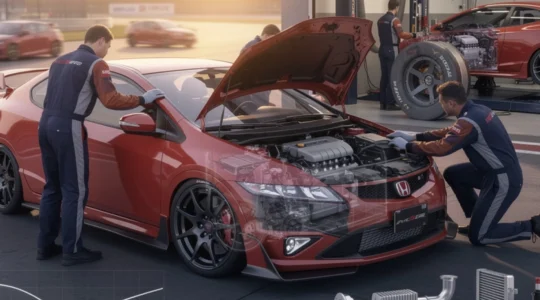
Honda civic type R FN2: performance guide
The Honda Civic Type R FN2 has moved from “controversial new kid” to cult modern classic. As values of EP3 and FK2 models climb, the FN2 sits in a sweet spot: the last naturally aspirated Civic Type R sold in…
Lire la suite
Where to find McLaren 650S for sale
The McLaren 650S has moved from cutting-edge new supercar to modern classic territory in barely a decade. Values have stabilised, choice on the used market is strong, and buyers now benefit from years of real-world ownership data. Whether you are…
Lire la suite
Used cars at porsche centre glasgow: what to expect
Shopping for a used Porsche is as much about the experience as the car itself. A 911, Macan or Taycan carries strong expectations: engineering integrity, careful previous ownership and a dealership that treats you as a long‑term client rather than…
Lire la suite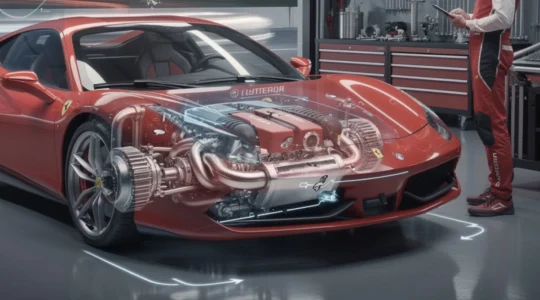
Ferrari 488 GTB motor: tech and performance
The Ferrari 488 GTB engine is one of the most significant supercar powertrains of the last decade. It marked Ferrari’s move from high-revving naturally aspirated V8s to a new generation of compact, twin-turbocharged units that deliver hypercar levels of thrust…
Lire la suite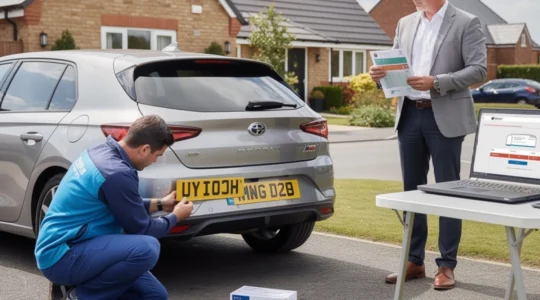
How to change a private plate back to original
Switching a car back from a cherished registration to its original age-related plate feels daunting at first glance, especially if you are juggling MOT expiry dates, tax status and insurance at the same time. Yet the DVLA process is highly…
Lire la suite
How GPS speedometers compare to vehicle speedometers
If you have ever glanced from a dashboard speedometer to a GPS speed read-out and seen different numbers, the question is obvious: which one is telling the truth? As vehicles gain more driver assistance technology, connected navigation and even mandatory…
Lire la suite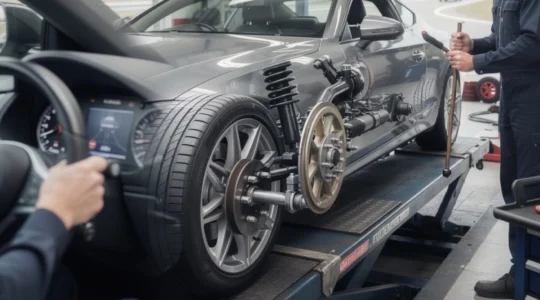
What causes a wobble on your steering wheel?
A wobble, shake or vibration through the steering wheel is one of those faults you feel instantly. It can turn an otherwise smooth drive into something that feels nervous, imprecise and, in some cases, unsafe. For many drivers, the first…
Lire la suite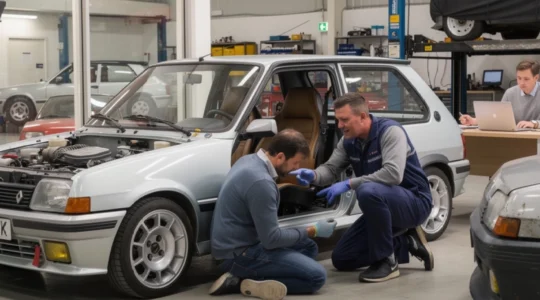
Where to buy a renault 5 GT turbo
The Renault 5 GT Turbo sits in that sweet spot between affordable classic and cult icon. Values have risen sharply since 2020, auction data shows a median sale price around £14,900 with the very best examples exceeding £60,000, and only…
Lire la suite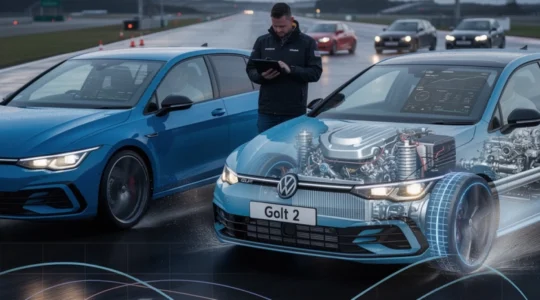
VW golf R: performance hot hatch explained
The VW Golf R occupies a rare space in the performance car world: a family hatchback that can outrun yesterday’s supercars, shrug off a wet January commute and still feel calm on the motorway. For many enthusiasts it has become…
Lire la suite