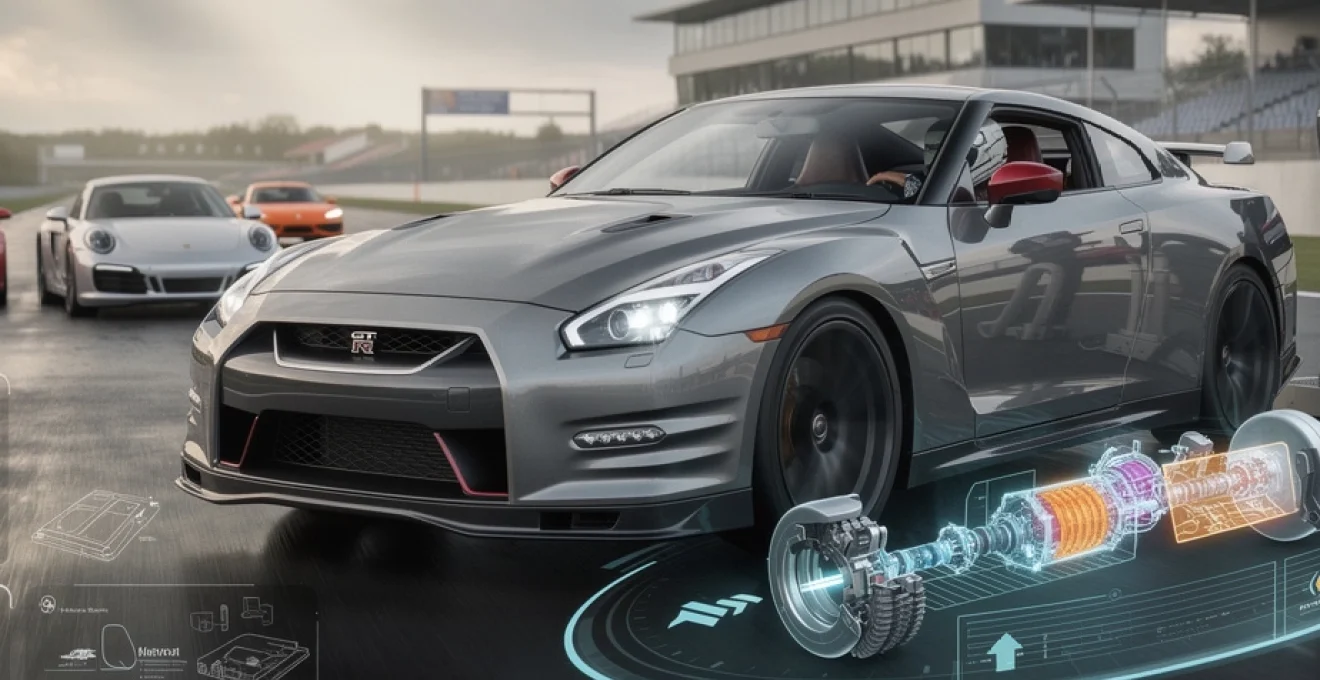
The 2016 Nissan R35 GT‑R sits at a fascinating crossroads between traditional Japanese engineering rigour and the brutal performance of modern European supercars. Launched nearly a decade earlier and continually refined, the facelifted GT‑R shows how far a meticulous evolution of chassis, powertrain and electronics can push an existing platform. For drivers in the UK looking at real‑world performance, trackday capability and daily usability in one package, the 2016 GT‑R still feels more like a physics experiment than a mere fast coupé. It is a car that forces you to recalibrate what “quick” means, particularly when you experience its all‑weather traction, relentless mid‑range shove and upgraded cabin that finally matches its price tag.
2016 nissan R35 GT‑R overview: supercar positioning, facelift changes and UK market context
By 2016, the Nissan GT‑R had already gained the “Godzilla” nickname in the press for its ability to demolish lap times and quarter miles at a price point that undercut many exotic rivals. The New York Auto Show update brought one of the most substantial refreshes to the R35 generation, aimed at keeping it competitive against newer metal like the McLaren 570S and the 991‑generation Porsche 911 Turbo. For UK buyers, the 2016 Nissan GT‑R offered a compelling mix of supercar performance, four‑seat practicality and all‑weather capability that suited typical British conditions far better than some rear‑drive alternatives. While values of special editions such as Nismo variants began to harden, the core model remained a relatively attainable way into 200‑mph territory and sub‑3‑second 0–62 mph potential on a damp B‑road.
The facelift also addressed some well‑known criticisms. Earlier GT‑R cabins were often described as functional rather than luxurious, with switchgear that felt more like a high‑spec JDM saloon than a six‑figure supercar. Nissan responded with an entirely leather‑wrapped dashboard, a simplified centre console and an 8‑inch touchscreen that consolidated many of the previous 27 physical buttons into just 11 controls. Externally, the introduction of the brand’s `V‑Motion` grille, a more sculpted bonnet and a revised front bumper gave the car a more contemporary face while improving cooling and stability. These updates helped the 2016 GT‑R feel less like an ageing brute and more like a highly focused GT with credible long‑distance comfort.
VR38DETT 3.8‑litre twin‑turbo V6: power output, torque curve and 0–62 mph performance data
At the heart of the 2016 R35 GT‑R sits the hand‑built `VR38DETT` 3.8‑litre twin‑turbocharged V6. Output rose compared with earlier cars, with power quoted at around 562 bhp and torque at approximately 470 lb ft. That places the 2016 GT‑R firmly in supercar territory, particularly when combined with short gearing and all‑wheel drive traction. The official 0–62 mph time hovers around 2.8–3.0 seconds when using launch control, and independent tests have repeatedly validated sub‑3‑second runs on decent tarmac. In‑gear, the torque curve feels broad and muscular from about 3,000 rpm to well past 6,000 rpm, with strong boost helping the car surge forward rather than merely accelerate.
What makes this twin‑turbo V6 distinctive is not just peak numbers but how accessible the performance feels. Nissan’s philosophy for the GT‑R engine has always focussed on usable power rather than chasing dyno glory. As a result, the torque delivery is engineered to be very linear, giving you the sense that there is always another wave of thrust on tap, whether you are exiting a tight hairpin or blasting down a motorway slip road. For UK drivers, this accessible torque means effortless overtakes in higher gears and less need to constantly downshift, which makes the 2016 GT‑R surprisingly relaxing in normal traffic despite its brutal potential.
Twin IHI turbochargers, boost pressure strategy and intercooler efficiency in the 2016 GT‑R
The 2016 GT‑R continues to use twin IHI turbochargers feeding each bank of the V6. Compared with earlier iterations, the facelift model runs slightly increased boost pressure in conjunction with revised ignition timing and improved cooling. The aim is not simply to add more top‑end power but to reduce lag and sharpen throttle response in the mid‑range, where you use the car most on the road. Think of the turbos as two high‑pressure lungs, breathing harder yet more efficiently, pushing compressed air through a carefully designed intercooler system to maintain charge temperatures under sustained abuse.
Intercooler efficiency is critical in a high‑output turbo engine, particularly on trackdays or spirited B‑road drives. The 2016 GT‑R benefits from improved airflow management at the front end, including that enlarged grille and reprofiled bumper, which channel more air through the radiators and intercoolers without significantly increasing drag. For you as a driver, the benefit is more consistent performance on a hot lap, with less power fade due to heat soak. Proper maintenance, including keeping intercooler fins free from debris and ensuring ducting seals remain intact, helps preserve this efficiency and is a worthwhile check for any used‑market buyer.
ECU calibration, ignition timing and fuelling revisions for the 2016 model year R35 GT‑R
Under the skin, the 2016 GT‑R features revised `ECU` calibration designed to work with the increased boost and updated ignition strategy. Small changes in timing maps, fuelling and knock control allow the engine to make more power safely on standard pump fuel. The philosophy is similar to a carefully optimised remap from a specialist, but executed with the full resources of the manufacturer and extensive durability testing. This gives the engine a slightly smoother and more progressive feel than earlier cars, particularly at part throttle, while still delivering that signature explosive surge when you bury the accelerator.
For enthusiasts considering further tuning, the 2016 calibration provides a robust baseline. However, any additional remapping must account for exhaust gas temperatures, knock thresholds and the limits of factory injectors and fuel pumps. Treat the GT‑R’s engine management like the brain of a high‑performance athlete: small, targeted adjustments can release impressive gains, but careless changes risk long‑term damage. Selecting a tuner with deep `VR38DETT` experience, ideally one who can provide before‑and‑after logging and dyno graphs, remains one of the most valuable decisions you can make.
Launch control (R‑Mode start), dual‑clutch gearbox integration and real‑world acceleration times
The 2016 GT‑R continues to offer an aggressive launch control system, often referred to as `R‑Mode Start`. When activated with the correct combination of transmission, suspension and VDC settings, the car preloads the drivetrain, manages boost and clutch engagement, and delivers a brutally efficient getaway. Repeated independent tests have clocked 0–60 mph in the low three‑second range, with some cars dipping just below that on sticky surfaces. For everyday use on public roads, you may rarely exploit full launch control, but even casual standing starts feel shockingly rapid thanks to instant all‑wheel drive traction.
Real‑world figures often depend on tyre condition, ambient temperature and surface grip. On a typical UK road with decent tarmac, you can expect 0–62 mph runs in roughly 3 seconds if you are comfortable using the system correctly. For longevity, it is sensible to reserve full `R‑Mode Start` launches for special occasions rather than every traffic light. Think of launch control as a sprint spike in athletics: perfect for maximum attack, but not something to wear all day if you care about the health of your ankles—here, the clutches and driveshafts.
Official vs dyno‑tested horsepower figures: stock 2016 GT‑R measurements on dynojet and maha benches
Like many turbocharged performance cars, the 2016 GT‑R’s real output is often higher than the official brochure figure. Independent dyno tests on stock examples frequently record wheel horsepower figures that, when adjusted for drivetrain loss, suggest crank outputs in the 580–600 bhp region rather than the quoted 562 bhp. This is especially true on more generous rolling roads such as some `Dynojet` units, though more conservative Maha benches still tend to indicate a useful surplus.
What does this mean for you as a buyer or owner? Firstly, the car feels as strong, if not stronger, than the numbers suggest, which is reassuring when comparing the 2016 GT‑R vs rivals like the 991 Turbo. Secondly, there is some headroom for mild tuning before stressing components, as the engine and cooling systems are engineered with safety margins. However, dyno readings can vary significantly between machines and conditions, so chasing specific numbers is less important than focusing on consistency, safe air–fuel ratios and sensible peak boost targets.
GR6 dual‑clutch transaxle and ATTESA E‑TS all‑wheel drive: drivetrain layout and torque management
The drivetrain architecture of the 2016 Nissan GT‑R remains one of its defining technical highlights. The `GR6` dual‑clutch transaxle is mounted at the rear, connected to the front‑mounted `VR38DETT` engine via a rigid prop shaft. Power is distributed to all four wheels through the sophisticated `ATTESA E‑TS` all‑wheel drive system, which continuously varies torque split based on sensors monitoring yaw, steering angle, throttle position and wheel speed. This transaxle layout contributes to the GT‑R’s distinctive handling balance, with a rear‑biased feel under power and astonishing traction out of slow corners.
In day‑to‑day driving, you experience this as a sense of security and stability, particularly in poor weather. Where a rear‑drive supercar might struggle to deploy 500+ bhp on a damp motorway on‑ramp, the GT‑R simply hooks up and goes. This is where the car’s reputation as an all‑weather weapon stems from, and why so many UK owners happily use their GT‑R year‑round. Understanding how the dual‑clutch gearbox and torque management work together also helps you adapt your driving style, extracting the most from the chassis without fighting the electronics.
Rear‑mounted GR6 DCT architecture, gear ratios and shift logic in R‑Mode, normal and save
The `GR6` six‑speed dual‑clutch transmission uses a rear‑mounted transaxle design that supports a near‑ideal weight distribution for a front‑engined car. Short, closely stacked gear ratios in the lower gears maximise acceleration, while higher ratios keep the engine within its broad torque band at motorway speeds. For 2016, Nissan refined the shift logic, focusing on reducing mechanical noise and smoothing low‑speed behaviour without diluting the aggressive character under hard driving.
Three main modes control the gearbox: Normal, Save and R‑Mode. In Normal, the car prioritises smoothness and fuel efficiency, upshifting early and minimising sudden downshifts. Save mode takes this a step further, useful for long motorway journeys or poor weather, softening the response to protect components. R‑Mode transforms the gearbox, delivering ultra‑fast shifts, holding gears longer and responding crisply to paddle inputs. If you want the full supercar experience on a trackday or quiet back road, R‑Mode is the setting that makes the GT‑R feel like a road‑legal race car.
ATTESA E‑TS all‑wheel drive system, electronically controlled centre diff and front–rear torque split
The `ATTESA E‑TS` system is essentially the silent partner constantly optimising how the GT‑R puts its power down. Unlike a simple mechanical four‑wheel drive setup, ATTESA uses an electronically controlled multi‑plate clutch in the centre differential to vary torque distribution between the front and rear axles. In steady‑state cruising, the system often favours the rear wheels, improving efficiency and giving the car a more traditional sports‑car feel. Under hard acceleration or when slip is detected, it can route a significant portion of torque to the front, improving traction.
On a wet UK road or a cold trackday session, this smart torque split can make the difference between drama and clean exits from tight corners. Instead of constantly intervening with intrusive traction control cuts, the GT‑R aims to pre‑empt slip by adjusting how power is shared, letting you feel like a hero driver while the car quietly manages grip. Understanding that the system rewards smooth, progressive inputs rather than abrupt stabs of throttle is one of the keys to unlocking faster, more confidence‑inspiring laps.
Electronic driving aids: VDC‑R, traction control and ABS tuning for fast road and track use
The 2016 GT‑R features a trio of adjustable settings for its dynamic aids: suspension, transmission and Vehicle Dynamic Control (`VDC`). VDC‑R is the most aggressive setting, tailored for track and committed road driving, allowing more slip angle before intervening. In Standard mode, the car balances safety and performance for most conditions, while switching VDC fully off hands control back to the driver and is best reserved for experienced pilots on a circuit. Traction control and ABS tuning were refined over the years to work in harmony with the all‑wheel drive, giving progressive, predictable intervention instead of abrupt cut‑outs.
For fast road use, many owners find that leaving VDC in its sportier configurations provides the best mix of confidence and speed. On track, experimenting with VDC‑R versus fully off can be revealing; the former often results in similar lap times with far less risk, as the system can rescue small mistakes in braking or throttle application. A useful tip is to approach VDC settings like tyre pressures: make one change at a time and observe how the car feels, rather than switching everything to max attack immediately.
Drivetrain durability, bellhousing rattle and known reliability considerations on 2016 GT‑R models
Despite its complexity, the GT‑R drivetrain has proven impressively robust when serviced correctly. However, no high‑output dual‑clutch all‑wheel drive system is entirely free from quirks. One commonly discussed issue is `bellhousing rattle`, a characteristic noise arising from play in the transmission’s front section. While often harmless, it can be irritating, and improved bellhousing fixes or replacements are a popular preventative measure among owners who want a more refined experience. For a used 2016 GT‑R, checking for excessive drivetrain noise and reviewing any documentation of bellhousing work is a wise step.
Other reliability considerations include regular transmission fluid changes, differential oil changes and ensuring the correct specification fluids are used. The GT‑R’s performance envelope means components operate under higher stress than in a typical performance coupé, so sticking to or exceeding manufacturer service intervals is important. Viewed positively, the car is more like a road‑registered racing machine than a conventional grand tourer; treat it with the same disciplined maintenance regime, and it rewards you with consistent, repeatable performance and long‑term durability.
Chassis, suspension and braking: nurburgring‑tuned handling characteristics of the 2016 R35 GT‑R
The 2016 Nissan GT‑R continues the model’s tradition of Nurburgring‑honed chassis tuning. Suspension revisions for this facelift focused on improving body control while also increasing refinement. Stiffer body shell sections, revised dampers and updated spring rates contribute to a car that turns in more cleanly yet rides with less harshness over broken surfaces. For UK drivers accustomed to uneven B‑roads, this evolution matters: earlier GT‑Rs could feel nervous or brittle over poor tarmac, whereas the 2016 version offers a more composed, mature response without sacrificing agility.
Braking performance remains a core strength. Large Brembo calipers and ventilated discs provide serious stopping power, and pedal feel is reassuringly firm under repeated high‑speed stops. The combination of strong brakes, grippy tyres and the all‑wheel drive system means deceleration forces can be just as shocking as the acceleration. For occasional track users, upgrading to high‑temperature pads and fluid provides additional resilience, but the factory setup is more than capable for fast road driving. The GT‑R’s chassis balance tends towards mild understeer at the limit, which is a deliberate tuning choice; small adjustments to alignment, such as adding a touch more front camber, can sharpen front‑end bite for those who prefer a more neutral stance.
| Key Chassis Metrics (2016 GT‑R) | Approximate Value |
|---|---|
| Kerb weight | ~1,740 kg |
| Front brake discs | 390 mm ventilated |
| Rear brake discs | 380 mm ventilated |
| Tyre size (front) | 255/40 R20 |
| Tyre size (rear) | 285/35 R20 |
Steering feel in the 2016 car benefits from incremental tweaks and tyres that better suit UK conditions. While hydraulic assistance means feedback is not quite as talkative as the very best sports cars, there is enough information coming through the rim to trust the front end and commit to high‑speed corners. On circuit, the GT‑R’s weight is still noticeable in very tight sequences, but stability through high‑speed sweepers and under heavy braking remains a standout strength. Driving the car quickly is a bit like playing a high‑speed video game with exceptionally good physics; once you tune into its responses, the GT‑R flatters and encourages you to push harder, lap after lap.
Aerodynamics and exterior design: drag coefficient, downforce and cooling of the 2016 GT‑R body
The exterior revisions for the 2016 Nissan GT‑R were more than a simple facelift. Nissan’s designers and aerodynamicists worked together to update the styling while enhancing cooling and reducing lift. The iconic quad round tail lights and quad exhaust pipes remain, preserving brand identity across GT‑R generations. However, the new `V‑Motion` grille is larger and more open to feed the radiators and intercoolers, and the bonnet has been significantly reinforced to maintain shape and stability at high speeds. A reprofiled front bumper with an integrated lower lip spoiler helps manage airflow to both cooling elements and the underbody.
Although official figures for drag coefficient (`Cd`) and downforce are not dramatically different on paper, the real‑world stability at 150+ mph has been improved. Testing at circuits such as the Nurburgring and Fuji Speedway highlighted the benefits of reduced front‑end lift and more consistent cooling under repeated high‑load usage. For everyday UK driving, you notice the effect more subtly: the car feels planted and composed at motorway speeds, with less wandering in crosswinds and more predictable behaviour during high‑speed lane changes. The side sills were widened, and the rear bodywork subtly reshaped to clean up airflow, contributing to better high‑speed stability and reduced buffeting.
High‑performance aerodynamics on a road car are not just about headline downforce numbers; consistency and stability at real‑world speeds matter just as much.
These aerodynamic refinements also play a role in the longevity of components such as brakes and intercoolers by delivering more effective cooling air where it is needed. For owners considering aftermarket bodywork or splitters, respecting the careful balance of drag, lift and cooling that Nissan engineered into the 2016 GT‑R is important. Poorly designed additions can introduce turbulence, increase drag or starve radiators of airflow. If you plan to modify the exterior, using wind‑tunnel‑tested components and seeking alignment with the car’s existing aero philosophy helps preserve that signature “locked‑down” GT‑R feeling at speed.
Interior, infotainment and daily usability: JDM‑derived cockpit with UK‑spec refinements
One of the biggest qualitative leaps for the 2016 GT‑R is found inside. Earlier cars were sometimes criticised for cabins that felt closer to high‑end Japanese saloons than rival supercars from Germany or Italy. The facelift sought to close that gap with richer materials, a cleaner design and improved ergonomics. The dashboard is now fully wrapped in leather, with stitching and soft‑touch surfaces that better reflect the price tag. The centre console has been decluttered, shrinking from 27 physical buttons to just 11, thanks to the integration of many functions into an 8‑inch touchscreen. This gives the interior a more modern, premium appearance while also making it easier for you to find key functions quickly.
Seating position and visibility are strengths for daily usability. You sit relatively high for a supercar, with good forward vision and decently sized mirrors, which makes threading through tight UK streets or multi‑storey car parks far less stressful. The rear seats, while best suited to children or short journeys, add genuine flexibility that many rivals lack; fitting a pair of small passengers or using them as extra luggage space makes weekend getaways or airport runs more realistic. Noise levels have been improved over earlier models, with better sound insulation and less intrusive transmission whine, though the GT‑R still communicates a purposeful level of mechanical activity that enthusiasts tend to appreciate.
For a high‑performance coupé capable of near‑superbike acceleration, the 2016 GT‑R remains surprisingly easy to live with every day.
The infotainment system, while not cutting‑edge by 2025 standards, was a meaningful step forward in 2016. The touchscreen consolidates navigation, audio and vehicle information, including the famous performance pages that display G‑forces, turbo boost and lap timing functions. These displays, developed in collaboration with video game designers, give you the sense of piloting a piece of interactive technology as much as a car. Practical touches such as a decent boot, usable cupholders and effective climate control mean the GT‑R can genuinely perform double duty as both a weekend toy and a long‑distance GT car. Treat it like a high‑performance daily driver, and it rewards you with a blend of excitement and everyday utility that few supercar contenders can match.
2016 nissan GT‑R vs rivals: audi R8 V10, porsche 911 turbo (991) and McLaren 570S performance comparison
Assessing the 2016 Nissan GT‑R as a supercar contender inevitably involves comparison with key rivals such as the Audi R8 V10, Porsche 911 Turbo (991) and McLaren 570S. Each of these cars offers a different interpretation of high performance. The R8 V10 majors on a spine‑tingling naturally aspirated soundtrack and mid‑engine balance, the 911 Turbo delivers devastating point‑to‑point speed with trademark Porsche polish, and the 570S focuses on lightweight agility and hydraulic steering feel. Against this group, the GT‑R brings a uniquely numbers‑driven approach: huge turbocharged power, advanced all‑wheel drive and data‑rich instrumentation that has more in common with a track tool than a traditional grand tourer.
| Model (2016) | Power (bhp) | 0–62 mph (s) | Top speed (mph) | Drivetrain |
|---|---|---|---|---|
| Nissan GT‑R (R35) | ~562 | ~2.8–3.0 | ~196 | AWD, DCT |
| Audi R8 V10 | 540–610 | ~3.2–3.5 | ~200 | RWD/AWD, DCT |
| Porsche 911 Turbo (991) | 520–560 | ~3.0 | ~197 | AWD, PDK |
| McLaren 570S | 562 | ~3.1 | ~204 | RWD, DCT |
On raw acceleration, the 2016 GT‑R is directly competitive, especially in poor conditions where its all‑wheel drive advantage really shows. On a damp UK B‑road, it can out‑drag more powerful rear‑drive rivals that simply cannot deploy their power as effectively. Track performance tends to favour the lighter McLaren on dry circuits, but the GT‑R counters with consistency and ease of use; you do not need racing‑driver reflexes to extract a large percentage of its capability. For many enthusiasts, this blend of approachability and outrageous performance forms the core of the GT‑R’s appeal.
Few cars at this price point let you access so much of their performance envelope so quickly and with so much confidence.
From a value perspective, used 2016 GT‑R prices often undercut equivalent 991 Turbos and McLaren 570S models, especially when factoring in running costs and potential reliability concerns. Insurance and tyre costs remain firmly in supercar territory, but the car’s underlying robustness and strong owner community support help mitigate surprises. If you are choosing between a GT‑R and its European rivals, your priorities will guide you: those craving a screaming V10 may lean towards the R8, purists seeking a rear‑engined icon might select the 911, and fans of featherweight feel could opt for the McLaren. However, if you want a brutally effective, technologically fascinating machine that will destroy point‑to‑point times in almost any weather while still coping with the weekly commute, the 2016 Nissan R35 GT‑R remains a formidable, and in many ways unique, supercar contender.