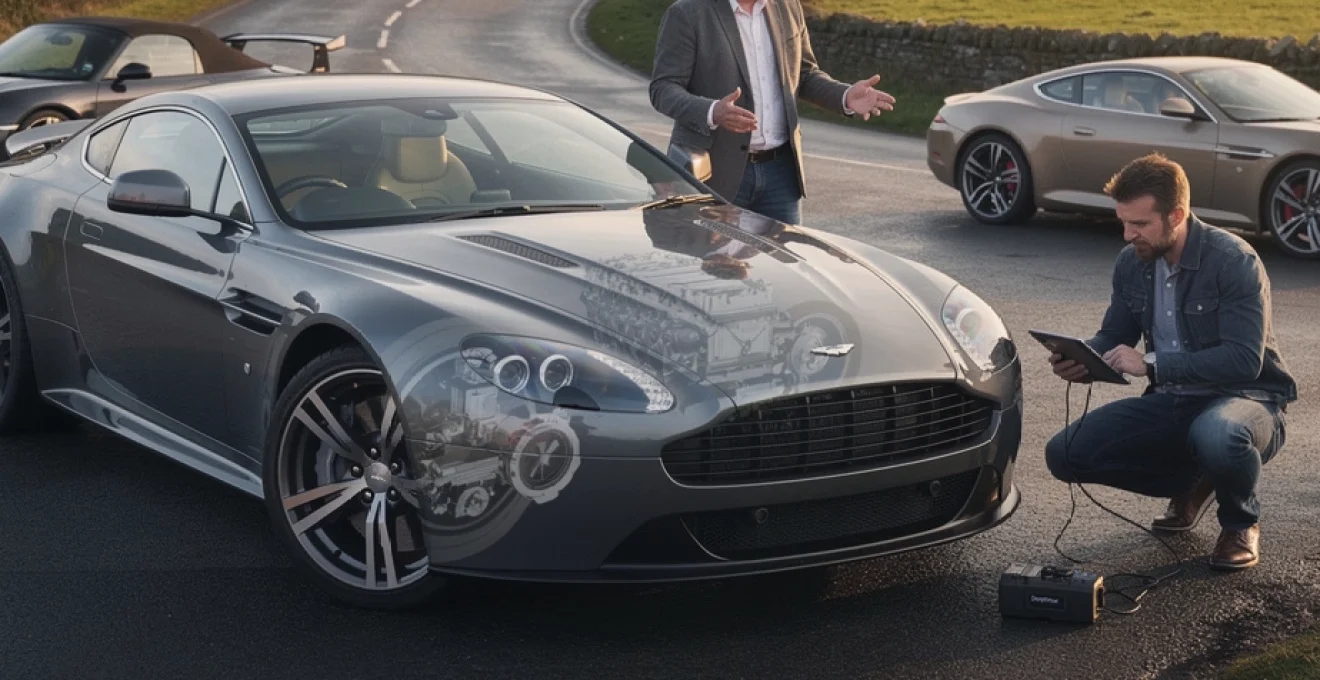
The 2012 Aston Martin Vantage sits in a fascinating sweet spot. It blends the original “baby Aston” purity with meaningful engineering updates that sharpen the car without diluting its character. For anyone contemplating an analogue, naturally aspirated sports car in a world of turbocharged automation, the 2012 model year is one of those rare combinations of usability, craftsmanship and soul that still feels special more than a decade on. If you are weighing it against a contemporary Porsche 911 or Jaguar XKR, or comparing it to earlier Vantage years, understanding exactly what changed for 2012 is crucial to making a confident decision.
Aston martin vantage 2012 model year overview: facelift changes, pricing and market positioning
By 2012, the VH-platform Vantage had already evolved from its original 4.3‑litre debut into a more potent 4.7‑litre sports coupé and roadster. The 2012 Vantage is best viewed as a “mini Vantage S”: Aston Martin cascaded key chassis, gearbox and styling changes from the harder-core S into the standard car, while also trimming list price in some markets to keep it competitive with a new generation of rivals. That combination of extra ability and keener value is why many enthusiasts specifically seek out a 2012 Aston Martin Vantage as a used buy.
Exterior design evolution for 2012: front bumper, lower splitter, rear diffuser and side sills
Visually, the 2012 Vantage looks familiar at first glance, yet the details reveal a clear evolution. The front bumper was reprofiled with a lower, more pronounced splitter, flanked by larger outboard air intakes. These feed additional cooling air to the brakes and engine, but also give the car a slightly wider, more hunkered stance. At the rear, a reworked diffuser helps manage airflow under the car, contributing to stability at sustained high speeds while adding subtle extra drama to the tail.
Side sills gained a more sculpted, muscular shape, echoing the design of the Vantage S and limited-run N400/N420 specials. Although the silhouette remained timelessly elegant, these relatively small tweaks nudged the visual message a fraction closer to “track-honed” without undermining the Vantage’s reputation as an elegant GT as much as a pure sports car. For you as a buyer, this facelift means a 2012 Vantage can look surprisingly contemporary parked next to far newer machinery.
2012 vantage UK pricing, trim levels and option packs (sport pack, premium, carbon)
On launch, UK pricing for the 2012 Aston Martin Vantage undercut many expected figures, especially considering the raft of hardware it borrowed from the Vantage S. Typical coupé prices hovered in the low-£90,000s, with the Roadster carrying a modest premium. Crucially, the brand packaged popular equipment into clear trim and option packs to simplify ordering and to drive up perceived value compared with rivals.
The Sport Pack (sometimes rolled into model-year standard spec on later cars or specific markets) brought stiffer springs, revalved dampers and unique wheels, while Premium and Carbon-style packages typically bundled upgraded leather, additional contrast stitching, piano-black or carbon-fibre interior trims and sometimes lightweight seats. When shopping used, these packs are worth decoding from the original build sheet because they can subtly, but meaningfully, alter both dynamics and cabin ambience.
Comparing 2012 vantage to pre-2012 models and rivals like porsche 911 (997) and jaguar XKR
Compared with pre‑2012 V8 Vantage models, the headline differences are sharper steering, larger brakes, wider tyres and, for Sportshift cars, a completely revised seven-speed gearbox. Power output remained similar to the existing 4.7‑litre generation at around 420–426 bhp, but the way that performance was deployed changed. The car felt keener to turn in, more responsive to mid-corner adjustments and calmer under heavy braking.
Set against a 997‑generation Porsche 911 Carrera, the 2012 Vantage was typically still a little heavier (around 1600 kg vs roughly 1395 kg for a 997 Carrera) and marginally slower point-to-point, but many drivers preferred the Aston’s front‑engine, rear‑drive balance and hydraulic steering feel. Against a Jaguar XKR, the Vantage felt more compact and focused, sacrificing the Jaguar’s supercharged punch and rear seating for a more intimate, sports‑car‑first driving experience. For you, the key question is whether lap times or feel matter more; the 2012 Aston Martin Vantage majors on the latter.
Production volumes, body styles (coupé vs roadster) and key VIN identifiers for 2012 cars
Exact production figures for the 2012 Vantage are relatively modest by mainstream standards, with annual volumes measured in the low thousands rather than tens of thousands. The majority of cars were coupés, but a significant number of roadsters were built, appealing to buyers who wanted to savour the AMV8 soundtrack with the roof down. From a collector or enthusiast perspective, 2012 cars represent a mid‑cycle evolution rather than a limited edition, which keeps prices sensible and availability reasonable.
Identifying a genuine 2012 model year Vantage relies primarily on checking the VIN and build plate rather than just going by registration date. Model-year coding in the VIN will typically denote 2012 as `C`, but always verify with Aston Martin or a marque specialist if you are unsure. Visual giveaways include that updated front bumper with deeper splitter and the Vantage S‑style rear diffuser, but an experienced buyer will always cross-reference these with documentation to avoid being misled by retrofitted parts.
Engine, transmission and drivetrain engineering in the 2012 aston martin vantage
4.7-litre AMV8 naturally aspirated V8: power output, torque curve and compression ratio
At the heart of the 2012 Aston Martin Vantage lies the 4.7‑litre AMV8, an all‑alloy, quad‑cam, 32‑valve unit with its roots in Jaguar architecture but extensively reworked by Aston. Quoted output sat at around 426 bhp at 7300 rpm and 470 Nm (347 lb ft) of torque at 5750 rpm in many markets, with a relatively high compression ratio of approximately 11.3:1. Figures for earlier 4.7‑litre cars are similar on paper, but refinement and calibration changes improved responsiveness.
The way this engine delivers power is central to the car’s character. Rather than a thick, turbocharged slug of torque at low revs, the AMV8 builds steadily, with a meaningful step in urgency once the exhaust valves open around 4000 rpm and a final, addictive rush to the red line. If you are used to modern turbo performance, it might feel a touch “thin” below 3000 rpm, but that is precisely why enthusiastic drivers enjoy chasing the upper half of the rev range. It rewards commitment like a naturally aspirated sports bike engine more than a modern twin‑turbo V8.
Six-speed manual graziano gearbox vs seven-speed sportshift II automated manual
Two transmissions were offered in 2012: a six‑speed manual Graziano gearbox and the new seven‑speed Sportshift II automated manual. The manual is the enthusiast’s default choice, praised for its weighty, mechanical shift action and the satisfaction of a traditional clutch pedal. Some owners note that first and second can feel slightly notchy when cold, but once warmed, the gearbox pairs beautifully with the free‑revving V8, delivering a deeply involving experience.
Sportshift II, by contrast, replaced the older six‑speed robotised manual with an extra ratio, shorter gearing and much smarter shift logic. It still uses a single‑clutch layout, so low‑speed manoeuvres can occasionally feel less fluid than a modern dual‑clutch, but it is substantially improved over the original Sportshift. On a flowing road or track, shifts in Sport mode at high rpm feel crisp and decisive, with downshifts accompanied by well‑judged throttle blips. If you do a lot of urban driving, you might still prefer the manual; if you enjoy two‑pedal convenience but value a strong mechanical connection, Sportshift II is far from the compromise some assume.
Rear-mounted transaxle layout, limited-slip differential and weight distribution
The 2012 Vantage retains the sophisticated rear‑mounted transaxle layout that has been a core pillar of the VH‑platform cars from the beginning. By mounting the gearbox and limited-slip differential (LSD) at the rear, connected to the engine via a carbon-fibre prop shaft in an aluminium torque tube, the car achieves close to a 49:51 front‑to‑rear weight distribution. That is a crucial ingredient in its balanced, adjustable handling.
On the road, this translates into a front end that is responsive but not hyper‑nervous, and a rear axle that offers strong traction out of slower corners yet is willing to rotate if you deliberately provoke it with throttle. Compared with front‑engined, front‑gearbox rivals, you feel the mass of the drivetrain working with you rather than against you, especially under combined braking and turning. For you as a driver, the end result is a car that feels as though it pivots around your hips, rather than swinging from the nose or dragging powertrain weight from the front axle.
Throttle mapping, engine management updates and exhaust tuning for the 2012 model year
The 2012 update subtly reworked throttle mapping and engine management to better suit the new gearbox calibration and to improve drivability. The dual‑map system allows a choice between a more progressive “Comfort” setting and a sharper “Sport” response, particularly noticeable in the first half of pedal travel. This might sound academic, but if you regularly drive in heavy traffic or wet conditions, the softer map helps modulate torque more easily, whereas the sportier map makes the car feel keener when you are in the mood.
Exhaust tuning also received attention. The bypass valves stay closed at low revs to avoid drone, then open more decisively above around 4000 rpm, unleashing that classic Aston bark and hard‑edged wail as you approach the limiter. Many owners regard the natural soundtrack as one of the Vantage’s greatest assets; aftermarket systems exist, but the factory setup on a healthy 2012 car provides a carefully judged balance between long‑distance refinement and emotional theatre when fully extended.
Chassis dynamics, suspension and braking performance of the 2012 vantage
Aluminium VH platform fundamentals: rigidity, crash structure and kerb weight
The Vantage sits on Aston Martin’s aluminium VH (Vertical‑Horizontal) platform, which combines extruded, cast and bonded components into a remarkably stiff yet relatively light structure. Torsional rigidity was state‑of‑the‑art when launched and still compares well with many modern sports cars. That stiffness allows the suspension to do its work precisely, improving both ride and handling, and also contributes to strong crash performance for a low‑volume coupe and roadster.
Kerb weight for the 4.7‑litre V8 Vantage coupé sits around 1610–1630 kg depending on options, with the Roadster adding a small premium. In raw numbers that makes it heavier than a 997‑generation 911 but lighter than many newer turbocharged GTs. For a driver used to lightweight track toys, that sounds significant, yet on the road the tight dimensions and low seating position help it feel more compact than the weight figure suggests. Think of it as a finely tailored suit rather than a gym vest: not the lightest garment, but one that moves with you.
Revised suspension geometry, spring and damper rates with the 2012 sport pack
The 2012 model adopted revised suspension geometry and component settings heavily inspired by the Vantage S. Spring rates increased modestly, dampers were revalved and anti‑roll bar tuning adjusted to maintain a supple ride while enhancing body control. Cars specified with the 2012 Sport Pack go a step further, delivering a firmer baseline that appeals to keen drivers who value precision over ultimate comfort on broken surfaces.
On typical UK B‑roads, a standard‑suspension 2012 Vantage flows with impressive composure. There is a gentle, well‑damped vertical movement at high speeds, but the car resists heave and pitch well, allowing you to build confidence quickly. Sport Pack cars tighten up these movements, feeling flatter and more immediate, but can verge on choppy over badly patched sections. If most of your driving is on smoother A‑roads, autobahns or occasional track days, the Sport Pack is a clear benefit; if your favourite routes are narrow, bumpy lanes, the standard setup might be the more rounded choice.
Steering calibration, tyre choices and real-world handling balance on UK b-roads
One of the most consistently praised aspects of the 2012 Aston Martin Vantage is its steering. The hydraulic rack uses a slightly quicker ratio than earlier non‑S cars, derived from the Vantage S, giving more immediate responses around the straight‑ahead while retaining reassuring stability at high speed. Crucially, there is genuine feedback through the rim; you feel subtle changes in grip, camber and surface quality in a way that many electrically assisted systems struggle to replicate.
Factory tyre fitment was often Bridgestone Potenza, though many owners later switch to Michelin Pilot Sport 4 S or similar ultra‑high‑performance rubber. Moving to a modern tyre can dramatically improve wet‑weather traction and ride quality, especially if the car is still running older original‑equipment tyres that are past their best by age if not by tread depth. On a damp B‑road, a well‑shod 2012 Vantage finds an appealing balance between secure front‑end bite and playful, progressively breakaway at the rear. If you enjoy adjusting a car with tiny, intuitive inputs rather than constantly fighting understeer or abrupt oversteer, this calibration will suit you perfectly.
Braking system specification: ventilated discs, callipers and optional carbon-ceramic set-ups
Braking hardware for the 2012 Vantage includes large, ventilated and grooved discs at each corner, with four‑pot calipers at the rear and six‑pot calipers up front. Front rotor size grew to around 380 mm on some variants, assisted by a retuned pedal feel for better modulation. Stopping distances from motorway speeds are entirely competitive for the class, and fade resistance is good for spirited road driving and occasional track use.
Optional carbon‑ceramic setups, more commonly found on V12 and later S cars, were rare on 2012 V8s but do crop up. These offer lighter unsprung mass and exceptional resistance to fade, though replacement costs are eye‑watering. For most owners, the standard iron brakes, when paired with quality pads and fluid, strike a very usable compromise between performance and running costs. A common owner tip is to budget for regular wheel cleaning: the combination of big brakes and performance pads generates substantial brake dust, which can quickly spoil otherwise beautiful alloys.
Interior craftsmanship, infotainment and everyday usability in the 2012 aston martin vantage
Slide into a 2012 Vantage and the cabin feels like a curated blend of traditional craftsmanship and early‑2010s technology. Soft, hand‑stitched leather covers almost every surface, from the heavily bolstered seats to the dashboard and door cards. Switchgear combines bespoke metalwork with some recognisable components from contemporary premium brands, yet everything is orchestrated in a way that feels cohesive and luxurious. The distinctive “swan‑wing” doors open upwards slightly as well as out, easing access in tight spaces and adding a sense of theatre every time you get in or out.
The driving position puts you low between the sills with a long bonnet stretching ahead, instantly reinforcing the front‑engine, rear‑drive layout. There is no pretence of rear seating; instead, the area behind the front seats becomes extra luggage space to supplement the coupe’s 300‑litre boot. For a two‑seat sports car, the Vantage is surprisingly usable as a weekend‑away or grand‑touring machine. Roadster luggage space is tighter, but still adequate for soft bags, with the added benefit of open‑air access to the soundtrack.
Infotainment is the one area where age shows most clearly. Early‑2010s Vantages used a pop‑up navigation screen and a system sourced from Garmin, controlled by a mixture of buttons and dials on the centre stack. Compared with modern touchscreens, it feels dated and occasionally clunky, but it is functional for basic navigation and media tasks. Many owners now retrofit upgrades that allow Apple CarPlay or Android Auto integration using the existing screen, significantly improving day‑to‑day usability without spoiling the original aesthetics.
From an everyday comfort standpoint, the 2012 car strikes a happier middle ground than the later, more aggressive GT‑derivatives. Ride quality on standard suspension is firm but not punishing, noise insulation is good enough for long motorway journeys, and the climate control and heated seat options make year‑round use perfectly realistic. If you are considering a 2012 Vantage as a part‑time daily driver, the main constraints are visibility in tight multi‑storey car parks and a justifiable reluctance to leave such a beautiful car in supermarket spaces rather than any real mechanical impracticality.
Real-world performance, fuel economy and reliability of the 2012 vantage
On paper, a 2012 V8 Vantage with the 4.7‑litre engine delivers 0–62 mph in around 4.8 seconds and a top speed close to 180 mph. In practice, the sensation of performance is shaped as much by the engine’s sound and throttle response as by the stopwatch. Above 4000 rpm, the car gathers speed with a hard‑edged urgency that feels properly exotic, and on an open derestricted road or track day, the AMV8 is entirely capable of flirting with its top‑end numbers given enough space.
Fuel economy, as you would expect from a naturally aspirated V8 sports car, is not the Vantage’s strongest card. Real‑world averages in mixed driving tend to hover around 18–22 mpg, with mid‑teens easily achievable if you frequently explore the upper rev range. On a steady motorway cruise at legal speeds, figures in the low‑20s are realistic. Annual road tax for 2012 cars in the UK is typically in the higher brackets, so factor that into ownership cost calculations alongside fuel and insurance.
Reliability, when the car is properly maintained, is generally better than many assume of a hand‑built British sports car. The AMV8 engine has earned a reputation for being fundamentally robust, with many cars comfortably exceeding 60,000–80,000 miles without major internal issues. The key is warm‑up discipline: allowing oil temperature to come up before high revs, using quality lubricants, and adhering to annual or 10,000–12,500‑mile service intervals with a competent specialist. The transaxle and differential are similarly stout, though Sportshift clutches do wear if abused.
Electrics and minor ancillaries are where most niggles occur. Owners occasionally report issues such as sticky exhaust bypass valves, misbehaving parking sensors, “DSC service required” messages linked to brake pedal sensors, or ageing navigation hardware. None are usually catastrophic, but they underline the importance of a thorough pre‑purchase inspection and a sensible annual maintenance budget. Treated as a finely engineered machine rather than a disposable commodity, a 2012 Aston Martin Vantage can be a genuinely dependable long‑term companion.
Used buying guide: common issues, servicing costs and 2012 aston martin vantage value trends
The used market now regards the 2012 Vantage as one of the sweet‑spot years, thanks to its blend of updated hardware and still‑accessible pricing. Early 4.3‑litre cars can be found from the low‑£20,000s, but 2012‑era 4.7‑litre examples typically start closer to the high‑£30,000s to low‑£40,000s depending on mileage, condition and specification. Vantage S and limited‑run N420/N430 cars sit higher, while late‑run, low‑mileage examples with desirable colours and manual gearboxes command a clear premium. Broadly, values have stabilised after an earlier dip and, for well‑kept cars, modest appreciation is increasingly common.
| Model / Year | Power | 0–62 mph | Typical UK used price (approx.) |
|---|---|---|---|
| V8 Vantage 4.3 (2005) | 380 bhp | 5.0 s | From £22,000 |
| V8 Vantage 4.7 (pre‑2012) | 420–426 bhp | 4.8 s | From £30,000 |
| V8 Vantage 4.7 (2012 MY) | ~426 bhp | 4.8 s | From £40,000 |
| V8 Vantage S (2011–2017) | 430 bhp | 4.5 s | From £45,000 |
Running costs are substantial but not absurd for this level of car if managed sensibly. Independent specialists typically quote around £800–£1000 for an annual service, with additional budget needed for consumables. A clutch on a manual car, if driven sympathetically, can last 40,000 miles or more; on a Sportshift II car regularly used in heavy traffic, replacement might be needed sooner, at a cost often north of £1700 at a specialist and more at a main dealer. Premium tyres will be around £900–£1200 a set, and a keen driver might expect 15,000–20,000 miles from a rear pair depending on usage.
Common issues to watch for when viewing a potential purchase include bubbling paint around the base of the A‑pillars or door handles, corrosion on the steel rear subframe, tired dampers and aged tyres, plus any evidence of neglected servicing. Carefully inspect the engine bay for rusty fasteners or signs that water has been allowed to sit without proper drying. Inside, check that all electrical functions operate, including windows, mirrors, seat adjusters and infotainment. A smooth, consistent engagement point on the clutch and clean, confident shifts (manual or Sportshift) are essential; any juddering, slipping or hesitation warrants deeper investigation.
For someone stepping into used Aston Martin ownership for the first time, the 2012 Vantage offers an unusually approachable entry point into the marque: modern enough to be usable, old‑school enough to feel special every time you start it.
Professional opinion among marque specialists consistently suggests prioritising condition and history over chasing the lowest price. A well‑maintained higher‑mileage example with thorough documentation is invariably a safer bet than a suspiciously cheap low‑miler with gaps in its records. Investing in a pre‑purchase inspection by a reputable independent can save several thousand pounds and a great deal of stress, especially when subtle chassis or electrical issues are not immediately obvious on a short test drive.
Over the next decade, the combination of naturally aspirated V8, manual or characterful single‑clutch gearbox and a compact, hand‑built body is likely to become even rarer as the market moves deeper into downsized, hybridised and electric performance cars. For you as an enthusiast, that makes the 2012 Aston Martin Vantage not just a gratifying car to drive now, but a compelling long‑term prospect that captures a particular moment in sports‑car history, when beauty, sound and driver involvement still sat at the top of the engineering priority list.