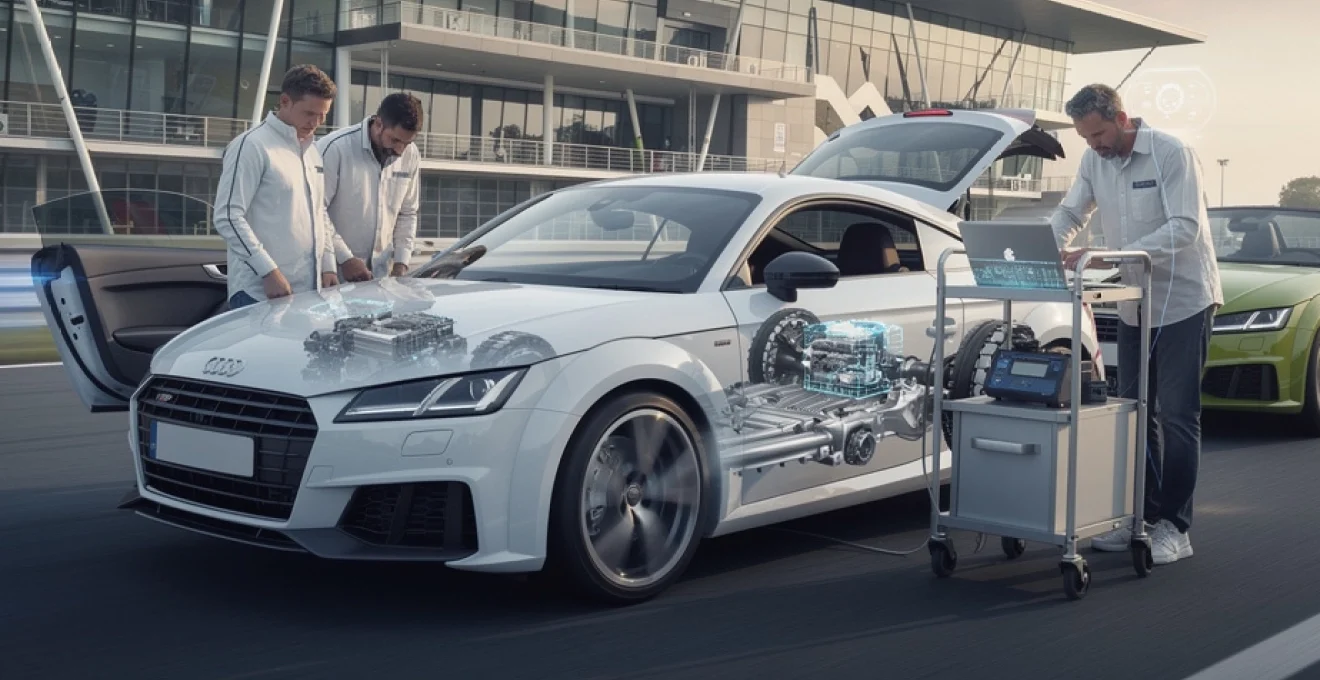
The third-generation Audi TT (Mk3) arrived in 2014 and quietly redefined what a compact sports coupé could be. Under the familiar silhouette sits a far more advanced platform, sharper powertrains and a digital cockpit that previewed the direction of the whole Audi range. If you are comparing it with a Mk2 TT, the jump in stiffness, efficiency and in-cabin tech feels similar to moving from an early smartphone to a current flagship. For drivers who value precise engineering and everyday usability as much as style, the Audi TT Mk3 still makes a compelling case on the used market, especially as values have softened while the specification and performance remain thoroughly modern.
Audi TT mk3 overview: model years, trim levels and drivetrain configurations (2014–2023)
The Audi TT Mk3 was launched in 2014 and ran through to 2023, with a mid‑life update in 2018 that rationalised engines and removed the diesel and entry‑level petrol from the range. Early cars offered 1.8 TFSI, 2.0 TFSI and 2.0 TDI ultra engines, along with a choice of six‑speed manual or S tronic dual‑clutch gearboxes. Later in the lifecycle, Audi streamlined the line‑up to petrol power only and, by the end of production, all cars were DSG‑only, reflecting industry-wide demand for fast-shifting automatics and lower CO₂ figures.
Trim levels followed a clear hierarchy: Sport, S line, Black Edition and Vorsprung for the standard TT, with the TTS and TT RS sitting above as performance flagships. Sport models feature 18‑inch alloys, xenon headlights and the now-standard Virtual Cockpit. S line brings 19‑inch forged wheels and more aggressive bumpers, while Black Edition adds 20‑inch wheels, a fixed rear spoiler and black styling. Vorsprung cars top out with Matrix LED headlights, driver‑assistance packs and a Bang & Olufsen audio system. Across the decade-long production run, incremental software and emissions updates kept the Mk3 competitive against newer rivals without fundamentally changing its character.
MQB platform engineering: chassis rigidity, axle design and weight distribution in the audi TT mk3
Multi‑material body construction: aluminium–steel hybrid ASF shell and torsional stiffness gains over the mk2
At the heart of the Audi TT Mk3 sits the Volkswagen Group MQB architecture, heavily reworked using Audi Space Frame principles. The body uses an aluminium–steel hybrid construction: cast and extruded aluminium in key load paths, with high‑strength steel in areas where energy absorption matters more than weight. Compared with the Mk2 TT, torsional stiffness increased significantly while overall mass dropped; typical coupé models weigh around 1210–1400kg depending on engine and drivetrain. This higher torsional rigidity is a major reason the Mk3 feels more precise on B‑roads and more refined on long motorway journeys.
Why does this matter to you in daily driving? A stiffer shell lets the suspension do its work more accurately, so the car responds more faithfully to steering inputs and stays composed over rough surfaces. It also cuts squeaks and rattles that can plague older sports cars as they age. For anyone considering a used Audi TT Mk3 as a long‑term purchase, that multi‑material shell is a hidden asset that supports both dynamic ability and long‑term durability.
Suspension geometry: MacPherson strut front, four‑link rear and optional magnetic ride dampers on TT S line
The Audi TT Mk3 uses a familiar but highly optimised suspension layout: MacPherson struts at the front and a four‑link rear axle on more powerful versions. Lower‑powered front‑wheel‑drive cars may use a refined torsion beam at the rear, but quattro models and performance variants benefit from the fully independent set‑up. This combination gives good primary ride comfort with the lateral control expected from a sports coupé. Spring and damper rates are firm but not punishing on 18‑inch wheels; moving to 19‑ or 20‑inch wheels increases grip but also tyre roar and sharp‑edge harshness.
Optional magnetic ride dampers, standard on many TTS and higher trims, use magnetorheological fluid to vary damping almost instantly. In Comfort mode the car breathes with the road, which you will appreciate on longer commutes. Switch to Dynamic and the body control tightens, reducing roll and pitch. This dual personality is one of the Mk3 TT’s greatest strengths: a car that feels supple enough for poor surfaces yet controlled enough for occasional track days, especially when paired with quality tyres and a proper alignment.
Steering and handling: progressive steering rack, wheelbase, track width and dynamic steering settings
The Mk3 TT’s steering uses an electrically assisted rack with a progressive ratio, meaning the gearing becomes quicker as you add more lock. In town, this gives light, easy manoeuvrability, while at higher speeds you get a calmer response around the straight‑ahead. Compared to the Mk2, the wheelbase was stretched by 37mm and track widths subtly revised, improving stability without making the car feel cumbersome. The overall footprint is still compact – around 4.18m long and 1.97m wide – which helps on tight city streets and narrow country lanes.
Via Audi Drive Select, you can tailor steering weight and response. Dynamic adds heft and a keener turn‑in, while Comfort keeps the assistance lighter. Some drivers find the steering feel a little filtered, especially compared with a Porsche 718 Cayman, yet the front end is impressively faithful and the car rotates predictably when you lean on it. If you enjoy making smooth, precise inputs, the TT Mk3 rewards that style by feeling almost like a scaled‑down grand tourer rather than a nervous hot hatch.
Braking systems: ventilated disc dimensions, caliper types and performance upgrades on TTS and TT RS
Braking hardware scales with power. Standard TT models use ventilated front discs with single‑piston sliding calipers and solid or smaller ventilated rears, offering strong everyday stopping performance. The TTS upgrades to larger diameter discs and more heat‑resistant pads, which you will appreciate on spirited drives or Alpine descents. Owners occasionally report low‑speed brake squeal, especially on larger set‑ups; this is often pad‑related rather than a systemic fault and can be mitigated by switching pad compound.
The TT RS moves into quasi‑supercar territory with substantial ventilated discs, performance pads and optional ceramic technology in some markets. Pedal feel is firmer and more reassuring during repeated high‑speed stops, perfect if you are planning track use or heavy performance driving. For tuned cars, uprated pads and stainless brake lines are common upgrades to maintain consistent pedal response and fade resistance as power outputs climb beyond factory figures.
Aerodynamics and bodywork: active rear spoiler, underbody panelling and drag coefficient improvements
The Audi TT Mk3’s exterior may look like an evolution of earlier models, but the aerodynamic detail work is far more sophisticated. An active rear spoiler rises automatically at speed on most models, adding stability without resorting to a permanent wing; Black Edition cars feature a fixed spoiler instead for a more aggressive appearance. The body integrates comprehensive underbody panelling to smooth airflow and help achieve a lower drag coefficient than the Mk2, contributing to improved fuel economy and reduced wind noise at motorway speeds.
Subtle design elements like the sharper nose, pronounced shoulder line and reprofiled rear diffuser also guide air around and away from the body. On the TT RS, larger intakes and vents balance the greater cooling requirement while still maintaining efficient airflow. Combined, these aerodynamic improvements make the Mk3 more stable at an indicated 155mph and more relaxed at 70mph, which you will notice as a calmer, quieter cabin on long journeys.
Powertrains and performance specs: 1.8 TFSI, 2.0 TFSI, TDI ultra, TTS and TT RS engines compared
2.0 TFSI EA888 gen 3: turbocharger layout, direct injection system and output figures for TT and TTS
The backbone of the Audi TT Mk3 range is the EA888 Gen 3 2.0 TFSI engine. This all‑aluminium, turbocharged four‑cylinder uses direct injection, variable valve timing and an integrated exhaust manifold to balance efficiency and response. In standard TT guise, power outputs range from around 194bhp (40 TFSI) to 241bhp in higher trims, with front‑wheel drive or quattro all‑wheel drive depending on specification. Torque typically sits in the 273lb ft region, delivered from low revs for easy overtaking and relaxed cruising.
In the TTS, the same basic unit is turned up to 301–316bhp and around 295lb ft. Here, stronger internals, revised boost control and specific mapping deliver much sharper performance: 0–62mph in about 4.4–4.5 seconds with S tronic. A later bump to 305bhp on some models, driven by emissions and calibration tweaks, did little to change the real‑world feel but illustrates how flexible the platform is. For you as a buyer, this means the 2.0 TFSI TT offers a strong base, while the TTS is effectively a factory‑tuned evolution built on the same technology foundation.
2.5 TFSI TT RS engine: five‑cylinder architecture, aluminium block, power and torque curves
The TT RS stands apart with its 2.5‑litre five‑cylinder TFSI engine, one of the last of its kind in a production car. Using an aluminium block, integrated exhaust manifold and a high‑output turbocharger, it produces around 394–395bhp and 354lb ft. The power curve is broad and muscular, with peak torque available from low in the rev range, giving the TT RS a shove that feels closer to a supercar than a compact coupé. Officially, 0–62mph is quoted at 3.6–3.7 seconds, and independent testing has recorded sprints as quick as 3.4 seconds to 60mph.
The five‑cylinder firing order gives a distinctive, uneven warble that enthusiasts value highly. Later cars, equipped with gasoline particulate filters to meet stricter WLTP emissions standards, lost some of the raw edge but still sound special. For anyone considering a TT RS as a weekend car, that blend of brutal acceleration and rich soundtrack is a major part of the appeal. It also underlines the engineering breadth of the Mk3 TT platform, capable of housing everything from efficient diesels to near‑400bhp performance engines.
Transmission options: 6‑speed manual vs 6/7‑speed S tronic dual‑clutch gearboxes and gear ratio analysis
Early in the Mk3’s life, buyers could choose between a six‑speed manual and a six- or seven‑speed S tronic dual‑clutch gearbox depending on engine. Manuals appeal if you prefer a more mechanical driving experience; the shift is light and accurate, though not as short‑throw as some pure sports cars. As emissions and efficiency regulations tightened, Audi progressively moved the range towards S tronic-only, and by the latter years every TT was fitted with the dual‑clutch.
S tronic offers rapid upshifts and downshifts, particularly in manual mode using paddles. In everyday driving, the gearbox sometimes prioritises fuel economy, shifting up early and feeling slightly hesitant if you ask for sudden acceleration from low revs. Switching to Sport sharpens response but also holds lower gears longer, which can feel a bit busy in town. For most drivers, the dual‑clutch’s blend of performance and convenience makes it the preferred choice, especially in traffic-heavy environments where a manual can become tiring.
Quattro all‑wheel drive: haldex gen 5 coupling, torque vectoring by braking and drive mode integration
Quattro‑equipped TT Mk3 models use a Haldex Gen 5 on‑demand system. Under normal conditions, most torque goes to the front wheels, improving efficiency. When slip is detected or when the system anticipates traction loss – for example, under hard acceleration – the multi‑plate clutch rapidly sends torque to the rear axle. In practice, this makes the TT feel front‑biased but very secure, especially in wet or slippery conditions where you can deploy the engine’s full torque without constant traction control intervention.
Torque vectoring by braking subtly nips at individual wheels to help the car rotate into a corner. Combined with Audi Drive Select, which adjusts throttle, gearbox, steering and damper behaviour, the system gives a wide spread of characters from laid‑back GT to sharp all‑weather weapon. If you live in a region with cold, wet winters, a quattro TT – particularly a TTS or TT RS – offers year‑round usability that many rear‑drive sports cars simply cannot match, especially when fitted with quality winter tyres.
Real‑world performance: 0–62 mph times, in‑gear acceleration and top speed across key mk3 variants
On paper, every Audi TT Mk3 is brisk. Entry‑level 1.8 TFSI models hit 0–60mph in around 6.7 seconds, with top speeds close to 149mph. The 2.0 TDI TTs, more focused on long‑distance economy, reach 60mph in roughly 6.9 seconds but deliver strong in‑gear pull thanks to 280lb ft of torque and excellent motorway fuel efficiency. Moving up, a 2.0 TFSI quattro with S tronic drops the 0–60mph sprint to about 5 seconds, combining sports‑car pace with everyday usability.
The TTS lowers the bar further to about 4.4 seconds (S tronic), and the TT RS sits at the top with sub‑4‑second capability and a limited 155mph top speed, with higher limits in some markets via optional packs. In the real world, what you will notice most is the effortless overtaking performance; even the mid‑range 2.0 TFSI cruises at 70mph with the engine barely ticking over, yet responds instantly when you flex your right foot. For a car that can double as a daily commuter and a weekend toy, those metrics hit a sweet spot.
| Variant | Engine | Power | Torque | 0–60 mph | Top speed |
|---|---|---|---|---|---|
| TT 1.8 TFSI | 1.8‑litre petrol | 177bhp | 184lb ft | 6.7s | 149mph |
| TT 2.0 TDI ultra | 2.0‑litre diesel | 181bhp | 280lb ft | 6.9s | 149mph |
| TT 2.0 TFSI quattro | 2.0‑litre petrol | 241bhp | 273lb ft | 5.0s | 155mph |
| TTS | 2.0‑litre petrol | 301–316bhp | 295lb ft | 4.4s | 155mph |
| TT RS | 2.5‑litre petrol | 394bhp | 354lb ft | 3.6s | 155mph+ |
Interior architecture and audi virtual cockpit: cockpit ergonomics, infotainment and digital instrumentation
Virtual cockpit hardware: 12.3‑inch TFT cluster resolution, NVIDIA tegra processor and UI layouts
The Audi TT Mk3 debuted the brand’s Virtual Cockpit, a 12.3‑inch TFT instrument cluster sitting directly behind the steering wheel. Driven by a powerful NVIDIA Tegra processor, it delivers crisp graphics and smooth animation, even by current standards. Resolution is high enough that maps and gauges remain legible at a glance, and brightness is strong enough to combat direct sunlight. Over‑the‑air software improvements have refined menu logic over the years, making the system more intuitive for daily use.
Several UI layouts are available. A classic twin‑dial view mimics analogue instruments, a full‑map mode turns most of the display into navigation with small auxiliary gauges, and on TTS models a large central rev‑counter mode suits more spirited driving. At night, dimming adjustments can reduce the visual load if you find bright displays tiring. Once you learn the layout, navigating through functions becomes second nature, with muscle memory taking over for most routine tasks.
Driver interface: MMI controls, steering‑wheel buttons and configurable performance displays
Instead of a central touchscreen, the Mk3 TT uses Audi’s MMI rotary controller and shortcut buttons on the centre console, plus multi‑function steering‑wheel controls. This layout keeps your eyes closer to the road, as most functions appear in the Virtual Cockpit rather than off to one side. If you value minimal distraction, this can actually feel more modern than the large, tablet‑style screens in many current cars. HVAC controls are cleverly integrated into the centre of the air vents, reducing button clutter without making simple tasks harder.
Performance displays include boost pressure, lap timers and detailed trip data, particularly on S line, TTS and TT RS models. If you plan regular track work, these built‑in tools can help monitor performance without resorting to third‑party apps. For everyday driving, having navigation, media and phone information all within the main instrument binnacle reduces eye movement and cognitive load, which subtly improves comfort on long runs.
Connectivity and audio: bluetooth, smartphone integration and bang & olufsen sound system specification
Connectivity in the Audi TT Mk3 covers the essentials: Bluetooth for phone calls and audio streaming, USB and auxiliary inputs, and, on later or well‑specced cars, smartphone integration and online services. Earlier models may lack modern standards like wireless mirroring, but retrofitting solutions exist if you want current‑generation functionality while keeping the original interface. For many owners, integrated voice control and steering‑wheel buttons provide enough control without taking hands from the wheel.
The optional Bang & Olufsen sound system brings a significant upgrade, with a higher‑power amplifier and carefully tuned speakers. In a compact cabin like the TT’s, that translates into a rich, detailed soundstage and strong bass even at moderate volumes. If you care about in‑car audio and enjoy long journeys, prioritising a car with B&O or budgeting for an aftermarket upgrade is worthwhile. The acoustically insulated cabin further enhances clarity by cutting wind and road noise compared with many hot hatches.
Seat design and materials: S sport seats, pneumatic side bolsters and upholstery options in S line and TT RS
Seats are a major part of the Audi TT Mk3’s appeal. Even base Sport models get well‑sculpted chairs with good lateral support and a wide range of adjustment. S line and TTS cars add S sport seats with deeper bolsters, integrated headrests and optional pneumatic side bolsters to hug you more firmly in fast corners. Upholstery ranges from cloth to Alcantara and fine Nappa leather, often with contrasting stitching that lifts the cabin ambience.
Wear on seat bolsters is a known cosmetic issue on some used examples, especially on the driver’s outside bolster where ingress and egress put stress on the material. While mostly aesthetic, it is worth checking carefully if interior condition matters to you. TT RS models often gain exclusive trim options and embossed logos, adding a subtle sense of occasion every time you climb in. Combined with the low driving position and thick‑rimmed wheel, the cockpit feels genuinely special next to most mainstream coupés.
Practicality metrics: boot capacity, rear seat usability and cabin storage in coupé vs roadster
For a style‑led sports car, the Audi TT Mk3 is surprisingly practical. The coupé offers 305 litres of boot space with the rear seats up and about 712 litres with them folded flat – more than many superminis and even some family hatchbacks. The tailgate opening is wide and low, making it easy to load bulky items like suitcases or flat‑packed furniture. Think of it as a 2+2 where the “+2” is mostly for luggage, and the overall practicality picture looks far more generous than the sleek profile suggests.
Rear seats are best reserved for children or very short adults; Audi itself quoted 1.48m as a sensible maximum height. Access is tight and legroom limited, but the ISOFIX points do allow occasional use for child seats. Cabin storage is adequate rather than abundant – a few cubbies, cupholders and door bins – yet for most day‑to‑day tasks, the TT coupé copes without complaint. If you frequently carry more than one passenger, however, a larger coupé or hatchback may suit better.
Dynamic upgrades over the audi TT mk2: ride quality, NVH refinement and driver‑assistance technologies
The step from Mk2 to Mk3 TT brought major improvements in ride quality and refinement. Thanks to the stiffer MQB‑based structure and more sophisticated suspension tuning, the Mk3 filters out small imperfections more effectively while maintaining taut body control. On 18‑inch wheels, long‑distance comfort is impressively close to a compact executive saloon, especially if the car has magnetic ride dampers. Moving to 19‑ or 20‑inch wheels sharpens turn‑in and improves aesthetics but introduces more tyre roar and fidget, which you will notice on coarse motorway surfaces.
Noise, vibration and harshness (NVH) levels are significantly lower than in the Mk2. Better door seals, acoustic windscreen options and improved engine mounts reduce unwanted vibrations and booming at speed. Around town, the cabin feels solid and free from major rattles, even on early cars approaching a decade old when properly maintained. Driver‑assistance technology moved forward too, with options such as Audi Side Assist, Park Assist, front and rear parking sensors and, on Vorsprung models, adaptive lighting and enhanced safety systems. While not as feature‑rich as the very latest models, the Mk3 TT offers a usefully modern safety baseline that suits both daily commuting and longer trips.
TT coupé vs TT roadster mk3: structural bracing, roof mechanism and weight penalty analysis
Choosing between Audi TT Mk3 Coupé and Roadster versions involves more than just personal taste. The Roadster trades the coupé’s small rear seats for additional structural bracing and a folding fabric roof mechanism, increasing weight by roughly 80–90kg depending on engine and specification. That added mass sits high and aft, so while Audi’s engineers worked hard to maintain rigidity, the Roadster inevitably feels a touch softer and less razor‑sharp than the fixed‑roof car. For open‑top cruising, however, the sacrifice is small and the overall package remains very composed.
The fabric roof itself is quick and quiet in operation, taking only a few seconds to open or close at low speeds. Acoustic insulation is strong enough that at motorway pace, wind noise is still acceptable for long journeys, particularly with the wind deflector in place. Boot space is slightly reduced compared with the coupé, but still usable for weekend luggage. If you prioritise ultimate chassis precision and maximum practicality, the coupé is the logical choice. If top‑down driving and a more relaxed grand‑tourer vibe appeal, the TT Roadster Mk3 makes an excellent everyday convertible that avoids the scuttle shake common in older soft‑tops.
Ownership considerations: fuel economy, CO₂ emissions, common reliability issues and tuning potential of the audi TT mk3
Running costs for the Audi TT Mk3 vary by engine, but all benefit from the platform’s lighter weight and improved aerodynamics. The 2.0 TDI ultra can deliver real‑world averages in the mid‑50s mpg on motorway runs, with CO₂ emissions low enough to have attracted favourable taxation when new. Petrol TTs typically return mid‑30s mpg in mixed use, dropping into the 20s if you exploit their performance regularly. TTS models sit in the low‑30s for sensible driving, while the TT RS, given its power and five‑cylinder layout, often averages in the mid‑20s. For a car of this performance, those figures remain reasonable, especially when compared to older, naturally aspirated rivals.
Reliability for the Mk3 TT is generally strong, though not flawless. Survey data often places it around 90% satisfaction, yet sometimes near the bottom of its specific sports‑car class because rivals can be exceptionally robust. Common niggles include squeaking brakes (usually pad‑related), occasional slow‑to‑start Virtual Cockpit displays (often resolved with software updates), and wear on seat bolsters. Suspension components such as front wishbones and anti‑roll bar links may need attention around 60,000 miles, especially on cars driven hard or used on poor roads. Careful inspection and a full service history are crucial when buying used.
Gentle running‑in during the first 1000–1200 miles, with varied speeds and no full‑throttle use, greatly improves the long‑term health of high‑output TFSI engines.
If you are interested in tuning, the Audi TT Mk3, especially with the EA888 2.0 TFSI, offers enormous potential. A simple stage 1 remap can lift power from around 230–245bhp to 350–370bhp on an otherwise standard TTS, while a high‑quality stage 2 set‑up with intake, downpipe and exhaust can push close to 400bhp. The stock internals are generally comfortable up to about 450bhp when supported by proper cooling and fuelling. On the TT RS, 450–500bhp is attainable with software and bolt‑on hardware, turning the car into a genuine super‑car chaser while retaining factory drivability.
To keep a tuned Audi TT Mk3 reliable, focus on preventative maintenance: more frequent oil changes, careful warm‑up and cool‑down routines, high‑octane fuel and regular checks on the DSG S tronic service intervals. On standard cars, sticking to the manufacturer’s service schedule, checking for software updates and addressing small issues early generally results in a dependable ownership experience. For enthusiasts seeking a blend of sharp handling, strong performance, everyday practicality and deep modification potential, the Audi TT Mk3 remains one of the most rounded choices in the compact sports‑coupé segment.