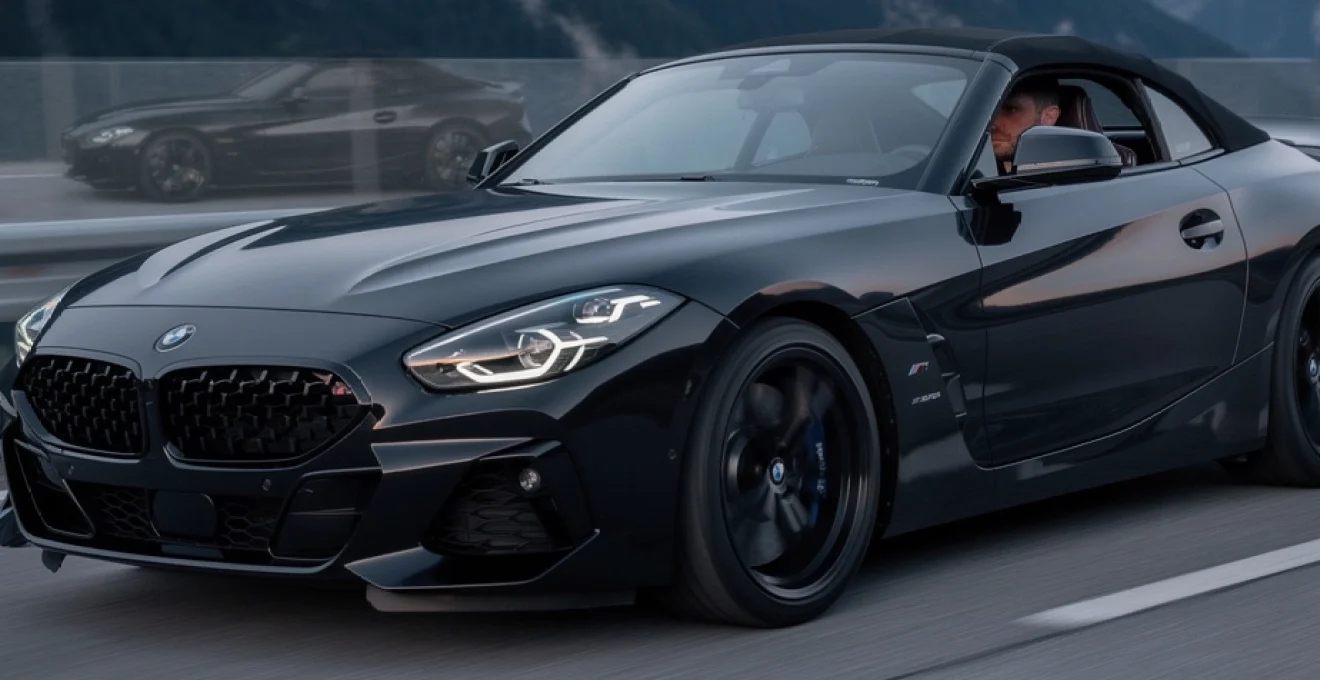
The BMW Z4 Coupe Black Edition sits at an interesting crossroads: part style icon, part precision tool, and now, part future collector’s item as the Z4 lineage approaches its final chapter. For drivers who care as much about chassis balance and steering feel as they do about stance and paint depth, this dark‑themed Z4 is more than a simple appearance package. It is a compact grand tourer and a serious sports car in equal measure, wrapping classic front‑engine, rear‑drive proportions in a contemporary, blacked‑out aesthetic. If you are weighing up whether a black‑spec Z4 belongs in your garage, understanding how its looks, dynamics and day‑to‑day behaviour work together is crucial.
Exterior design analysis of the BMW Z4 coupe black edition: proportions, surfacing and aerodynamics
From the first E85 roadster in 2002 to the current G29 generation, the Z4 has always leaned on a long bonnet, set‑back cabin and truncated tail. The Black Edition amplifies this with shadowy surfacing that visually lowers and lengthens the car. The coupe‑style silhouette (even on the fabric‑roof G29) benefits from a strong shoulder line and pronounced rear haunches, giving a rear‑drive stance that hints at the 50:50 weight distribution. Aerodynamically, BMW’s wind‑tunnel work has trimmed drag to around the mid‑0.3 Cd range while still generating useful high‑speed stability, especially noticeable above 160 km/h on derestricted autobahn sections. The darker finishes help hide visual mass, so the Z4 Coupe Black Edition reads more compact and athletic than its footprint suggests.
M-sport body kit, shadowline trims and aerodynamic elements on the Z4 G29 black edition
The Z4 G29 Black Edition is typically based on the M Sport exterior package, which means deeper front and rear aprons and sculpted side sills. These elements do more than look aggressive; the front bumper integrates air intakes that channel flow towards the brakes and into the air curtains. M High‑gloss Shadowline trims replace brightwork around the kidney grille, side window surrounds and some lower body details, giving a stealth, “single‑volume” appearance. If you stand back at dusk, the combination of the M‑sport body kit and Shadowline treatment mimics a concept car more than a series production model, especially on Frozen Matt Black editions.
Black sapphire metallic vs frozen black finishes: gloss, matte and satin paintwork characteristics
Two black‑themed finishes define most Black Edition builds: Black Sapphire metallic and BMW Individual Frozen Matt Black. Black Sapphire offers a deep gloss with metallic flake, so light plays across the curves of the bonnet and rear arches, emphasising surfacing. Frozen Matt Black, used on the Z4 Final Edition, does the opposite: it flattens reflections, making the car appear like a sculpted model straight from a design studio clay buck. Matte and satin paints demand more care; you cannot polish out scratches in the same way, and automatic car washes are best avoided. For resale and practicality, Black Sapphire metallic remains more forgiving, but for sheer drama, Frozen Matt Black gives the most distinctive “Black Edition” identity.
Wheel design, staggered fitment and tyre profiles on 18″, 19″ and 20″ black edition alloys
Wheel choice shapes both the stance and the handling of the BMW Z4 Coupe Black Edition. Most cars run staggered setups, for example 225‑width tyres at the front and 255 or 265 at the rear, on 18‑inch or 19‑inch alloys. Some M Performance packages stretch to 20‑inch wheels with ultra‑low‑profile tyres. Larger diameters visually fill the arches and sharpen steering response, but they also add unsprung mass and can reduce ride compliance over broken urban surfaces. If you intend to mix spirited B‑road driving with daily commuting, 19‑inch black alloys often represent the best compromise between precision and comfort, especially when paired with the Adaptive M Suspension.
Lighting signature: adaptive LED headlamps, darkened clusters and rear light graphic
The lighting package contributes as much to the Z4 Black Edition’s character as the paint. Adaptive LED headlamps with darkened internal housings give a menacing, focused look. On twisty country roads, the adaptive function swivels the beam into corners and shapes the light pattern at higher speeds to reduce glare while maintaining reach. At the rear, the slim LED light bar and L‑shaped graphic emphasise width, with smoked elements on some Black Edition packages. Beyond aesthetics, the strong beam intensity and fast LED response time provide an extra margin of safety for night driving, especially when pushing on in a car capable of sustained high‑speed touring.
Wind tunnel-derived details: front air curtains, rear diffuser and bootlid aero lip performance
A closer look at the front bumper reveals vertical slots near the outer edges: these are the air curtains. They guide airflow around the front wheels to reduce turbulence and drag. At the opposite end, a subtle bootlid spoiler lip and a functional rear diffuser manage the wake behind the car. Think of these elements as invisible hands pressing the Z4 into the tarmac at speed, improving stability without resorting to oversized wings. BMW’s testing at circuits like Nürburgring GP has shown that these aero tweaks help maintain composure in fast direction changes and during heavy braking zones, where a stable rear end inspires more confidence as you lean on the brakes.
On a well‑sorted sports car, the most effective aerodynamic features are often the ones you barely notice until you drive at speed.
Interior aesthetics and ergonomics in the BMW Z4 coupe black edition cabin
Slip into the Z4’s cabin and the Black Edition treatment continues with darker materials, subtle red accents and driver‑centred ergonomics. The low seating position, close to the rear axle line, instantly sets a sporting tone. Controls are grouped logically around the driver, and unlike in some rivals, the dashboard does not overwhelm you with screens. The fabric roof of the G29 saves weight compared with the previous retractable hardtop yet maintains excellent refinement when raised. For taller drivers, the combination of steering wheel adjustment and seat travel provides one of the best driving positions in the compact sports‑car class, making the Z4 a realistic long‑distance companion.
Black vernasca and merino leather upholstery, contrast stitching and M seat design
Most BMW Z4 Coupe Black Edition cabins are trimmed in Vernasca leather in black, often combined with Alcantara inserts for better grip. Higher‑spec or Individual builds may upgrade to Merino leather, which feels softer and more natural to the touch. Red contrast stitching, as seen on the Final Edition, runs across the seats, dashboard and door cards, adding visual interest without clashing with the monochrome theme. M Sport seats feature integrated headrests, pronounced bolsters and adjustable thigh support. If you plan regular track days or enthusiastic Alpine passes, the lateral support they provide can be the difference between feeling braced in the car and bracing yourself against the steering wheel.
Aluminium, piano black and carbon-effect inlays: tactile quality and perceived premium feel
Trim inlays significantly alter the perceived ambience. Brushed aluminium makes the cockpit feel technical and light, Piano Black looks sophisticated but shows fingerprints, while carbon‑effect trims signal motorsport intent. In a Black Edition context, many enthusiasts gravitate towards satin aluminium or subtle carbon‑effect, which contrast nicely with the dark leather. The key is tactility: surfaces you regularly touch should feel dense and cool, not hollow. This is where the Z4’s build quality stands out; controls such as the iDrive controller, heating knobs and window switches move with a damped precision more often associated with larger BMW coupes and saloons.
Idrive 7 / idrive 8.5 cockpit layout, digital cluster and head‑up display in a driver-focused environment
Depending on model year, the Z4 Coupe Black Edition pairs iDrive 7 or the more recent iDrive 8.5 with a fully digital instrument cluster. The interface layout keeps essential performance data—speed, revs, gear, and navigation prompts—within your natural sightline. An optional head‑up display projects even more information directly onto the windscreen, reducing the need to glance down. Compared with some rivals that have moved to touch‑only systems, the continued presence of a rotary controller is a blessing for driving enthusiasts: you can adjust settings by feel, without taking eyes off the road, especially useful when switching drive modes or zooming a map on the move.
Sports steering wheel, pedal box positioning and control reach for performance driving
The M‑branded sports steering wheel, often wrapped in Alcantara on Final and Black Editions, features a thick rim and sculpted thumb grips. This shape encourages a proper 9‑and‑3 hand position, essential for accurate steering inputs. The pedal box is well aligned, avoiding the offset foot placement that spoils driving positions in some two‑seat sports cars. For manual‑equipped M40i models, pedal spacing makes heel‑and‑toe downshifts natural once you have the technique. You sit low, legs stretched slightly forward, with the gear lever or shift paddles falling easily to hand. This harmony of wheel, seat and pedals is one of the reasons the Z4 still appeals strongly to purist drivers.
A truly driver‑focused cabin makes performance driving feel effortless, not demanding; the Z4’s ergonomics quietly support every input you make.
Chassis architecture and suspension tuning of the BMW Z4 coupe black edition
Beneath the black paintwork, the Z4 Coupe Black Edition shares its CLAR platform with the Toyota GR Supra 3.0, but the tuning philosophy is distinctly BMW. The architecture uses a mix of high‑strength steels and aluminium to achieve impressive torsional rigidity—BMW quoted gains of around 30% over the old E89 generation when the G29 launched in 2018. That stiffness allows the suspension to work more accurately, benefiting both ride and handling. With near‑perfect weight distribution and a relatively short wheelbase, the Z4 responds quickly to steering inputs, yet remains composed on long‑wave motorway undulations, a key trait for long‑distance black‑edition touring.
CLAR platform, torsional rigidity and weight distribution versus standard Z4 and toyota GR supra
The Black Edition does not fundamentally alter the CLAR underpinnings, but added equipment and larger wheels can nudge kerb weight upwards by several kilograms. Typical Z4 M40i models sit just over 1,500 kg, very similar to the GR Supra. However, BMW pitches the Z4 as the slightly more compliant, grand‑touring oriented sibling. Where the Supra’s set‑up feels firmer and more nervous over poor surfaces, the Z4’s calibration favours stability and progression. The 50:50 balance means that, if you imagine the chassis as a see‑saw, the pivot point lies almost exactly at the driver’s hips, aiding intuitive rotation when you guide the car into a bend.
Adaptive M suspension, spring and damper rates, and ride height specific to black edition setups
Many Z4 Coupe Black Edition cars are configured with Adaptive M Suspension. This electronically controlled damper system varies its behaviour based on the selected drive mode and road conditions. In Comfort, damper valves allow freer movement for better absorption of small bumps, while in Sport and Sport Plus, they firm up significantly, reducing body roll and pitch under braking. Ride height typically sits around 10 mm lower than non‑M‑Sport Z4s, which lowers the centre of gravity and marginally improves roll stiffness. The result is a chassis that can be supple on a long autoroute slog yet taut enough for focused track sessions when required.
Front MacPherson strut and rear multi-link configuration: kinematics, camber gain and toe control
The front axle uses a MacPherson strut arrangement with aluminium swivel bearings and control arms to reduce unsprung weight. At the rear, a five‑link multi‑link design manages wheel location. The kinematics are tuned so that as the suspension compresses in a corner, the wheels gain a degree of negative camber, keeping the tyre contact patch optimised. Toe‑in changes at the rear under load contribute to stability; a small increase in toe‑in as the car rolls helps the Z4 track straight, resisting unwanted oversteer snaps. This subtle “self‑correcting” tendency makes the car exploitable near the limit, particularly useful for enthusiastic drivers building confidence.
Run‑flat versus ultra‑high‑performance tyres: impact on steering precision and compliance
Earlier G29 Z4s often shipped with run‑flat tyres as standard. These offer the convenience of limited mobility after a puncture but come with stiffer sidewalls that can dull steering feedback and increase harshness. Many owners switching to non‑run‑flat ultra‑high‑performance tyres (such as Michelin Pilot Sport 4S) report a transformative effect: finer steering precision, better compliance over sharp edges and improved wet grip. The trade‑off is the need for a mobility kit or space‑saver spare. If you intend to maximise the Black Edition’s dynamic potential on road and track, moving away from run‑flats towards more performance‑oriented rubber is one of the most cost‑effective upgrades available.
Optional M performance chassis upgrades: anti‑roll bars, strut braces and factory alignment settings
BMW’s M Performance catalogue offers several factory‑approved chassis enhancements. Thicker anti‑roll bars reduce body roll further without necessarily compromising ride quality in a straight line. Front strut braces, sometimes in carbon, tie the suspension turrets together, enhancing steering accuracy over rough surfaces. For drivers who frequently attend track days, a more aggressive factory alignment with increased front camber and slight toe‑out can sharpen initial turn‑in. Think of alignment like fine‑tuning the string tension on a musical instrument: small changes can transform how the whole car “plays” beneath you, especially on circuits with long, loaded corners.
Chassis tuning is where the Z4 Coupe Black Edition earns respect from keen drivers; the hardware is inherently capable, and thoughtful tweaks unlock even more depth.
Steering feel, feedback and handling behaviour on road and track
Steering and handling define whether a sports car feels alive or aloof. The BMW Z4 Coupe Black Edition sits on the more communicative side of the current BMW range, especially in six‑cylinder M40i guise. Electric power steering inevitably filters some texture compared with the hydraulic racks of earlier Z4 M models, yet the variable sport steering calibration still communicates weight transfer and front‑tyre load convincingly. On flowing B‑roads, the car feels eager to change direction, while on motorways it relaxes into a calm, straight‑ahead gait. The real magic lies in how adjustable the chassis feels mid‑corner, allowing you to trim your line with small steering or throttle inputs.
Variable sport steering calibration: ratio, weighting and on‑centre stability at autobahn speeds
BMW’s Variable Sport Steering uses a quicker ratio around the straight‑ahead, becoming even more direct as you move away from centre. This means small inputs yield meaningful response at lower speeds, reducing hand‑over‑hand movements in tight hairpins or car parks. At autobahn speeds, the system adds weight and reduces assistance, so the car feels planted and never darty. Some drivers prefer a constant‑ratio rack, but in the Z4 this variable approach is well judged; it supports relaxed cruising and spirited driving equally. If you frequently drive faster than 200 km/h, the combination of steering calibration, aero stability and chassis rigidity pays real dividends in confidence.
Corner entry behaviour, mid‑corner balance and exit traction on b‑roads and alpine passes
Approach a corner on a favourite B‑road and the Z4 Coupe Black Edition typically exhibits mild, reassuring front‑end push if you enter a little too hot. Trail the brakes gently and the nose tucks in, rotating the car around your hips. Mid‑corner, the balance feels neutral, with enough compliance in the chassis to absorb bumps without skipping wide. On exit, the rear tyres dig in and provide strong traction, especially on M40i models with the electronic limited‑slip differential. On tight Alpine passes, the compact footprint and strong low‑to‑mid‑range torque let you slingshot out of hairpins in second gear, using the engine’s flexibility rather than chasing redline theatrics every time.
Understeer and oversteer characteristics in comfort, sport and sport plus driving modes
The Z4’s character changes subtly across Comfort, Sport and Sport Plus modes. In Comfort, throttle mapping softens, gearshifts smooth out and the suspension relaxes. The car tends towards safe understeer when pushed, ideal for wet commutes or unfamiliar roads. Switch to Sport, and responses sharpen; steering gains weight, and the chassis adopts a more neutral stance, rotating more eagerly. Sport Plus dials back stability control intervention, allowing progressive oversteer on corner exit if provoked. On track, this mode lets experienced drivers explore the car’s rear‑drive nature, using power oversteer as a tool rather than an accident, while still retaining a safety net.
Handling comparison with porsche 718 cayman, audi TT RS and toyota GR supra 3.0
How does the BMW Z4 Coupe Black Edition stack up against key rivals? The mid‑engined Porsche 718 Cayman still offers the most surgical steering and chassis precision; its engine placement gives a natural advantage in rotation and front‑end bite. The Audi TT RS counters with quattro traction and brutal straight‑line performance from its five‑cylinder turbo, but its front‑biased architecture makes it feel less playful at the limit. The Toyota GR Supra 3.0, sharing much of the Z4’s hardware, is tuned to feel edgier and more track‑oriented. Against this backdrop, the Z4 Black Edition carves out a niche: more communicative and rear‑drive pure than the TT RS, more comfortable and refined than the Supra, and more open‑air, grand‑touring focused than the Cayman.
Track-day performance at circuits like nürburgring GP and silverstone: lap‑time potential and consistency
On circuits such as Nürburgring GP or Silverstone National, a well‑driven Z4 M40i Black Edition can lap in times comparable to a GR Supra 3.0, typically within a few tenths of a second when running similar tyres. Strong, fade‑resistant M Sport brakes with red calipers provide repeated heavy stops from 200 km/h without drama, especially if paired with high‑temperature pads and fluid. The car’s balance encourages consistent lap‑times; it communicates early when the front tyres begin to work too hard, allowing you to adjust lines and braking points. For occasional track‑day use, you can enjoy fast, confidence‑inspiring sessions without sacrificing the comfort and refinement that make the Z4 a credible long‑distance companion.
Powertrain variants and their influence on dynamics in the black edition
The BMW Z4 Coupe Black Edition typically appears in two key powertrain flavours: the four‑cylinder sDrive20i and the six‑cylinder M40i. Both use BMW’s latest turbocharged engines with direct injection and variable valve timing, yet they deliver very different characters. The 20i offers a lighter nose and better fuel efficiency, making it appealing if you spend much of your time in urban or mixed driving. The M40i, with its three‑litre straight‑six and up to 382 bhp in some markets, turns the Z4 into a genuinely rapid roadster‑coupé capable of 0–100 km/h in around 4.5 seconds. Your choice will shape how the car feels under braking, turn‑in and power application.
BMW Z4 sdrive20i vs m40i black‑trimmed editions: engine output, torque curve and throttle mapping
The sDrive20i produces around 197 bhp and 320 Nm of torque, delivering 0–100 km/h in roughly 6.6–7.0 seconds, depending on specification. Its lighter engine improves front‑end agility; the car changes direction a touch more eagerly than the six‑cylinder version. The M40i, by contrast, offers approximately 340–382 bhp and 500 Nm of torque, depending on market, with a broad, plateau‑like torque curve from about 1,600 rpm. Throttle mapping in Sport and Sport Plus modes makes response near‑instant, allowing precise modulation mid‑corner. If you value a more relaxed, revvy driving style, the 20i suffices; if you crave deep, effortless acceleration and a richer soundtrack, the M40i Black Edition is the clear choice.
Eight‑speed ZF automatic gearbox logic, launch control and paddle‑shift responsiveness
Both engines pair with the excellent ZF 8HP eight‑speed automatic. In daily driving, shifts are near‑imperceptible, keeping revs low to save fuel. Engage Sport mode or manual shifting, and the gearbox adopts a very different persona: it holds gears, blips downshifts and responds quickly to paddle commands. Launch control allows repeatable, hard launches—ideal if you are curious about the car’s real‑world 0–100 km/h potential. Compared with many dual‑clutch systems, this torque‑converter unit is smoother at low speeds and more refined in traffic, yet crisp enough on upshifts that you rarely wish for a DCT, especially in the M40i.
Electronic limited‑slip differential (M sport diff) behaviour under high lateral load
The M40i Black Edition features an electronic M Sport differential on the rear axle. This clutch‑type diff can lock proactively based on steering angle, throttle position and yaw rate, not just when it senses wheelspin. Under high lateral load in fast corners, it helps distribute torque to the outer rear wheel, aiding rotation and stability. On corner exit, especially in second and third gear, you feel the diff hooking up and pushing the car out rather than simply letting the inside wheel spin away power. For you as a driver, this translates into stronger traction in the wet and a more exploitable, playful rear‑drive balance in the dry.
Everyday usability, NVH refinement and long‑distance comfort in the Z4 coupe black edition
Despite its focused looks and performance potential, the BMW Z4 Coupe Black Edition remains a usable, everyday sports car. The fabric soft‑top raises or lowers in around 10 seconds at low speeds, making spontaneous open‑air motoring easy. With the roof up, noise, vibration and harshness levels sit comfortably in the grand‑tourer bracket; wind noise is well controlled up to typical motorway speeds, and tyre roar depends largely on wheel and tyre choice. Practicality is naturally limited by the two‑seat layout, but the boot accommodates weekend luggage, and the cabin offers enough small‑item storage for daily life. For long‑distance journeys, the combination of supportive seats, dual‑zone climate and adaptive cruise control keeps fatigue at bay.
If you plan to use the Z4 as a daily driver, a few set‑up choices make a tangible difference. Sticking to 18‑ or 19‑inch wheels with non‑run‑flat tyres improves ride quality on poor urban roads. Selecting Vernasca leather with Alcantara inserts rather than full Merino may offer better long‑term wear if you frequently hop in and out. On the technology front, configuring driver assistance systems to a minimal but effective level—lane departure warning and blind‑spot monitoring, for example—avoids intrusive beeps while still providing a safety net in dense traffic. Over time, what stands out is how the Black Edition balances its extrovert appearance with civilised manners, allowing you to enjoy its looks and handling every day rather than reserving it solely for special drives.