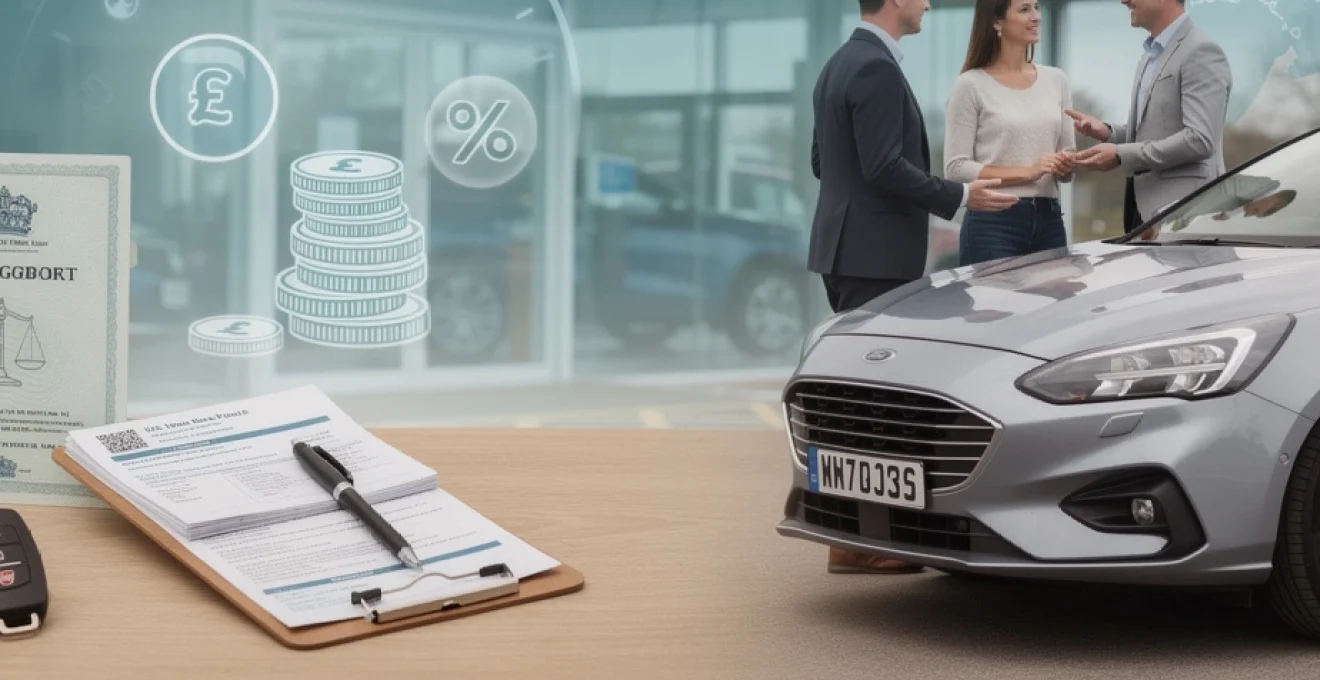
Personal Contract Purchase (PCP) has become one of the most popular ways to drive a new or nearly new car in the UK. According to recent finance industry data, more than 75% of private new car registrations are now funded through PCP or similar products. That shift has quietly changed how car insurance works in practice, because you are driving a vehicle that you use every day but do not yet legally own. If you get the insurance side wrong, the consequences can be severe: claims refused, agreements terminated and, in the worst cases, personal liability for large finance shortfalls. Understanding how PCP car finance interacts with UK insurance law helps you protect both your licence and your wallet.
How PCP car finance agreements interact with UK car insurance law
At its core, UK motor insurance law has not changed just because PCP has grown. You still need at least third party cover to drive on public roads, and insurers still assess risk based on the vehicle, the driver and usage patterns. What has changed is the ownership structure. With PCP, lenders such as Black Horse, MotoNovo, Santander Consumer or Volkswagen Financial Services retain legal title to the vehicle until you either pay the final balloon or hand the car back. That creates an extra party with an interest in what happens to the car, and insurers must recognise that when they underwrite and settle claims. For you, the driver, the critical point is insurable interest – the legal and financial stake you have in the car, even if the logbook shows a finance company as owner.
Insurable interest and legal ownership in PCP contracts with providers like black horse and MotoNovo
Under UK law, an insurer can only pay out if you have an insurable interest in what is being insured. On a PCP agreement, the finance company is the legal owner, but you are the registered keeper and have a contractual obligation to look after and pay for the car. That gives you sufficient insurable interest to arrange a fully comprehensive policy in your own name. In most PCP contracts with lenders such as Black Horse or MotoNovo, the terms explicitly require you to insure the vehicle for its full value and to name the finance company as an interested party. Some insurers treat PCP much like hire purchase, and will automatically check for outstanding finance at the point of a total loss claim. Settlements are usually paid directly to the lender first, with any surplus – or request for extra funds – passed to you.
V5C logbook, registered keeper status and implications for comprehensive cover
The V5C logbook causes a lot of confusion with PCP insurance. The document clearly states that the person named is the registered keeper, not necessarily the legal owner. On most PCP deals, your name appears on the V5C, while the finance company holds legal title. When arranging comprehensive car insurance, you must answer ownership questions accurately. If a comparison site asks, “Who is the legal owner?”, the correct answer is usually “finance company” or “lease/finance”. If it asks, “Who is the registered keeper?”, you would normally select “me”. Mis-stating this can, in extreme cases, give an insurer grounds to void a policy after a serious claim. Insurers routinely run HPI or similar checks on total losses, so any attempt to present a PCP car as outright owned is very likely to be discovered.
Consumer credit act, FCA rules and how they shape insurance obligations on PCP vehicles
PCP agreements are regulated under the Consumer Credit Act and supervised by the Financial Conduct Authority (FCA). While those rules focus on credit fairness rather than insurance, they still influence your insurance obligations. The finance contract will almost always include clauses requiring you to maintain appropriate insurance and prohibiting you from using the vehicle in ways that fall outside the agreed use (for example, taxi work without consent). FCA rules on product disclosure also affect how add-on insurances such as GAP are sold alongside PCP, which helps to protect you from being pressured into unsuitable extras. If you fail to meet the insurance conditions, the lender may consider you in breach of the agreement and could, in theory, demand early repayment or repossess the vehicle.
How PCP balloon payments, mileage limits and condition clauses affect risk and underwriting
PCP is built around a future value – often called the balloon or MGFV (Minimum Guaranteed Future Value). That balloon assumes you keep within mileage limits and return the car in fair condition. From an insurer’s perspective, those constraints affect risk. Higher annual mileage caps typically increase accident exposure and, therefore, premiums. Condition clauses mean you have a financial incentive to repair even minor damage properly, which insurers view positively when you opt for comprehensive cover. If you crash the car close to the end of the term and it is written off, the insurer’s market value settlement may be lower than your final balloon payment, creating a potential shortfall that GAP insurance is designed to address. Understanding how those moving parts interact is essential for choosing the right level of protection.
Mandatory insurance requirements for cars on PCP in the UK
UK road traffic law is clear: every vehicle used on public roads must have at least third party insurance. That baseline applies whether you bought the car outright, lease it or run it on PCP. For financed vehicles, though, the legal minimum is rarely enough. Most PCP lenders, including mainstream names such as Volkswagen Financial Services, Toyota Financial Services or Santander Consumer, specify that you must maintain fully comprehensive cover throughout the agreement. That requirement is not just bureaucracy. It protects the lender’s asset from partial loss, theft and fire, and it protects you from being left with monthly PCP payments on a car that no longer exists. Some finance houses routinely check policy documents at inception or renewal, particularly when approving higher-value vehicles.
Why fully comprehensive cover is usually required by PCP lenders such as volkswagen financial services
From a lender’s point of view, a PCP car is collateral for the loan. If the car is written off in a collision and only third party cover is in place, there is no payout for the damaged car itself. You would still owe the outstanding finance, but have no vehicle and no insurer contribution towards replacing it. That scenario creates major credit risk for the lender and obvious hardship for you. Fully comprehensive cover solves that by providing protection for the vehicle against accidents, vandalism, weather damage, fire and theft. Statistics from the UK motor insurance market show that comprehensive policies consistently account for over 60% of private car cover, and lenders have a strong commercial interest in keeping financed cars within that segment.
Minimum third party cover vs lender stipulations in england, scotland, wales and northern ireland
The legal framework for compulsory third party insurance is broadly the same across England, Scotland, Wales and Northern Ireland. However, lender stipulations can vary slightly between regions and brands. Some captive finance companies, especially those linked to premium marques, insist on comprehensive insurance with relatively low excesses and may prohibit certain policy types, such as pay-per-mile schemes, if those could leave gaps in cover. If you only carry third party or third party, fire and theft on a PCP car, you are technically road-legal but almost certainly in breach of your finance agreement. In practice, that combination is rare, because most mainstream insurers, brokers and comparison sites will flag that a financed vehicle typically needs comprehensive protection.
Proof of insurance, policy wording and compliance checks by PCP finance companies
Many lenders reserve the right to request proof of insurance at any time during the PCP term. In the early days of the agreement, the dealer or broker may even verify your cover before you drive away. Policy wording is important here. Some insurers automatically note the finance house as a “loss payee” or “interested party” on the schedule, which smooths things during a total loss claim. Others require you to provide the lender’s details after the policy is live. If you change insurer mid-term, make sure the new provider knows the car is on PCP and ask for written confirmation that the finance company’s interest will be recognised in any settlement. That small administrative step can prevent delays when a large claim is being processed.
Consequences of driving uninsured or under‑insured on a PCP agreement
Driving a PCP car without insurance carries the same penalties as any other uninsured driving offence: vehicle seizure, fixed penalty fines, six points or more on your licence and the risk of prosecution. With a financed car, the fallout extends further. If a serious accident occurs while you are uninsured or under-insured, the finance company will still expect the PCP balance to be repaid in full. The Motor Insurers’ Bureau might handle third party injury and damage claims, but you could face separate civil action from the lender. Even being under-insured – for example, mis-declaring use for business when the car is routinely used for work – can lead to reduced or refused claims, leaving you with a damaged car, an active PCP agreement and very limited support.
Key policy features to compare when insuring a PCP car
Beyond simply choosing “comprehensive”, the details of the policy matter a great deal for PCP drivers. Two products with identical premiums can respond very differently if a new car is written off in the first year, if you drive a high-spec BMW on PCP, or if an at-fault accident triggers a large excess. Treat the insurance contract as a financial safety net layered on top of your PCP agreement. Features such as new-for-old replacement, settlement based on market value, excess levels and optional add-ons can either absorb the shock of a major loss or magnify it. Checking those aspects in advance is more effective than trying to fix gaps after a claim has already happened.
New‑for‑old replacement vs market value settlement and impact on PCP liability
Many comprehensive policies include some form of new-for-old replacement for cars under 12 months (sometimes 24 months) old. If your PCP car is written off in that period, the insurer may supply a brand new, equivalent model rather than paying the depreciated market value. That can significantly reduce your risk of negative equity. Once the new-for-old window closes, claims are usually settled on market value. If your outstanding PCP balance is higher than that value, you face a shortfall that must be paid from savings or covered by GAP insurance. For someone starting a three-year PCP on a £25,000 car, the difference between a first-year new-for-old claim and a second-year market value claim can easily run into several thousand pounds.
Agreed value vs actual cash value endorsements on high‑value PCP cars (e.g. BMW, audi)
Owners of high-value PCP cars, particularly premium models such as BMW, Audi or Mercedes-AMG, sometimes consider policies with agreed value or special endorsements. Standard comprehensive insurance pays the “actual cash value” at the time of loss, based on trade guides and market data. An agreed value endorsement sets a pre-determined settlement figure, usually reviewed annually, which can be higher than typical market estimates. While more common in classic or specialist performance markets, similar concepts are appearing for new prestige cars, especially where optional extras add thousands to the list price. For a PCP driver, this can offer extra certainty that, in a total loss, there will be enough funds to clear the finance, although the premiums reflect that additional protection.
Voluntary and compulsory excess structures and their effect on claim affordability
Every car insurance policy has a compulsory excess; most allow you to add a voluntary excess to reduce the premium. On a PCP car, that trade-off deserves close thought. A high voluntary excess can make monthly insurance payments cheaper, but it increases how much you must pay upfront if a claim is made. Consider whether you could realistically afford that combined excess if the car were stolen tomorrow. Statistics from UK insurers suggest that average combined excesses now sit around £350–£500, but many price-conscious drivers select £750 or more. For a financed car used daily for commuting, that might be a false economy, especially for younger drivers who already pay higher premiums.
Protected no‑claims discount and its role in long‑term PCP ownership cycles
PCP often encourages drivers to change cars every three or four years, creating a cycle of repeat insurance purchases. Protecting your no-claims discount (NCD) can be valuable in that context. Although NCD protection does not prevent premiums from rising after an at-fault claim, it preserves the discount level itself, which can represent 50% or more off the base premium. Over multiple PCP cycles, that can translate into substantial savings, particularly for those insuring higher group cars. For example, a driver with nine years NCD insuring a compact SUV on PCP might pay £600 with protection instead of £1,000 without; losing that discount just before starting a new, more expensive PCP deal can make the combined monthly outgoings uncomfortable.
Optional add‑ons: courtesy car, legal expenses, personal accident and key cover
Optional extras on a PCP insurance policy are often dismissed as minor, but certain add-ons can make life significantly easier during a claim. Courtesy car cover is especially relevant if you rely on your PCP vehicle for work or school runs. Some policies only provide a basic small hatchback; others offer similar-class vehicles. Motor legal expenses can help recover uninsured losses, such as your excess, from a third party in a non-fault claim. Personal accident cover and key cover are more situational but can be worthwhile if replacements or medical costs would otherwise stretch your budget. Think of these extras as mini safety nets that support you while the main claim and any settlement with the finance company are being finalised.
Gap insurance for PCP: how it works and when it is financially justified
GAP insurance – short for Guaranteed Asset Protection – is closely linked to PCP. Because cars depreciate rapidly, especially in the first three years, there is a real risk that an insurer’s market value payout will not clear the outstanding finance if a PCP car is written off or stolen. Industry figures often cite first-year depreciation of 20–30% on new vehicles, rising to 50–60% by year three for some mainstream models. GAP policies exist to plug that gap between the comprehensive insurer’s settlement and either the amount you originally paid, the cost of a replacement or the remaining PCP balance. For shorter PCP terms with modest deposits, especially on cars that hold value well, GAP may be a luxury; for longer terms or higher-risk depreciation profiles, it can be sensible risk management.
Combined return to invoice (RTI) GAP vs finance GAP for negative equity on PCP
Two of the most relevant GAP products for PCP are Return to Invoice (RTI) GAP and Finance GAP. Finance GAP simply covers any shortfall between the insurer’s market value payout and the outstanding finance. RTI GAP goes further, topping up the settlement to either the original invoice price or the cost of a like-for-like replacement, depending on the policy. Combined RTI and Finance GAP products often appeal to PCP drivers because they address both negative equity risk and the desire to get back into an equivalent car without injecting large amounts of fresh cash. For example, after two years of a four-year PCP, RTI GAP could bridge the difference between a £10,000 insurer payout and the £15,000 invoice price, while also clearing the remaining £2,000 finance, subject to policy limits.
Worked example: write‑off of a three‑year PCP on a ford focus and the GAP shortfall
Consider a driver who signs a four-year PCP on a new Ford Focus with a £24,000 list price. They pay a £3,000 deposit and agree monthly payments based on a £10,000 balloon. After three years, the car is written off. The comprehensive insurer values the car at £11,000, reflecting typical depreciation. However, the outstanding PCP balance is £13,000, leaving a £2,000 shortfall. Without GAP, the driver must pay that £2,000 to the finance company, then find a separate deposit for a replacement vehicle. With a well-chosen Finance GAP policy, the £2,000 is covered. With RTI GAP, there could be a larger top-up to help fund a replacement Focus at current prices, assuming the policy limit and duration are sufficient.
Dealer‑sold GAP vs standalone GAP providers such as ALA and direct gap
Main dealers often offer GAP at the point of sale, sometimes bundling premiums into the PCP payments. While convenient, this is rarely the cheapest option. FCA reviews have previously found that dealership GAP can cost several times more than equivalent cover from standalone providers such as ALA or Direct Gap. Standalone policies bought online typically allow more customisation – for example, choosing between three-, four- or five-year terms and different claim limits – and can be bought up to several months after the car is delivered. A professional view is that dealer GAP is occasionally competitive on heavily discounted promotions, but comparison with independent providers almost always pays off.
FCA rules on GAP insurance sales, cooling‑off periods and mis‑selling red flags
GAP insurance has been a focus of FCA regulation due to past mis‑selling. Dealers must now give you prescribed information about the product, including clear pricing and what it covers, and must not require an immediate decision on the day the car is sold. There is also a cooling‑off period during which you can cancel GAP and receive a refund, usually 30 days. Red flags for mis‑selling include high-pressure tactics, being told GAP is compulsory for finance approval, or being sold a policy whose term obviously exceeds the likely PCP duration. If those arise, consider lodging a complaint and, if needed, escalating it to the Financial Ombudsman Service.
GAP insurance should always be a considered choice, based on the numbers in your finance agreement and the realistic depreciation of your car, rather than an automatic add‑on bundled into monthly payments.
Exclusions, claim triggers and mileage/vehicle age limits in GAP policy small print
Not all GAP policies are equal, and the small print matters. Common exclusions include vehicles used for hire and reward (such as taxis), certain high-performance or heavily modified cars, and claims where the main motor insurer has declined to pay out due to fraud or policy breach. Many policies have maximum vehicle age or mileage limits at inception, often five to seven years old or under 80,000 miles. There may also be caps on the maximum payout, such as £25,000. Claim triggers are usually limited to total loss events – theft or write-off – not partial damage. Reading and understanding these conditions before buying ensures that the cover genuinely matches your PCP circumstances.
Underwriting and pricing factors specific to car insurance on PCP
From the insurer’s side, a PCP car is primarily just another risk, but certain finance-related details can subtly influence premiums. Underwriters pay close attention to how the vehicle is funded, your credit status, any telematics data, the exact specification and how you intend to use the car. Recent market trends, such as the rise of subscription-style finance packages and data-driven risk scoring, also play into pricing. If you understand what insurers are looking at, you can present accurate information and potentially reduce costs without compromising cover.
How credit status, finance type and lender (e.g. santander consumer, toyota financial services) influence premiums
Most mainstream insurers do not vary base premiums purely because a car is on PCP rather than outright owned. However, your broader financial profile can still affect pricing. Insurers often run soft credit checks to verify identity and gauge overall risk. A stable credit file tends to correlate with lower claims frequency, which can lead to better quotes. Finance type and lender – whether Santander Consumer, Toyota Financial Services or another provider – mainly matter if they indicate higher mileage or specific usage patterns. For example, certain commercial-linked finance products might hint at business use, which must be disclosed accurately. Misrepresenting your usage or finance structure to chase a lower premium can backfire badly at claim time.
Telematics “black box” policies and data‑driven pricing on financed vehicles
Telematics or “black box” policies have become a significant tool for managing premiums on newer, financed cars, especially for younger drivers. A small device or smartphone app records data such as speed, acceleration, time of day and braking patterns. Safer driving can translate into lower renewal premiums, which is particularly valuable when insuring a high-group PCP car in your twenties. Industry reports suggest that telematics can reduce premiums for careful young drivers by 20–30% compared with standard policies. However, telematics also come with rules: frequent driving after midnight, harsh braking or regular speeding can trigger warnings or even policy cancellation. If your PCP agreement depends on keeping the car insured at all times, that risk needs to be considered before opting in.
Think of a telematics device as a fitness tracker for your driving: helpful for building a good record, but unforgiving if you consistently push the limits.
Vehicle specification, optional extras and modification rules on PCP cars
PCP cars often come with optional extras – upgraded wheels, technology packs, performance kits – that affect both the vehicle’s value and risk profile. Insurers base premiums partly on the car’s insurance group, which already reflects standard equipment, but certain dealer-fitted or aftermarket options can count as modifications. Changes that boost performance, alter suspension or significantly change appearance must usually be declared. Many PCP contracts also restrict modifications without the lender’s consent, because they can affect resale value. Failing to disclose modifications can jeopardise claims, while making prohibited changes might breach your finance agreement. When factory-fitting expensive options such as panoramic roofs or larger alloys, make sure your insurer has the correct specification so any claim settlement properly reflects the car’s true value.
Usage patterns: commuting, business use and annual mileage declarations under PCP
Insurers draw clear lines between social, domestic and pleasure use; commuting; and different levels of business use. PCP drivers sometimes under-declare this, especially when a car is occasionally used for client visits or multiple workplaces. If you mainly use your PCP car for commuting and occasional business trips, a policy limited to “social and commuting” may not be adequate. Annual mileage declarations are another key rating factor. PCP agreements themselves cap mileage and charge for excess, so there is already a financial incentive not to underestimate. From an insurance perspective, under-stating mileage to reduce premiums can result in proportionate settlements or declined claims if the discrepancy is large. A realistic estimate based on your PCP mileage limit usually gives the best balance between cost and security.
Claims handling on PCP cars: total loss, write‑offs and settlement with the finance company
When a PCP car is involved in a serious accident or is stolen, the claim process has an extra layer: the finance company. Understanding how write-offs are categorised, how settlements are structured and what happens if there is equity or a shortfall can prevent unpleasant surprises. The insurer’s goal is to put you back in the position you were in before the loss, financially. The lender’s goal is to recover the outstanding balance. Navigating those two objectives effectively is much easier if you know in advance how the pieces fit together.
ABI salvage categories (A, B, S, N) and their relevance to financed vehicles
In the UK, written-off vehicles are classified into ABI categories: A and B (break for parts, never to return to the road) and S and N (repairable structural and non-structural damage, respectively). For a financed car, these categories matter mainly because they determine whether the vehicle is repairable or a total loss. On PCP, the finance company will almost always expect a total loss settlement if the car falls into category A or B. For category S or N, the insurer may choose to repair if it is economical, and you continue with the PCP as normal. Buying back salvage – sometimes popular with outright owners – is rarely compatible with PCP, because the lender retains title and typically wants the finance cleared rather than the damaged asset remaining in circulation under their name.
How insurers settle with PCP lenders and what happens to any equity or shortfall
When a PCP car is declared a total loss, the insurer will ask for details of any outstanding finance. The usual process is to pay the market value settlement directly to the finance company. If that amount exceeds your remaining balance, the surplus is passed on to you as the policyholder. If the settlement is lower than the balance, you remain liable for the shortfall unless GAP insurance covers it. For example, if £9,000 is outstanding and the insurer pays £11,000, you receive £2,000. If £12,000 is outstanding and the insurer pays £10,000, you must find £2,000 or rely on GAP. Any equity you receive can then be used as a deposit towards the next PCP or another form of finance, helping you stay mobile after a loss.
Handling fault vs non‑fault claims on a PCP vehicle and impact on future finance
From an insurance standpoint, PCP cars are treated the same as any other when determining fault. In non-fault claims where the other party is clearly liable and identified, your insurer may recover costs, and your no-claims discount may be reinstated depending on the policy. For fault or split-liability claims, you can expect excesses to apply and NCD to be affected, even if you have protection. Future insurance premiums are likely to increase, which indirectly affects the affordability of future PCP agreements because lenders always consider the total cost of ownership. A history of at-fault accidents can also cause some finance companies to scrutinise applications more closely for higher-value or higher-performance PCP deals.
Insurers and finance companies both look at patterns over time; one isolated claim rarely defines you, but repeated high-cost incidents can change how your risk is viewed by both.
Early termination, voluntary termination under PCP and related insurance implications
PCP agreements often allow for voluntary termination once you have paid at least 50% of the total amount payable (including interest and fees), as set out in the Consumer Credit Act. If you exercise that right and hand the car back, your insurance responsibilities end on the day you cease to be the registered keeper and the vehicle is off the road. Inform the insurer promptly to avoid paying for unused cover; a pro-rata refund of the premium may be due if you paid annually. If the agreement is settled early by paying the outstanding finance and optionally the balloon, ownership transfers to you and the insurance should be updated to reflect that you are now both legal owner and keeper. Failing to update those details could complicate any later claim, because the risk profile has changed from a financed to an outright-owned vehicle.