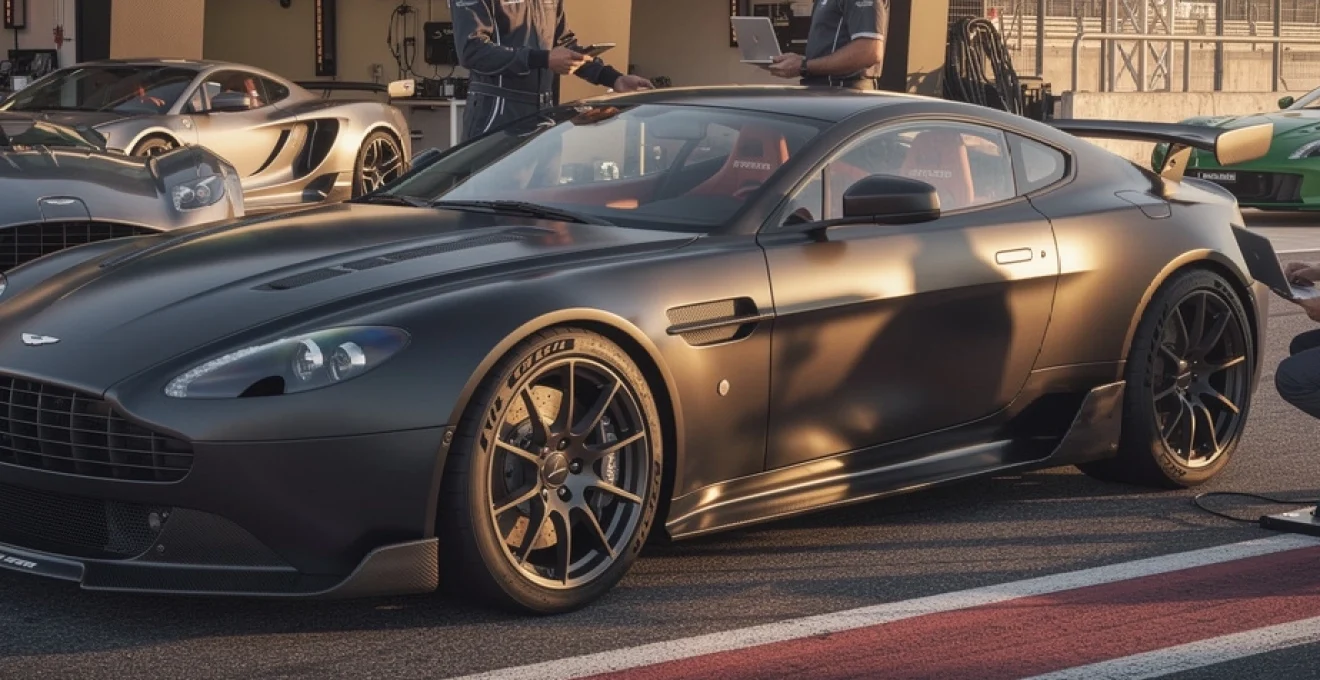
The idea of a V8 Vantage “77” edition sits right at the crossroads of analogue driving pleasure, motorsport-inspired engineering and Aston Martin’s ultra-rare One‑77 halo car era. For anyone who loves front‑engined GTs with real character, the concept is fascinating: a driver’s car influenced by a million‑pound flagship, but wrapped in the more compact, agile Vantage package. Enthusiasts who track market trends have also noticed how limited‑run Aston specials such as Valour, Victor and Valiant have reshaped expectations around collectability and future values. Understanding what defines a hypothetical V8 Vantage “77” edition helps you read that landscape more clearly, judge authenticity better and decide whether such a car would suit fast‑road use, track days or a well‑curated collection.
Aston martin V8 vantage “77” edition: origin, production context and relationship to the one-77 halo car
The V8 Vantage “77” edition concept belongs to the VH platform era, when Aston Martin used a bonded aluminium architecture across V8 Vantage, DB9, DBS and the spectacular One‑77. That period saw a clear strategy: leverage a common structure but create distinct personalities and price points. The One‑77 served as the technological and emotional pinnacle, showcasing a 7.3‑litre naturally aspirated V12, advanced carbon structure and a design language that still influences modern cars like the latest Vantage and Valour. A V8 Vantage “77” edition would logically sit beneath that flagship as a more attainable but still highly exclusive celebration of the same design and engineering themes, echoing how today’s Valour references both Victor and the Le Mans “Muncher”.
Limited-run positioning: how the V8 vantage “77” edition complements the aston martin one-77 flagship
A V8 Vantage “77” edition would be positioned much like the modern Valour relative to the mainstream Vantage: not merely an appearance pack, but a coherent package of aero, chassis and powertrain changes that pay direct homage to the One‑77. Where the One‑77 used a carbon monocoque, the “77” edition stays faithful to the aluminium VH structure yet borrows its visual drama and some aero philosophy. Think of it as the analogue, manual‑friendly counterpart to a hypercar: similar ethos, different scale. For you as a buyer, that positioning matters because it affects how the car is perceived in the hierarchy of Aston specials and how strongly it will be compared with icons such as the V12 Vantage and Victor.
Production timeline and markets: launch year, allocation strategy and UK vs EU availability
Given the One‑77 production window (2010–2012) and the later emergence of track‑leaning specials, a plausible launch for a V8 Vantage “77” edition would sit in the early 2010s, towards the middle of the VH Vantage lifecycle. Production would almost certainly be limited, mirroring the 77‑car run of the flagship itself. Allocation strategy in that era tended to favour key regions: the UK and wider Europe, North America and the Middle East. For UK and EU buyers, left‑hand‑drive and right‑hand‑drive splits would be largely driven by dealer demand, with some cars pre‑assigned to high‑value customers already owning a One‑77 or similar halo Aston models, reinforcing the sense of a curated “family” of cars.
VIN patterns, build plaques and authentication markers unique to the “77” edition
For anyone considering a limited‑run Aston Martin, authentication is critical. A genuine V8 Vantage “77” edition would be expected to feature a specific VIN pattern – likely a unique code within the sequence identifying its special‑series status – plus a numbered build plaque on the sill or dashboard. Additional markers would probably include “77 edition” embroidery, unique chassis codes in service documentation and references within factory build sheets. When evaluating such a car, you would want to cross‑check VIN data, plaque numbering and paperwork from authorised dealers, mirroring the due diligence carried out today on cars like Valour and the track‑focused Valiant.
Comparison with standard V8 vantage, N400 and N430 special series in the VH platform era
The standard VH‑era V8 Vantage delivered around 380–420 bhp from its 4.3‑ and later 4.7‑litre engines, with 0–62 mph times in the 4.7–5.0 second range and a top speed just shy of 180 mph. The N400 and N430 series added modest power bumps, sharper suspensions and Nürburgring‑inspired styling, but remained relatively subtle. A “77” edition would be expected to push further: more aggressive aero, deeper chassis changes and a stronger visual link to the One‑77’s chiselled surfaces. In market terms, that would place it closer to the modern Valour philosophy than to earlier “N” cars, appealing to drivers who want a genuinely different experience, not just a badge and stripe kit.
Exterior design and aero package of the V8 vantage “77” edition
The most immediate way you would identify a V8 Vantage “77” edition is by its bodywork. Just as the Valour reinterprets 1970s and 1980s V8 Vantage cues with modern carbon fibre, a “77” edition would reinterpret One‑77 themes at a smaller scale. Expect a more sculpted bonnet with integrated vents, a stronger shoulder line and a rear section that nods to the Kamm‑tail forms seen on both historic Vantages and modern specials. Beyond aesthetics, the aero would serve a purpose: reduce lift, improve stability at high speed and help feed cool air to brakes and radiators for sustained track use, a recurring concern when power outputs rise beyond 500 bhp.
Bodywork modifications: front splitter, rear diffuser and side sills inspired by one-77 aero
One‑77 aero solutions revolved around controlling airflow over and under the car, and a V8 Vantage “77” edition could echo that with a deeper front splitter, reprofiled side sills and a more functional rear diffuser. A carbon front splitter would increase front‑end downforce while also helping channel air into enlarged brake cooling ducts. Along the flanks, sculpted sills could tidy up underbody airflow and visually widen the stance. At the rear, a multi‑channel diffuser inspired by the One‑77 – and today’s Valour – would help extract air from under the car, improving stability in fast sweepers and giving you more confidence to carry speed through high‑load corners.
Unique paint schemes: satin finishes, Q by aston martin bespoke colours and racing-inspired liveries
Aston Martin’s Q by Aston Martin division has become synonymous with bespoke finishes, from tinted carbon to heritage‑inspired racing hues. A “77” edition would almost certainly offer a curated palette: deep metallic greens referencing Le Mans “Muncher” lore, satin greys recalling the One‑77’s press cars and perhaps bold dual‑stripe liveries echoing the Vantage GT4 racers. Satin and semi‑matt finishes might be used on contrast elements such as roof panels, mirrors and aero components. For you as an owner, these schemes do more than look dramatic; they can materially influence long‑term appeal and auction results, especially if linked to a known factory launch specification or press fleet car.
Lighting, grille and badging: “77” edition identifiers on bonnet vents, side strakes and rear deck
Subtle details often separate a genuine factory special from aftermarket builds. On a V8 Vantage “77” edition, expect a unique front grille pattern – perhaps a reinterpretation of the classic V8 Vantage mesh combined with modern LED light signatures. Bonnet vents might carry small “77” inlays, while side strakes could integrate laser‑etched numerals or discreet enamel badges. At the rear, a revised light blade arrangement, similar in concept to the Valkyrie‑style treatments used on Valour, would emphasise width and modernity. These touches might look minor, but for enthusiasts comparing cars at concours events or specialist dealers, they act as quick visual authentication cues.
Wheel and tyre specification: forged alloy designs, pirelli P zero fitment and track-focused sizes
Wheel and tyre choice underpins both stance and dynamic behaviour. A plausible specification for the V8 Vantage “77” edition would be forged 20‑ or 21‑inch alloys with a bespoke “honeycomb” or turbine design, echoing both One‑77 and Valour styles. Tyre sizes in the region of 255/35 front and 295/30 rear on Pirelli P Zero or Michelin Pilot Sport S 5 rubber would balance steering feel, traction and wet‑weather usability. Forged construction reduces unsprung mass by around 20–25% compared with cast wheels of the same size, improving damping response and mid‑corner composure – something you would notice immediately on broken B‑roads or during long stints at circuits such as Silverstone or Spa.
Powertrain and performance upgrades on the V8 vantage “77” edition
The beating heart of any V8 Vantage special is its engine. In the “77” edition, the familiar all‑alloy AM4 4.7‑litre V8 would almost certainly receive more than a token remap. Inspired by the way modern Aston engineers extracted an extra 153 bhp from the latest Vantage during its 2024 update, a similar philosophy would apply here: rework breathing, fuelling and cooling to unlock a meaningful hike in performance while retaining durability. The aim would be a car that not only feels significantly quicker than a stock V8 Vantage in a straight line, but also offers a more urgent, race‑bred character as revs rise, echoing the naturally aspirated drama of the One‑77’s 7.3‑litre V12.
AM4 V8 engine tuning: revised ECU maps, intake tract and exhaust backpressure changes
The AM4 V8 responds well to tuning, and a factory‑engineered package would focus on three main areas: revised ECU calibration, a less restrictive intake and lower exhaust backpressure. A freer‑flowing airbox and larger‑diameter intake runners would improve volumetric efficiency, particularly in the mid‑ to upper‑rev range. On the exhaust side, a new cross‑pipe and bigger rear silencers with active valves could reduce backpressure by 10–15%, allowing the engine to breathe more easily. Combined with sharper ignition and fuelling maps, those changes might yield a 10–15% power increase while maintaining OEM drivability and emissions compliance in UK and EU markets.
Output figures and performance data: horsepower, torque, 0–62 mph and top speed vs base V8 vantage
Translating those technical tweaks into numbers, a realistic target for the V8 Vantage “77” edition would be around 480–500 bhp and 460–480 Nm of torque, up from roughly 420 bhp in a standard 4.7‑litre car. With gearing optimised, 0–62 mph could fall to around 4.2 seconds, with 0–100 mph in under 9 seconds and a top speed nudging 190 mph. For context, that would place the “77” edition between the older V12 Vantage and today’s 656 bhp Vantage in outright pace. More importantly for you on the road, in‑gear acceleration – say 50–70 mph in fourth – would feel substantially stronger, making overtakes easier and more relaxed.
Sportshift II and manual gearbox calibration: final drive ratios, shift logic and launch characteristics
Whether specified with the automated Sportshift II transmission or the six‑speed manual, gearing and calibration would be central to the car’s personality. Shortening the final drive ratio slightly – for example from 3.46:1 to around 3.73:1 – would sharpen low‑ and mid‑range response without sacrificing a relaxed motorway cruise in top gear. On Sportshift cars, revised shift logic in Sport and Track modes would deliver faster upshifts and more assertive throttle blips on downshifts, enhancing involvement. Manual versions could benefit from a lighter, more precise linkage and a marginally shorter throw, giving you a more mechanical, rifle‑bolt feel consistent with the car’s focused brief.
Exhaust system and sound engineering: cross-pipe, valve control and one-77 inspired acoustic signature
Sound is a huge part of the Aston experience, and a V8 Vantage “77” edition would lean heavily on acoustic tuning inspired by the One‑77 and modern Valour. A central cross‑pipe helps equalise pulses between banks, giving a harder‑edged, more motorsport‑style timbre as revs climb. Dual‑stage valves in the rear box would keep things civilised at low load and in Normal mode, but open fully in Sport or Track, releasing a wilder soundtrack. The goal is not just volume; it is the texture of the sound. Think of it as moving from a hi‑fi to a live performance: richer harmonics, crisper overrun crackles and a more urgent induction roar near the 7,000 rpm red line.
Chassis, suspension and braking calibration specific to the “77” edition
Power upgrades only deliver their full benefit when matched by a chassis that can exploit them. The V8 Vantage “77” edition would therefore receive a comprehensive rethink of its suspension, body stiffness and braking hardware, similar in scope to the work carried out on the latest 656 bhp Vantage, which gained a 20 mm wider track and up to 29% greater rear‑axle stiffness. The aim would be an inherently more sporting feel without sacrificing the GT usability that defines the Vantage badge. For you as a driver, that translates into cleaner turn‑in, better body control over undulations and more consistent brake performance during repeated high‑speed stops.
VH platform adaptations: torsional rigidity, subframe bushings and weight distribution
The bonded aluminium VH platform already offers impressive rigidity, but focused editions tend to look for incremental gains. Additional shear panels at the front and rear, plus a stiffer engine cross‑brace, could raise torsional stiffness by 5–10%, improving steering precision and suspension effectiveness. Firmer subframe bushings would reduce unwanted compliance, helping the car feel more tied down under heavy braking or aggressive lateral loads. Careful placement of added bracing and lightweight components would aim to preserve an ideal weight distribution close to 49:51 front‑to‑rear, ensuring the “77” edition retains the Vantage’s neutral, progressive balance.
Suspension tuning: bilstein dampers, coil spring rates and anti-roll bar specifications
Suspension hardware would likely revolve around adaptive Bilstein dampers, as seen on other VH‑era models, but with “77”‑specific valving. Springs might be in the region of 10–15% stiffer than a standard V8 Vantage, complemented by slightly larger‑diameter anti‑roll bars. That combination would reduce roll and pitch without rendering the car unusably harsh on real‑world roads. Adaptive modes could range from a compliant GT setting for long motorway trips to a taut Track mode that keeps the body flat and composed, giving you the confidence to lean on the car’s substantial grip for lap after lap.
Steering feel and geometry: rack ratio, alignment settings and turn-in response
Steering feel is often cited as a key strength of hydraulic‑assisted VH‑era Astons, and a “77” edition would double down on that trait. A slightly quicker rack ratio – perhaps a few per cent faster than stock – combined with revised front camber and caster would sharpen turn‑in and improve mid‑corner feedback. Additional negative camber helps the front tyres maintain a more optimal contact patch during high lateral loads, while careful toe settings would keep straight‑line stability reassuring. If you regularly enjoy challenging roads, those geometry changes translate into a front end that feels both more eager to change direction and more communicative on the limit.
Brake system: brembo hardware, disc dimensions, pad compounds and fade resistance under track use
With higher speeds come higher thermal loads on the brake system. A V8 Vantage “77” edition would almost certainly feature Brembo four‑ or six‑piston callipers clamping larger discs – for example 400 mm front and 360 mm rear – with optional carbon‑ceramic (CCB) rotors. CCBs can cut unsprung mass by over 20 kg and resist fade at temperatures up to 800°C, making them ideal for track days. High‑friction pad compounds and improved cooling ducts would further enhance consistency. If you drive hard in the mountains or at circuits, that extra margin of fade resistance means more stable pedal feel and shorter, more repeatable stopping distances session after session.
Interior craftsmanship, materials and ergonomics in the aston martin V8 vantage “77” edition
Inside, the V8 Vantage “77” edition would fuse traditional British craftsmanship with purposeful, driver‑centric design. The VH‑era Vantage cabin is already known for its hand‑stitched leather and tactile switchgear, but later cars like Valour and the revamped 2024 Vantage show how far materials and ergonomics have evolved. A “77” edition interior would sit somewhere in between: retaining analogue charm – physical buttons, real dials – while incorporating more carbon fibre, Alcantara and motorsport‑influenced details. For long‑distance touring, the key questions are comfort, visibility and control placement; for spirited driving, seat support, wheel feel and pedal spacing move to the top of the list.
Cabin trim and upholstery: bridge of weir leather, alcantara inserts and “77” edition stitching
Expect Bridge of Weir leather across the seats, dashboard and door cards, paired with Alcantara on high‑touch areas such as the steering wheel, gear lever and headlining. A two‑tone scheme – for example dark green with lighter contrast stitching – could reference heritage racing colours, while “77 edition” logos might be subtly stitched into the seatbacks and floor mats. For you as an owner, those touches make the cabin feel genuinely special rather than merely re‑trimmed. They also tend to age gracefully; high‑quality hides patinate attractively over time if cared for properly, which is an important consideration for long‑term collectability.
Carbon fibre and aluminium detailing: centre console, door cards and instrument surrounds
Carbon fibre elements would likely include the centre console, transmission tunnel, door pulls and seat shells, echoing the approach used on both Victor and Valour. Satin‑finished aluminium or titanium could appear on rotary controls, pedal faces and instrument bezels, giving a technical contrast to the softer materials. These details are not only aesthetic; carbon seat shells, for instance, can save several kilograms per seat compared with traditional steel frames. That kind of weight reduction, while seemingly small in isolation, contributes to the car’s overall agility and responsiveness, particularly in quick transitions and chicanes.
Seats, driving position and controls: bucket seat design, steering wheel and pedal box configuration
The driving position in a V8 Vantage is already low and sporting, but a “77” edition would probably adopt slimmer, more heavily bolstered bucket seats. Adjustable lumbar support, electric backrest angle and, ideally, manual fore‑aft adjustment would help you fine‑tune your posture for track or touring. A slightly smaller‑diameter steering wheel trimmed in Alcantara and leather would enhance grip and feedback. The pedal box spacing would remain suited to heel‑and‑toe downshifts, with precise, progressive pedal feel – especially important if you prefer manual gearboxes and like to exploit the engine’s character on tight, technical roads.
Infotainment and instrumentation: analogue dials, garmin-based navigation and audio system options
Being rooted in the VH era, the “77” edition would not share the fully digital interface of the latest Aston models. Instead, analogue dials with clear numerals and a central tachometer would dominate the view ahead. A Garmin‑based navigation unit could sit within the centre stack, complemented by Bluetooth and USB connectivity. Audio options might range from a standard system to an upgraded premium setup from a specialist supplier. Importantly, key vehicle settings – damping, exhaust valves, transmission modes – would use physical buttons rather than touch‑only controls, allowing you to make adjustments by feel alone while focusing on the road.
Market values, collectability and long-term ownership of the V8 vantage “77” edition
Rarity, design integrity and driving experience all play into collectability, and a V8 Vantage “77” edition would score strongly on each. The modern market has shown considerable appetite for analogue, front‑engined, rear‑drive sports cars with manual gearboxes, as evidenced by how quickly the 110‑unit Valour run sold out and how one‑off projects like Victor command seven‑figure sums. For you as a potential owner, the key considerations are entry price, maintenance costs, likely depreciation (or appreciation) and how mileage and history affect liquidity. A well‑chosen example can function as both a deeply satisfying driver’s car and a credible long‑term store of value.
Current pricing trends in the UK, EU and middle east: auction results and dealer premiums
Looking at how comparable Aston specials have behaved provides useful benchmarks. Limited‑run VH‑era V12 Vantages and rare manual cars have generally stabilised or appreciated over the last 5–7 years, with some rising 20–40% in that period according to major UK auction data. Middle Eastern markets often place a premium on ultra‑low‑mileage, highly specified examples, sometimes by as much as 10–15% over equivalent UK or EU prices. A V8 Vantage “77” edition, with genuine factory provenance and a clear link to the One‑77, would likely follow a similar trajectory, especially if supply is capped at around 77 units globally.
Mileage sensitivity, condition grading and provenance factors influencing resale values
Mileage sensitivity on such cars tends to be marked: a 5,000‑mile example can command a significant premium over a 25,000‑mile car, even when both are mechanically sound. Condition grading often uses a 1–5 scale, with “1” representing concours‑level cars that have seen minimal road use. Provenance is equally critical. Early build numbers, factory press or show cars and examples with prominent first owners frequently attract higher bids. For you as a buyer, a detailed folder of invoices, MOT records and dealer stamps is more than paperwork; it is a direct contributor to liquidity and pricing power when the time comes to sell.
Maintenance considerations: aston martin dealer servicing, common wear items and parts availability
Running a V8 Vantage “77” edition requires a realistic approach to servicing and consumables. Annual or 10,000‑mile services at an authorised Aston Martin dealer will typically cover oil changes, inspections and software updates, with costs reflecting the car’s status as an ultra‑luxury sports model. Common wear items include tyres, brake pads and discs, clutch components on manual cars and fluid changes for the Sportshift transmission. Parts availability for VH‑era cars remains strong, with many components shared across V8 Vantage and DB9 derivatives, which keeps downtime manageable. Sticking to the manufacturer’s maintenance schedule and using genuine parts will help preserve both reliability and residual values.
Investment outlook: comparison with V12 vantage, vantage AMR and one-77 appreciation curves
From an investment perspective, the V8 Vantage “77” edition sits at an interesting intersection. V12 Vantage and Vantage AMR models have already demonstrated that limited‑run, manual‑gearbox Astons can appreciate meaningfully over time, particularly when production numbers are low. The One‑77’s trajectory, meanwhile, shows how a true halo car can anchor a whole ecosystem of specials in the eyes of collectors. A “77” edition drawing explicit visual and philosophical links to that flagship would likely benefit from the same halo effect. For you, the most compelling scenario is one where the car is used regularly yet carefully, maintained to a high standard and eventually passes to the next custodian as a fully documented, cherished example that retains both its emotional and financial appeal.