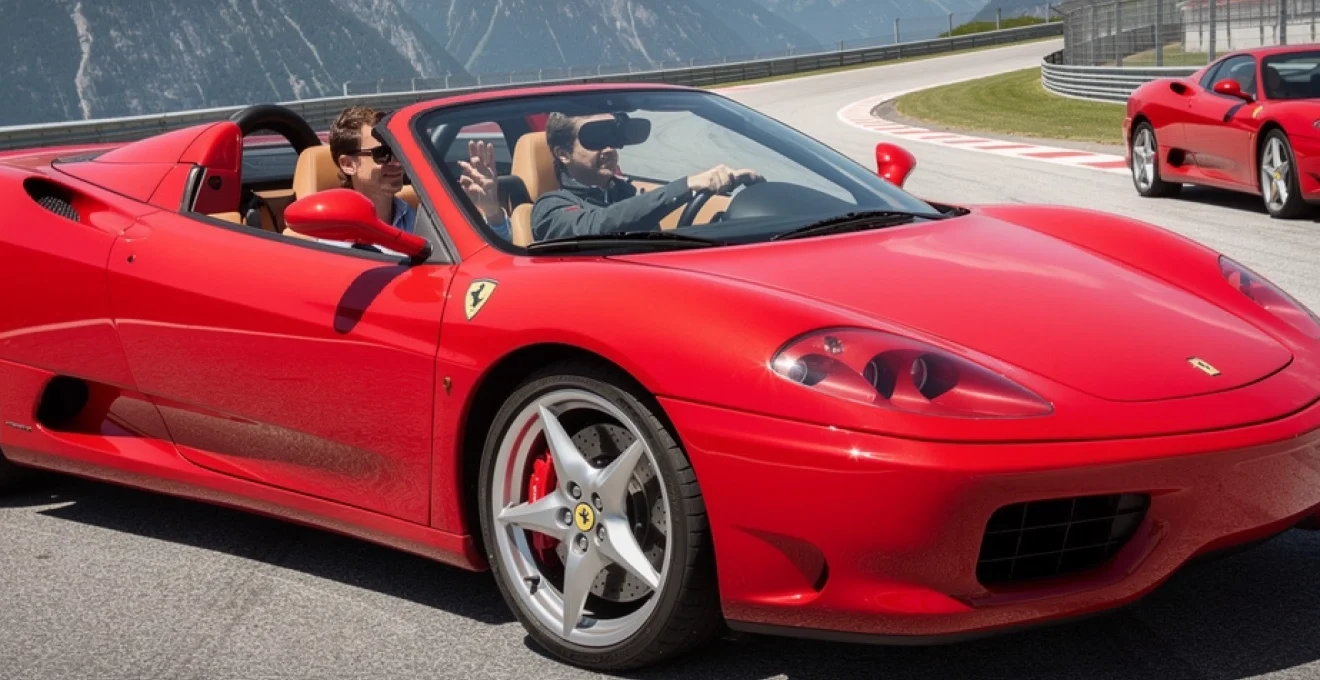
The Ferrari 360 Modena Spider sits at a sweet spot in Maranello’s history: modern enough to use regularly, analogue enough to feel truly mechanical. Roof down, the aluminium-bodied Spider combines a naturally aspirated V8, F1‑era styling cues and a level of usability that earlier Ferraris never quite managed. For many enthusiasts, it is the first open‑top V8 Ferrari that you could genuinely drive to the office, blast to the Alps and cruise through town in without drama.
Two decades on, the 360 Spider has also become one of the most interesting ways to enter Ferrari ownership. Values have stabilised, service knowledge is widespread and the model benefits from a strong supply of parts and specialist support. If you have ever wondered what it would be like to wear a Ferrari rather than simply drive one, the 360 Modena Spider is an enlightening place to start.
Ferrari 360 modena spider overview: evolution, design brief and positioning in maranello’s V8 lineage
The Ferrari 360 Modena Spider launched in 2000 as the open‑top evolution of the 360 Modena coupé, replacing the F355 Spider and introducing Ferrari’s first all‑aluminium spaceframe convertible. Around 7,565 Spiders were built globally between 2000 and 2005, forming roughly half of the 360 family’s 17,500‑car production. That makes it one of the more numerous Ferraris, but in modern supercar terms still a relatively rare sight on the road.
Positioned as a mid‑engined grand tourer rather than a hardcore track car, the 360 Spider sat below the contemporary V12s but above the 456 in terms of overt drama. Pininfarina’s design smoothed away the sharp edges of the F355, replacing pop‑up headlamps with fixed units and optimising airflow for downforce rather than pure theatre. At launch, some traditionalists dismissed the “jelly mould” shape, yet time has been kind to the 360’s clean surfacing and delicate proportions.
Under the rear glass lies the F131 3.6‑litre V8, a development of the F355 engine but with more torque, greater reliability and easier servicing. Period tests measured 0‑62 mph in around 4.5 seconds and a top speed near 183 mph, figures that still feel brisk today. The Spider retained this performance almost intact despite its folding roof and additional bracing, which speaks volumes about the underlying engineering.
Crucially, the 360 ushered Ferrari into a new era of usability. Electronic suspension control, more robust electrics and easier access to items like cambelts made ownership far less intimidating than with earlier V8 Ferraris. That shift is a key reason the 360 Modena Spider is now widely regarded as a modern classic rather than a fragile exotic.
Aluminium chassis and suspension engineering: modena spider’s spaceframe, rigidity and handling trade‑offs
Alcoa aluminium spaceframe architecture: torsional rigidity figures and impact on open‑top dynamics
The heart of the 360 Spider’s dynamic character is its aluminium spaceframe, co‑developed with Alcoa. Compared with the F355’s steel chassis, the 360’s structure was 40% stiffer and 28% lighter in coupé form. Even after the roof was removed and additional bracing added, the Spider still achieved impressive torsional rigidity for an early‑2000s cabriolet, typically quoted at around 40,000 Nm/deg.
For you as a driver, this matters because torsional rigidity translates into steering precision and predictable behaviour over bumps. In earlier convertibles, scuttle shake and flex could make the steering wheel shimmy over rough roads; the 360 Spider largely avoids that. There is still a touch more compliance than in the Modena coupé, but it feels more like a carefully tuned GT character than a structural compromise.
Think of the spaceframe as the skeleton of the car. The aluminium extrusions and cast nodes work together like bones and joints, distributing loads from the suspension pick‑up points throughout the chassis. The result is a platform that allows the suspension to do its job properly, which is where the 360 Spider really shines on a favourite B‑road or fast autoroute.
Double wishbone suspension geometry, anti‑roll bars and bushing setup versus 360 modena coupé
Both the 360 Modena and Spider use double wishbone suspension at each corner, with aluminium control arms, coil‑over dampers and electronically adjustable shock absorbers. The geometry is essentially identical between coupé and Spider, but Ferrari tweaked spring rates and anti‑roll bars to compensate for the convertible’s extra weight and slightly different weight distribution.
In practice, you get a balance of agility and compliance that remains impressive today. Steering response is immediate but not nervous, and body roll is well contained without feeling brittle. The suspension offers two modes, typically labelled Normal and Sport; Sport tightens the damping, sharpens body control and suits smoother surfaces, while Normal is more forgiving on broken tarmac or in town.
Bushing choice plays a critical role here. The 360 Spider uses relatively firm rubber bushings, offering accurate wheel control but enough isolation to avoid harshness. On older cars, worn bushes can dull this precision, so replacing tired components often restores the original sharpness. If you test‑drive a car that feels floaty or vague, assume that age, not design, is to blame.
Weight distribution, centre of gravity and mass penalty of the spider’s folding roof mechanism
The electrically operated soft‑top mechanism and additional chassis bracing add around 60‑70 kg compared with the 360 Modena coupé, giving a typical kerb weight in the region of 1,350 kg. Weight distribution remains close to ideal, at roughly 42:58 front to rear, thanks to the mid‑mounted engine and the relatively light aluminium structure.
Centre of gravity stays low because the roof mechanism is tucked tight against the rear bulkhead and above the gearbox. You may notice a fractionally softer turn‑in compared with a well‑sorted coupé, but the trade‑off is minimal. For open‑top driving on road, the extra mass is a footnote rather than a defining characteristic.
On track, the Spider will lean a little more on its outside rear tyre under power, and very committed drivers might prefer the slightly sharper response of the Modena. For most owners, the ability to drop the roof and listen to the V8 at 8,000 rpm more than compensates for the marginal performance difference.
Brembo braking system, ABS calibration and real‑world stopping distances for the 360 spider
Braking is handled by large Brembo ventilated steel discs at all four corners, clamped by four‑piston callipers and backed up by ABS and electronic brake distribution. Front discs measure around 330 mm, rears 310 mm, and period tests recorded 100‑0 km/h stopping distances of roughly 36 metres on quality tyres.
ABS calibration is refreshingly unobtrusive for an early‑2000s system. You can brake hard on a good surface without a chattering pedal, yet the system intervenes confidently on wet or uneven roads. As with any performance car, brake feel and power are highly dependent on pad choice, fluid quality and disc condition.
Many owners choose mild upgrades such as high‑friction pads and braided lines, which sharpen pedal response without compromising road usability. Unlike the later Challenge Stradale, there are no carbon‑ceramic discs here, but for road and occasional track use the standard Brembo system is more than capable when properly maintained.
3.6‑litre naturally aspirated V8 (F131B/F131BE): performance, sound signature and reliability patterns
Flat‑plane crankshaft, 5‑valve‑per‑cylinder heads and bosch motronic engine management
The 360 Modena Spider’s engine, coded F131B (and F131BE for some markets), is a 3,586 cc, 90‑degree V8 with an all‑aluminium block and heads. It uses a flat‑plane crankshaft, meaning the crank pins are arranged at 180 degrees rather than the cross‑plane layout found in most V8s. This configuration allows the engine to rev more freely while producing the distinctive Ferrari wail.
The cylinder heads feature five valves per cylinder – three intake, two exhaust – for a total of 40 valves. This design, shared with the F355, improves breathing at high rpm and supports the 8,500+ rpm capability. Fuel and ignition are managed by Bosch Motronic ME7.3, with individual cylinder knock control, drive‑by‑wire throttle and adaptive mapping for different conditions.
For you, the driver, the result is a responsive, free‑revving engine that feels more like a racing powerplant than a conventional GT motor. Throttle response is almost instantaneous, especially in the mid‑range, and the engine’s willingness to spin to the redline encourages a more involved, enthusiastic driving style.
Power and torque delivery: 400 PS output, 8,700 rpm redline and 0‑100 km/h acceleration benchmarks
Officially, the 360 Spider produces 400 PS (395 bhp) at 8,500 rpm and 275 lb ft (373 Nm) of torque at around 4,750 rpm. Independent dyno tests often show slightly lower wheel figures, as expected, but the real magic lies in the way the power is delivered. Below 3,000 rpm the engine is tractable but not especially urgent; from 4,000 rpm upwards, it hardens into a savage, linear push to the limiter.
Performance figures are still strong by modern standards. Contemporary road tests recorded 0‑100 km/h in 4.5 seconds for both manual and F1 Spider variants, with 0‑200 km/h in around 15 seconds and a top speed just below 295 km/h (183 mph). The Spider is only a fraction slower than the coupé, often within 0.1‑0.2 seconds in like‑for‑like tests.
If you are coming from a modern turbocharged car, the 360’s naturally aspirated character will feel different. There is less low‑down shove, but a far more satisfying build of intensity as revs rise. The long‑tail keyword many buyers search for – “Ferrari 360 Spider naturally aspirated V8 experience” – really comes alive above 6,000 rpm, where sound, throttle response and acceleration converge.
Exhaust system acoustics: stock manifolds, capristo and tubi style upgrades on the 360 spider
The standard exhaust system uses tubular manifolds feeding into catalytic converters and a rear silencer with vacuum‑controlled valves. Below roughly 4,000 rpm, the valves stay closed for a relatively civilised tone; above that, they open to unleash the full flat‑plane howl. Roof down, the effect is immersive without being oppressive at cruising speeds.
Many owners fit aftermarket systems such as Capristo or Tubi Style to enhance the sound. A Capristo Level 2 or 3 system, for example, sharpens the high‑rpm shriek and adds a harder edge to mid‑range acceleration, turning every tunnel into an event. Tubi tends to offer a slightly deeper, more classic Ferrari note, especially with sports cats.
From a practical standpoint, it is worth checking that any upgraded system is properly heat‑shielded and compliant with local noise regulations. An overly aggressive race system might impress at Cars & Coffee, but on a 1,000‑mile European road trip the drone could become fatiguing. For most road‑focused owners, a high‑quality sports rear box mated to standard or 200‑cell cats hits the sweet spot.
Common engine issues: header cracking, variator recalls and cambelt service intervals
Despite an excellent overall record, the 360 Spider’s engine does have a few known weak points. Early cars suffered from camshaft variator issues, which could – in extreme cases – lead to serious internal damage. Most affected engines were rectified under warranty, so you should look for evidence of variator replacement in the service history of pre‑2001 cars.
Another common issue is cracking exhaust manifolds (headers). The combination of high temperatures, thin wall construction and vibration can cause failures over time. Replacement with improved OEM or quality aftermarket headers is a popular long‑term fix, and many cars on the market will already have had this work done.
Cambelt servicing is a key maintenance item. Official guidance moved from three to five years when Ferrari introduced a Teflon‑coated belt, but many specialists recommend a four‑year interval as a sensible compromise. The good news is that, unlike the F355, the 360’s belts can be changed through a service panel without removing the engine. That saves substantial labour and makes regular belt changes far more likely to have been carried out correctly.
F1 electro‑hydraulic transmission vs gated manual: driving experience and long‑term ownership impact
Magneti marelli F1 gearbox hardware, shift logic and clutch wear metrics in urban versus track use
The optional F1 transmission in the 360 Spider is a conventional six‑speed manual gearbox operated by an electro‑hydraulic system from Magneti Marelli. Hydraulic actuators engage the clutch and select gears, while paddles behind the steering wheel replace the traditional gear lever. Mechanically, the internals are the same as the gated manual; the difference lies in the control system.
Shift speeds vary depending on throttle position and selected mode. At full throttle in Sport mode, upshifts feel snappy and decisive, with shift times quoted as low as 150 ms in later cars. At low speeds or partial throttle, the system attempts to smooth the engagement, which can feel slightly jerky until you adapt your driving style.
Clutch wear is the primary long‑term concern. Urban stop‑start driving and slipping the clutch on inclines accelerate wear; sympathetic use, with prompt engagement and minimal reversing, can see clutches last 25,000‑30,000 miles. Diagnostic tools can read clutch wear as a percentage, and anything above roughly 80% worn should be budgeted for replacement.
Iconic open‑gate 6‑speed manual: shift feel, market demand and price premiums on 360 spider examples
The manual 360 Modena Spider uses the iconic open metal gate, with a polished shift pattern that has become a symbol of analogue Ferrari driving. The shift feel is mechanical and slightly notchy when cold, loosening up as the oil warms. Well‑adjusted linkages and fresh gearbox oil make a noticeable difference to accuracy.
From an enthusiast perspective, the manual offers a more involved, tactile experience. Matching revs on downshifts, feeling the lever slide across the gate and hearing the metallic “click” as it finds the next ratio adds a layer of engagement that many modern paddle‑shift cars struggle to replicate.
In the market, this has translated into significant premiums. Estimates suggest only around 670 manual Spiders reached the US, with similar scarcity in right‑hand‑drive UK and EU markets. As a result, manual 360 Spiders can command £10,000‑£15,000 more than comparable F1 cars in the UK, and even higher spreads are seen in the US collector market where gated‑manual Ferraris have become highly prized.
Launch control, throttle blipping and drivability differences between early and late F1 software versions
Software evolution had a noticeable impact on the F1 gearbox. Early cars shipped with more conservative shift algorithms, which prioritised clutch longevity over outright speed. Later updates sharpened the logic, particularly in Sport mode, improving shift aggression and reducing hesitation.
Some late cars and retrofitted ECUs include rudimentary launch strategies, but the 360’s system is not as sophisticated as later dual‑clutch units. Aggressive standing‑start launches are unkind to the clutch and rarely necessary for road use. More relevant is how the system handles throttle blipping on downshifts, which improved with successive updates to deliver smoother, more intuitive behaviour.
If you are considering an F1 Spider, it is worth asking a specialist to confirm the software version and, where appropriate, update to the latest calibration. The difference in daily drivability between an early, unrefined setup and a later, optimised one can be significant, particularly in traffic or tight urban environments.
Retrofitting and converting F1 to manual: cost, complexity and implications for authenticity
Given the premium commanded by manual cars, some owners explore converting F1 360 Spiders to a gated manual configuration. Mechanically, the conversion is feasible because the underlying gearbox is the same, but it requires replacement of the clutch actuation system, installation of a pedal box with a clutch pedal, a gated shifter assembly and associated ECU changes.
Specialists report parts and labour costs that can easily exceed £15,000‑£20,000, depending on parts availability and the desire to use genuine Ferrari components. From a driving perspective, a well‑executed conversion can feel indistinguishable from a factory manual. However, from an originality standpoint the car will always remain an F1 car in the factory records.
That distinction can influence long‑term collectability. Purists tend to prefer factory manuals and may discount converted cars accordingly, even if the driving experience is excellent. If your priority is authentic investment potential, a genuine manual Spider remains the most desirable option. If the primary goal is driving pleasure at a lower entry price, a high‑quality conversion on a sound F1 base can make sense.
Cabriolet roof system, aerodynamics and cockpit comfort at speed in the 360 modena spider
The 360 Spider’s electro‑hydraulic soft‑top was carefully engineered to preserve the coupé’s sleek profile while offering genuine all‑weather usability. Operation is fully automatic: a single switch triggers a ballet of motors and rams that stows the fabric roof beneath a rigid tonneau panel. Cycle time is under 25 seconds, and the mechanism can be operated when stationary or at very low speeds.
Aerodynamically, the Spider retains much of the Modena’s stability. With the roof raised, drag and lift figures are close to the coupé’s, aided by underbody airflow management and integrated rear spoilers. Roof down, wind buffeting is well controlled up to motorway speeds, especially with the standard rear glass wind‑stop in place. You can comfortably converse with a passenger at 70 mph without shouting, which is not always the case in older open‑top supercars.
Cockpit comfort is another strength. The cabin offers more room than the F355 Spider, with improved seating ergonomics and better footwell space. Standard air conditioning copes adequately with continental summers, and the heating system is strong enough that you can enjoy “roof‑down winter drives” – a long‑tail keyword many owners actively seek – without freezing. The main wear points to watch are elastic straps in the roof fabric, hydraulic lines and the canvas itself; slow operation, binding or leaks indicate that attention is due.
Buying guide: pre‑purchase inspection checkpoints, market prices and specification desirability
Service history, clutch wear readings and suspension bush inspection on used 360 spider models
A 360 Modena Spider buying decision should start with documentation. Full service history from recognised specialists or main dealers is strongly preferable, with evidence of cambelt changes at sensible intervals (every 3‑5 years), annual oil services and brake fluid changes. A thick folder of invoices often tells a more honest story than a glossy advert.
On F1 cars, insist on a recent diagnostic print‑out showing clutch wear percentage and gear‑change counters. A reading below 50% suggests healthy life remaining; above 80% indicates impending replacement. Manual cars avoid this complexity but still benefit from clutch inspection, especially if the pedal feels unusually heavy or the bite point is inconsistent.
Suspension bushes and ball joints require close examination. Listen for clunks over bumps, feel for looseness in the steering and check for uneven tyre wear. Worn front wishbone bushes and dampers are common on higher‑mileage cars, but replacements transform the way the car feels. Budgeting for a suspension refresh as part of a purchase can be a smart move, particularly if you want the car to feel as tight as it did when new.
Rust, corrosion and bodywork checks on aluminium panels, undertrays and subframes
The 360 Spider’s aluminium body and spaceframe do not rust in the traditional sense, but they are not immune to corrosion. Stone chips, previous repairs and galvanic reactions (where aluminium meets steel fixings) can lead to bubbling paint and white powdery deposits, particularly around the front bulkhead, windscreen frame and lower door edges.
Underneath, composite undertrays can hide both damage and leaks. A proper pre‑purchase inspection should remove these trays to check for oil seepage, coolant stains and structural corrosion on steel subframes and brackets. While the main structure is aluminium, some ancillary components are still steel and can suffer in harsh climates or if the car has seen winter use.
Panel gaps and paint quality deserve scrutiny as well. Aluminium is harder to repair perfectly than steel, and poor‑quality bodywork can be costly to rectify. Look for colour mismatches under different lighting, signs of overspray on rubbers and uneven reflections along the flanks, all of which may indicate previous accident damage or cheaper resprays.
Desirable options and special trims: challenge rear grille, daytona seats and scuderia shields
Certain factory options and later upgrades increase both enjoyment and desirability. The perforated Challenge rear grille is highly sought after, as it improves engine bay cooling and visually links the Spider to the 360 Challenge Stradale. Cars without it can be retrofitted, but original fitment is a plus in collectors’ eyes.
Inside, Daytona‑style seats with their distinctive horizontal inserts are widely regarded as more attractive and supportive than the standard chairs. Electric adjustment and factory‑fit harness mounts are also desirable if you plan occasional track use. On the exterior, enamel Scuderia Ferrari shields on the front wings add visual drama and were a popular factory option.
Other attractive specification details include the optional modular or Challenge‑style wheels, carbon interior trim, coloured stitching and rare paint colours. That said, condition and history should always trump options; a straight, well‑maintained Spider in a classic Rosso or Argento shade will generally be a better buy than a tired car in an unusual hue.
Market analysis: UK, EU and US price trends, mileage sweet spots and colour combinations
Market values for the Ferrari 360 Modena Spider have firmed in recent years as enthusiasts recognise its place in Ferrari’s V8 evolution. In the UK, well‑maintained F1 Spiders typically start around £50,000, with exceptional, low‑mileage manual cars reaching into the £80,000‑£90,000 range. The EU market closely mirrors this, adjusted for local taxes and registration costs.
In the US, the hierarchy is similar: F1 Spiders sit at the entry level, with strong examples trading from the high $70,000s upwards, while rare manual cars can more than double that, particularly in prime colours and with documented low mileage. Collectors increasingly view the 360 as a gateway modern classic, boosting demand for the best cars.
Mileage is less critical than on some earlier Ferraris. A Spider that has covered 40,000‑60,000 miles with meticulous servicing can be a better proposition than a 10,000‑mile garage queen with deferred maintenance. For many buyers, the “sweet spot” is a car in the 25,000‑45,000‑mile range, used regularly enough to stay mechanically healthy but not heavily worn. Colour combinations such as Rosso Corsa with crema, Argento Nürburgring with blue and Nero Daytona with tan tend to command broader appeal, making future resale easier if you decide to move on.
Driving impressions and track performance: goodwood, silverstone and alpine passes in a 360 spider
On the road, the Ferrari 360 Modena Spider delivers a blend of precision and theatre that few cars can match. Imagine a dawn run across an Alpine pass: roof down, the V8 echoing off rock faces, steering alive with feedback yet never twitchy. The light nose and mid‑engine balance let you place the car confidently, while the engine pulls hard out of hairpins and sings towards 8,500 rpm on the short straights between bends.
On circuits like Goodwood or Silverstone, the Spider’s character shifts from grand tourer to willing track companion. Turn‑in is crisp, and the chassis communicates clearly as you approach the limit of grip. Smooth inputs are rewarded; abrupt throttle lifts mid‑corner remind you that this is still an old‑school rear‑drive supercar. In Sport mode, the dampers keep the body neatly tied down through fast changes of direction like Silverstone’s Maggotts/Becketts complex.
For you as a driver, the open‑top element adds a unique dimension to track days and spirited road drives alike. Hearing the engine and tyres directly, feeling the airflow over the cabin and smelling the hot brakes after a session all contribute to a deeper, more visceral connection with the car. It feels less like operating a high‑performance appliance and more like collaborating with a finely tuned mechanical instrument, an experience that continues to resonate long after the engine has cooled in the pit lane or on the driveway at home.