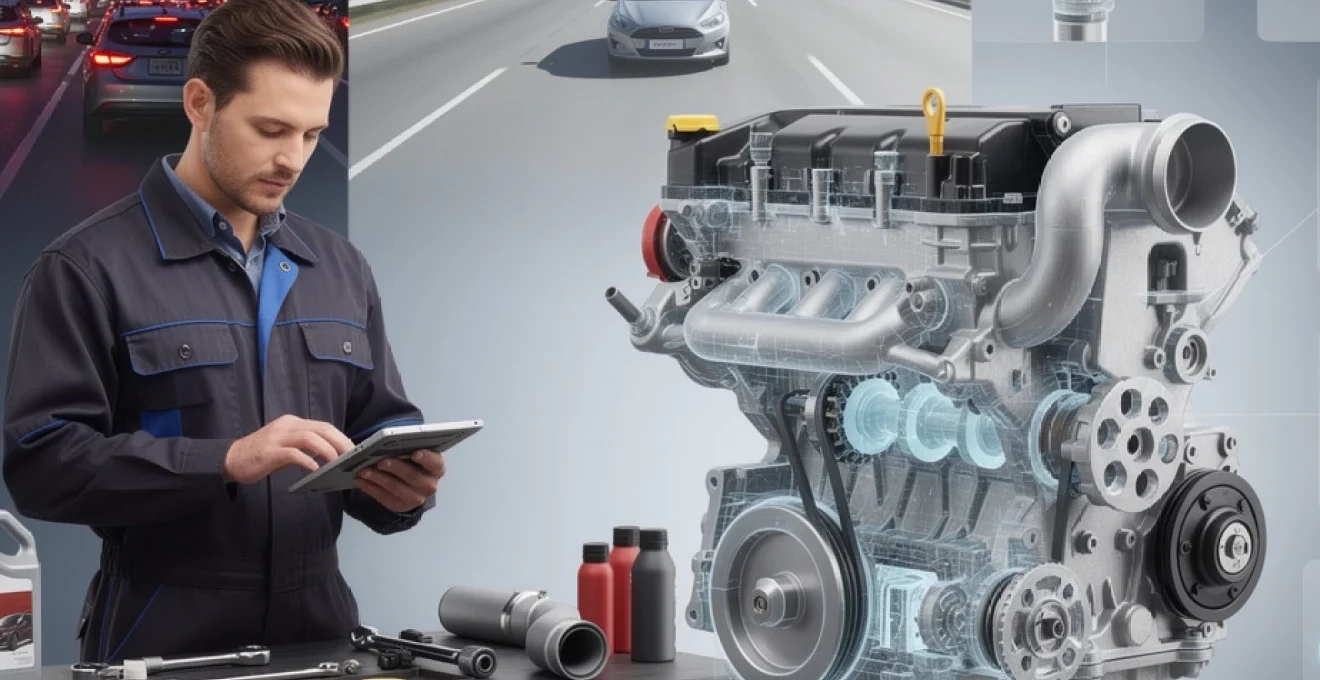
The Ford 1.0 EcoBoost has a reputation for being both clever and slightly demanding. It squeezes the performance of a traditional 1.6‑litre petrol into a tiny three‑cylinder block, yet owners naturally want to know how long it will last in the real world. With many cars now passing 150,000 miles and a fair number heading beyond 200,000, the picture is clearer than it was when the engine launched in 2012. Life expectancy, however, varies enormously depending on driving style, service discipline and whether the car falls into the early “problem years”. Understanding those differences is the key to deciding how far you can realistically push a 1.0 EcoBoost before facing a major overhaul or replacement.
Ford 1.0 EcoBoost engine life expectancy under real-world driving conditions
Average mileage to major overhaul on ford fiesta, focus and EcoSport 1.0 EcoBoost engines
Across owner reports from the UK and mainland Europe, a well‑maintained Ford 1.0 EcoBoost in a Fiesta, Focus or EcoSport typically reaches between 150,000 and 200,000 miles before any major internal work is needed. Many units remain on the original turbocharger, pistons and timing system at 180,000+ miles, especially when serviced on time with the correct oil. Independent specialists regularly encounter Fiestas used as driving‑school cars or taxis with 220,000–260,000 miles on the clock.
At the opposite end of the scale, engines exposed to neglect sometimes fail before 70,000 miles. Common triggers are missed oil changes, using non‑spec oil, ignoring coolant loss, or stretching intervals far beyond the Ford schedule. In workshop experience, roughly 70–80% of early catastrophic failures trace back to lubrication or cooling issues rather than inherent design defects. That is why the service history on a used 1.0 EcoBoost often tells you more about life expectancy than the mileage itself.
Urban stop‑start usage versus motorway cruising and impact on engine lifespan
Driving profile has a dramatic effect on 1.0 EcoBoost longevity. An engine covering 25,000 motorway miles a year can be in better shape at 150,000 miles than an urban car at 70,000 miles. Short, cold trips under 10 minutes prevent oil and coolant from stabilising at operating temperature, encouraging condensation and fuel dilution in the sump. Over time this degrades the WSS‑M2C948‑B oil film and accelerates wear on bearings, timing components and turbocharger.
By contrast, steady motorway cruising lets the small three‑cylinder settle into its most efficient regime: constant load, stable temperatures and continuous lubrication. Several high‑mileage case studies from taxi and delivery fleets show original engines beyond 250,000 miles with motorway‑biased use and oil changes every 5,000–6,000 miles. If your usage is mostly city‑based, you should assume a shorter Ford 1.0 EcoBoost engine life expectancy unless service intervals are tightened and the car is routinely given longer “clear‑out” runs.
Life expectancy differences between 100 PS, 120 PS and 140 PS 1.0 EcoBoost variants
The 1.0 EcoBoost family shares the same basic architecture across 100 PS, 120 PS and 140 PS outputs. Higher power levels are achieved mainly through boost control and calibration rather than wholesale hardware changes. In simple terms, the 140 PS version runs closer to the outer edge of the design envelope in daily use, particularly when drivers make full use of the extra performance.
In practice, there is no consistent statistical evidence that the 140 PS engines routinely fail earlier, but specialists do note that remapped or heavily worked 140 PS units are over‑represented in piston, ring land and turbo failure cases. If you own a 100 PS or 120 PS variant and drive sensibly, there is slightly more “headroom” in the design, which often shows up as less oil consumption and slower wear at high mileage. For drivers prioritising maximum life over power, the lower‑output variants, kept stock, tend to offer more comfortable margins.
Comparing UK, EU and US owner-reported mileage data on 1.0 EcoBoost longevity
Owner‑reported mileage data from the UK, EU and US gives an interesting spread. In the UK, cars in the 2013–2016 bracket often show 120,000–180,000 miles with mixed reliability depending on how early coolant and timing belt issues were addressed. Continental European owners, with higher average motorway mileage, frequently report longer distances before problems, with several Focus and B‑Max 1.0 EcoBoost examples above 220,000 miles on original internals.
In North America, where the engine saw more limited use in the Focus and EcoSport, major Ford 1.0 EcoBoost engine recall campaigns around the wet belt and oil pump drive have prompted more proactive servicing. US engines, when maintained correctly, appear to have similar life expectancy bands, although the sample size is smaller. Overall, the engine’s underlying durability is comparable across regions; the real variable is adherence to oil specification and attention to early warning signs of overheating or oil starvation.
High-mileage case studies: ford 1.0 EcoBoost engines exceeding 150,000 and 200,000 miles
High‑mileage examples provide valuable proof that the Ford 1.0 EcoBoost engine life expectancy can comfortably exceed 200,000 miles. Taxi and private‑hire Fiestas in some UK cities have logged 260,000–300,000 miles on the original engine and turbocharger. Their common habits are disciplined oil changes at half the official interval, premium synthetic oil to Ford spec, and avoidance of hard acceleration when the engine is cold.
On the other hand, there are Focus 1.0 EcoBoost owners who have experienced head gasket failure or timing belt disintegration well under 60,000 miles, almost always coupled with irregular servicing or repeated overheating events. The contrast highlights a simple truth: this small, high‑specific‑output engine can be long‑lived, but only if treated less like a disposable appliance and more like a precision component that relies on clean oil and stable temperatures to survive.
Key engineering design features of the ford 1.0 EcoBoost that influence durability
Turbocharger architecture, boost pressure levels and bearing wear patterns over time
The 1.0 EcoBoost uses a compact, high‑speed turbocharger that can spin at over 150,000 rpm under full load. This single‑scroll unit is designed for low inertia and fast response, but the flip side is intense thermal and mechanical stress on the bearing system. The turbo relies on a constant supply of clean, high‑quality oil at the correct viscosity. Any sludge, varnish or aerated oil rapidly damages the plain bearings and thrust surfaces.
Over time, turbocharger bearing wear tends to follow a predictable pattern: minor radial play, small oil leaks into the compressor or turbine housing, and eventually loss of boost and smoke under load. Engines running extended service intervals or non‑approved oils show these symptoms far earlier. Allowing the engine to idle for 20–30 seconds after hard motorway use helps reduce heat soak and oil coking in the bearing housing, adding thousands of miles to turbo life.
Direct fuel injection system, injector coking and long-term combustion chamber cleanliness
The direct injection system on the 1.0 EcoBoost injects fuel straight into the combustion chamber at high pressure. This improves thermal efficiency and knock resistance, but it changes how deposits form. On older port‑injection engines, fuel washed over the valves and kept them relatively clean. Here, the back of the intake valves never see fuel; instead, they are bathed in oily crankcase vapour from the PCV system.
Over tens of thousands of miles, this leads to carbon build‑up on valve stems and ports, often noticeable from around 80,000–100,000 miles. Symptoms include rough idle, sluggish response and reduced fuel economy. Professional walnut‑shell blasting or chemical intake cleaning restores flow by removing those deposits. Combustion chambers themselves tend to stay relatively clean if high‑quality fuel is used, but low‑speed pre‑ignition (LSPI) can become a risk if poor fuel and low‑grade oil are combined, especially under high boost at low rpm.
Timing belt-in-oil (BIO) design, degradation mechanisms and replacement intervals
One of the most controversial design choices is the “belt‑in‑oil” timing system on early 1.0 EcoBoost engines. Ford opted for a wet belt configuration, running the timing belt and oil pump drive in engine oil to reduce friction, noise and packaging size. In theory, the belt would last the lifetime of the engine. In real‑world use, however, some belts began to degrade much earlier, shedding rubber particles into the sump.
Those particles can block the oil pickup strainer, starving the top end and turbo of lubrication. Once oil pressure drops, camshaft journals, hydraulic lifters and turbo bearings can fail rapidly. Updated service guidance in several markets has shortened belt replacement intervals, and later engines moved to a timing chain layout instead. For BIO‑equipped engines, ignoring the belt means betting the entire engine on a component that quietly deteriorates out of sight.
Integrated exhaust manifold and its effect on thermal loading and component fatigue
The 1.0 EcoBoost uses an integrated exhaust manifold cast into the cylinder head. This helps warm the catalyst quickly, improves cold‑start emissions and allows closer coupling of the turbocharger. The downside is concentrated thermal loading in the head casting and valve seats. Under heavy, sustained boost, the head and manifold area run extremely hot, especially if coolant flow is compromised.
On early engines with known cooling‑system weaknesses, this combination contributed to head cracking and gasket failure. Revisions to coolant routing, sensor calibration and hardware have reduced the incidence, but the design still demands respect. Long climbs at full throttle, towing close to maximum capacity and ignoring rising coolant temperature readings all increase thermal fatigue. Allowing short periods of lighter load after hard driving gives metal components a chance to cool more evenly and extends their fatigue life.
Three-cylinder NVH characteristics, balance shaft design and crankshaft bearing life
Three‑cylinder engines naturally generate more vibration than four‑cylinder units because of their firing order and inherent secondary imbalance. The 1.0 EcoBoost counteracts this with an offset crankshaft and a carefully tuned balance shaft. This reduces noise, vibration and harshness (NVH) to acceptable levels for a modern supermini or compact SUV, but those forces still travel through the crankshaft, main bearings and engine mounts.
As mileage increases, tired mounts and worn auxiliary components can allow more of that vibration into the cabin, leading some owners to assume the engine is “tired” when the bottom end is still sound. In reality, crankshaft bearing life is generally good when oil quality is maintained, thanks to the stiff block design and well‑supported journals. Excessive low‑rpm lugging in high gears, however, does increase bearing loads, so using the gearbox properly is a simple way to reduce long‑term stress.
Known reliability issues and failure modes affecting ford 1.0 EcoBoost engine life
Coolant system failures on early 1.0 EcoBoost (e.g. focus, B-Max) and cylinder head cracking
Early 1.0 EcoBoost units in models like the Focus and B‑Max developed a reputation for coolant system problems. In some cases, weak hoses, degas bottle issues or poorly routed pipes allowed coolant to escape gradually, with no obvious external leak. As the level dropped, the engine overheated, often with little warning beyond a brief temperature spike or a warning message that some drivers missed.
Repeated or severe overheating on these aluminium heads leads to warping, cracked fire rings on the gasket and, in bad cases, cracking around the exhaust valve seats. Once compression gases enter the coolant or coolant seeps into the combustion chamber, damage accelerates quickly. Later production runs incorporated improved components and, in some regions, recall action. Nonetheless, any unexplained coolant loss on a 1.0 EcoBoost should be treated as urgent and investigated immediately.
Oil starvation, turbocharger failure and sludge build-up with extended service intervals
Oil neglect is one of the main killers of Ford 1.0 EcoBoost engines. The combination of high specific output, turbocharging and small sump capacity means the oil works extremely hard. Running 12,000–15,000 miles between changes, especially in cold, stop‑start city use, encourages sludge formation and viscosity breakdown. As sludge accumulates, the fine mesh on the oil pickup can clog, starving critical parts of oil.
Once flow drops, the turbocharger is often the first victim, followed by camshafts and, eventually, crank bearings. Specialist garages have uncovered engines at 60,000–70,000 miles where the rocker cover interior looks more like a 250,000‑mile unit due to neglected service. The cost difference between extra oil changes and a turbo or engine rebuild is enormous, turning penny‑pinching into very expensive false economy.
Timing belt delamination, oil contamination and catastrophic top-end engine damage
As noted earlier, the belt‑in‑oil system can shed material into the lubrication circuit if the belt begins to delaminate. Initial symptoms may be subtle: slight ticking from the timing area, minor oil pressure warnings under hot idle, or sporadic camshaft position faults. If left unaddressed, the oil pickup blocks further, and the engine can rapidly suffer from top‑end seizure.
Catastrophic cases often present as sudden loss of power, rattling from the cam box and, ultimately, timing loss if the belt jumps teeth or fails outright. The result is bent valves, damaged pistons and, in extreme scenarios, a completely scrap cylinder head and block. Respecting updated replacement intervals and using the correct oil (which slows chemical attack on the belt material) dramatically reduces the likelihood of this scenario on BIO‑equipped engines.
Carbon build-up on intake valves in GDI engines and long-term performance loss
Gradual intake valve carbon build‑up is less dramatic than a snapped belt but still affects long‑term reliability and driveability. As deposits thicken, airflow into the cylinder becomes disturbed, reducing volumetric efficiency. Owners may notice the car feels “lazy”, with poorer fuel economy and hesitation under load. Misfire codes on one or two cylinders are also possible as deposits disrupt mixture preparation.
Direct injection makes this more or less unavoidable beyond a certain mileage, although the rate varies. Engines regularly run on quality fuel and occasionally driven at sustained higher rpm on the motorway tend to fare better. Professional cleaning every 80,000–100,000 miles can restore lost performance and protect exhaust components by reducing unburnt hydrocarbons caused by poor mixture quality at the valve.
ECU mapping, overboost events and increased thermal stress on pistons and ring lands
The factory ECU mapping includes controlled overboost strategies, allowing short bursts of extra torque for overtaking. In stock form, these events are within the design safety margins. Problems arise when the ECU is remapped for higher boost without appropriate safeguards, or when poor‑quality fuel and low‑grade oil allow knock and LSPI events at high load.
Repeated uncontrolled overboost and knock place extreme thermal and mechanical stress on pistons, ring lands and con‑rods. Cracked pistons, broken rings and heavy bore wear are common findings in heavily tuned engines used hard. Even without remaps, labouring the engine at low rpm in high gears while demanding full throttle can over‑stress the small pistons, so sensible gear selection and good fuel play a surprisingly large role in preserving the rotating assembly.
Proper calibration, high‑quality fuel and correct oil specification work together to keep combustion temperatures and pressures within the safe operating window for the 1.0 EcoBoost.
Service schedule, lubricants and maintenance practices that extend 1.0 EcoBoost lifespan
Choosing the correct ford WSS-M2C948-B specification oil and its effect on wear rates
Oil choice is not a detail on the 1.0 EcoBoost; it is central to its survival. Ford specifies an oil meeting WSS‑M2C948‑B for this engine, typically a 5W‑20 low‑viscosity, high‑detergent synthetic. This formulation balances rapid cold flow, shear stability at high rpm and strong deposit control. Using generic supermarket oil, even if the viscosity looks similar, risks inadequate film strength and poorer resistance to oxidation and sludge.
Independent tests and field experience show that engines consistently filled with the correct spec oil have cleaner internals, less varnish and slower wear on camshaft lobes and turbo bearings. If you intend to keep the car long‑term, treating the correct oil as non‑negotiable is a straightforward way to push the realistic Ford 1.0 EcoBoost engine life expectancy toward the upper end of the 200,000‑mile band.
Optimising oil change intervals for high-mileage 1.0 EcoBoost engines in UK conditions
Official oil change intervals have to balance fleet costs and marketing claims with engineering reality. For UK conditions, with a high proportion of short, cold trips and congested traffic, a conservative approach is sensible. Many specialists recommend 5,000–6,000‑mile (or 6‑monthly) oil changes, particularly once the engine passes 60,000 miles or if most use is urban.
If your driving is predominantly motorway, stretched intervals up to 8,000–9,000 miles can be acceptable with high‑quality oil and a clean service history. Pushing to 10,000+ miles between changes, especially in a BIO‑equipped early engine, significantly increases the risk of sludge, oil pickup blockage and timing belt degradation. For the relatively modest cost of extra services, you are effectively buying additional years of usable engine life.
Coolant flush procedures, correct coolant types and preventing overheating-related failures
Coolant often receives less attention than oil, yet overheating is one of the quickest ways to destroy a 1.0 EcoBoost. Using the correct Ford‑approved coolant mixture, maintaining the proper concentration and refreshing it at the recommended interval helps prevent internal corrosion, scale build‑up and hot spots around the exhaust ports. Air locks after DIY coolant changes are another hidden danger, as they can create localised boiling even when the gauge looks normal.
A proper coolant flush for this engine includes bleeding procedures to remove trapped air and careful checks of hoses, clamps and the expansion bottle. Any sign of unexplained coolant loss, sweet smells in the cabin or steam from the exhaust on start‑up should trigger an immediate pressure test. Early intervention at this stage can be the difference between a cheap hose replacement and a four‑figure head‑gasket repair.
PCV system inspection, intake cleaning and mitigating LSPI in the 1.0 EcoBoost
The positive crankcase ventilation (PCV) system routes blow‑by gases and fine oil mist back into the intake. Over time, this contributes to intake and valve deposits. A sticking PCV valve or blocked hoses can increase crankcase pressure, forcing oil past seals and worsening consumption. Periodic inspection and cleaning of PCV components, along with intake tract cleaning, keeps the system functioning correctly.
Mitigating low‑speed pre‑ignition is another reason to care about PCV and deposits. LSPI tends to occur at low rpm, high load and high boost when droplets of oil and fuel ignite prematurely. Using LSPI‑resistant oil (which the correct Ford spec is formulated to be), avoiding full‑throttle acceleration from very low engine speeds, and keeping the intake reasonably clean all reduce the risk of damaging LSPI events that can crack pistons.
Dealer versus independent specialist servicing and impact on long-term engine reliability
Main‑dealer servicing offers access to the latest technical service bulletins, software updates and genuine parts, which can be valuable on a relatively complex engine like the 1.0 EcoBoost. However, independent specialists with deep experience of EcoBoost failure modes often go beyond the basic checklist, inspecting oil pickup strainers, monitoring timing belt condition more proactively and advising shorter oil intervals.
For long‑term reliability, the ideal scenario is a service provider who both understands the engine’s inherent design features and is willing to tailor maintenance to your usage pattern. Whether that is a dealer or an independent matters less than their familiarity with issues like wet belt degradation, coolant system weak points and carbon build‑up. Asking targeted questions about how they handle these specific items is often more revealing than simply comparing labour rates.
Longevity on a 1.0 EcoBoost is rarely about one heroic repair; it is usually the result of dozens of small, correct decisions made throughout the car’s life.
Driving style, load profiles and operating temperature management
Driving style has as much influence on Ford 1.0 EcoBoost engine life expectancy as the service book does. Treat the engine like a naturally aspirated 2.0‑litre and it will protest; use the gearbox and allow it to warm up gently and it can run for hundreds of thousands of miles. Think of it like a distance runner rather than a sprinter. Constant full‑throttle acceleration from low rpm, especially in higher gears, heaps enormous cylinder pressures onto small pistons and rods. Short‑shifting and lugging the engine below 1,500–1,700 rpm under heavy load only magnify the stress.
By contrast, keeping the revs in the 2,000–3,000 range for normal driving, waiting a minute or two before using full boost on a cold morning, and allowing 20–30 seconds of gentle running before shutdown after hard use all help stabilise temperatures and oil flow. Regular longer journeys let the oil reach and maintain its designed operating temperature, burning off condensation and fuel dilution. If most of your trips are short, adding a weekly 20–30‑minute dual‑carriageway run is one of the simplest ways you can support long‑term reliability. In essence, you are managing heat cycles: reducing violent spikes and giving the metal a calmer, more predictable life.
Comparative longevity: ford 1.0 EcoBoost versus naturally aspirated and rival small turbo engines
How does the Ford 1.0 EcoBoost compare with older naturally aspirated engines and rival small turbo units from other brands? On paper, traditional non‑turbo engines often reached 200,000 miles with minimal fuss, partly because they produced less power per litre and operated under lower thermal and mechanical stress. The trade‑off was slower performance and higher fuel consumption. The 1.0 EcoBoost, like other modern downsized engines, reverses that balance: strong performance and excellent efficiency at the cost of more stringent maintenance requirements.
Rival three‑ and four‑cylinder turbo engines from Volkswagen, PSA, Renault and others show similar patterns: long life when serviced correctly, but sensitivity to neglect, extended oil intervals and poor‑quality lubricants. The Ford unit is neither uniquely fragile nor indestructible; it simply has less tolerance for abuse than a lazy, large‑capacity naturally aspirated engine from a previous era. If you are willing to follow best‑practice on oil, cooling, driving style and early fault diagnosis, the realistic Ford 1.0 EcoBoost engine life expectancy stands shoulder‑to‑shoulder with its peers and, in many cases, exceeds 200,000 miles without internal overhaul.