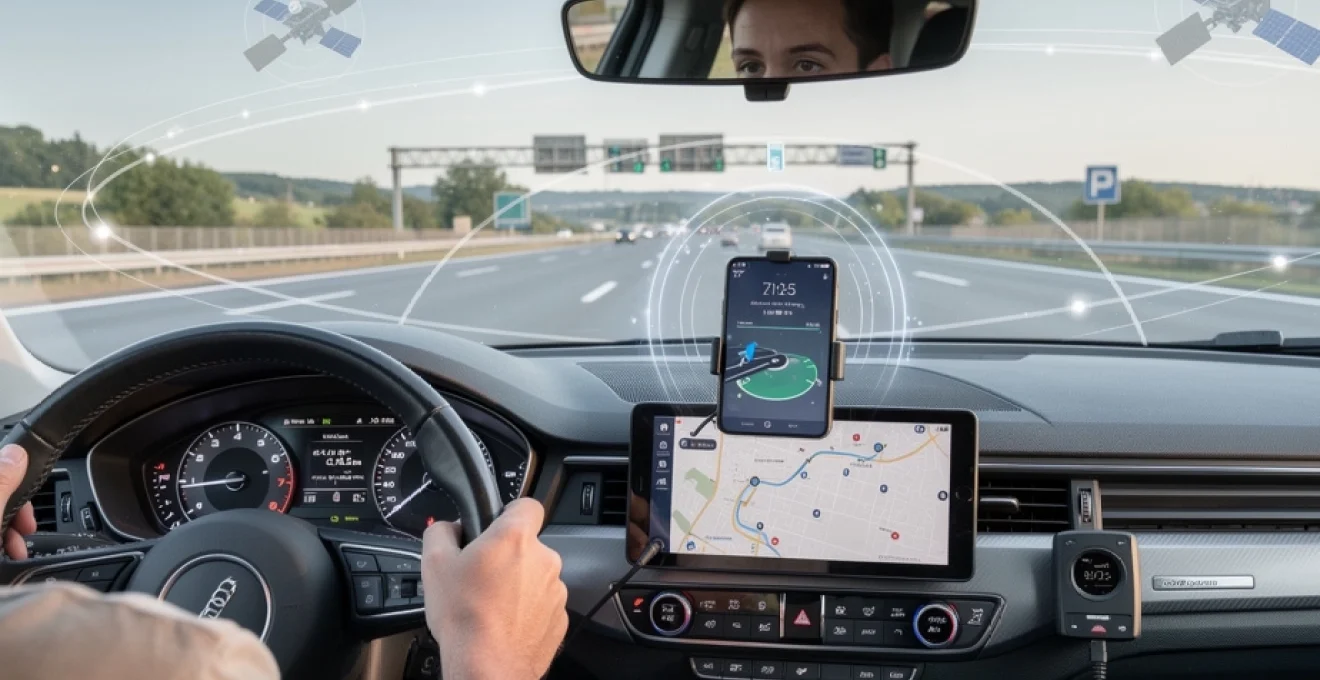
If you have ever glanced from a dashboard speedometer to a GPS speed read-out and seen different numbers, the question is obvious: which one is telling the truth? As vehicles gain more driver assistance technology, connected navigation and even mandatory speed limiters, understanding how speed is measured is more than a matter of curiosity. It affects how you drive, how you set cruise control, how accurate your dashcam evidence might be and even how safe you are around enforcement cameras. Modern vehicles combine multiple sources of speed data, and each has its own strengths, weaknesses and bias.
GPS-based speedometers promise almost laboratory-grade precision in the right conditions, whereas traditional vehicle speedometers are intentionally pessimistic and often read higher than reality. Yet GPS has its own blind spots: urban canyons, tunnels, steep gradients and lag under hard acceleration. Once you understand the core principles behind ground speed, wheel speed and indicated speed, you can decide which number to trust in different scenarios and how to configure your own equipment for road, off-road and motorsport use.
Core principles of GPS speed measurement vs traditional vehicle speedometers
How GPS receivers calculate ground speed using satellite doppler shift and positional deltas
Consumer GPS speedometers typically rely on two methods for estimating ground speed: positional deltas and Doppler shift. In positional mode, the receiver determines your position several times per second and computes speed as distance travelled over the time interval. Under open sky, horizontal accuracy around 3–5 metres is common, and speed accuracy can reach about 0.2 km/h at constant velocity. Many modern chipsets also use the Doppler shift of satellite signals, which measures how quickly you are moving relative to the satellites themselves rather than only relative to the ground track.
In practice, that means a good GPS speedometer can report very stable speeds on a straight motorway at constant throttle. Because the error in position is often quite stable over short time windows, changes in position are actually measured more consistently than absolute location. That is why a cheap handheld GPS can show speed to within ±0.5 mph even if the dot on the map is a few metres off the road. Problems appear when the route twists tightly, reception drops or elevation changes sharply, as the straight-line approximation between samples breaks down.
Mechanical vs electronic vehicle speed sensors: VSS, gearbox output, and wheel speed pickups
Traditional vehicle speedometers do not know or care where you are on the globe. They infer speed from how quickly parts of the drivetrain spin. Older cars used a mechanical cable driven by the gearbox; rotation induced a magnetic field in the head unit, moving the needle. Modern vehicles rely on a VSS (Vehicle Speed Sensor), usually a hall-effect or reluctance sensor that counts pulses from a toothed wheel on the gearbox output or from wheel hubs.
These pulses are sent to the ECU and the instrument cluster over the CAN‑bus, where software converts them into an indicated speed. That conversion assumes a certain final drive ratio and, critically, a certain rolling circumference for the tyres. Change tyre size or final drive and the indicated speed shifts. Electronic systems are less prone to mechanical wear than cables, but they are still only as accurate as their calibration. Because many cars share platforms and drivetrains, manufacturers often choose a conservative calibration rather than bespoke precision for every variant.
Instantaneous speed readings vs averaged GPS speed over time intervals
Another key difference between GPS speedometers and vehicle speedometers is how each handles time. The speed signal on the CAN-bus is effectively near-instantaneous, updating 10–20 times per second, sometimes faster in performance vehicles. That allows quick feedback under brisk acceleration or braking. By contrast, many consumer GPS modules run at 1 Hz, meaning they update speed once per second and often include some averaging or smoothing to avoid flicker.
On a steady run, a one-second average is almost indistinguishable from instantaneous speed. Under rapid throttle changes, however, you may notice that the GPS number lags slightly behind the needle. This is especially clear during 0–60 mph acceleration tests, where GPS-based time slips often show slightly delayed speed milestones compared with the dash. For normal driving, the lag is small enough that most drivers never consciously notice it, but it matters if you rely on GPS speed for performance testing or motorsport telemetry.
Differences between ground speed, wheel speed and indicated speed on analogue clusters
Ground speed, wheel speed and indicated speed are often used interchangeably in conversation, but they are not the same thing. Ground speed is how fast you move relative to the Earth’s surface. GPS speedometers aim to report this value directly, regardless of wheelspin, slip or tyre deformation. Wheel speed is how quickly the tyre rotates; under hard acceleration on a wet road, this can exceed ground speed significantly.
Indicated speed is what the speedometer actually shows, usually on an analogue or digital cluster. By law in many regions, including under UNECE Regulation 39, the indicated speed must never be lower than true ground speed and can legally over-read by up to 10% plus 4 km/h. In other words, if true speed is 100 km/h, a compliant speedometer may show anything between 100 and 114 km/h. Manufacturers therefore deliberately bias indicated speed upwards to ensure that production tolerances, tyre wear and optional wheel sizes never cause under-reading.
Accuracy comparison: GPS speedometers and OEM vehicle speedometers in real-world driving
Typical error margins: ±1 km/h GPS modules vs 4–10% OEM over-read under UNECE regulation 39
In controlled tests, many modern GPS modules achieve speed errors below ±1 km/h at constant speeds, especially above 30 mph. Some specialist motorsport units even claim 0.1 mph resolution in ideal conditions. OEM vehicle speedometers, by contrast, are allowed to over-read significantly. Under UNECE R39, the formula 0 ≤ (V1 – V2) ≤ 0.1 × V2 + 4 km/h defines the permitted window between indicated speed V1 and true speed V2.
Real-world checks frequently show cars reading 3–8% high. A dashboard might display 70 mph while a GPS device shows 66–68 mph. Road test data from magazines confirms this pattern: indicated 60 mph is often a genuine 57–58 mph, and an indicated 120 mph may correspond to 110–115 mph. Extremely high-end vehicles sometimes aim for near-perfect calibration, but they are the exception rather than the rule. For day-to-day driving, you are almost always travelling slower than your speedometer suggests.
Influence of wheel diameter, tyre wear and pressure on vehicle speedometer calibration
Speedometers are calibrated assuming the factory tyre size and a nominal tyre pressure. Change those assumptions and the rolling circumference changes, taking speed read-outs with it. Fit a smaller-profile tyre and, at a given wheel rpm, the vehicle covers less ground, so true speed drops while indicated speed stays the same. The result is more pessimism and a larger over-read.
Conversely, fit larger off-road tyres on a 4×4 and the vehicle travels further per wheel revolution. That means the indicated speed can under-read, potentially putting you the wrong side of a speed limit. Tyre wear also matters: as tread wears down, effective diameter shrinks a little, increasing over-read marginally. Tyre pressure has a smaller effect but can still contribute; an under-inflated tyre deforms more and behaves like a smaller wheel. Although manufacturers build in safety margins, substantial tyre or wheel changes can push a speedometer outside its expected range.
Performance of GPS speed in urban canyons, tunnels and heavy tree cover
GPS speed measurement relies on reliable, timely satellite signals. In open countryside under clear skies, reception is usually excellent, and speed precision is high. In dense city centres with tall buildings—so-called urban canyons—signals reflect off glass and steel, creating multipath errors. The receiver may temporarily think you are slightly off your true position, and the resulting speed calculation can spike or wobble.
Tunnels remain a full blind spot for most standalone GPS devices; as soon as line-of-sight to satellites is lost, speed freezes or drops to zero. Even heavy tree cover and bad weather can degrade accuracy, though modern multi-constellation receivers cope far better than early-generation units. Navigation apps often smooth these glitches with filtering algorithms, but you may notice delayed or noisy speed indications compared with a rock-steady dashboard speedometer.
Test cases: motorway cruise control at 70 mph compared with garmin, TomTom and waze read-outs
Consider a common real-world scenario: you set cruise control to an indicated 70 mph on a relatively flat motorway. Many drivers then check a Garmin or TomTom unit – or a smartphone app such as Waze – and see 66–68 mph reported. Over long journeys, that difference is remarkably consistent, confirming both the over-reading nature of OEM speedometers and the stability of GPS-based measurements at steady speeds.
Practical tests show similar behaviour across a range of vehicles: one car might show 83 mph on the cluster, cruise set at 80 mph and GPS-based apps hovering at 77–78 mph. Another might be almost spot-on, especially if it has been checked on a rolling road. From a professional perspective, GPS speed is usually the closest approximation to true ground speed in these constant-speed scenarios, assuming good reception.
Latency and update rate: 1 hz GPS chips vs 10–20 hz CAN-bus speed signals
Update rate is one area where vehicle systems have the upper hand. Typical automotive networks carry speed data at 10–20 Hz, and some performance ECUs broadcast at even higher rates. That allows stability control, ABS and adaptive cruise systems to react quickly. Entry-level GPS chips, by contrast, often work at 1 Hz. Even premium consumer satnavs from established brands tend to top out at 5–10 Hz.
For daily driving, the roughly one-second latency of a 1 Hz GPS unit is rarely problematic, but it becomes visible if you use GPS to monitor rapid acceleration, braking or corner exit speeds. Higher-rate GPS loggers solve this by sampling position and Doppler data several times per second, then fusing them for smooth, low-lag speed output. If you rely on GPS speed for track days or competitive motorsport, choosing a device with a 10 Hz or higher rate is crucial.
Standards, legislation and type-approval affecting speedometer and GPS readings
UNECE R39, FMVSS 101 and EU directives governing factory-fitted speedometers
Factory speedometers are not just engineering choices; they are legal instruments governed by standards such as UNECE R39 in Europe and FMVSS 101 in the United States. These regulations define how clearly speed must be displayed, the units used and the acceptable accuracy bands. In the UK and wider EU, the core requirement is that indicated speed never under-reads. The upper tolerance is the “10% plus 4 km/h” formula already mentioned.
Because of this regulatory pressure, manufacturers design in pessimism. It would be technically trivial to calibrate a speedometer that is perfectly accurate when new, yet tyre wear, optional wheel packages and even gearbox swaps in the used market could push it into illegal under-reading. A slight factory over-read is therefore the safest option for compliance and reduces liability around speeding offences.
Legal status of GPS speed as evidence in speeding prosecutions in the UK and EU
Can GPS speed readings be used to fight a speeding ticket? In the UK and most EU jurisdictions, the primary evidence in speeding prosecutions comes from calibrated police equipment: radar guns, laser devices and approved timing systems. These are tested regularly and certified. Consumer GPS speed data—whether from a satnav, dashcam overlay or smartphone app—is not typically regarded as primary evidence.
However, GPS traces and dashcam recordings can still be useful. In disputes over “estimated speed” offences, where a police officer has used professional judgement rather than a specific measurement, a GPS log may cast doubt on the estimate. Courts may consider such data as supporting material, especially when time-stamped and consistent with other evidence. The key point is that the legal system trusts devices that are type-approved and calibrated, whereas off-the-shelf GPS apps have no mandatory accuracy standard.
Impact of speed limiter and ISA (intelligent speed assistance) regulations on indicated speed
Recent regulations in Europe mandating Intelligent Speed Assistance (ISA) in new vehicles add another layer of complexity. ISA systems cross-reference vehicle speed with speed limit data from maps and traffic sign recognition. When limits are exceeded, they warn the driver or gently reduce engine torque. If the underlying speed signal systematically over-reads, ISA will be conservative, prompting interventions slightly earlier than strictly necessary.
Upcoming speed limiter requirements in some markets build directly on accurate speed measurements. Manufacturers are therefore combining GPS ground speed, camera-based recognition and wheel-speed sensors to achieve reliable, fused speed estimates. The indicated speed shown to you may still retain a small safety margin, but behind the scenes, the control systems may work with a more precise internal value derived from multiple sources.
Insurance and MOT test implications of inaccurate dashboard speed readings
In many insurance policies, the expectation is that the vehicle is maintained in a roadworthy state, which includes having a functioning, legible speedometer. A grossly inaccurate instrument cluster, especially one that under-reads, can strengthen an insurer’s position if there is a dispute after a speeding-related incident. An incorrectly calibrated speedo due to non-standard tyres or an incorrect speedo drive gear can therefore have indirect financial consequences.
During routine inspections, such as the UK MOT, tester guidance focuses on whether the speedometer is present, illuminated where required and appears to function. Detailed calibration checks are not usually part of the standard test, but obvious faults—like a dead needle or wildly erratic readings—can result in advisories or failures. If you heavily modify a vehicle, especially wheel and tyre sizes, measuring real speed with a GPS device and recalibrating the speedometer is a sensible step.
Consumer-grade GPS speed apps vs dedicated GPS speedometer hardware
Accuracy differences between smartphone GPS (android, iOS) and dedicated devices from garmin and TomTom
Many drivers first encounter GPS speed via a smartphone navigation app rather than a dedicated unit. Modern phones have surprisingly capable GNSS chipsets, but there are differences compared with devices from Garmin, TomTom or specialist motorsport brands. Smartphones share antennas between multiple radios, live in pockets, door bins or cup holders and are subject to frequent movement. All of this can degrade signal quality and introduce brief speed glitches.
Dedicated satnavs and GPS speedometers typically use purpose-designed antennas, often with better sky view on the windscreen or dashboard. As a result, they can achieve more consistent accuracy and maintain lock with more satellites. That said, for routine use on open roads, Android and iOS devices often perform within 1–2 km/h of hardware units, making them excellent tools for checking whether a car’s speedometer is optimistic.
Effect of assisted-GPS (A‑GPS), GLONASS, galileo and BeiDou constellations on speed precision
Another reason modern GPS speed apps feel more precise than early satnavs is support for multiple satellite constellations. Today’s receivers can often track not only GPS but also GLONASS, Galileo and BeiDou signals, dramatically increasing satellite visibility. Assisted-GPS (A‑GPS) uses mobile network data to download orbit information, allowing faster lock and more stable positional fixes.
From a speed perspective, this multi-constellation, assisted approach improves both accuracy and robustness. With more satellites at better geometric spread, the receiver can resolve position and motion with less noise. In real terms, that means cleaner speed traces through variable terrain and fewer random spikes or dropouts. For you, it translates into GPS speed read-outs that can be trusted most of the time on straight, level roads, even when traditional GPS-only devices might struggle.
Sampling frequency, sensor fusion and smoothing algorithms in apps like waze and google maps
Navigation apps do more than simply read raw GPS data. To provide a usable on-screen speed and position, they combine multiple sensors and apply smoothing. Accelerometers, gyroscopes and sometimes even wheel-speed data (in tightly integrated in-car systems) contribute to a fused estimate of motion. Algorithms then filter out improbable jumps, such as a sudden jump sideways caused by a reflected satellite signal.
From your point of view, this results in a stable speed display that does not bounce excessively. The downside is additional lag and some averaging. If you rapidly brake from 70 mph to 30 mph, a heavily smoothed app may show intermediate values for a second or two longer than reality. For speed limit awareness and everyday navigation, that trade-off is perfectly acceptable. For precision performance testing, a high-rate logger with minimal smoothing is preferable.
Mounting position, antenna quality and signal multipath distortion in aftermarket GPS units
Even the best GPS hardware can be undermined by poor installation. Mounting a GPS speedometer low on the dashboard, near metallic tint strips or under a cluttered shelf can block parts of the sky and reduce satellite count. External antennas help, but cable runs and connector quality then come into play. Reflective surfaces inside the cabin can also create multipath effects, where signals bounce before reaching the receiver.
For best results, place GPS devices where they have as much open sky view as possible: high on the windscreen or on top of the dashboard, away from thick pillars and heated windscreen elements. If you use a waterproof GPS speedometer on a motorcycle or off-road buggy, an external antenna mounted away from roll cages and bodywork improves both speed precision and route tracking, especially at higher speeds where small positional errors turn into larger speed errors.
Integrating GPS speed data with modern vehicle systems and diagnostics
OBD‑II and CAN-bus access to vehicle speed vs external GPS speed streams
Modern vehicles expose speed information through diagnostic interfaces such as OBD‑II. Plug-in Bluetooth or Wi‑Fi dongles can read this speed from the ECU and send it to apps and head-up display systems. This vehicle speed is based on wheel or gearbox sensors and therefore inherits any calibration bias built into the car. For in-car dashboards that overlay speed on navigation, developers must decide whether to use this internal value, external GPS speed, or a blend of both.
Some premium retrofit displays allow configuration so you can view GPS speed alongside vehicle speed or apply percentage offsets. That is particularly useful if you have changed tyre sizes and know that the dash now over- or under-reads. By comparing the two sources, you can keep a conservative indicated speed for legal safety while also seeing an accurate ground speed for fuel economy logging or performance analysis.
Data logging and telemetry with devices like RaceLogic VBox, dragy and AIM solo
For serious performance testing, consumer satnavs and standard apps are not sufficient. Devices such as RaceLogic VBox units, Dragy sensors and AIM Solo loggers employ high-frequency GNSS, often at 10–20 Hz, and sophisticated processing to deliver very accurate speed and acceleration data. These are the tools commonly used in magazine road tests to produce 0–60 mph, quarter-mile and in-gear acceleration figures.
Because these loggers record both position and high-precision speed, they are ideal for telemetry in motorsport and track days. You can examine braking points, apex speeds and exit acceleration with confidence that errors are small and consistent. When cross-referenced with CAN-bus data, such as throttle position or brake pressure, GPS speed becomes the backbone of detailed driver coaching and vehicle development.
Using GPS speed overlays in motorsport video analysis with GoPro and garmin VIRB
Action cameras such as GoPro and Garmin VIRB have made it simple to overlay speed and track position directly onto onboard footage. Many models have built-in GPS receivers, and others can sync with external loggers. When you review a lap, an on-screen speed trace highlights exactly how fast you were travelling at turn-in, mid-corner and exit.
This visual analysis is powerful for improving consistency and confidence. If you see that a particular corner is always taken 5 mph slower than similar bends, you know where to focus. For such uses, speed accuracy within 1–2 km/h is more than adequate, and the slight lag between GPS and real time is easily mentally adjusted once you become familiar with it. For drag racing or sprint events, pairing the camera with a dedicated high-rate GPS logger improves timing precision further.
Fleet tracking platforms (webfleet, samsara) and compliance with tachograph speed data
In the commercial world, fleet management platforms integrate GPS speed and position to monitor driver behaviour, fuel use and legal compliance. Systems from providers such as Webfleet or Samsara combine telematics units with cloud software to track real-time location, speed relative to limits and harsh events such as heavy braking. While GPS-based speed here is generally accurate, fleets must also consider tachograph data in regulated industries.
Tachographs, which record driver hours and speeds using motion sensors and sealed equipment, remain the legal reference for many compliance checks. Telematics speed traces can highlight potential infringements and optimisation opportunities, but official investigations often prioritise tachograph records. For fleet managers, aligning GPS-based reports with vehicle-based sensors provides the most robust view of how vehicles are being driven on the road network.
Choosing and configuring a GPS speedometer for road, off-road and motorsport use
Key specification criteria: update rate, horizontal accuracy, SBAS support and IP rating
Selecting a GPS speedometer or logger involves more than picking the nicest display. Key specifications include update rate (1 Hz vs 10 Hz or higher), stated horizontal accuracy, support for Satellite-Based Augmentation Systems (SBAS) and environmental ratings such as IP67. For everyday road use and checking an optimistic speedometer, a 1 Hz consumer device is usually sufficient. For high-performance driving, a 10 Hz or 20 Hz unit gives a much more faithful representation of what is happening.
Look for devices that support multiple constellations and, where available, SBAS services that correct for some atmospheric errors. For motorcycles, off-road rigs and marine applications, water and dust resistance is crucial, so an appropriate IP rating matters. If you drive in harsh environments, a robust enclosure and secure mounting reduce the risk of dropouts caused by vibration or impact.
| Use case | Recommended update rate | Typical accuracy target |
|---|---|---|
| Urban commuting | 1–5 Hz | ±1–2 km/h |
| Motorway cruising | 1–5 Hz | ±0.5–1 km/h |
| Track days | 10 Hz+ | < ±0.5 km/h |
| Drag racing | 10–20 Hz | < ±0.3 km/h |
Calibrating GPS and vehicle speed for rally trip meters and off-road navigation (trail tech, ICO racing)
Rally and off-road navigation often requires synchronising GPS speed, odometer readings and trip meters from brands such as Trail Tech or ICO Racing. Unlike casual road use, small discrepancies here accumulate into meaningful navigation errors over long stages. A common approach is to use a known calibration section—a measured kilometre or mile—and adjust the trip meter until its reading matches the GPS-derived distance as closely as possible at steady speed.
Because off-road terrain introduces wheel slip, mud and frequent vertical movement, blending GPS with wheel sensors can help. Many professional rally setups provide correction factors that you can tweak after comparing logs from both sources. Repeating this calibration whenever tyre sizes or pressures change, or when moving between sand, gravel and tarmac sections, keeps distance and speed readings reliable for plotting notes and hitting waypoints accurately.
Using GPS speed in track day timing, drag racing and 0–60 mph performance testing
For enthusiasts keen to measure 0–60 mph, quarter-mile times or lap consistency, GPS speed offers a direct way to quantify performance without installing intrusive hardware. Devices such as Dragy or compact performance meters use high-rate GNSS to capture launch behaviour and trap speeds. Because they measure true ground speed, wheelspin is automatically accounted for, unlike wheel-based speed sensors that can overstate acceleration in low-grip situations.
When you combine GPS performance data with video or app-based analysis, patterns emerge: where you lift early, which braking zones are too conservative and where gearing changes cost time. Treating these devices as coaching tools rather than absolute arbiters of vehicular bragging rights leads to more consistent, safer driving. Understanding the stated accuracy and limitations printed in the manuals helps you know whether a claimed 0.1-second improvement is real or within the noise of measurement.
Firmware updates, map databases and speed limit data integration for UK and european roads
Modern GPS speedometers and navigation devices are as much software products as hardware. Firmware updates improve satellite handling, fix bugs in speed calculation and add support for new constellations. Map database updates refine road layouts, junctions and, crucially, speed limit information. In the UK and across Europe, where speed limits and enforcement strategies evolve regularly, keeping devices current ensures that the on-screen speed limit and your indicated speed align as closely as possible.
Some advanced systems integrate live speed limit data with ISA-like warnings, buzzing or flashing when you drift above the posted figure. Others overlay average speed camera zones, encouraging smoother driving. By pairing an accurate GPS speed read-out with up-to-date map data, you gain a clearer sense of how much headroom you actually have relative to enforcement thresholds, rather than relying solely on conservative dashboard speedometers that might leave a comfortable but unknown safety margin.