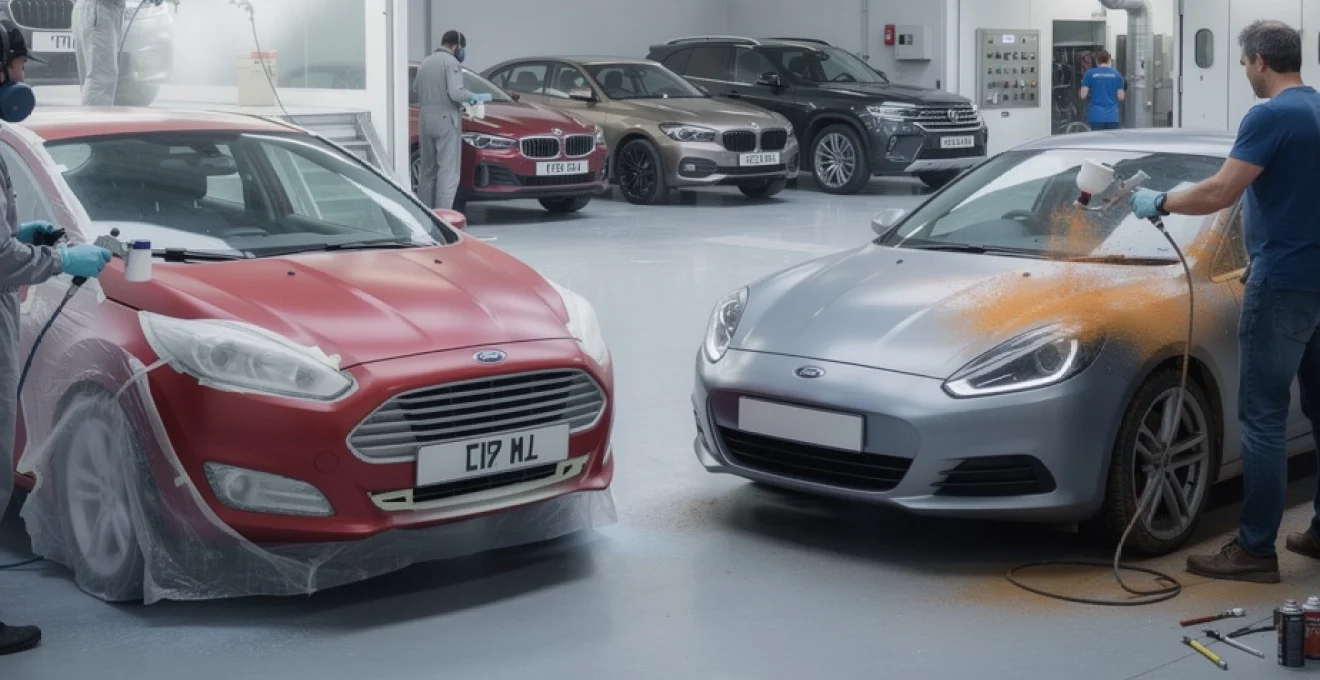
Changing the colour of a car or restoring tired paintwork is one of the most noticeable upgrades you can make. A professional respray can transform a faded, stone-chipped daily driver into something that looks almost factory fresh, but the cost of repainting a vehicle in the UK varies wildly. Quotes can range from under £1,000 to well over £5,000, and the differences often come down to the type of car, the paint system used and the amount of preparation required. Understanding what drives those figures puts you in a much stronger position when you start collecting estimates and comparing bodyshops.
Average car respray costs in the UK by vehicle type and paint system
Across the UK, a full car respray typically costs between £900 and £3,000 for standard work, rising to £5,000 or more for high-end finishes and extensive repairs. Industry data from platforms such as `whocanfixmycar` suggests an overall average around £2,400 for a complete repaint, with some manufacturers like Mazda and Hyundai often sitting above £1,700 even for more basic jobs. Those figures assume no major rust repairs or accident damage and a straightforward colour choice in line with the original shade.
Price ranges for full resprays on hatchbacks, saloons and estates (ford fiesta, VW golf, BMW 3 series)
Small hatchbacks and family saloons usually sit at the lower end of the respray cost scale because of their reduced surface area and simpler panel shapes. For a Ford Fiesta, VW Golf or similar compact model, a full exterior respray in a solid colour might start at around £900–£1,400 at an independent bodyshop. For a slightly larger car such as a BMW 3 Series saloon or estate, that figure often moves into the £1,500–£2,000 range, particularly if metallic paint and clear coat systems are used.
When budgeting for a complete repaint on a typical daily driver, it is sensible to assume that extra preparation will push the lower headline figure upwards. Stone chips on the bonnet and front bumper, car park door dings, lacquer peel on older roofs and boots, and minor scuffs on corners all need addressing before the new paint goes on. Each of those imperfections translates into extra labour, and therefore extra cost, even on relatively small hatchbacks and estates.
Cost differentials for SUVs, 4x4s and MPVs (nissan qashqai, range rover evoque, VW tiguan)
SUVs, crossovers and MPVs almost always cost more to respray than similarly aged hatchbacks and saloons. A Nissan Qashqai, VW Tiguan or similar mid-size SUV can require 20–30% more paint and labour hours, so a typical full respray budget might be £1,800–£2,500 for a quality job in a metallic or pearlescent finish. Larger 4x4s and prestige SUVs like the Range Rover Evoque or BMW X5 can easily land in the £2,500–£4,000 bracket, especially if door shuts and inner returns are painted as well.
This price jump is not just about size. More complex bumpers with multiple inserts, sensors and trims, chunkier wheel arches, roof rails and sometimes two-tone roof/roof spoiler combinations all add masking and de-trimming time. If you use your SUV heavily on the motorway or for towing, expect extra effort on stone chip repair along the front end and lower sills before the paint can be applied.
Premium pricing for sports cars and prestige marques (porsche 911, BMW M3, Mercedes-AMG)
Sports cars and prestige marques attract premium pricing for a full respray because of both expectations and complexity. A quality repaint on a Porsche 911, BMW M3 or Mercedes-AMG typically starts around £3,000 at a reputable independent and can reach £6,000–£8,000 or more at a main dealer or specialist using factory-approved materials. For rare colours, multi-stage `tri-coat` finishes or showroom-level preparation, those numbers can climb even higher.
Higher costs are partly down to labour intensity: more time spent removing and refitting bumpers, spoilers, badges, glass and trims, plus the care needed on aluminium and composite panels. Owners of performance and prestige cars also tend to demand a flawless finish with extensive colour sanding, machine polishing and detailed inspection, which adds many hours after the paint has cured. From a resale perspective, a cheap respray on a prestige car can actually reduce value, so cutting corners is rarely advisable.
Solid, metallic and pearlescent paint cost comparison using OEM pricing data from BMW, audi and VW
Paint type has a big influence on both parts and labour costs. Manufacturer data from brands such as BMW, Audi and VW shows clear price tiers for factory colours, and that logic carries across into the refinish world. A basic solid colour (for example a flat white or red) is generally the least expensive, both for dealer-applied and refinish systems. Metallic paints require more sophisticated pigments and careful application, while pearlescent and effect paints often need multiple layers and additional clear coat work.
| Paint type | Typical OEM surcharge (new car) | Impact on respray cost (full car) |
|---|---|---|
| Solid | £0–£350 | Baseline, roughly £900–£2,000 |
| Metallic | £600–£900 | +£200–£500 vs solid |
| Pearlescent / special | £900–£1,800+ | +£500–£1,500 vs solid |
Complex shades like BMW’s `Individual` colours, Audi’s special pearlescent tones or VW’s exclusive effect paints can require extra blending into adjacent panels and more precise colour matching. That means more time spent on spray-out cards, tinting and adjustment, which again impacts labour costs. If you choose a hue far from the original factory shade, additional dismantling may be needed to avoid obvious colour differences in door shuts, under the bonnet and in boot apertures.
Key cost drivers in a professional car respray: labour hours, materials and paint technology
The total cost of repainting a car in the UK is dominated by labour. Even though high-quality refinish products from brands like PPG, Glasurit and Standox are not cheap, parts and materials usually account for a smaller fraction of a quote than human time. Anything that increases the number of hours required—deep scratches, previous poor repairs, rust, complex colours—quickly shifts a job out of the lower price brackets. Paint technology, booth time and energy prices then add further variation between providers.
Bodyshop labour rates in the UK: main dealer vs independent vs mobile paint technician
Labour rates vary dramatically across the trade. Main dealer bodyshops, especially those attached to premium brands, commonly charge £90–£150+ VAT per hour for paint and bodywork. Independents usually sit somewhere between £50 and £90 per hour depending on location, reputation and certification. Mobile technicians and smart repair franchises may operate from £40–£70 per hour, focusing on smaller areas rather than whole-car resprays.
These hourly figures stack up quickly. A thorough full respray on a mid-size car can easily consume 40–60 labour hours from initial inspection through preparation, painting, curing, polishing and reassembly. At an average independent rate of £65 per hour, that alone is £2,600–£3,900 in labour. In practice, many shops aim to keep cosmetic repaints under that level by adjusting the scope of the job and focusing on the most visible areas of the vehicle.
Material costs for 2K, water-based and HS clear coat systems (PPG, glasurit, standox examples)
Professional bodyshops today tend to use either `2K` solvent-based systems or compliant water-based basecoats combined with high-solids (`HS`) clear coats. Premium product lines from PPG, Glasurit or Standox cost more than generic or budget alternatives, but they deliver better colour accuracy, coverage and durability. A full car respray can easily consume several litres of colour and clear coat, plus primers, hardeners and thinners.
For a typical mid-size metallic car using a modern waterborne basecoat and HS clear, material costs alone can sit in the £300–£800 range when quality brands are specified. Special effect paints, multi-stage pearls or custom mixes push that number higher. Professional opinion in the trade is that saving £100–£150 by choosing lower-grade materials rarely makes sense, given the impact on finish quality and how long the paint will resist fading and environmental damage.
Panel preparation time: sanding, filler work, priming and masking affecting total respray cost
Preparation is where much of the unseen time—and therefore cost—sits in a car respray quote. Before any primer or colour goes on, technicians must strip down trims, clean and degrease the bodywork, sand existing paint, and deal with dents, scratches and previous repairs. The smoother and straighter the panels become at this stage, the better the final finish will look once the clear coat is polished.
Badly stone-chipped bonnets, dented doors or panels with micro-blistering require more aggressive treatment, sometimes going back to bare metal and applying filler and high-build primer. Each extra preparation step adds hours, and masking complexity around door handles, badges, parking sensors and lights adds further time. As a rule of thumb, the more preparation a shop includes, the more consistent and long-lasting the result, even though the headline price rises accordingly.
Booth time, bake cycles and energy usage in compliant spray booths meeting UK environmental regs
Professional bodyshops use controlled spray booths to maintain air quality, control dust and comply with UK environmental regulations. These booths are expensive to run; they use powerful extraction systems and heating to maintain correct temperature and airflow. Each respray involves multiple `bake cycles` to cure primers, basecoats and clear coats, and energy costs have risen significantly in recent years.
Booth time is usually factored into a job in blocks of hours. A full respray on a family car can occupy a booth for several sessions spread across several days, while smaller panel repairs might only need one or two cycles. Rising electricity and gas prices mean that booths running longer or at higher temperatures directly affect final quotes, especially in colder months when ambient workshop temperatures are lower.
Additional costs for body repairs, dent removal and corrosion treatment before repainting
Hidden bodywork issues often emerge once a technician starts sanding back the original paint. Previous filler repairs, corrosion around wheel arches and sills, and poorly blended past resprays may only become obvious at this point. If rust is present, treatment can range from surface abrasion and rust converter to cutting out sections and welding in new metal, which significantly increases both time and cost.
Paintless dent removal (`PDR`) is sometimes used before painting to minimise filler use on certain panels, which can save weight and improve long-term stability. However, if a car has extensive accident damage or deep creases, more traditional panel beating and body repair techniques are required before any colour can be applied. Quotes for resprays that include structural repairs are often closer to comprehensive accident repair pricing than simple cosmetic refresh levels.
Partial respray and panel respray pricing: bumpers, wings, doors and bonnets
Not every car needs a complete repaint. In many cases, a targeted bumper respray, bonnet repaint or single panel repair can restore the appearance of a vehicle for a fraction of the cost of a full respray. Single panel work also suits owners who plan to sell the car soon and simply want to improve first impressions, or those correcting specific damage such as car park scuffs or motorway stone chipping.
Front and rear bumper respray cost estimates for plastic components with textured inserts
Front and rear bumper resprays are among the most common jobs in UK bodyshops. For painted plastic bumpers on mainstream cars, an average respray cost falls roughly between £250 and £450 per bumper, depending on the extent of damage and the paint type. If the bumper includes textured black plastic inserts, sensors, chrome trims or splitter extensions, masking and de-trimming can push costs towards the upper end of that range.
Where the bumper has deep gouges, cracks or previous poor repairs, labour time on plastic welding and reshaping adds further expense. A quick blow-over on a lightly scuffed bumper may sound appealing at £150–£200, but may not last or match the surrounding panels as well. A carefully prepared, properly baked finish tends to blend more convincingly and retain its gloss for several years.
Single panel respray pricing for doors, wings and quarter panels with colour blend into adjacent panels
Respraying a single metal panel such as a door, front wing or rear quarter typically costs in the region of £250–£600, based on data from UK comparison platforms that report ranges of about £363–£669 per panel. Metallic and pearlescent colours nearly always require blending into adjacent panels to avoid a noticeable colour shift under different lighting, which adds masking, preparation and spraying time.
A common approach is to apply the new colour and clear coat to the damaged panel, then lightly `fade` the basecoat into neighbouring areas and apply a full clear coat to those panels as well. This technique creates a visually consistent transition, especially on long, flowing body lines. From a cost perspective, you might be quoted less for a single-panel solid colour in a straightforward shade than for the same area in a complex metallic, even if the panel size is identical.
Stone chip and bonnet resprays on motorway-driven cars using high-build primers
Cars driven regularly on UK motorways often suffer from heavy stone chipping on the bonnet, front bumper and sometimes the leading edges of wings and mirrors. Bonnet-only resprays are frequently priced between £250 and £500, depending on how severe the damage is and whether blending into wings and bumper is included. High-build primers are typically used to fill minor chips and imperfections before block sanding the surface flat.
For heavily pitted surfaces, technicians may sand down closer to bare metal, apply etch primer, then several coats of high-build primer to restore a smooth base. This additional preparation ensures the new paint does not highlight every chip under the clear coat. If the rest of the car’s paint is faded or oxidised, there can still be a slight gloss or colour difference even after careful blending, something to factor into expectations and resale plans.
Smart repair and mobile paintwork solutions for scuffs and scratches from providers like ChipsAway
Smart repair and mobile paintwork services specialise in localised cosmetic repairs rather than full resprays. Providers such as `ChipsAway` and other smart repair franchises typically handle bumper corner scuffs, mirror caps, small dents and scratches, often with same-day turnaround. Pricing for these targeted repairs is usually between £100 and £300 per area, which can be considerably cheaper than traditional bodyshop work.
Smart repairs use a limited blend area and fast-drying systems to keep costs and time low. For relatively new vehicles or lease returns with isolated damage, this approach is often very cost effective. However, for larger panels, extensive damage or older paint with widespread fading, the visual difference between the repaired area and the rest of the panel can become noticeable, so a conventional bodyshop respray may still be more appropriate.
Respray cost variations between main dealer bodyshops, insurance-approved centres and independents
Choosing where to have a car resprayed is as important as deciding whether to repaint in the first place. Main dealer bodyshops, insurance-approved accident repair centres and independent workshops each present different pricing structures, warranty levels and levels of flexibility. Understanding how those differences translate into cost and quality can help you match the provider to your expectations and budget.
Pricing structures at franchised dealer bodyshops (BMW, audi, toyota approved repairers)
Franchised dealer bodyshops attached to brands such as BMW, Audi or Toyota usually focus on maintaining `OEM` standards and protecting manufacturer warranties. Labour rates are often the highest in the market, and approved paint systems must match factory specifications. As a result, a full respray quote from a dealer can be 30–60% higher than a reputable independent for the same model and colour.
Dealer bodyshops typically follow manufacturer repair methods closely, which is especially important for newer vehicles and those with complex materials like aluminium or carbon fibre. If your car is still under a corrosion or paint warranty, or you plan to keep a full dealer service record for resale, paying the premium for an approved repairer may make sense, particularly for prestige marques and performance models.
How insurance-approved accident repair centres quote for cosmetic resprays vs crash repairs
Insurance-approved accident repair centres primarily handle crash damage paid for by insurers, where labour and materials are costed according to industry-standard systems. For private cosmetic resprays, these centres may offer different pricing models, sometimes more competitive than main dealers but slightly higher than leaner independents. They often have strong quality controls and modern booths due to insurer requirements.
When you approach an accident repair centre for a cosmetic respray, it is common to receive a detailed written estimate with separate line items for panel repairs, paint, booth time and additional parts. Standards for colour matching and corrosion protection tend to be high because the same processes are used for insurance work, which can be reassuring if you value long-term durability as much as short-term appearance.
Independent bodyshop quotes in london, manchester and birmingham compared with rural areas
Independent bodyshops vary more widely in both pricing and quality than dealer and insurer-approved centres. In major cities such as London, Manchester and Birmingham, higher rent, wages and overheads push average hourly rates up, so a full respray may easily start at £1,800–£2,200 even for smaller cars. In rural areas or smaller towns, capable independents sometimes quote £1,200–£1,800 for similar work using the same paint brands and booth setups.
Regional cost-of-living differences are only part of the story, though. An independent with an excellent reputation and strong online reviews may be busier and price accordingly, while a lesser-known shop might undercut rivals to build clientele. Visiting the premises, looking at completed cars and asking to see work in progress is often more informative than focusing solely on price, especially for complex colours or classic restorations.
Warranty terms, paint guarantees and OEM paint specification compliance across provider types
Warranty coverage is a crucial part of comparing respray quotes. Many main dealer bodyshops and insurer-approved centres offer paintwork guarantees of three to five years against defects such as peeling, excessive fading or delamination, provided the car is maintained correctly. Some independents match or even exceed these terms, while others operate with more limited assurance, so it is worth asking for written confirmation.
Compatibility with existing `OEM` paint specifications matters for newer vehicles and those with galvanised or aluminium bodywork. Using incompatible products or skipping corrosion protection can shorten the life of the respray. A provider willing to explain which paint systems are being used, how panels are prepared and what thickness of clear coat is applied is usually a safer bet than one that only offers a single, vague price for the whole job.
Hidden and optional costs in a UK car respray quote
Headline prices often focus on the visible spraying work, but a significant part of a professional respray involves non-paint tasks. De-trimming, removing glass, replacing clips, aligning panels and performing post-respray detailing all take time. Some bodyshops build these into a single fixed price, while others itemise them so you can decide how far to go. Understanding these extras helps prevent unpleasant surprises once the car is already in the booth.
De-trimming, glass removal and refitting badges, sensors and trims impacting labour cost
Properly de-trimming a car before painting allows technicians to paint right up to edges and under seals, creating a more factory-like result. Removing and refitting bumpers, lights, badges, roof rails, rubber seals, parking sensors and door handles can add several hours or even a full day of labour on complex vehicles. Some shops offer a cheaper `mask and paint` option that leaves more of this trim in place, which can sometimes lead to slight paint edges or masked lines.
Glass removal is a particularly important cost consideration. Windscreens and rear screens bonded in place may need cutting out to address corrosion or lacquer peeling around their edges. Glass-out resprays look cleaner and reduce future rust risk, but they introduce potential for glass damage and re-bonding issues, so additional parts and labour are nearly always required. These steps are usually optional for cosmetic jobs but may be essential on older or heavily corroded vehicles.
Paint blending into adjacent panels for metallic colours to avoid colour mismatch
For metallic and pearlescent finishes, blending into adjacent panels is one of the most frequently misunderstood extras on a respray quote. Without blending, even a correct colour mix can appear slightly off under certain lighting due to differences in flake orientation or ageing on the existing paint. Blending extends the new basecoat into neighbouring panels and then clears the entire area, effectively smoothing the visual transition.
This process adds material and labour costs, especially on long panels like estates and saloons. However, skipping blending for cost reasons can leave obvious differences between a freshly painted bonnet and older wings, or between a new door and original front and rear quarters. From a professional standpoint, blending is almost always advisable when working with modern metallics and pearls, unless repainting a complete side or the entire car.
Paint correction, cutting back and machine polishing after respray for high-gloss finishes
Even in a high-quality booth, some minor texture, dust nibs or `orange peel` effect will usually be present in the clear coat. To achieve a deep, mirror-like gloss, many shops offer post-respray paint correction. This involves carefully wet sanding high spots, then machine polishing with progressively finer compounds and pads to refine the finish. The process is time consuming but can dramatically improve the final appearance.
Some bodyshops include a basic machine polish in the standard price, while a multi-stage correction may be listed as an optional extra. On dark colours, especially black and deep blue, this step makes a noticeable difference to clarity and reflection. On lighter shades, the improvement is more subtle, but it still helps reduce visible defects that might otherwise be seen under bright sunlight or showroom lighting.
Valeting, panel alignment checks and post-respray inspection fees
At the end of a respray, the car usually receives a thorough wash and interior vacuum to remove dust and overspray residues. Some providers include a full valet with glass cleaning, tyre dressing and interior wipe-down, while others charge separately. Panel alignment checks and a formal inspection of gaps around doors, bonnet and boot are also common, as removing and refitting parts can sometimes alter original fit.
Many of the finishing touches that make a respray feel `factory fresh` sit outside the painting itself, yet they are among the first things you notice when you collect the car.
Occasionally, bodyshops include follow-up inspections a few weeks after the respray once the paint has fully cured, particularly if ceramic coatings or protective films are being added. These additional visits help identify any minor issues early and contribute to long-term durability, especially on daily-driven cars exposed to UK weather and road salt.
DIY car respray vs professional bodyshop: cost breakdown and quality trade-offs
The idea of saving thousands of pounds by respraying a car at home can be appealing, especially if you enjoy learning new skills. However, automotive refinishing is closer to surgery than simple decorating: results depend on environment, preparation, technique and equipment, and mistakes are both obvious and difficult to reverse. Before committing to a DIY repaint, it helps to compare the real costs and the likely impact on appearance and resale value.
DIY material costs for compressor, HVLP spray gun, abrasives and paint kits
A serious DIY respray requires more than a few cans from a motor factor. At minimum, you will need a capable air compressor, a quality `HVLP` spray gun, moisture traps, respirator and personal protection, plus a selection of abrasives, fillers, primers, basecoat and clear coat. A realistic starter budget for equipment and consumables sits around £600–£1,200, depending on whether you buy new or used and which paint brand you choose.
- Compressor and air line setup suitable for car paintwork
- Mid-range HVLP spray gun and smaller detail gun
- Abrasives, fillers, primers and masking materials
- Basecoat and clear coat paint kits matched to your colour
Beyond pure cost, the main limiting factor for DIY enthusiasts is environment. Without a clean, well-ventilated space, dust contamination, overspray and inconsistent drying are almost guaranteed. Some hobbyists rent time in shared booths or community workshops, but access to such facilities depends heavily on local availability and may still require technical knowledge and insurance.
Using rattle cans vs professional spray equipment for small DIY touch-ups
For very small areas—mirror caps, wheel centre caps, or tiny rust spots—`rattle cans` (aerosol paint) paired with good preparation can provide an acceptable result at low cost. Many paint suppliers will mix aerosol cans to match factory codes, and for chips and small scuffs this approach is often quicker and safer than attempting to set up spraying equipment. Typical costs per can sit around £10–£20, with clear coat and primer adding a similar amount.
However, once you move beyond small panels or localised touch-ups, aerosols struggle to provide the same coverage, depth and control as a professional gun. Uneven application, rapid drying at the nozzle and limited fan patterns make it difficult to achieve a smooth finish on bonnets, roofs or doors. As an analogy, using aerosols for a full panel is like painting a wall with a small artist’s brush: technically possible but rarely efficient or attractive.
Risk of overspray, orange peel and runs without a controlled spray booth environment
Lacking a controlled booth environment significantly increases the risk of defects such as overspray, orange peel, runs and dry edges. Dust and insects can settle on wet clear coat, creating visible nibs that require later sanding and polishing. Temperature and humidity swings can also affect how paint flows and cures, sometimes leading to dull patches or solvent popping under the surface.
Professional booths act like climate-controlled clean rooms for cars, allowing paint to flow and cure consistently while keeping contaminants at bay.
Correcting these defects at home demands yet more time, materials and skill, and there is no guarantee of success on the first attempt. On modern cars with complex metallic or pearlescent finishes, even slight variations in spray technique can alter how the metallic flake lies, creating patchy or cloudy areas that are difficult to blend. For this reason, many experienced DIY enthusiasts restrict themselves to classic cars with simpler solid colours or to non-critical parts.
Resale value impact on used cars (auto trader and WBAC valuations) after DIY vs pro respray
From a market perspective, the quality of paintwork has a strong influence on used car valuations. Buyers browsing listings on marketplaces such as Auto Trader or obtaining instant quotes from services similar to `WBAC` often treat poor paint as a sign of hard use or hidden accident damage. A professional respray with clear documentation can sometimes lift a car into a higher price bracket, particularly if the rest of the vehicle is in good mechanical condition.
A visibly amateur DIY respray, by contrast, can have the opposite effect. Obvious masking lines, mismatched shades, overspray on rubbers and trims or excessive orange peel may lead potential buyers to assume more serious issues lurk beneath. In some cases, the car may sell for less than it would have done with original but honest, worn paint. When you factor in the time, equipment cost and learning curve, a professional bodyshop often remains the better value choice if the goal is to protect or increase resale value rather than purely to experiment or learn.