Copart membership opens the door to thousands of salvage, repairable and used vehicles, but the headline subscription fee is only part of the story. If you are chasing a cheap donor engine, a Category S project or a quick flip, the real question is not just “How much is membership?” but “How much will it cost to actually get a car on the driveway?”. Understanding the full Copart fee structure in the UK – from membership tiers to buyer fees, internet bid fees and storage – helps you decide whether it is genuinely cheaper than buying from a trader or from platforms like eBay. For many buyers, the difference between a bargain and an expensive mistake is hidden in the fine print of the Copart price list.
Copart membership cost structure explained: basic, advanced and premier tiers in the UK
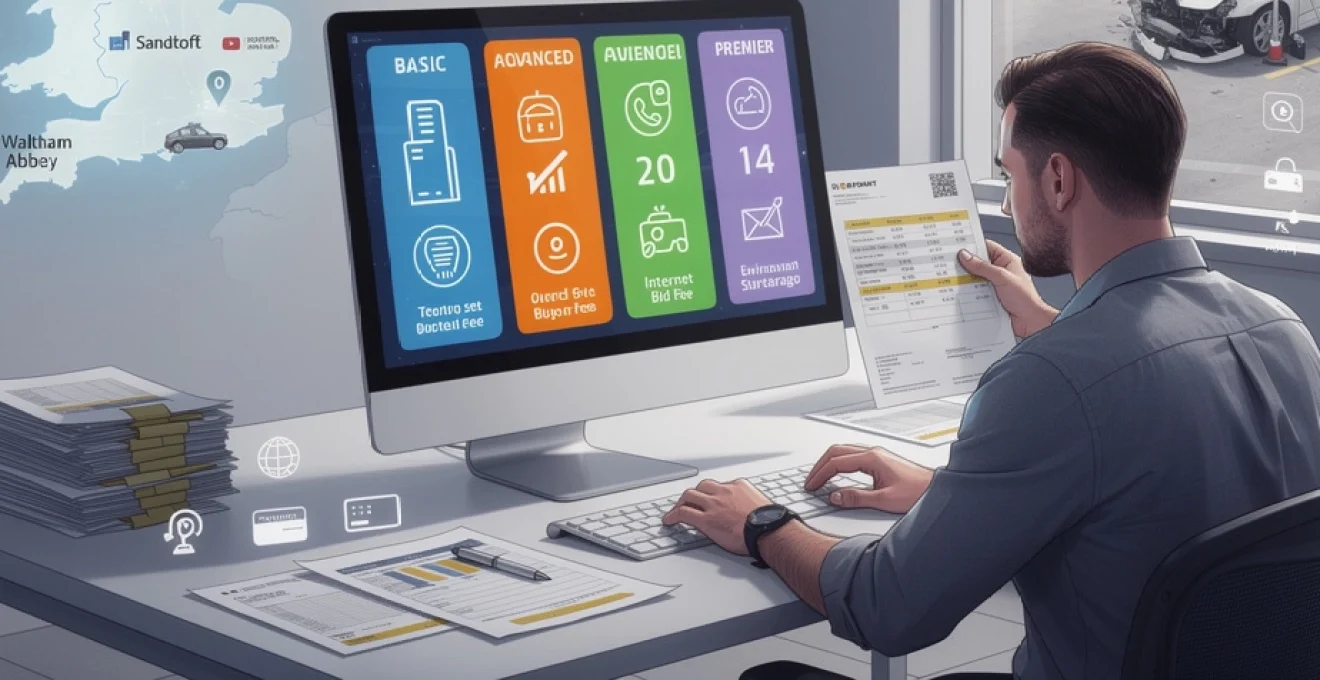
Copart in the UK runs a tiered membership structure designed to separate occasional public buyers from higher-volume trade users. While US documentation highlights Guest, Basic and Premier accounts, the UK site commonly refers to Basic, Advanced and Premier trading levels, each with increasing bidding power and privileges. A typical Basic membership in the UK costs around £100 per year, which aligns roughly with the $99 fee quoted for the US Basic tier. Premier-style accounts, aimed at traders, can cost more up front but unlock higher daily bidding limits and additional support from Member Services.
Membership on Copart.co.uk effectively operates as a paid gateway to the live auction environment. A free guest login lets you browse stock and watch auctions, but you cannot submit real bids or access detailed calculators such as the Total Cost Estimate window without upgrading. This is intentional: Copart wants only committed buyers placing bids that legally bind them once the hammer falls. As a result, you should treat the membership fee as the entry ticket to a wholesale marketplace, not as the main cost of participation.
Breakdown of copart basic membership fee: registration, annual renewal and per‑auction charges
For a UK buyer who only wants to purchase one or two salvage cars a year, the Basic membership is usually sufficient. Registration is typically charged as an annual fee (for example, £100), which then renews every 12 months. There is no additional “per-auction” subscription fee, but each successful purchase carries several mandatory charges that make a bigger difference to your wallet than the membership itself. Think of the annual fee as a Netflix subscription and the individual auction fees as the pay-per-view surcharge on every film you actually watch.
From a budgeting perspective, the key point is that the annual Copart membership cost spreads out over every car you buy. If you only plan to win one lot in a year, that membership cost effectively adds £100 to that vehicle’s true purchase price. If you buy five vehicles, it becomes £20 each. For casual buyers, this scaling effect is crucial when comparing Copart against a straightforward classified advert or fixed-price sale.
Advanced and premier membership pricing: higher bidding limits and enhanced buyer privileges
Advanced and Premier tiers are designed for buyers who want more freedom to bid on multiple vehicles and spend higher amounts each day. In the US, a Premier membership is advertised at $249, with the ability to bid up to $100,000 a day. The UK equivalent Premier or higher-tier trade account usually sits above the Basic price point and sometimes demands additional documentation, such as proof of motor trade status or VAT registration. These advanced memberships are best suited to breakers, rebuilders and exporters rather than a one-off hobbyist.
Enhanced privileges can include faster support queues, the right to bid on restricted or trade-only categories, and higher preliminary bid limits before sending full payment. From an economic point of view, paying more for Premier membership only makes sense if you plan to buy several cars a month or need access to heavily regulated categories of stock. For a single donor engine or one Category N runabout, the cost difference rarely pays back in savings.
Comparing UK copart membership costs with US and EU fee schedules
Official Copart documentation highlights that membership structures across regions are broadly similar, even if pricing is in different currencies. The US market uses Guest, Basic ($99) and Premier ($249) tiers, while EU subsidiaries in countries like Germany, Spain and Ireland mirror the same concept under their local portals such as Copart.de or Copart.es. UK users often find that the core benefits – bidding power, daily limits, and queue priority – behave in an almost identical way.
Where you see a clear difference is in fee amounts and taxes. UK buyers must factor in 20% VAT on most service fees, whereas overseas schedules may show figures exclusive of local sales tax or state-specific surcharges. If you compare “headline” membership prices between the UK and US, the figures seem close, but once tax, buyer fees and logistics are added, the total cost of acquiring a vehicle can vary by 10–20% between markets.
How copart calculates maximum bid limits based on membership level and payment method
The maximum amount you can bid on Copart is calculated using your membership tier plus any security deposit held on the account. The US example explains that a Basic member can bid on one vehicle per day up to $2,000 without a deposit and can increase that “buying power” by lodging a fully refundable deposit equal to 10% of the total bids. A similar principle applies in the UK: higher membership tiers allow more lots and higher total bids, but Copart still expects you to back that with real money on account.
If you plan to bid aggressively – for example, up to £10,000 of total hammer price – you should expect to place a deposit of around £1,000 to unlock that capacity. Different payment methods can also impact how quickly your limits are updated. Bank transfer often releases limits once cleared funds arrive, while card-based payments may have stricter caps or additional verification. From a risk management angle, Copart uses this mechanism to ensure that bidders have genuine financial backing behind their screen names.
Compulsory copart fees that affect the real cost of membership (buyer fee, internet bid fee, gate fee)
The biggest trap for new Copart members is underestimating compulsory fees. The auction hammer price is only the starting point. For UK buyers, the minimum stack of mandatory charges usually includes a Buyer Fee, an Internet Bid Fee, a Lot Retrieval or Gate Fee, and VAT on most of those services. Several UK forum users regularly report paying £600–£900 on top of a £2,000 hammer price, once all charges and delivery are included. Understanding each fee line is essential before you commit to a bid.
Copart buyer fee brackets by hammer price: £0–£99, £100–£499, £500–£999 and higher tiers
Buyer fees are banded according to the final hammer price, much like a sliding commission scale at a traditional auction house. Although exact figures can change, a typical structure might look like this for UK Copart sales:
| Hammer price band | Illustrative Buyer Fee (excl. VAT) |
|---|---|
| £0 – £99 | ~£35 |
| £100 – £499 | ~£90 |
| £500 – £999 | ~£150 |
| £1,000 – £1,999 | ~£225 |
| £2,000 – £3,999 | ~£275–£325 |
In a real example shared by a UK buyer, a hypothetical £1,000 sale attracted a Buyer Fee of £225 plus VAT. That works out to a 22.5% fee before tax and around 27% with VAT included. As prices rise, the percentage usually falls, but the absolute amount still adds hundreds of pounds to your invoice. For buyers chasing low-value donor cars, this can make very cheap lots surprisingly expensive.
Internet bid fee on copart.co.uk for live auction and buy it now purchases
On top of the Buyer Fee, Copart applies an Internet Bid Fee on successful online bids. For UK bidders on Copart.co.uk, this is typically a flat figure around £60–£70 plus VAT, applied per winning lot regardless of hammer price. That means a £300 project car might instantly gain another ~£80 with VAT just from the privilege of bidding online. In the £1,000 example above, the Internet Bid Fee was recorded at £69, again plus VAT.
From a budgeting angle, treating the Internet Bid Fee as a fixed line item per car helps simplify calculations. If you plan to buy multiple cars per year, you can multiply that ~£80 figure and quickly see how it adds up. For a one-off buyer, it simply becomes another component of the “auction premium” that must be compared against buying from a local garage or independent dealer.
Gate fee and loading fee on copart UK lots: salvage cars, category S and category N vehicles
Every Copart vehicle must leave the yard somehow, and the Gate Fee or Lot Retrieval Fee is the charge for preparing the car for collection. UK buyers often report a standard fee of around £50 plus VAT per lot. This is charged whether you collect the car yourself or use a transporter. For non-runners or heavily damaged vehicles, there can also be a Loading Fee if special equipment is needed to lift the car onto a recovery truck.
Category S (structurally damaged) and Category N (non-structural) vehicles are treated similarly in terms of gate fees, but non-runners or cars with severe damage are far more likely to need mechanical loading. If you are buying a donor engine, there is a strong chance the car is immobile. That makes it sensible to build in an extra £50–£100 contingency for loading and handling, especially at busy sites like Bristol, Sandtoft or Waltham Abbey.
Environmental and storage surcharges on high‑risk or non‑runner salvage vehicles
Some Copart yards apply environmental fees or hazardous material surcharges on certain categories of salvage, particularly when dealing with vehicles that leak fluids, contain deployed airbags or involve battery-related risks. While these are usually modest amounts, they can appear as small line items on the invoice, nudging up the true cost. The exact rules may shift as new environmental regulations come into force, especially around EV and hybrid battery handling in the UK and EU.
Storage fees are another hidden cost that many first-time buyers overlook. Copart typically offers a short free storage window, often around 3–5 working days from the date of sale. After that, daily storage charges apply, which can run to £10–£20 per day plus VAT depending on the yard. In tight markets or during busy periods – such as after winter storms or floods – delays in organising recovery can mean an extra £100–£200 appearing on the final bill.
Illustrative invoice: total landed cost on a £2,000 category N vehicle including all copart fees
To illustrate how these fees stack up, consider a £2,000 hammer price on a Category N diesel estate bought to donate an OM642 engine. A realistic invoice might look like this:
| Item | Amount (excl. VAT) |
|---|---|
| Hammer price | £2,000.00 |
| Buyer Fee | £300.00 |
| Internet Bid Fee | £69.00 |
| Lot Retrieval / Gate Fee | £50.00 |
| Estimated environmental / admin fees | £20.00 |
| Subtotal before VAT | £2,439.00 |
VAT at 20% on the fees (but not usually on the hammer price if the seller is not VAT-registered) might add around £87–£100, giving a rough invoice of £2,525–£2,550. Add delivery of £250–£400 plus VAT, and the “£2,000 car” is quickly costing around £2,900–£3,000 landed at your postcode. This is why so many experienced buyers recommend calculating full door-to-door cost, not fixating on hammer price alone.
For most Copart buyers, the hammer price is only 70–80% of the final landed cost; the real figure only emerges once all fees, VAT and logistics are included.
Optional copart membership add‑ons and hidden ownership costs
On top of compulsory auction fees, a range of optional and indirect costs can significantly change the economics of Copart membership. These include broker access charges for public buyers on restricted lots, transport from the yard to your home or workshop, payment method surcharges and the standard post-purchase outlays such as V5C registration, MOT, insurance and HPI checks. Each of these can easily add £100–£500 to the net cost of that “cheap” salvage car.
Broker access fees for public buyers: using third‑party brokers such as AutoBidMaster or CrankyApe
In some regions and categories, Copart restricts bidding to licensed dealers or dismantlers. Public buyers sometimes turn to third-party brokers, who allow you to piggyback on their trade account for a fee. Popular examples in the US include AutoBidMaster or CrankyApe-style intermediaries; in Europe and the UK, various Copart Certified Resellers offer similar services. These brokers typically charge either a fixed fee per car or a percentage commission on the hammer price.
Using a broker can make sense if you only want one restricted vehicle and do not meet Copart’s documentation requirements for a full trade account. However, broker fees stack on top of Copart’s own Buyer Fee and Internet Bid Fee. A broker commission of 5–10% on a £3,000 car can mean another £150–£300, pushing the final cost beyond what a public buyer might pay for an equivalent vehicle in the open retail market.
Transportation and recovery costs from copart facilities in bristol, sandtoft, waltham abbey and more
Transport often dwarfs the annual membership cost, especially if the chosen car sits at a Copart yard on the other side of the country. In a real UK estimate for delivery to Dorset (DT1 1ST), a buyer calculated transport at around £250 plus VAT from Gloucester and approximately £441 plus VAT from Corby for similar-sized vehicles. That means location choice can shift £200–£250 of cost without touching the hammer price. Fuel prices and driver shortages, particularly visible after 2021 in the UK, have only amplified these logistics charges.
You can obtain quotes directly from Copart’s transport partners or use freight marketplaces such as Shiply to source competitive recovery rates. For non-runners or Category S structural write-offs, ensure the quote includes winching or loading. In practical terms, always factor at least £200–£400 into any “cheap car” calculation unless you happen to live near a yard like Bristol, Rochford, or Waltham Abbey and own a suitable trailer.
Payment method surcharges with copart: bank transfer, debit card, credit card and third‑party finance
Different payment options can alter your net cost by a few percent. Bank transfer is usually the default method and often carries no additional fee beyond your bank’s own charges. Debit cards may be accepted within certain limits, but credit cards are either restricted or incur additional handling fees due to interchange costs. Third-party finance providers, when used for higher-value purchases, may add arrangement fees or higher interest rates that effectively increase the car’s cost over time.
From a cost-management perspective, bank transfer tends to yield the most predictable outcome. However, it can also slow down your ability to bid again if you rely on funds being released or refunds being processed. If you plan to flip vehicles quickly, consider the cash flow impact as well as the headline membership and fee structure, because waiting on refunds can be as limiting as a strict bidding cap.
Additional compliance costs: V5C registration, MOT, insurance, and HPI checks on salvage vehicles
After the car leaves Copart, ownership costs begin. Many Category S and Category N vehicles arrive without a V5C document, meaning you must apply for a replacement logbook from the DVLA, currently charged at £25. A fresh MOT test, often essential after structural or cosmetic repairs, costs around £35–£55 depending on the garage. For a donor car used solely for parts, these costs may be irrelevant, but for a rebuild intended for the road they are unavoidable.
Insurance on a previously written-off vehicle can be more expensive, and many experts recommend an independent HPI or history check before committing to repairs, adding another £10–£20. If you send the car to a professional body shop, labour and paint can easily exceed the entire Copart invoice. For anyone considering Copart membership purely to save money, realistic quotes on repair and compliance work are just as important as understanding the auction’s internal fee structure.
Buying a salvage car cheaply is only half of the equation; restoration, registration and insuring that vehicle can easily double or triple the original outlay.
Public buyer vs trade account: how membership type changes what you really pay copart
The distinction between a public Copart membership and a trade account goes far beyond the label on the invoice. Trade members often benefit from higher bidding limits, access to additional categories of stock and, in some cases, lower effective costs per car thanks to volume. A breaker who buys ten vehicles a month pays the same type of Buyer Fee as a hobbyist but spreads the annual membership and administrative overhead far more thinly across each build. In contrast, a public buyer who only wins one lot per year effectively loads that membership cost entirely onto a single car.
Furthermore, trade buyers occasionally negotiate better transport rates from familiar recovery firms due to frequent business, reducing landed costs by £50–£100 per trip. Public buyers rarely enjoy such economies of scale. Trade accounts may also streamline documentation and payment processes, cutting the risk of late fees or storage charges. For someone planning to make Copart a central sourcing channel for stock, stepping up to a professional account not only unlocks more vehicles but can genuinely reduce per-unit costs over time.
However, trade status brings its own responsibilities. Maintaining proper records, handling VAT correctly, and complying with consumer protection rules for onward sales all require time and expertise. If you are only hunting a single engine or a personal project, the extra complexity of becoming a full-time trader simply to tweak the fee structure is rarely justified. In that case, a Basic public membership, with full awareness of the real fee stack, is generally the pragmatic route.
How to estimate your total copart buying cost before upgrading your membership
Accurately forecasting the total cost of buying from Copart is the most useful skill you can build before paying for membership. The aim is to treat Copart like an equation: hammer price plus fees, taxes and logistics must be less than the market value of the vehicle or parts you want, with a sensible buffer for surprises. Treat this process like surveying a house before buying it, rather than just glancing at the estate agent’s guide price.
Practical steps to build a realistic copart cost estimate
A simple, repeatable method helps you stay disciplined when bidding:
- Research the market value of your target vehicle or engine (e.g. OM642 donor engine) on open platforms such as eBay or local classifieds.
- Set a maximum all-in budget that makes sense, then subtract a realistic estimate for Copart Buyer Fee, Internet Bid Fee, Gate Fee and VAT.
- Obtain at least two delivery quotes from the relevant Copart yard to your postcode and include these in your calculation.
- Factor in repair, compliance and ownership costs (MOT, V5C, insurance, HPI) and keep a contingency of 10–20% for unexpected faults.
This approach flips the typical behaviour of chasing the lowest possible hammer price. Instead, you work backwards from what the car is actually worth to you, including its running costs. If the numbers do not add up before membership, paying for that membership simply exposes you to more ways of overspending.
Using worked examples and community data to refine your expectations
One of the most effective ways to learn Copart cost patterns is to study real invoices shared by members on enthusiast forums. In a widely circulated example, a buyer simulated a £1,000 hammer price on two different Copart UK locations. The breakdown showed a Buyer Fee of £225, an Internet Bid Fee of £69, a Lot Retrieval Fee of £50 and VAT of £68.80, plus delivery quotes of £250 and £441 ex VAT from different sites. The resulting totals were approximately £1,663 and £1,854 respectively before any repairs.
Figures like these demonstrate two vital insights. First, fees alone can add 30–60% to the hammer price on lower-value vehicles. Second, transport distance can create a £200 swing between two otherwise similar cars. If you are aiming to save £1,000 versus buying a running example privately, those margins matter. All of this guidance holds true whether you are eyeing a single donor vehicle or planning to grow a side business trading lightly damaged cars.
Key tips to keep copart membership economically worthwhile
A few disciplined habits can dramatically improve your chances of making Copart membership pay its way:
- Always calculate a door-to-door price, including every Copart fee, VAT line, delivery charge and predicted repair cost, before bidding.
- Focus on vehicles that provide either a very strong parts value (for example, high-demand engines or gearboxes) or a clear resale margin after repair.
- Avoid bidding wars driven by emotion; once the hammer price breaches your pre-defined limit, accept that the deal no longer works and move on.
- Keep meticulous records of each purchase, tracking total spend versus realised value, so you can refine your estimates with real-world data.
By treating Copart membership as a professional tool rather than an impulse purchase, you dramatically increase the odds that the next salvage car or donor engine genuinely saves you money rather than quietly draining your budget. With clear visibility of membership fees, mandatory auction charges and downstream ownership costs, you can decide with confidence whether Copart fits your buying strategy or whether a traditional used car route offers better overall value.