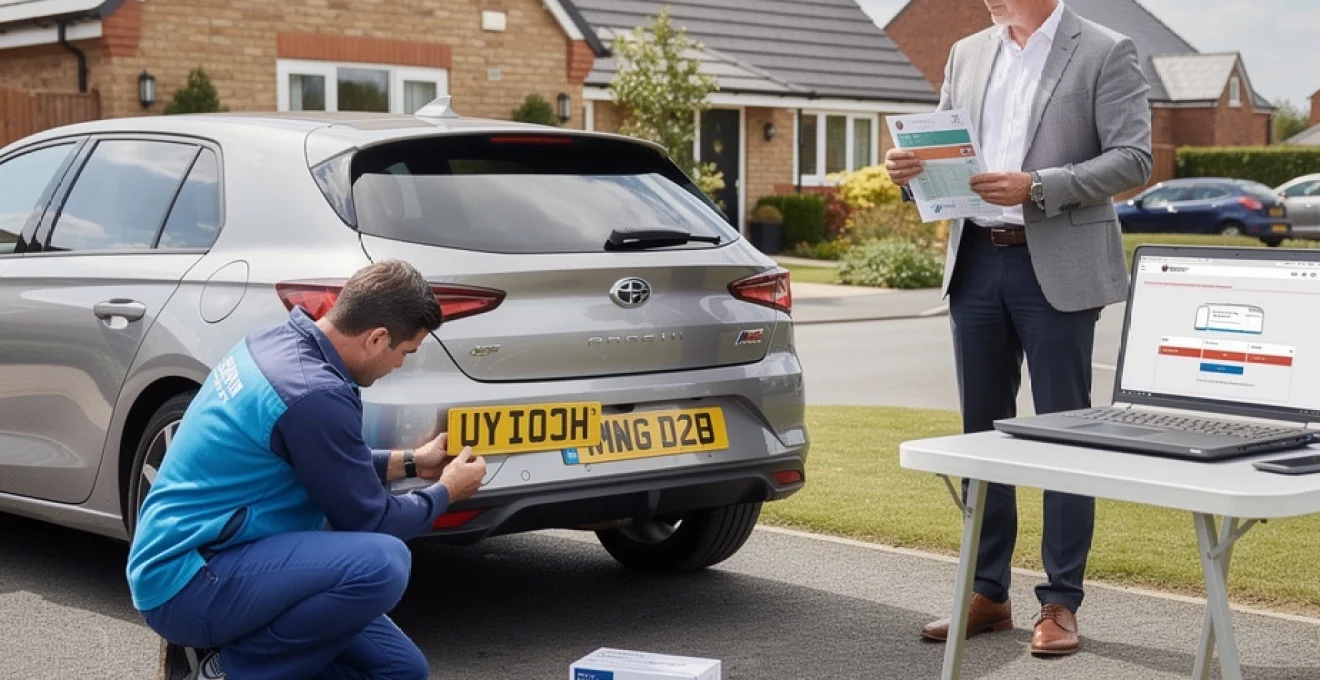
Switching a car back from a cherished registration to its original age-related plate feels daunting at first glance, especially if you are juggling MOT expiry dates, tax status and insurance at the same time. Yet the DVLA process is highly structured, and if you follow it carefully you can preserve the value of your private plate while keeping your legal position watertight. Whether you are selling a vehicle, scrapping a non-runner, or simply prefer the original index mark, understanding how DVLA links registrations to your V5C, VIN and digital record is essential. Getting this right also protects you from invalid insurance, ANPR mismatches and unexpected penalty charge notices during the changeover window.
DVLA rules for reverting from a personalised registration to the original age-related plate
Understanding V5C registration certificate data fields before changing a private plate
The V5C registration certificate is the starting point for any number plate reversion. Before changing a private plate back to the original registration, you need to confirm that the V5C shows you as the current registered keeper and that the registration, VIN and make/model details are accurate. The DVLA uses information in sections like Document reference number, Current registration mark and VIN/chassis/frame number to match your online or postal application to the correct digital record.
When a private number is first assigned, the original age-related plate is normally held on DVLA’s system against the same VIN. If you later tell DVLA to “take a private number off a vehicle”, the system uses that VIN and document reference to reassign the old plate automatically. That is why having the latest V5C (not an older version) is crucial; without the correct reference number, the online service will reject your attempt to remove a cherished registration and you may be forced into a longer postal route instead.
Think of the V5C as the “master key” for your registration history: if its details are wrong or outdated, every other part of the process becomes slower and more error-prone.
Checking eligibility to remove a private plate: tax, MOT and SORN status on DVLA records
Before DVLA allows you to revert a private plate to the original, the vehicle itself has to meet specific eligibility rules. The car, van or HGV must be registered with DVLA in the UK, be able to move under its own power, and be of a class that normally needs an MOT or HGV test certificate. On top of that, DVLA expects the vehicle either to be currently taxed or to have a Statutory Off Road Notification (SORN) in place, and that tax or SORN must have been continuous for the last five years.
If the car has been on SORN for more than five years, you are required to tax it again and have a valid MOT certificate before DVLA will process a plate removal. For many owners of long-laid-up classics, this is the biggest surprise. Historic vehicles that are normally MOT-exempt still need a current MOT if you want to change a private registration back to the original. If any of these checks fail on the DVLA database, your online application will simply not proceed.
From a practical point of view, checking MOT and tax status on the DVLA vehicle enquiry service before starting the transfer saves time and avoids rejected applications. It also clarifies whether any backdated SORN issues might exist from previous keepers.
How DVLA associates the original index mark to your vehicle VIN and chassis number
Behind the scenes, DVLA does not just see your number plate as a piece of plastic; it treats it as an index mark linked directly to the vehicle’s VIN or chassis number. When a personalised plate is put on a car, the original registration is not deleted in most cases. Instead, it is put “on hold” and kept in reserve against that same VIN. When you apply to remove the private plate, the system normally reattaches the last age-related mark automatically and updates the digital record to show that as the current registration.
This VIN-based approach is why a car that has had several cherished plates over the years can still resume its original index mark decades later, assuming it has not been scrapped or radically altered. It also explains why registrations cannot legally make a vehicle appear newer than it is. DVLA’s system checks the year identifier in the plate against the first registration date tied to the VIN; any mismatch generates an automatic stop.
The link between VIN, index mark and V5C document reference is therefore a three-way chain. If any part of that chain is broken – for example, due to incorrect VIN entry after an accident repair – you may face a manual inspection request or additional evidence requirements.
Common DVLA rejection reasons when attempting to revert a cherished plate to the original
Despite the process being straightforward on paper, applications to revert a private plate do get rejected. The most frequent reasons are surprisingly consistent across cases:
- Vehicle not currently taxed or on valid, continuous
SORNfor the last five years - No MOT or HGV test certificate where one is required (including historic vehicles that need an MOT for plate changes)
- V5C document not showing the applicant as the current registered keeper, or details not matching DVLA records
- Vehicle recorded as scrapped, exported or permanently removed from the road
Statistics released in recent FOI responses indicate that roughly 8–10% of personalised registration transactions encounter delays due to missing documentation or failed eligibility checks. A smaller portion – estimated at under 3% – are refused entirely because the vehicle has been scrapped or the registration history is compromised. For anyone handling an estate, a repossession, or a vehicle that has sat uninsured for a long period, reviewing these risk factors early can prevent losing a sentimental cherished mark during disposal.
Once a vehicle is officially marked as scrapped on DVLA systems, the associated registration number – original or personalised – is effectively locked and cannot usually be reassigned or retained.
Step-by-step process to change a private plate back to the original registration with DVLA online
Using the DVLA ‘take a private number off a vehicle’ online service: GOV.UK walk-through
The quickest way to change a private plate back to the original registration is to use the DVLA online service called Take a private number off a vehicle on GOV.UK. The portal usually operates between 7am and 7pm and, in most straightforward cases, removes the cherished plate immediately once you complete the form. The process is designed for keepers who want either to place the private registration on retention or assign it directly to another vehicle.
To start, you select the option to remove a private number, enter your registration, confirm basic vehicle details such as make and colour, and then provide the key document references from your V5C. The system runs background checks on tax, MOT, SORN and whether the vehicle might need inspection. If everything passes, your original age-related plate is reinstated at once, and the digital record updates while you are still online.
For many motorists, the most reassuring part of the online journey is the instant on-screen confirmation that the private plate has been taken off and placed on a retention certificate or transferred, rather than waiting weeks for a letter.
Entering the correct reference numbers from your V5C and latest V11 tax reminder
Mis-typing DVLA reference numbers is a surprisingly common cause of failed attempts to revert to an original plate. The online service typically asks for the 11‑digit document reference number from your latest V5C logbook. This must match the version of the V5C that reflects the cherished plate currently on the car. Using an older logbook from before the private plate was added will cause an automatic failure.
In some scenarios, you might also need details from your V11 tax reminder or other DVLA correspondence, especially if the system has flagged recent changes. Reading these numbers carefully, double-checking each sequence before you submit, and entering letters in upper case where requested can save a lot of reattempts. Anecdotal data from plate transfer specialists suggests that input errors account for around 20% of initial online failures.
If the service will not accept your details even though you are sure they are correct, that can indicate a deeper mismatch in DVLA’s record – for example, an unprocessed keeper change – and you may be routed towards the postal V317 route instead.
Processing timescales, DVLA email confirmations and updating your digital vehicle record
One of the biggest advantages of using the online DVLA number plate change service is speed. In most cases where no inspection is needed, the system removes the private plate and reassigns the original registration within a few minutes. An email confirmation is usually sent within the same day, and the change appears on the public DVLA vehicle enquiry tool soon after.
The physical documents take longer. Expect a new V5C logbook showing the reinstated original registration within 4–6 weeks, although government performance statistics in 2024 indicated that around 85% of logbooks after registration changes are issued within 3–4 weeks. If an MOT certificate was submitted as part of a linked taxation process, it will normally be returned separately.
During this waiting period, the digital record – not the paper logbook – is what matters to enforcement cameras and police ANPR. As soon as the online confirmation is received, you can fit the original plates and drive legally, provided insurance and tax are in order under the reverted index mark.
What happens to your private plate after removal: retention certificate (V778) vs immediate transfer
When the private plate is taken off your vehicle, you choose whether to keep it for future use or move it to another car straight away. If you opt to keep it, DVLA issues a V778 retention document. This proves your right to that cherished registration for up to 10 years. The retention can usually be renewed free of charge at the end of each 10‑year period, making it effectively indefinite as long as renewals are completed on time.
If the plate is being moved to another vehicle immediately, either you or another keeper can have it assigned using the online Assign a private number to a vehicle service or by post. In many cases, especially with dealer-supplied cars, the transfer is almost instantaneous once both vehicles meet the eligibility rules. Where the private plate is in someone else’s name, the V778 or V750 (certificate of entitlement) will go to that person rather than the current keeper of the car.
For sentimental or high-value private registrations, keeping the number on a V778 retention document before disposing of a vehicle is the safest way to avoid losing rights to the cherished mark.
Reverting plates by post: using DVLA forms V317, V778 and V5C for offline applications
When you must use form V317 instead of the DVLA online service to remove a private reg
Despite the efficiency of digital services, some situations require the traditional paper-based route. Form V317 – “Transfer or retain a vehicle registration number” – is the standard DVLA document used when the online option is blocked or unsuitable. You must use V317 if the vehicle is not in your name on the V5C, if a recent keeper change has not fully processed, or if the system flags the car for potential inspection.
V317 contains two main options: transferring a private reg from one vehicle to another (Option A) or taking the number off and putting it on retention (Option B). Even if you do not plan to use the plate on another car immediately, Option B is still the correct choice to protect it. Current DVLA guidance sets the fee at £80 for most retention or transfer transactions via post.
Processing by post is slower. Official figures and user feedback suggest postal V317 applications typically take around 2 weeks to complete the plate change, and 4–6 weeks for the new V5C to arrive. During peak volumes – often after major rule changes or system upgrades – that can extend slightly, so early planning is sensible.
Completing and posting a V778 retention document for an already retained cherished mark
If your private plate is already on retention, the V778 retention document becomes the core piece of paperwork rather than the V317. You use it to assign the cherished mark to a vehicle, renew your right to the plate, or amend nominee details. When reverting a car back to its original plate in this scenario, the process typically involves assigning the private plate from the retention document onto another vehicle, or leaving it dormant while the original age-related plate is allocated back by default.
Completing a V778 is straightforward: confirm the retention holder’s details, check the expiry date, and ensure any nominee is correctly named if the plate will be used on a vehicle that is not registered to you. Sending the V778 and the target vehicle’s V5C together allows DVLA to update both records in a single transaction, which is useful when coordinating multiple plate changes at once.
Professional plate brokers and dealers often handle dozens of concurrent V778-based assignments, which is one reason the DVLA emphasises clear, legible handwriting and correct addresses to minimise rejections and postal delays.
Handling lost V5C logbook scenarios and ordering a replacement before plate changes
It is very common to discover that the V5C logbook is missing precisely at the moment you want to revert to the original registration. DVLA will not process a plate change without some form of valid registration certificate, so the first step in this scenario is to apply for a replacement using form V62. The current fee is £25, and applications are sent to DVLA Swansea.
Once the replacement V5C arrives, the document reference number on it becomes your key for using the online service or completing a V317. Attempting to use old copies, photocopies or pre‑private‑plate V5Cs is not accepted and risks confusing the record. From 2023 DVLA performance data, the majority of V62 replacement requests are processed within 6 weeks, but postal issues or incomplete information can extend that, so factoring in this delay is important if you are working to a sales or scrappage deadline.
If a vehicle is being scrapped, the golden rule is simple: always secure the private plate first, via retention or transfer, and wait for confirmation before notifying DVLA that the vehicle has been destroyed. Once the scrappage status hits the database, no later V62 or V317 will resurrect the ability to move that number.
Coordinating insurance, ANPR databases and penalty risks when changing back to the original plate
Notifying car insurers (admiral, direct line, aviva, etc.) of registration reversion to avoid invalid cover
Changing a private plate back to the original registration is not just a DVLA formality; it is also a material change for your insurance policy. Most major insurers – including Admiral, Direct Line and Aviva – require that the registration number on the policy matches the live DVLA record and the plates actually displayed on the car. Failing to update the policy can, in extreme cases, jeopardise cover if you are involved in an accident.
Industry surveys suggest that around 1 in 20 policyholders forget to update their registration after a number plate change. While many insurers handle straightforward swaps with no additional premium, some may apply an admin fee, which is usually far less painful than the risk of a claim dispute. Ideally, you should contact the insurer on the same day the DVLA confirms the revert to the original reg, supplying any reference or confirmation email received from GOV.UK.
For leased or financed vehicles, there may also be a requirement to notify the finance company or leasing provider so that their records, and any associated gap insurance policies, remain accurate.
Automatic number plate recognition (ANPR) updates: police databases, congestion charge and ULEZ records
Once DVLA updates your vehicle’s registration, that change propagates across several national databases used by the police, local authorities and toll operators. Automatic Number Plate Recognition (ANPR) systems rely on these central feeds to determine whether a car is taxed, insured, compliant with emissions zones, or subject to outstanding offences.
For example, London’s Congestion Charge, Ultra Low Emission Zone (ULEZ) and other Clean Air Zones in cities such as Birmingham and Bath use ANPR cameras to check number plates against payment and exemption records. When you revert to an original plate, those systems will not automatically carry over your stored details unless they are keyed against the vehicle’s VIN or you manually update your account. The same applies to Dart Charge for the Dartford Crossing and the Mersey Gateway bridge.
Operational data from some operators indicates that plate-related mismatches account for thousands of manually reviewed cases each year. These are avoidable for most drivers by logging into accounts and updating the registration number shortly after the DVLA change appears on the public vehicle enquiry tool.
Preventing PCNs and speeding fine mismatches during the number plate changeover window
During the short changeover window when you have just switched plates, there is a small but real risk of receiving penalty charge notices (PCNs) or other enforcement letters linked to the old registration. This can happen if an offence is captured just before the DVLA record updates, or if private parking operators are using outdated data snapshots.
To reduce this risk, it is sensible to time the change for a period when you are unlikely to drive through multiple charging zones or private car parks – for example, late evening or a day when the car is mostly off the road. If a PCN does arrive for the former registration after the date of change, you can usually appeal by providing the DVLA confirmation or new V5C as evidence, since liability moves with the vehicle rather than the acrylic plate itself.
Keeping a digital copy of the DVLA confirmation email and any V778 retention document makes contesting wrongly addressed PCNs significantly easier, particularly when private enforcement firms rely on bulk data pulls that can lag behind real-time changes.
Physical number plate replacement: BS AU 145e standards, suppliers and fitting procedures
Ordering new legal plates from DVLA-registered suppliers such as halfords and euro car parts
Once the DVLA has reassigned the original registration, you need physical plates that match the new record. In the UK, only registered number plate suppliers are legally allowed to make road-legal plates that display the vehicle registration. Well-known chains such as Halfords and major motor factors like Euro Car Parts operate under these rules, alongside many independent garages and dealerships.
To order plates showing the original age-related registration, you are expected to provide proof of identity and proof of entitlement to the number. Typically, that means a photocard driving licence and either the updated V5C or the DVLA confirmation email for the new registration mark. Many suppliers can print plates while you wait, and some offer online ordering with in-store collection, which is handy if you are coordinating multiple vehicles.
Choosing a reputable supplier ensures not only legality but also compliance with current technical standards, which are increasingly important as enforcement cameras become more sophisticated at detecting non-compliant plates.
BS AU 145e compliance: font, spacing, national identifiers and dealer markings for UK plates
Modern UK number plates must comply with the BS AU 145e standard, which sets strict requirements for reflectivity, durability and character design. Plates must use the prescribed “Charles Wright 2001” font, correct spacing, and a white reflective background at the front with yellow at the rear. Decorative fonts, non‑approved tints and oversized borders are not permitted on road‑going vehicles and can lead to MOT failures or roadside penalties.
Optional national flags and identifiers, such as the Union flag with UK or the Saltire with SCO, are allowed within specific dimensions, but any design must still leave the mandatory area for characters clear and legible. The supplier’s name and BS standard code must appear at the bottom of the plate in small but readable text. These markings help enforcement officers and MOT testers confirm that the plate is legal.
| Feature | Requirement under BS AU 145e |
|---|---|
| Font | Standard Charles Wright 2001, fixed character size |
| Colour | White front, yellow rear, black characters only |
| Spacing | 2 groups separated correctly, no compression or stretching |
| Identification | Supplier name and BS code printed at lower edge |
For anyone reverting from a heavily stylised cherished plate, moving back to a compliant original registration often means saying goodbye to coloured bolts, novelty borders and 3D gel effects that may not meet the standard.
DIY fitting vs professional installation: fixing methods, torque, and anti-theft screws
Fitting the physical plates after a number plate change can be handled either at home or by a professional. DIY fitting kits typically include self-tapping screws, anti-theft caps or strong adhesive pads. If the vehicle already has screw holes in the correct positions, reusing them with new stainless screws is usually the neatest solution. Drilling new holes should be done carefully away from characters to avoid cracking and to keep the plate legible.
Adhesive pads give a clean look without visible fixings, but surfaces must be properly cleaned and degreased first. Applying even pressure across the plate for several minutes helps ensure a long-lasting bond. Excessive tightening of screws can warp or crack the acrylic, so using a modest hand-tight torque rather than a power tool is often advisable. Many garages offer plate fitting for a small fee, which may be worthwhile if you are uncomfortable drilling or working near parking sensors.
Anti-theft screws or security fixings are worth considering for high-value private plates that stay on a vehicle long-term. Although reverting to the original registration might seem less of a theft target, cloned plates are still a growing issue, and visible deterrents can make opportunistic theft less attractive.
Disposing of old acrylic plates securely to prevent cloning or fraudulent reuse
Once the original registration is back on the car, the old personalised plates become redundant. Keeping them lying around intact increases the risk that someone could use them to clone your previous registration and rack up speeding, parking or congestion charges in your name. Responsible disposal is therefore more than just a tidy-up exercise; it is a fraud-prevention step.
The safest approach is to physically damage the old plates so that the registration characters are no longer readable as a complete number. Cutting the plates into several pieces with a saw, snapping them carefully, or heavily scoring through the characters with a sharp tool are all effective methods. Some recycling centres accept damaged acrylic plates in the plastics stream, but local rules vary.
For fleet operators and businesses rotating multiple vehicles between private and original registrations, having a standard operating procedure for plate destruction helps maintain consistent protection against cloning across the entire fleet.
Edge cases: northern ireland, leased vehicles, finance agreements and plate changes after a write-off
Northern Ireland registrations now fall under the same DVLA systems as Great Britain, but older NI plates sometimes cause confusion when reverting to original marks. The core rules remain the same: no plate can make a vehicle appear newer than its registration date, and the original index mark is usually held against the VIN. However, records for imports and historic NI registrations may prompt DVLA to request an inspection or extra documentation before approving the change.
Leased and financed vehicles introduce an additional stakeholder into the process. The finance company or leasing provider is usually the legal owner, while you are the registered keeper. Before changing a private plate back to the original, it is good practice to check your agreement; some contracts require written consent for registration changes or specify that any cherished plates must be removed and placed on retention before handing the vehicle back. Ignoring those terms risks administrative fees or disputes at the end of the lease.
Finally, plate changes after a write-off require particular care. If an insurer declares a vehicle a total loss and notifies DVLA as scrapped or permanently exported, the window to remove a private plate or revert to the original registration can close very quickly. The most robust approach is to initiate the retention or transfer process as soon as a write-off seems likely, rather than waiting for settlement. For Category S or N vehicles that will be repaired and returned to the road, ensuring the registration history is clean and consistent helps avoid complications at future MOTs, resale, or during subsequent cherished plate transfers.