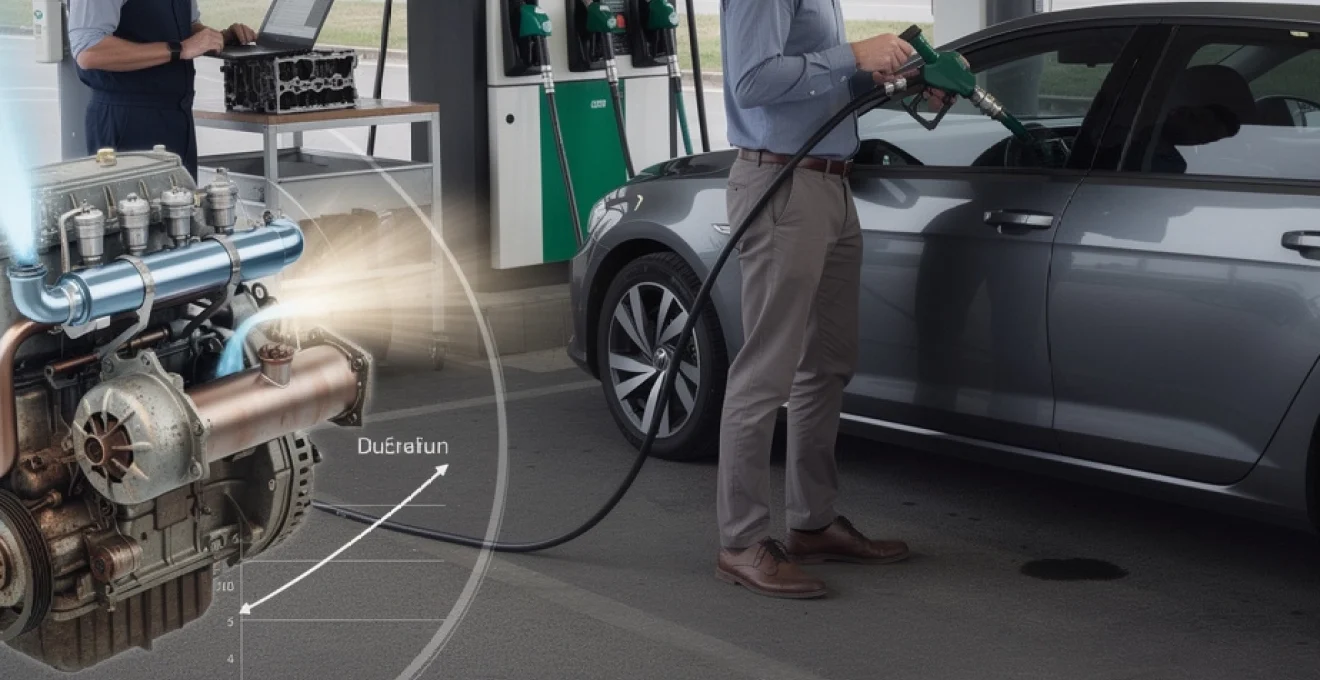
Standing at a UK fuel pump, staring at the price difference between standard diesel and the premium nozzle, it is natural to wonder if the extra 10–30p per litre is buying anything more than clever marketing. Diesel engines are already known for strong torque and good economy, so the promise of “ultimate cleaning power” or “maximum performance” can be tempting, especially if you drive a newer, high-tech car or cover serious motorway mileage. Understanding how premium diesel fuel actually differs from ordinary diesel, and when your engine can exploit those differences, helps you decide rationally instead of relying on sales slogans.
Premium diesel is not magic, but it is also not identical to cheaper fuel. The reality lies somewhere in between: some engines and driving patterns do benefit, others hardly at all. Looking at ignition quality, detergency, cold-flow behaviour and long-term engine cleanliness gives a much clearer picture of when premium diesel is worth paying for and when standard EN 590 fuel from a supermarket pump is perfectly adequate.
How premium diesel fuel differs from standard diesel in UK forecourts
On UK forecourts, all road diesel must meet the EN 590 standard, whether it comes from a budget supermarket pump or a branded premium product. This European specification covers key parameters such as cetane number, density, sulphur content, lubricity and cold-filter plugging point (CFPP). In other words, the basic “base fuel” in premium diesel and standard diesel is often very similar, and sometimes identical, before additives are blended in. The difference is that premium products such as Shell V-Power Diesel, BP Ultimate Diesel, Esso Synergy Supreme+ and Texaco Supreme are dosed with more sophisticated additive packages designed to improve cleanliness, stability and sometimes cold-weather behaviour.
Price differences can be significant. Premium diesel in the UK often costs around 8–12p per litre more than standard diesel, and at some motorway services the gap can stretch to 20–30p. For a 50-litre fill, that is £4–£15 extra every tank. For you as a driver, the key question is whether the extra detergents, cetane improvers and lubricity enhancers provide measurable benefits in your particular vehicle and use case. Understanding the role of cetane, detergents and sulphur content is the starting point.
Cetane number, ignition delay and combustion quality in premium diesel formulations
The diesel equivalent of octane is cetane number. It measures how quickly and smoothly the fuel ignites after being injected into hot, compressed air. A higher cetane number means shorter ignition delay and more controlled combustion, which can reduce harsh knocking noise and improve cold starting. EN 590 requires a minimum cetane number of 51 across UK road diesel, and mainstream standard fuels typically sit around that minimum. Premium formulations often aim for effective cetane numbers in the mid‑50s, sometimes advertised as “improved ignition quality”.
In practice, many modern common-rail engines are calibrated to run reliably on 51 cetane, so adding a few points does not transform performance. However, in some high-pressure, high EGR Euro 6 engines, a slightly higher cetane number can make cold starts smoother and reduce combustion roughness at low rpm. For you as a driver, this might feel like slightly less rattle when pulling away in first gear or quieter idle on cold mornings, particularly if the original fuel quality was marginal. It is a subtle refinement, not a dramatic power increase.
Detergency packages and injector-cleaning additives in fuels like shell V-Power diesel and BP ultimate diesel
Where premium diesel really differentiates itself is through strong detergency additives. These are chemical compounds blended into the fuel to keep injectors clean and to remove existing deposits. Brands such as Shell V-Power Diesel and BP Ultimate Diesel promote “active cleaning” technology specifically targeting deposits on injector tips and internal injector components. Independent tests cited in marketing materials often claim up to 60–80% reduction in injector deposits compared with basic EN 590 fuel.
Injector cleanliness matters because modern piezo or solenoid injectors have incredibly fine nozzles with multiple microscopic holes. Even slight coking or lacquer formation can distort the spray pattern, leading to poorer atomisation, incomplete combustion and higher soot output. For you, that can translate into rougher idle, slightly higher fuel consumption and more frequent diesel particulate filter (DPF) regenerations. Running a tank of premium diesel every few thousand miles, or using it regularly on a high-mileage vehicle, can help maintain optimum spray patterns and keep these high-precision components operating as designed.
Sulphur content, lubricity modifiers and EN 590 compliance across supermarket versus branded premium diesel
All UK road diesel is now ultra-low sulphur diesel (ULSD), capped by EN 590 at a maximum of 10 ppm sulphur. This applies equally to supermarket diesel, branded standard diesel and premium diesel. In other words, premium diesel is not “lower sulphur” than regular fuel in the UK; they are already at the regulatory floor. The main distinction is that premium fuels usually contain extra lubricity modifiers and corrosion inhibitors to compensate for the natural lubricating properties lost when sulphur was removed.
Supermarket and branded standard diesels also include basic lubricity additives to meet the wear-scar limit in EN 590, so your fuel pump and injectors are protected either way. Premium diesel tends to go beyond the minimum, which can be beneficial for high-pressure injection equipment (2,000+ bar common-rail systems) over very long mileages. Under normal annual mileages of 8,000–12,000 miles, the difference is unlikely to be noticeable, but a taxi driver or fleet operator covering 30,000+ miles per year may see reduced wear and fewer injection-related issues if higher-quality lubricity packages are used consistently.
Cold-flow properties, CFPP and winter-grade enhancements in premium diesel blends
Cold-weather performance is controlled by the cold filter plugging point (CFPP) and related cold-flow characteristics dictated by EN 590 seasonal requirements. In the UK, both standard and premium diesel must meet winter specifications (typically down to around –15°C CFPP, sometimes lower in more northerly regions). Premium diesel often includes advanced cold-flow improvers designed to prevent wax crystal agglomeration and keep the fuel flowing through filters and injectors at lower temperatures than basic fuel.
If you drive in Scotland, northern England or rural areas where overnight temperatures regularly dip below zero, a premium winter diesel blend can reduce the risk of filter waxing and hard starting on frosty mornings. For the average driver in the South of England, who rarely encounters temperatures below –5°C, the added margin is helpful but not essential. Storing the car outside, frequent short runs and poor-quality fuel filters can magnify the benefits of improved cold-flow properties compared with ideal test-lab conditions.
Engine technologies that can actually exploit premium diesel characteristics
Not every diesel engine is capable of taking advantage of the enhancements in premium fuel. Older rotary-pump diesels with simple injectors will run happily on standard EN 590 for hundreds of thousands of miles, provided maintenance is up to date. Modern engines, however, are much more sensitive. Technologies such as high-pressure common-rail with piezo injectors, variable-geometry turbochargers and complex exhaust after-treatment benefit more from fuels with strong detergency and stable combustion behaviour, particularly under demanding use such as towing or high-speed motorway running.
From around the Euro 4 era onwards, engines branded TDI, HDi, dCi, CDTi, CRDi and similar acronyms began pushing injection pressures past 1,600 bar, with Euro 6 units often exceeding 2,000 bar. These systems deliver outstanding torque and impressive official fuel economy figures under WLTP and NEDC test procedures, but they are also vulnerable to injector fouling and DPF issues if soot production creeps up. In such engines, premium diesel can act as a preventive measure, keeping critical components cleaner for longer rather than offering an obvious “performance tune-up” sensation.
Common-rail injection pressures, piezo injectors and fuel spray atomisation in modern TDI, HDi and dci engines
Common-rail systems from Bosch, Denso, Delphi and Continental achieve very fine fuel atomisation by injecting tiny quantities of diesel multiple times per combustion cycle. The shape and consistency of the spray plume depend heavily on clean injector nozzles and stable fuel properties. Even a 1–2% change in spray pattern due to deposits can alter mixing, raising soot output and increasing noise and vibration.
Premium diesel’s strong detergency helps reduce nozzle coking and internal diesel injector deposits (IDID). For engines like the VW 2.0 TDI, PSA BlueHDi or Renault–Nissan dCi units, maintaining clean injectors can reduce uneven cylinder-to-cylinder combustion and help preserve the “just-like-new” feel for longer. From a driver’s perspective, this means smoother idle, crisper throttle response and slightly better low-speed refinement, though the improvement is normally subtle rather than dramatic.
Turbocharger efficiency, variable geometry turbines and exhaust gas temperatures under premium diesel use
Modern diesels rely on variable geometry turbochargers (VGT or VNT) to provide strong torque from low rpm while avoiding excessive backpressure at higher loads. These units use adjustable vanes in the turbine housing, which are highly sensitive to soot and ash deposits. Premium diesel, by lowering injector deposits and improving combustion, can slightly reduce the soot load reaching the turbine and exhaust.
This has two minor but real benefits: firstly, it can help keep the turbo’s variable vanes moving freely, reducing the risk of sticking and overboost or underboost faults; secondly, it can moderate exhaust gas temperatures and protect turbo bearings over high-mileage operation. For a driver frequently towing a caravan or using the full torque of a Mercedes 2.1 CDI or Ford 2.0 EcoBlue on long motorway gradients, cleaner combustion can reduce thermal stress compared with a poorly maintained engine run exclusively on low-detergency fuel.
Diesel particulate filter (DPF) regeneration cycles and soot loading with high-detergency premium fuel
Every Euro 5 and Euro 6 diesel sold in the UK is fitted with a DPF to capture soot particles. The filter periodically regenerates by burning off accumulated soot at high temperature, usually every 200–600 miles depending on usage. If soot production is elevated because of dirty injectors, short trips or poor combustion, regeneration intervals become more frequent, fuel consumption increases and, in extreme cases, the DPF can become overloaded.
Premium diesel’s cleaning action on injectors and its more controlled combustion can slightly reduce soot generation. Over tens of thousands of miles, that can translate to fewer forced regenerations and lower DPF backpressure. For a driver doing mainly urban journeys, perhaps in a BMW 320d or Audi A4 TDI, using premium diesel occasionally or regularly can help maintain a healthier DPF, although it cannot fully compensate for unsuitable driving patterns such as constant stop–start with no sustained high-speed runs.
Selective catalytic reduction (SCR) systems, NOx emissions and AdBlue dosing strategies
Most modern Euro 6 diesels use selective catalytic reduction with AdBlue (urea solution) to cut NOx emissions. These systems rely on accurate exhaust temperature and emission models built into the engine management software. Cleaner, more predictable combustion from higher cetane and better injector performance can make these models more reliable, helping the control unit fine-tune AdBlue dosing.
In practice, premium diesel does not replace AdBlue or dramatically reduce NOx on its own. However, by ensuring consistent combustion phasing and lower engine-out soot, it can support more stable SCR performance and reduce the likelihood of NOx sensor or catalyst issues triggered by abnormal combustion. For you as a owner of a diesel SUV or van frequently entering low emission zones, maintaining after-treatment efficiency through good fuel quality and regular servicing is essential to avoid costly repairs and warning lights.
Measurable performance impacts of premium diesel on power, torque and drivability
Marketing for premium diesel often hints at extra power and sharper performance. The reality, backed by independent dyno tests and industry experience, is more restrained. Most engines show very modest gains, if any, when switching from standard EN 590 diesel to a major-brand premium fuel, provided the engine was already in good condition. Any difference is usually within 1–3% for power and torque, sometimes within the margin of measurement error. Where premium diesel can shine is on engines suffering from injector fouling, where cleaning up the injectors gradually restores lost performance over several tanks.
From a drivability perspective, small changes in torque delivery, turbo lag and throttle response can make a vehicle feel fresher and more responsive, especially in day-to-day low-speed driving. However, a driver is more likely to notice the difference when alternating between very cheap supermarket fuel and a top-tier premium diesel than when changing between two branded fuels, all else being equal. Expectations should be realistic: premium diesel is not a remap or performance chip, it is more akin to a gentle tune-up and cleaner-living regime for the engine.
Dynamometer testing: bhp and nm gains on engines like the ford 2.0 EcoBlue and VW 2.0 TDI
Independent magazines and tuning specialists have run back-to-back dyno tests on popular diesel engines such as the Ford 2.0 EcoBlue, VW 2.0 TDI and Mercedes 2.1 CDI. Results often show peak power differences of 1–3 bhp and torque gains of 5–10 Nm when using premium diesel compared with a standard supermarket fuel after a couple of tanks. One frequently cited finding is that most of the gain comes from restoring lost performance due to injector deposits rather than from inherent additional energy in the fuel.
To put that in perspective, a 150 bhp engine gaining 3 bhp is only a 2% improvement, barely noticeable in isolation. However, if the premium fuel cleans up uneven combustion across cylinders, the engine may feel smoother and more linear, particularly around the mid-range where diesels spend much of their time. For a driver sensitive to refinement, this can be worth the modest extra cost, but for pure acceleration figures the stopwatch rarely reveals dramatic changes.
Throttle response, turbo lag reduction and low-end torque delivery in real-world road tests
Road-test impressions often highlight slightly sharper throttle response and reduced perceived turbo lag when running premium diesel in engines like the VW 2.0 TDI or Peugeot 1.6 BlueHDi. This is usually due to improved low-speed combustion and cleaner injectors enabling more precise pilot injection and main-injection timing. In stop–start urban driving, you might feel a more immediate surge when rolling back onto the throttle at 1,500–2,000 rpm.
However, driver psychology plays a role; simply knowing that premium fuel has been added can create a “placebo effect”. For a more objective assessment, some fleet managers compare driver logs or telematics data across multiple tanks. Most find that any improvement in drivability is real but mild. If your goal is to cure serious flat spots or surging, a software update, EGR clean or injector diagnosis is more likely to help than relying solely on premium diesel.
Noise, vibration and harshness (NVH) changes in euro 5 vs euro 6 diesel vehicles
Premium diesel’s higher cetane rating and better combustibility can subtly reduce NVH – noise, vibration and harshness – especially in cold-start and light-load conditions. Euro 5 engines with less sophisticated injection strategies often show a more noticeable change, with slightly quieter clatter on idle and smoother pick-up around town. Euro 6 engines already use advanced pilot injections to minimise harshness, so the incremental benefit is smaller but still detectable in some cases.
Owners of vehicles such as the previous-generation VW Golf 2.0 TDI or early BMW 320d sometimes report that the engine sounds less “diesely” on a high-quality premium fuel, particularly on cold winter mornings. In contrast, late-model diesels designed specifically around stringent Euro 6d-Temp limits tend to be quieter by design, so premium diesel adds more in terms of cleanliness than dramatic NVH transformation.
Fuel economy and cost per mile analysis: premium diesel vs standard diesel
Fuel economy is often the deciding factor when judging if premium diesel is worth it. If a higher pump price is matched by a proportional improvement in mpg, the cost per mile can end up similar or even lower. However, real-world tests in the UK generally show that economy gains are small, frequently in the region of 1–3% at best. When premium diesel costs around 5–10% more per litre, that arithmetic does not usually balance in favour of premium for pure fuel savings alone.
The more realistic way to view premium diesel is as an insurance policy for long-term efficiency and reliability rather than as an instant mpg booster. Cleaner injectors and more stable combustion can help maintain original fuel economy figures for longer, reducing the gradual decline some owners notice after 80,000–100,000 miles. For you as a driver clocking up big motorway mileage every year, the combination of slightly better economy and lower risk of costly injection or DPF issues can justify the premium, even if the immediate cost-per-mile calculation looks marginal.
Calculating pence-per-mile using UK pump prices from shell, BP, esso and supermarket brands
To estimate whether premium diesel saves money, start by comparing pence-per-mile. Suppose standard supermarket diesel is 150p per litre and premium diesel at a major brand is 160p per litre. On a car averaging 50 mpg on standard fuel (around 11 miles per litre), the fuel cost per mile is about 13.6p. If premium diesel improves economy by 2% to roughly 51 mpg (11.2 miles per litre), the cost per mile becomes about 14.3p.
That is still around 0.7p per mile more, which over 10,000 miles adds up to £70. For many drivers, that sum might be acceptable if injector and DPF cleanliness are materially better. However, if your car shows no measurable economy improvement between fuels, the extra cost per mile simply adds to the running bill. Keeping fuel receipts and tracking mpg via the trip computer or a fuel log app over several tanks of each fuel type provides an evidence-based answer for your own vehicle and routes.
Long-distance motorway driving versus short urban cycles on the WLTP and NEDC test procedures
Official test cycles like WLTP and the older NEDC give comparative fuel economy figures under controlled conditions, but they do not specifically mandate premium versus standard fuel. In long-distance motorway driving, modern diesels already operate near optimal thermal efficiency; injection timing, boost levels and EGR strategies are well within their comfort zones. Premium diesel may yield a tiny gain in mpg, but the difference is often too small to distinguish from wind, traffic and temperature variations.
Short urban cycles are more sensitive to ignition quality and injector condition. Here, higher cetane numbers and better detergency can marginally improve combustion stability during frequent start–stop events. You might see a slightly higher average mpg on a city commute when using premium diesel, especially in winter. Yet the biggest driver of fuel consumption remains trip length and driving style rather than fuel grade, so focusing on smooth acceleration and anticipation usually brings bigger gains than a simple switch to premium.
Case studies: fleet MPG data from ford transit, mercedes sprinter and vauxhall vivaro vans
Fleet operators running vans like the Ford Transit, Mercedes Sprinter and Vauxhall Vivaro often keep meticulous fuel usage records. Internal studies shared within the industry show that switching an entire fleet from standard diesel to premium can yield modest improvements of 1–3% in average mpg, depending on duty cycle and vehicle age. For a fleet covering several million miles annually, that can justify the extra cost and simplify maintenance planning.
In mixed-use fleets where some vehicles do mainly urban delivery and others focus on long-haul motorway runs, managers sometimes adopt a hybrid strategy. High-mileage or urban vehicles with complex after-treatment may be assigned premium diesel, while others continue on standard fuel. For an individual owner-driver or small business running one or two vans, similar logic can be applied: if a particular vehicle suffers from injector or DPF issues, premium diesel is more likely to repay its cost in reduced downtime and workshop bills.
Impact of driving style, load and tyre pressures on any premium diesel economy advantage
One common misconception is that premium diesel alone can transform poor fuel economy. In reality, factors such as driving style, payload, tyre pressures and maintenance status have a far greater impact. Aggressive acceleration, frequent braking and high cruising speeds can easily worsen fuel consumption by 15–25%, dwarfing the 1–3% potential gain from premium fuel. Under-inflated tyres can cost 3–5% in economy on their own.
For you as a driver trying to reduce fuel costs, the smart strategy is to optimise these basics first. Adopt smoother driving, keep tyres correctly inflated, remove unnecessary roof boxes and have the engine serviced on schedule. Once those fundamentals are in place, using premium diesel on a trial basis can show whether there is a small but worthwhile additional gain for your particular usage pattern, especially if long-term reliability is also a priority.
Engine cleanliness, reliability and long-term maintenance outcomes with premium diesel
Long-term engine cleanliness is arguably the strongest case for paying extra for premium diesel, particularly in high-tech Euro 5 and Euro 6 engines. Deposit formation does not happen overnight; it is a slow accumulation over tens of thousands of miles, often invisible until symptoms such as rough idle, increased DPF regenerations or reduced fuel economy appear. Premium diesel’s enhanced detergency and stability aim to slow this process, acting more like preventative medicine than a short-term cure.
For owners planning to keep a diesel car or van for 8–10 years or 150,000+ miles, lower injector fouling, cleaner intake systems and healthier DPFs can translate into fewer big-ticket repair bills. Several independent diesel specialists in the UK report that engines consistently run on top-tier or premium fuel often present with cleaner injectors and less severe carbon build-up than those fed a diet of the cheapest supermarket diesel and irregular servicing, although driving pattern remains a big variable.
Injector fouling, nozzle coking and spray pattern degradation in bosch and denso injection systems
Injector fouling typically manifests as deposits on the nozzle holes and internal components, sometimes referred to as IDID (internal diesel injector deposits). Bosch and Denso common-rail systems, common in VW, Mercedes, Toyota and many others, are particularly sensitive because they rely on micron-level tolerances. As deposits build, the effective flow area of the nozzle changes, altering spray momentum and shape.
Premium diesel’s additive packages include strong detergents designed to both prevent and gradually remove these deposits. Industry bench tests often simulate 10,000–20,000 miles of operation and show significantly lower flow loss and more stable spray patterns when premium fuels are used. For you as a driver, the practical effect is that the engine continues to feel consistent as it ages, with less of the subtle roughness or hesitation that sometimes appears on high-mileage diesels using only basic fuels.
Intake valve, EGR and intake manifold deposits in vehicles like BMW 320d and audi A4 TDI
Diesel engines recirculate a portion of exhaust gas through the EGR system to cut NOx emissions. Unfortunately, this exhaust contains soot that can mix with oil vapour and form sticky deposits on intake valves and in the manifold. Vehicles like the BMW 320d and Audi A4 TDI are known to suffer from intake clogging over high mileages, sometimes requiring expensive manual cleaning.
Premium diesel does not directly clean the intake manifold, but by improving combustion and reducing soot at the source, it can slow the rate at which deposits form. Combined with regular high-speed runs that allow the engine to reach full operating temperature, this can help keep the air path cleaner for longer. If your driving is mostly short commutes, using a high-detergency fuel and occasionally taking the car on a sustained motorway journey is a sensible strategy to mitigate EGR and intake issues.
DPF ash loading, regeneration frequency and backpressure over high-mileage operation
While soot in the DPF burns off during regeneration, metallic ash from oil additives and fuel impurities gradually accumulates and cannot be removed without physical cleaning or replacement. Premium diesel is formulated to burn more completely, leading to less soot per unit of power produced. This does not change ash content radically, but by reducing the amount of soot the DPF must handle, it can lower overall thermal stress and extend the interval between regenerations.
Over 100,000+ miles, fewer regenerations and stable backpressure can help preserve DPF substrate integrity. For example, a high-mileage fleet of taxis using premium diesel may see lower incidence of DPF replacement compared with one on standard fuel, all else equal. However, oil quality, correct low-SAPS specifications and regular servicing are just as important; premium diesel works best as part of an integrated “clean running” approach rather than as a standalone fix.
Workshop evidence: independent diesel specialists’ findings on engines run on premium vs regular fuel
Independent diesel workshops across the UK often provide useful anecdotal evidence. Many report that injectors from engines habitually run on premium or high-detergency branded fuel show less visible deposit build-up when inspected under magnification. Similarly, EGR valves and intake manifolds tend to be moderately cleaner, though driving style and mileage remain major factors. These observations support the claim that fuel quality contributes to long-term cleanliness.
However, specialists also stress that no fuel can compensate for poor servicing, neglected oil changes or chronic short-trip usage that never warms the engine fully. A carefully maintained car run on standard fuel often fares better than a neglected one using premium. For you as a owner weighing up the extra cost, the most effective reliability strategy is regular maintenance, appropriate oil, occasional longer runs and, where budget allows, using premium diesel periodically to keep the fuel system in good condition.
When premium diesel is and is not worth the extra cost for UK drivers
Premium diesel offers real but measured benefits that depend heavily on your engine type, mileage and driving pattern. For a high-performance, modern Euro 6 diesel with common-rail injection, DPF and SCR – for example, a Mercedes GLE 450d, Audi S6 TDI or a late-model BMW 30d – regular use of premium fuel can help maintain injector cleanliness, reduce DPF stress and preserve smooth performance over long mileages. Taxi drivers, high-mileage reps and motorway commuters covering 20,000–30,000 miles a year are also more likely to notice the long-term advantages in reliability and consistent fuel economy.
In contrast, if you own an older, simpler diesel such as an early-2000s Land Rover Discovery, a pre-DPF Transit or a budget runabout that mostly sees gentle suburban use and limited annual mileage, the extra cost of premium diesel is harder to justify. Standard supermarket diesel meeting EN 590 is entirely adequate, and any improvement from premium fuel will be marginal compared with the savings from better driving habits and regular servicing. A sensible compromise for many UK drivers is to use regular diesel most of the time and run a tank of premium every 1,000–2,000 miles, especially before long motorway trips, to take advantage of its cleaning properties without incurring the full-time price premium.