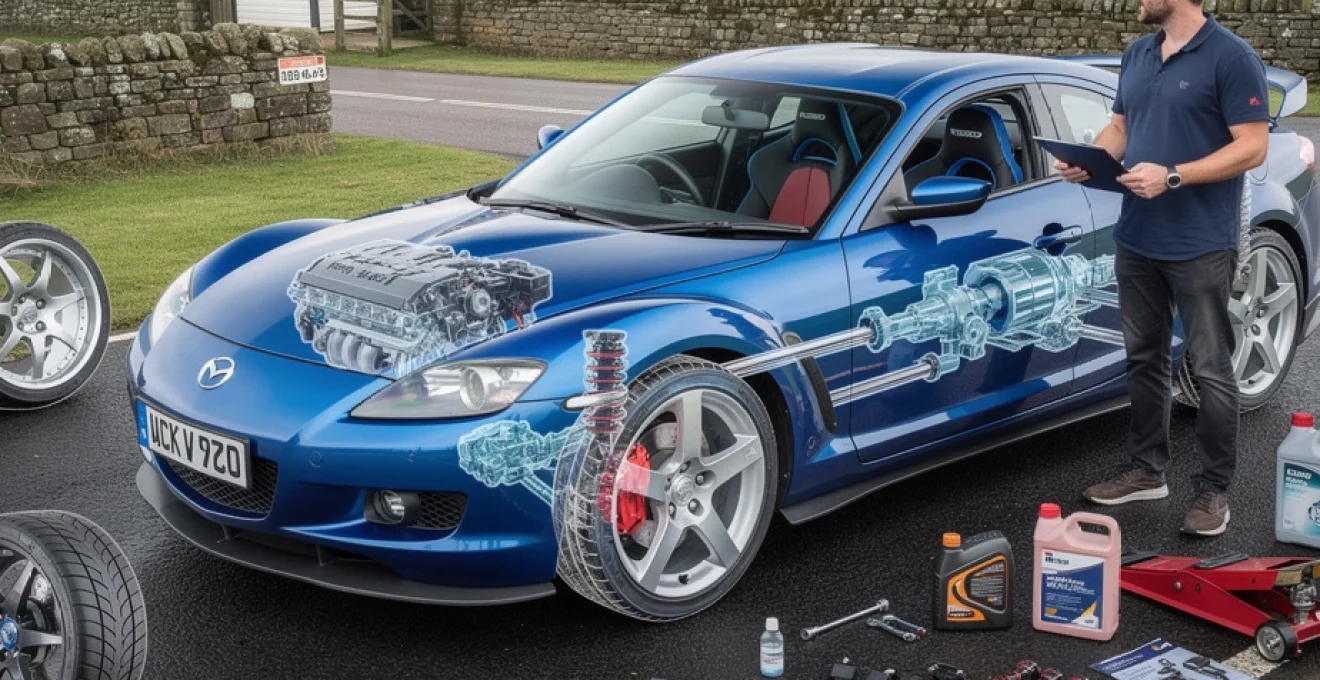
The Mazda RX‑8 R3 occupies a rare niche: a high‑revving, naturally aspirated rotary coupé that can still carry four adults and their weekend bags. For drivers who enjoy precision more than straight‑line bravado, the R3’s combination of a 9000rpm 13B‑MSP Renesis, manual gearbox and carefully honed chassis delivers an experience that modern turbo hot hatches struggle to replicate. Yet the same engineering quirks that make the RX‑8 R3 so distinctive also make ownership more demanding than a typical 2.0‑litre coupé. Understanding how the R3 differs from earlier RX‑8s, what it needs to stay healthy, and how to set it up for UK roads and track days will determine whether you enjoy years of reliable performance or face premature rebuilds and rising bills.
If you are considering a used RX‑8 R3, or looking to get more from one you already own, a clear view of its chassis behaviour, rotary engine care, drivetrain strengths and long‑term running costs helps turn a potentially risky purchase into a deeply rewarding long‑term project car.
Mazda RX‑8 R3 chassis, suspension and handling characteristics on road and track
R3-specific bilstein dampers, stiffer springs and anti-roll bars vs standard RX‑8 Sport/GT
The RX‑8 R3 builds on the already capable RX‑8 platform with a much more focused suspension package. Compared with the earlier 231bhp Sport/GT models, the R3 receives unique Bilstein dampers, stiffer coil springs and revised anti‑roll bars, along with a strengthened front subframe and additional foam filling in key chassis members. The ride height drops by roughly 15mm versus early cars, similar to the Prodrive‑tuned PZ, which immediately sharpens turn‑in and reduces the gentle float some owners noticed on fast A‑roads.
On typical UK B‑roads, the R3 set‑up feels more tied down yet still compliant if the dampers and bushes are in good order. Body control over crests and compressions is significantly better than a tired early RX‑8, and the car resists heave and pitch under hard braking or rapid direction changes. For track‑day driving, the R3 package copes remarkably well in stock form; many owners only feel the need for uprated dampers after fitting much grippier tyres that expose the limits of the original Bilsteins.
Factory geometry, alignment specs and fast-road setups for UK b‑roads
Factory alignment for the RX‑8 R3 targets neutral, predictable handling with modest negative camber and a touch of front toe‑in. However, factory tolerances are wide, and a decade of potholes and speed bumps often means a used R3 is no longer within specification. A proper four‑wheel alignment is one of the highest‑value upgrades you can buy for fast‑road and occasional track use.
For UK B‑road driving, many rotary specialists recommend increasing front negative camber to around ‑1.5° to ‑2.0°, running close to zero toe at the front and a hint of toe‑in at the rear to keep the car stable on motorways. This fast‑road geometry improves front‑end bite without making the RX‑8 dart around on uneven surfaces. Think of it as sharpening a high‑quality chef’s knife; the core tool is excellent from the factory, but proper setup unlocks its real precision.
Handling balance, understeer/oversteer traits and steering feel at the limit
The RX‑8 R3 retains the platform’s near‑perfect 50:50 weight distribution and very low centre of gravity. On the road that translates into a natural, confidence‑inspiring balance that flatters enthusiastic drivers without nasty surprises. At sensible road speeds the car is essentially neutral, with the front and rear working together rather than one end dominating. Push harder on circuit and gentle, progressive understeer arrives first, easily trimmed with a small lift of the throttle or a touch more steering lock.
With stability control in its more permissive modes, the R3 will rotate neatly on corner exit if you are deliberate with throttle application. Unlike a torquey turbo coupé, the modest low‑end torque means oversteer is more about momentum management than brute force. Steering feel remains a highlight: the electric power steering is lighter than some hydraulic systems but communicates grip levels clearly, especially with quality tyres at the correct pressures. At the limit, the car talks to you rather than shouts, which makes the R3 a superb chassis to learn rear‑wheel‑drive dynamics.
Wheel and tyre optimisation: OEM 19‑inch alloys vs 18‑inch track setups and tyre compounds
The R3’s OEM 19‑inch alloys and 225/40R19 tyres look fantastic and offer respectable grip, but they are a compromise between aesthetics, comfort and performance. The larger wheel diameter adds unsprung weight, and replacement premium‑brand tyres on 19‑inch rims can be expensive, particularly if you favour Michelin Pilot Sport or similar UHP compounds. Moving to 18‑inch wheels with 225/45R18 or 235/40R18 tyres is a popular modification for track‑biased cars and for owners seeking a better balance of grip, cost and ride quality.
With a quality 18‑inch setup, the sidewalls work more effectively over broken tarmac, improving traction out of tight bends and making the steering slightly less nervous over ruts. On circuit, a square 235/40R18 fitment on lightweight alloys often delivers more consistent lap‑to‑lap performance and reduces the risk of sudden breakaway. Tyre choice matters more than size: premium UHP or semi‑slick rubber transforms the RX‑8 R3 into a genuinely quick track‑day tool, but will also expose any weaknesses in geometry, dampers or driver technique.
Brake system performance, fade resistance and upgrades for circuit usage
Standard R3 brakes use large ventilated discs and twin‑piston front calipers, more than adequate for brisk road use when paired with quality pads and fluid. In independent tests, stock cars have repeatedly achieved sub‑36m 60‑0mph stopping distances, putting the RX‑8 in line with many modern performance saloons. However, sustained track use on OEM pads and fluid tends to reveal some fade after a handful of hard laps, particularly on heavier circuits like Silverstone GP or Donington.
For regular track days, simple upgrades make a significant difference: high‑temperature pads, DOT 4 or DOT 5.1 performance brake fluid, and braided lines to improve pedal feel under heavy load. Only those chasing serious lap times on semi‑slicks usually need to consider big brake kits. As with many aspects of R3 ownership, investing in preventative maintenance – fresh fluid each season and regular checks for caliper slider corrosion – pays off more than cosmetic upgrades.
13B‑MSP renesis engine in the RX‑8 R3: performance, reliability and tuning paths
High-compression 13B‑MSP renesis overview: side-port layout, high-rev characteristics and powerband
The R3 uses the later high‑compression version of Mazda’s 13B‑MSP Renesis rotary engine. This 1.3‑litre twin‑rotor unit features side exhaust ports rather than the peripheral ports found on earlier 13B designs, improving emissions and fuel economy while allowing a lofty 8500rpm power peak and 9000rpm redline. Official output is 228bhp, with around 156lb ft of torque at 5500rpm, but the character of the engine matters far more than those numbers suggest.
Power builds steadily from about 4500rpm, with a distinct step in urgency past 6000rpm as the secondary intake ports fully open. Above 7000rpm the engine feels almost motorcycle‑like, with a smooth, turbine‑style delivery that encourages you to stretch each gear. For drivers used to torquey turbo fours, the Renesis demands a mindset shift: performance comes from revs and gear selection, not low‑down shove. That unique powerband is a major part of the RX‑8 R3’s appeal, especially on flowing roads where you can keep the needle in the top third of the dial.
Compression testing, apex seal health and rotor housing wear diagnosis for used r3s
Rotary engine health lives and dies by compression. Low compression usually indicates worn apex seals, side seals or rotor housing wear, and is the number‑one concern when buying a used RX‑8 R3. Unlike a piston engine, a basic garage compression tester is useless here; a proper rotary compression test uses a dedicated device and measures three readings per rotor at a standardised cranking speed (typically 250rpm). Healthy R3 engines often show corrected figures close to the factory standard of around 8.5kgf/cm² (120psi) per face, with minimum acceptable readings around 6.9kgf/cm² (98.6psi).
A practical rule of thumb when viewing a car is to assess hot and cold starting. The engine should start within two seconds both from cold and when fully warmed; prolonged cranking on a hot restart can be an early warning of marginal compression. However, the R3’s faster starter motor can mask low compression to some extent, which is why a documented rotary compression test from a recognised specialist is strongly advisable, especially on cars above 60,000 miles or with patchy history.
R3 ignition system: coil packs, leads, plugs and common misfire faults
Ignition health is crucial for Renesis longevity. The RX‑8 R3 uses four coil packs feeding dual plugs per rotor, along with specific high‑temperature leads and unique plug types. Weak coils or degraded leads lead to incomplete combustion, washing oil from the rotor housings with unburnt fuel and accelerating wear. Experience in the UK rotary community suggests that even genuine coils are a consumable item, best replaced around every 30,000 miles or 5–6 years, whichever comes first.
Common symptoms of ignition issues include rough idle, hesitation around 3000‑4000rpm and increased fuel consumption. Budget pattern coils – the £50 per set type often found online – may seem tempting, but many owners have reported failure within a few thousand miles. In contrast, genuine or high‑quality aftermarket parts from recognised rotary parts suppliers typically last far longer. When inspecting an R3, asking when the coils, leads and spark plugs were last replaced is as important as checking the service book stamps.
Intake, exhaust and ECU remap options: racing beat, HKS, cobb and UK rotary specialists
Naturally aspirated rotary tuning is more about optimisation than headline power gains. A well‑mapped, bolt‑on modified RX‑8 R3 might gain 10–20bhp at the top end, but the main benefit lies in smoother delivery, improved mid‑range response and potentially better fuel economy when driven sensibly. Popular upgrades include freer‑flowing panel filters or intake kits, sports exhaust systems from brands such as Racing Beat or HKS, and high‑flow catalytic converters for track‑only cars.
ECU remapping through UK rotary specialists can refine fuelling and ignition timing and raise the factory rpm limiter slightly, often to around 9000–9300rpm, still within safe tolerances if the engine is healthy. Given how sensitive the Renesis is to mixture and heat, professional mapping from a workshop that understands rotary engines is essential. Treat the engine management system like a conductor in an orchestra; when it does its job properly, every other component works in harmony.
Forced induction considerations: greddy turbo, rotrex supercharger kits and engine longevity
Forced induction on the RX‑8 R3 – via Greddy‑style turbo kits or Rotrex superchargers – is undeniably appealing on paper. Gains of 60–120bhp are achievable, transforming straight‑line performance and making the car feel more like a modern turbo coupé. However, the Renesis was never designed from the outset as a boosted engine. Its high compression, side‑port layout and marginal cooling system leave limited headroom for additional thermal stress.
Owners who pursue turbo or supercharger builds usually accept a higher risk of shorter engine life and significantly increased maintenance. Careful tuning, conservative boost levels, upgraded cooling and regular oil analysis can mitigate some of the risk, but the reality remains: for most enthusiasts, focusing on reliability, chassis tuning and driver development delivers far greater satisfaction than chasing big dyno numbers. For those determined to go forced‑induction, budgeting for a built engine with upgraded seals and clearances from a specialist is a wise step.
RX‑8 R3 drivetrain, gearbox and differential behaviour under spirited driving
Aisin 6‑speed manual gearbox ratios, shift feel and synchro wear points
The RX‑8 R3’s Aisin 6‑speed manual gearbox is one of the most satisfying parts of the driving experience. Ratios are closely stacked to keep the Renesis in its powerband, with a short first gear and relatively tall sixth for motorway cruising. Shift action is light and precise, with a short throw that rewards deliberate, wrist‑flick movements. On a good example, fast upshifts at 8500rpm feel clean and drama‑free, enhancing the car’s high‑revving character.
Over time, especially with hard track use, some R3 gearboxes develop weak synchros on second or third gear, leading to notchiness or baulking when shifting quickly. Cold‑weather stiffness is common but usually improves once the oil warms. High‑quality transmission oil, changed more frequently than the official schedule suggests, can extend gearbox life. If you notice crunching on fast 2–3 shifts during a test drive, factor a potential gearbox rebuild or replacement into the purchase decision.
Clutch, flywheel and pedal feel: OEM vs lightweight performance upgrades
OEM clutch specification on the RX‑8 R3 offers a light pedal and progressive engagement, making daily driving in traffic relatively painless. Clutch life varies greatly with driving style; 60,000–80,000 miles is not unusual for a sympathetically driven car, while regular track work or abuse can shorten that significantly. As the friction plate wears, engagement typically moves higher up the pedal travel, and you may notice slip under full‑throttle upshifts in the higher gears.
Many enthusiasts opt for a lightweight single‑mass flywheel when replacing the clutch. This reduces rotational inertia, allowing the Renesis to spin up even more freely and sharpening throttle response. The trade‑off is increased drivetrain noise at idle and sometimes a slightly more abrupt take‑up, especially with aggressive aftermarket clutches. For a primarily road‑driven R3, a quality OEM‑spec clutch with a modestly lighter flywheel offers a good balance between longevity and sharper response.
Limited-slip differential characteristics, fluid choices and track durability
The RX‑8 R3 uses a mechanical limited‑slip differential (LSD) that plays a major role in its traction and corner‑exit behaviour. Under power, the LSD helps both rear wheels share the workload, reducing inside‑wheel spin when exiting tight corners. The factory unit is relatively mild in action compared with an aggressive aftermarket plate diff, which suits a dual‑purpose road and track car. On wet roads, the LSD makes the car feel predictable, allowing you to explore slip angles without sudden breakaway.
Differential fluid quality is often overlooked. Fresh, high‑quality gear oil meeting the correct specification helps reduce noise and ensures consistent lock‑up, particularly after repeated hot laps. On track‑focused cars, annual fluid changes are sensible; on low‑mileage road cars, every two to three years is usually adequate. Persistent whining, clunking on on‑off throttle, or obvious chatter in tight turns may indicate a diff that has been neglected or abused with repeated clutch‑kick antics.
Prop shaft, engine mounts and driveline NVH in daily use
The RX‑8 R3’s prop shaft and engine mounts are often ignored until they start to cause vibration or noise. Over time, rubber mounts soften and crack, increasing driveline movement under load. Worn engine mounts can exacerbate gearshift baulking, add a slight delay to throttle response and introduce new rattles into the cabin. On higher‑mileage cars, replacing tired mounts with fresh OEM parts or slightly uprated polyurethane items can restore the original tight, cohesive feel.
NVH levels in a healthy R3 remain civilised for daily commuting, with a subdued rotary hum at motorway speeds and minimal vibration through the pedals and gear lever. If you notice pronounced droning or vibration at specific road speeds, a bent prop shaft, worn centre bearing or failing diff mount may be to blame. Addressing these issues promptly avoids knock‑on damage to the gearbox or rear axle and preserves the refined side of the RX‑8’s personality.
Known RX‑8 R3 ownership issues, preventative maintenance and UK running costs
Hot and cold starting problems, flooding risks and correct shutdown procedure
Starting behaviour is one of the clearest windows into the health of a Renesis engine. A healthy RX‑8 R3 should start promptly from cold and hot, usually within one or two seconds of cranking. Prolonged cranking, especially on a warm restart after a short trip, can suggest marginal compression or weak ignition. Flooding – where excess fuel saturates the chambers and fouls the plugs – is more common on cars that undertake repeated short journeys and are switched off before reaching full operating temperature.
To minimise flooding risk, many specialists recommend a simple shutdown procedure: allow the engine to reach full temperature where possible, and before switching off after cold moves, blip the throttle to around 4000rpm and release the key as revs drop sharply. This helps clear excess fuel. If flooding does occur, a proper de‑flood procedure involving removing the fuel pump fuse, cranking to clear the chambers, then re‑attempting a start, can often avoid a tow. Understanding and following these steps is one of the most valuable skills you can develop as an RX‑8 owner.
Oil consumption, premix strategies and recommended lubricants for renesis longevity
Rotary engines are designed to use oil; the RX‑8’s oil metering system injects engine oil into the combustion chambers to lubricate apex seals. Mazda’s own figures suggest up to 0.25 litres per 1000 miles is within normal range, although real‑world consumption varies with driving style. Checking the dipstick at every fuel fill – or at least every 500 miles – is essential. Running low on oil is one of the fastest ways to shorten an engine’s life.
Oil grade recommendations differ slightly between markets, but for UK use a quality 5W‑30 or 10W‑40 mineral or semi‑synthetic oil is typically favoured over fully synthetic, which can leave more ash deposits. Some owners choose to premix a small quantity of two‑stroke oil into the fuel, especially on rebuilt engines with upgraded seals. Premix can improve lubrication at high rpm, but must be used with care to avoid excessive carbon build‑up. Whatever strategy you choose, consistency and frequent level checks matter far more than brand loyalty.
Cooling system checks: radiator, thermostat, coolant seals and overheating prevention
The Renesis is sensitive to heat, and cooling system condition plays a huge role in engine longevity. Radiators on older cars can corrode and silt up, reducing efficiency, while thermostat failures can cause slow warm‑up or, more seriously, overheating. There have been documented cases where a split expansion tank or hose has led to rapid coolant loss and subsequent seal damage, necessitating a costly rebuild. Checking for any signs of dried coolant residue, staining or crusty hose clamps around the front of the engine bay is time well spent.
Because the factory coolant gauge is heavily damped – often sitting in the middle from roughly 70–105°C – many experienced owners fit an aftermarket temperature gauge or monitor live data via OBD tools. Spotting creeping temperatures early allows you to back off before real damage occurs. Flushing the cooling system and replacing coolant at conservative intervals, along with proactive radiator replacement on higher‑mileage cars, provides cheap insurance for the 13B‑MSP.
UK MOT pain points: emissions, catalytic converter efficiency and exhaust leaks
As RX‑8s age, MOT emissions tests can become more challenging. A tired catalytic converter – often damaged by prolonged misfires, excess fuel from repeated flooding, or poor‑quality ignition components – may struggle to keep HC and CO levels within limits. Rotary engines also run relatively rich by design at certain load points, which can mask marginal cats. If a car only just scrapes through emissions, consider that an early warning sign rather than a pass to ignore.
Exhaust leaks before the cat, especially at manifold joints or cracked flex sections, can skew lambda readings and lead to MOT failures. Regular inspections of the exhaust system, including the condition of heat shields and hangers, reduce the chance of an unexpected fail. When replacing a catalytic converter, investing in a quality part rather than the cheapest pattern unit typically pays off in longer service life and more consistent emissions performance.
Insurance, road tax, fuel economy and typical annual maintenance budget in the UK
Running costs for an RX‑8 R3 in the UK sit somewhere between a hot hatch and a junior performance saloon. Fuel economy for mixed driving commonly ranges between 18–23mpg, dropping into the low teens with frequent high‑rev use or track days. Annual VED for later cars falls into higher bands due to CO₂ emissions, so factoring road tax into your ownership budget is sensible. Insurance premiums are usually reasonable for drivers with a clean record, thanks to relatively low theft rates and mature owner demographics.
For maintenance, a realistic annual budget for a well‑looked‑after, enthusiast‑owned R3 might be £800–£1500 excluding major work, assuming around 6000–8000 miles per year. This covers regular servicing, ignition refreshes at sensible intervals, tyres, brakes and the odd suspension component. The big variable is engine health: setting aside a contingency fund for a future rebuild – typically £2500–£4000 depending on parts and specialist – turns a nasty surprise into a planned upgrade rather than a crisis.
Interior, ergonomics and daily usability of the mazda RX‑8 R3
Recaro front seats, driving position and cabin ergonomics for taller drivers
Inside, the RX‑8 R3 distinguishes itself with excellent Recaro front seats featuring pronounced bolstering and integrated headrests. These seats strike a rare balance: enough lateral support for serious track work, yet comfortable enough for long motorway journeys. Taller drivers up to around 6’3″ generally report a good driving position, helped by a wide range of steering wheel adjustment and well‑placed pedals that suit heel‑and‑toe downshifts.
The cabin layout is driver‑centric without feeling claustrophobic. Rotary‑themed touches – such as the triangular motif on the gear knob and door cards – provide subtle reminders of the car’s unusual heart. Visibility is better than many coupés of the era, with a relatively low scuttle and thin A‑pillars compared with modern cars. If you enjoy feeling part of the car rather than perched on top of it, the R3’s cabin geometry will likely appeal.
Practicality of the freestyle rear doors, rear seats and boot space in everyday use
One of the RX‑8’s signature features is its “freestyle” rear doors: rear‑hinged half‑doors that open only when the corresponding front door is already open. This layout allows remarkably easy access to the rear seats compared with a traditional three‑door coupé. For families with older children or for carrying adults occasionally, the RX‑8 R3 is genuinely more usable than many rivals. The two individual rear seats are sculpted and comfortable, with enough legroom for average‑height adults on shorter trips.
Boot space is adequate rather than cavernous, but well‑shaped enough for weekend luggage or a weekly shop. The fixed rear bulkhead, required for structural rigidity, means there is no through‑load for very long items, but the rear seatbacks can be folded to increase volume. For track days, you can realistically carry a second set of wheels and tools inside the car, albeit at the expense of rear passenger space and some interior cleanliness.
R3-specific trim, bose audio, navigation and common interior wear points
The R3 introduced small but welcome interior upgrades over earlier RX‑8s, including revised trim materials, unique sill plates and, in many markets, an upgraded Bose audio system. Factory navigation systems now feel dated compared with modern smartphones, but the integrated screens still provide useful trip and vehicle information. Most owners today choose to retrofit discreet phone mounts or double‑DIN head units with Android Auto or Apple CarPlay while retaining the OEM climate controls.
Wear points to watch include the driver’s seat bolster, which can show cracking or splitting on higher‑mileage cars, and scuffed plastic seat backs from rear passengers entering and exiting. The handbrake gaiter on early RX‑8s was known to split, although many have been updated. Window switchgear and steering wheel buttons generally prove durable, but testing every function, including seat heaters and audio controls, is wise when viewing a potential purchase.
Noise, vibration and harshness on motorway commutes vs spirited weekend drives
On the motorway, the RX‑8 R3 settles into a surprisingly relaxed rhythm. At 70mph in sixth gear, the Renesis hums along quietly at modest rpm, and tyre roar is acceptable provided quality tyres are fitted. Wind noise is in line with other cars of its era, and the refined secondary ride from the Bilstein dampers avoids the harshness often associated with firm sports suspensions. If you cover regular long distances, you will appreciate how civilised the car can be when driven gently.
Open the taps on a favourite B‑road, however, and the character changes. The engine note hardens into a metallic wail above 7000rpm, road and drivetrain noise increase, and the whole car comes alive. Noise, vibration and harshness (NVH) increase, but in a purposeful, mechanical way rather than as crude intrusion. That duality – quiet enough for a commute, engaging enough for a dawn blast – is one reason many owners keep their R3s even when adding more modern machinery to the driveway.
Buying guide and value analysis for used mazda RX‑8 R3 models in the UK
R3 production years, UK market numbers and differences vs PZ, 231 and 192 models
The RX‑8 R3 arrived as part of the 2009 facelift and remained on sale in the UK until around 2010, with relatively low production numbers compared with earlier 231 and 192 models. This relative rarity, combined with its mechanical improvements, makes the R3 the most sought‑after factory RX‑8 variant for many enthusiasts. Compared with the PZ, which was a Prodrive‑tuned limited edition based on the pre‑facelift car, the R3 benefits from the later oiling system revisions, stiffer bodyshell and factory‑developed Bilstein suspension.
Versus the standard 231, the R3 adds the aforementioned chassis changes, unique bodykit and wheels, Recaro seats and detail interior tweaks. The lower‑powered 192 models, while cheaper to insure and tax, lack the high‑rev punch and shorter‑ratio six‑speed gearbox that define the RX‑8 experience. For drivers prioritising pure driving enjoyment and long‑term collectability, the R3 sits at the top of the hierarchy.
Key inspection checklist: rust hotspots, chassis corrosion and bodywork issues
Bodywork condition is just as important as engine health when assessing an RX‑8 R3. Although later cars are generally better protected than early 2003–2005 examples, rust can still appear, particularly on UK cars exposed to winter road salt. Common hotspots include the rear wheel arches where they meet the bumper, the sills just ahead of the rear wheels, and the underside around jacking points and subframe mounts. Surface bubbling around the high‑level brake light on the bootlid can also occur.
Getting the car on a ramp or at least inspecting thoroughly with a torch is essential. Look for evidence of poor previous repairs, filler, or underseal hastily applied over rust. Checking the condition of the front oil cooler lines and the surrounding wheel arch liners is particularly relevant, as Mazda ran a special service campaign to address corrosion issues here. A structurally sound shell is the foundation for everything else; engine issues can be fixed, but extensive rust is usually a walk‑away sign unless the car is very cheap and you are experienced with restoration.
Service history requirements: rotary specialist stamps, major intervals and rebuild evidence
A thick folder of invoices from recognised rotary specialists is worth more than a fully stamped main‑dealer book with little detail. Ideal evidence includes regular oil changes (every 3000–6000 miles), documented ignition system refreshes, cooling system work and, where applicable, compression test printouts. Spark plugs have an official replacement interval around 37,500 miles or three years, but many enthusiasts change them sooner, particularly if the car has seen repeated short journeys.
If an engine rebuild has been carried out, documentation of who did the work, what parts were used (for example upgraded apex seals, new rotor housings, bearings) and any break‑in recommendations is vital. A properly rebuilt engine by a respected UK rotary specialist can be an asset, especially if compression figures are strong and the car has been run‑in with care. Conversely, a vaguely described “rebuild” with no paperwork might hide corner‑cutting or simply a used engine swap.
Typical UK price ranges, mileage bands and depreciation trends for the RX‑8 R3
UK prices for RX‑8 R3 models have largely stabilised after years of depreciation. While early, high‑mileage 231s sometimes change hands for under £2000, genuine R3s in usable condition tend to start higher. Expect asking prices around £5000–£7000 for cars with 70,000–100,000 miles, rising to £8000–£10,000 or more for low‑mileage, well‑documented examples. Ultra‑low‑mileage, collector‑grade R3s occasionally command even higher figures, reflecting their rarity.
Depreciation from this point is likely to be gentle, especially for tidy cars kept in good mechanical condition. As more rough examples are broken for parts or scrapped due to engine failure and rust, the pool of clean R3s will shrink. For an enthusiast buyer who looks after the car and keeps mileage sensible, total cost of ownership over five years can compare favourably with many newer hot hatches, especially when factoring in the R3’s growing status as a modern classic.
Recommended UK rotary specialists and owners’ clubs for pre-purchase inspections
Given the RX‑8 R3’s specific needs, involving a rotary specialist before purchase is one of the smartest moves you can make. A proper pre‑purchase inspection with a hot compression test, borescope inspection where possible and thorough underside check can uncover issues that a generic inspection might miss. Costs for such inspections are usually modest compared with the price of an engine rebuild or extensive rust repair.
Active RX‑8 owners’ clubs and online communities in the UK are also valuable resources, both for finding known good cars and for learning which specialists have the best reputations. Many experienced owners are willing to accompany prospective buyers to view cars, helping you spot the difference between a well‑cared‑for enthusiast example and a tired RX‑8 that has passed through too many indifferent hands. Taking the time to tap into that shared knowledge base dramatically increases the chances that your RX‑8 R3 ownership story will centre on 9000rpm memories rather than workshop invoices.