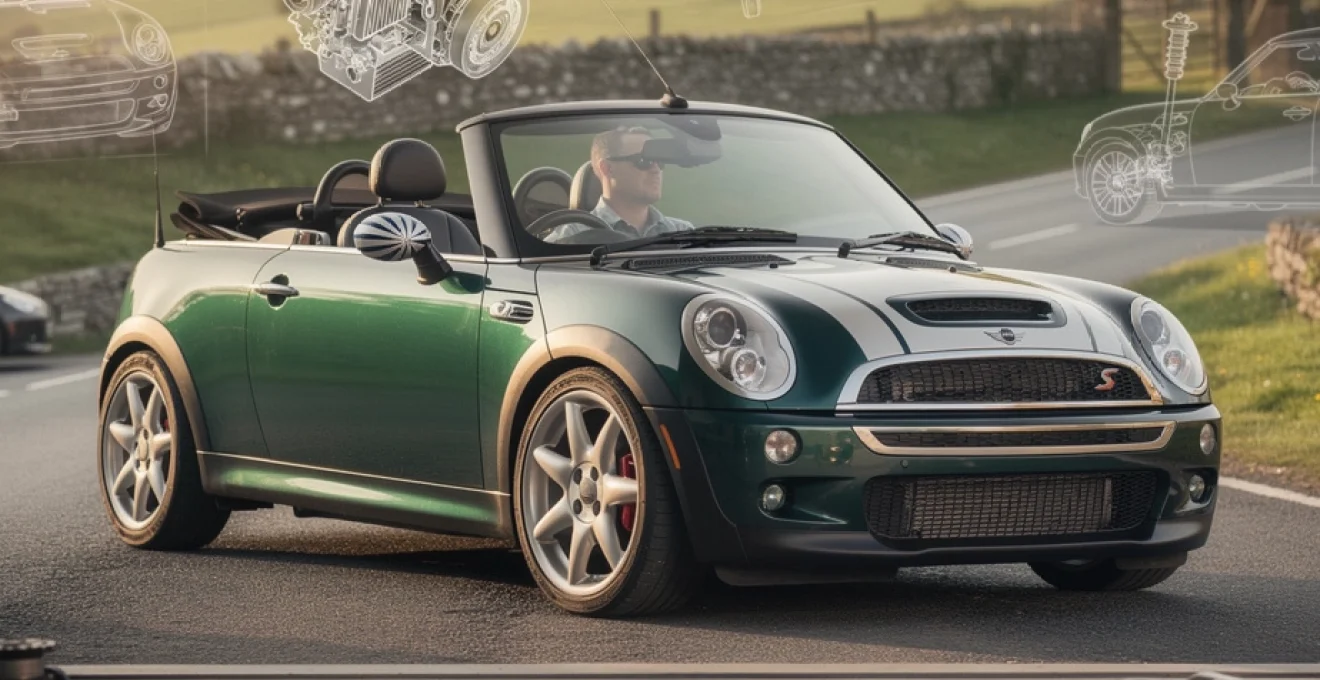
The Mini Cooper S R52 brings together old-school hot hatch energy and open-top cruising in a way that still feels distinctive. With values now dipping well below £3,000 in the UK, this supercharged soft-top sits in a sweet spot between cheap convertible toy and genuinely usable everyday car. If you enjoy a car that feels alive at sensible speeds, has room for a child seat in the back, and can still make a Sunday B-road blast feel special, the R52 Cooper S deserves serious attention. Understanding its engine, chassis, roof engineering and reliability quirks will help you choose the right example and decide how far to push performance upgrades.
Mini cooper S R52 roadster overview: production years, variants and market positioning in the hot hatch cabrio segment
The Mini Cooper S R52 Convertible arrived in 2004, three years after the reborn R50 hatch, and stayed in production until around 2008 (with some markets registering stock into 2010). It sat above the 90 bhp Mini One Convertible and the 116 bhp Cooper Convertible, using the same supercharged 1.6 as the R53 hatch but with extra weight and a very different character. In the early 2000s it was positioned as a premium hot hatch cabriolet, costing significantly more than mainstream rivals yet undercutting prestige roadsters on price and running costs.
Three main Cooper S flavours existed over its life: early 170 bhp cars, later models with slight ECU and emissions tweaks, and the 210 bhp dealer-fit JCW kit. All shared the same basic mechanical package, so even a standard 170 bhp R52 feels brisk enough by modern warm hatch standards. Compared with contemporary Mazda MX‑5 and Audi TT Roadster 1.8T models, the R52 Cooper S offered something more playful and “cheeky”: a practical four-seater cabrio with a go‑kart feel and almost endless factory personalisation. Today the car occupies a niche as an affordable enthusiast’s convertible, often appealing to drivers who want more character than a generic family hatch but need more usability than a pure two-seat roadster.
Engine and performance analysis of the mini cooper S R52: tritec 1.6 supercharged, power delivery and tuning potential
Tritec W11B16A 1.6-litre supercharged engine architecture, eaton M45 compressor and intercooling layout
At the heart of the R52 Cooper S sits the W11B16A 1.6‑litre Tritec engine, built in Brazil and co-developed with Chrysler. It is a relatively simple, robust iron-block, aluminium-head four-cylinder using a belt-driven Eaton M45 roots-type supercharger. Instead of a turbocharger spooling up with exhaust gases, the M45 is mechanically driven from the crankshaft, so boost is available almost off idle and builds in a linear, predictable way. The supercharger feeds an air‑to‑air intercooler mounted on top of the engine, with air drawn through a bonnet scoop to reduce intake temperatures.
Because the W11 is not highly stressed in factory form, it copes well with modest increases in boost and fuelling. The engine uses port fuel injection and relatively conservative ignition timing, which gives tuners a safe baseline. The intercooler layout is the main compromise; being top‑mounted, it suffers from heat soak in slow traffic, especially on warm days. That limitation becomes more significant when pulley sizes are reduced to raise boost pressure, which is why many owners combine pulley changes with uprated intercoolers and improved under‑bonnet airflow.
Factory performance figures: 0–62 mph, top speed, in-gear acceleration and comparison with R53 cooper S
Officially, a manual R52 Cooper S delivers around 170 bhp and 162 lb ft, depending on model year. Published factory figures quote 0–62 mph in roughly 7.6 seconds and a top speed of around 134 mph. Automatic versions are slower, edging closer to 8.5 seconds to 62 mph due to torque converter losses and gearing. In-gear acceleration is where the supercharged setup shines: 30–70 mph is dispatched in under 8 seconds in the right gear, giving strong mid‑range punch for overtakes.
Compared with the equivalent R53 Cooper S hatch, the R52 is typically about 100–120 kg heavier due to the reinforced shell and roof mechanism. That weight blunts outright acceleration by a few tenths and slightly softens the initial response. However, real‑world differences are modest; if you drove a standard R53 and R52 back-to-back on a damp B-road, the stopwatch would matter less than the noise, wind-in-hair sensation and how much confidence each car gives you. For most drivers, the convertible feels 90–95% as quick as the hatch in dry conditions, with the same eager supercharger whine adding to the sense of speed.
Real-world performance on b-roads and motorways in the UK: overtaking, torque curve and drivability
On typical UK B‑roads, the Mini Cooper S R52 feels lively rather than brutally fast. Peak torque arrives from about 4,000 rpm, but there is useful pull from as low as 2,000 rpm. That broad torque curve means you can leave the gearbox in third or fourth and concentrate on positioning the car, rather than constantly rowing through the ratios. In mixed driving, owners often report averages of 30–34 mpg, with high‑20s more realistic if you regularly use the upper half of the rev range.
On the motorway, the Cooper S convertible sits at 70 mph at around 3,000 rpm in sixth (for cars with the later six‑speed manual), so the engine is audible but not intrusive. Overtakes from 60–80 mph are confident as long as you downshift to fifth or fourth; the supercharger gives near‑instant response compared with older turbocharged engines that needed to wake up. With the roof down, wind buffeting is manageable and the car remains composed even after a few hours behind the wheel, provided the suspension and tyres are in good condition.
Common performance upgrades: 15% reduction pulley kits, intercooler upgrades, remaps and cat-back exhausts
The R52 Cooper S is one of those cars where modest, well-chosen upgrades can transform performance without ruining the underlying character. The most popular modification is a smaller supercharger pulley, typically a 15% reduction. This spins the Eaton M45 faster, raising boost by around 2–3 psi and lifting power into the 190–200 bhp range when combined with a proper remap. Many owners pair this with a freer‑flowing cat-back exhaust and high‑flow panel filter.
Intercooler upgrades are the next logical step, especially for those who enjoy repeated hard runs or track days. A larger front‑mount intercooler reduces intake temperatures by up to 20–25°C in some data logs, helping sustain power and protect the engine from detonation. Gains of 10–20 bhp over a pulley‑only setup are common. A quality remap ties all these changes together, improving throttle response and part‑throttle drivability while keeping fuelling and ignition timing within safe limits.
Reliability considerations under tuned conditions: supercharger wear, detonation risk and cooling limitations
As with any tuned forced-induction engine, pushing an R52 Cooper S past 200 bhp raises stress levels. The Eaton M45 supercharger uses internal bearings and a separate oil supply; by 100,000 miles the unit is often due a refresh, and higher boost from pulley reductions can accelerate wear. Listening for unusual rattles or whines beyond the normal supercharger noise is crucial when viewing a modified car. A rebuilt supercharger from a reputable specialist is not cheap, but it is far more economical than running a failing unit until it disintegrates.
Detonation, or pinking, becomes more likely when intake temperatures spike and ignition timing is aggressively advanced by an over‑ambitious remap. On 95 RON fuel the risk increases, so high‑boost cars benefit from consistently running 97–99 RON. Cooling is another constraint; the compact engine bay and top‑mount intercooler mean that repeated full‑throttle runs can quickly heat-soak the system. Owners who track or regularly drive hard often upgrade radiators, fit oil coolers, or improve airflow with vented bonnets to keep coolant and oil temperatures in check.
Chassis, handling and braking: comparing the R52 cooper S roadster to R50/R53 hatch and R56 successors
Suspension geometry and set-up: MacPherson struts, multi-link rear and impact of convertible body reinforcement
The R52 Cooper S roadster shares its basic chassis layout with the R53 hatch: MacPherson struts at the front and a compact multi‑link arrangement at the rear. Where it differs is in the additional body reinforcement required to compensate for the missing metal roof. Thickened sills, reinforced A‑pillars and under‑floor bracing add mass but also aim to preserve torsional rigidity. Despite this, the convertible never quite matches the hatchback’s body stiffness, so the suspension has slightly softer settings to reduce the feeling of harshness and scuttle shake.
On typical UK roads this translates into a firmer-than-average ride that feels busy but controlled. Early cars with Sport Suspension Plus can verge on harsh over sharp potholes, especially on 17‑inch wheels. Some owners actually prefer the standard suspension on the R52 because it gives a more fluid, forgiving ride without sacrificing much cornering ability. Careful geometry setup – including a touch more front camber and slight toe adjustments – can sharpen turn‑in while keeping tyre wear under control.
Steering feel and turn-in response: electro-hydraulic power steering behaviour on twisty roads
The electro‑hydraulic power steering in the R52 Cooper S is one of its defining features. Unlike full electric systems, it combines hydraulic assistance with an electric pump, giving strong weighting and plenty of feedback through the rim. On twisty B‑roads, the car responds quickly to small inputs; the front end darts eagerly into bends, and the short wheelbase contributes to a playful, adjustable balance. If you enjoy a car that feels “alive” just off centre, the R52 delivers that sensation in spades.
There are caveats. The steering rack can feel slightly nervous on poor motorway surfaces, and worn bushes or tired dampers amplify this. The electric pump is a known failure point as the cars age, sometimes leading to intermittent assistance or, in rare cases, sudden loss of power steering. Replacements and refurbished units are readily available but not cheap, so any whining noises or inconsistent assistance on a test drive should prompt questions about the system’s health.
Braking system performance: OEM discs, callipers, brake fade and recommended pad/fluid upgrades
Standard R52 Cooper S brakes use ventilated front discs with single‑piston sliding calipers and solid rear discs. For daily driving and occasional spirited use, the stock setup is adequate, with stopping distances around the 35–36 m mark from 62 mph when the system is fresh. However, repeated hard braking from motorway speeds or enthusiastic runs down a mountain pass will quickly highlight the limitations; brake fade and a soft pedal are common complaints, especially on older fluid or budget pads.
A simple upgrade path keeps the system reliable without resorting to expensive big brake kits. High‑quality fast road pads, braided stainless-steel brake lines and fresh DOT 4 or DOT 5.1 fluid significantly raise resistance to fade and improve pedal feel. For drivers planning regular track days, larger discs and calipers from later or performance-oriented Mini models can be retrofitted. Whatever the setup, regular inspection of rear calipers for sticking sliders is essential, as seized components can dramatically increase stopping distances and cause uneven pad wear.
Wheel and tyre configurations: 16″ vs 17″ alloys, run-flat tyres vs conventional tyres, effects on ride and grip
Most R52 Cooper S models were specified with 17‑inch alloys from new, often on stiff run‑flat tyres. While this combination looks great, it can make the ride uncomfortably firm on broken city streets and contribute to tramlining on rutted tarmac. Many owners switching from run‑flats to high‑quality conventional tyres report a marked improvement in comfort, steering feel and wet‑weather grip, at the cost of needing a tyre repair kit or space‑saver in the boot.
For drivers prioritising B‑road composure and everyday refinement, 16‑inch wheels with a slightly taller sidewall often provide the best balance. The difference in unsprung weight and tyre compliance is noticeable, allowing the suspension to work more effectively and enhancing overall grip on poor surfaces. Choosing the right tyre – with a performance-biased compound and appropriate load rating – has more impact on real-world handling than almost any other single modification on this car.
Dynamic character comparison: R52 cooper S vs mazda MX-5 NC and audi TT roadster 1.8T
How does the R52 Cooper S roadster stack up against rivals like the Mazda MX‑5 NC and Audi TT Roadster 1.8T? The MX‑5 offers a purer rear‑wheel‑drive experience, with lighter steering and a more progressive balance at the limit. Its 2.0‑litre engine delivers similar performance to a stock Cooper S, but the Mazda’s party trick is its fluid, neutral handling and superb manual gearbox. If you value adjustability and classic sports-car feel above all else, the MX‑5 still edges ahead.
The Audi TT Roadster 1.8T, particularly in quattro form, feels more grown-up and refined, with better high‑speed stability and a more insulated cabin. However, it lacks the Mini’s hyperactive turn‑in and go‑kart personality. The Cooper S R52 occupies a middle ground: more practical and playful than the TT, more characterful and supercharged‑punchy than the MX‑5, but with slightly less finesse. For many drivers who want hot‑hatch pace, four seats and a fabric roof in a single package, that compromise is precisely the appeal.
Convertible roof engineering and body structure: soft-top mechanism, rigidity and NVH in the mini cooper S R52
Electro-hydraulic roof mechanism operation, failure points and maintenance routines
The R52’s soft-top uses an electro‑hydraulic mechanism rather than a manual hood or complex folding metal roof. Press the switch once and the front section slides back about 40 cm, creating a sunroof effect useful in cooler weather. Press and hold again, and the roof folds fully behind the rear seats in roughly 15 seconds. Unlike some rivals, the system retains 120 litres of boot space even with the roof stowed, thanks to the compact folding arrangement and drop‑down tailgate.
Common failure points include worn micro-switches in the boot area (which confuse the control unit about roof position), tired hydraulic pumps and frayed tensioning straps. A simple maintenance routine helps: keeping boot load off the parcel shelf, lubricating hinges and latches annually, and clearing debris from the roof drains. If you press the switch and only the sunroof portion moves, the culprit is often a mis-positioned boot shelf or faulty switch rather than a catastrophic hydraulic failure.
Body shell reinforcement, torsional rigidity and impact on handling versus the R53 hardtop
Removing the metal roof inevitably affects torsional rigidity, so Mini engineered substantial reinforcements into the R52 shell. Thicker door sills, heavily strengthened A‑pillars designed to act as roll‑over protection, and additional cross‑members beneath the floor all work together to mitigate flex. These changes make the R52 one of the stiffer small convertibles of its era, but not quite as solid as the R53 hardtop when dealing with sharp inputs such as potholes or aggressive kerb strikes.
On the road, the difference appears as a hint of scuttle shake over rough surfaces; the dashboard and steering column can tremor slightly where the hatchback would remain calm. Pushed close to the limit on fast, bumpy roads, the convertible feels a touch less composed, with the suspension having to work harder to keep the tyres in contact with the tarmac. For most drivers using the car as a fast road machine rather than a track tool, the extra character and open‑top experience more than offset that marginal loss in ultimate precision.
Wind noise, scuttle shake and NVH characteristics at 70 mph with roof up and down
Noise, vibration and harshness (NVH) levels in the R52 Cooper S are surprisingly well controlled for a soft-top of this vintage. With the roof up at 70 mph, wind noise is comparable to many modern small hatchbacks, and tyre roar usually dominates the soundscape. The fabric hood uses multiple layers and a heated glass rear window, so winter usability is strong, with minimal drafts once seals are in good condition. Owners report that motorway journeys of 200–300 miles are realistic without emerging exhausted.
With the roof down, wind management is good up to around 60 mph, becoming progressively more blustery beyond that. A wind deflector between the rear headrests significantly reduces buffeting, especially for front occupants, and makes roof‑down motorway running a viable option. Scuttle shake is most noticeable on poor concrete surfaces, where the steering column and mirror can visibly tremble. Ensuring the front subframe bushes and top mounts are fresh helps reduce perceived shake and keeps NVH in check.
Weatherproofing and water ingress: seals, drainage channels and corrosion-prone areas
Any 15‑ to 20‑year‑old convertible demands careful inspection for water ingress, and the Mini Cooper S R52 is no exception. The roof uses a network of seals and drainage channels around the windscreen, side windows and rear quarters. Blocked drains can lead to water pooling in the sills or footwells, sometimes manifesting as damp carpets and steamed‑up windows. Regularly clearing debris from the gutter areas with a soft brush or compressed air helps prevent this gradual buildup.
Corrosion-prone areas include the lower edges of the front wings, rear subframe mounting points, and the boot floor around the rear panel. If the tailgate seals fail, water can sit in the boot and eventually attack the metal from the inside. A thorough pre‑purchase check should include lifting boot carpets, feeling under the rear seats and inspecting the sills from below. Catching minor rust early allows targeted treatment rather than having to fund structural welding later.
Retrofit and upgrade options: wind deflectors, roof fabric re-skinning and glass rear window considerations
For owners wishing to improve the R52’s roof setup, several retrofit options exist. Genuine and aftermarket wind deflectors slot behind the front seats and cut buffeting dramatically, especially for taller drivers. If the original hood fabric is faded, torn or has shrinking seams, a quality re‑skin can transform the look of the car and improve weatherproofing. Costs vary widely, but in many cases a full roof replacement is still cheaper than repainting a metal roof on a tin‑top car.
The factory glass rear window is heated and integrated, so there is no need to worry about cloudy plastic rear screens as on many older convertibles. When re‑skinning, choosing a mohair or premium canvas material adds a more upmarket appearance and can reduce road noise. Ensuring the tension cables and frame are correctly adjusted after any roof work is crucial to avoid wind whistles and leaks around the A‑pillars.
Interior, ergonomics and everyday usability: cabin packaging in the mini cooper S R52 roadster
Inside, the Mini Cooper S R52 combines retro styling cues with a surprisingly solid feel. The large central speedometer, toggle switches and chrome details give a sense of occasion every time you climb aboard. Front seats provide good lateral support, particularly on Cooper S sport seats, and there is enough adjustment for most drivers to find a comfortable position. The slightly upright seating position and relatively low scuttle mean visibility forwards is excellent, especially with the bonnet tips visible – a useful trait on tight Cornish lanes or multi‑storey car parks.
The rear seats are best described as occasional, but for children or short adults on shorter journeys they are perfectly usable. Many owners use the back seats for a child seat on one side and extra soft luggage on the other, turning the Mini into a genuinely flexible daily convertible. With the roof up, boot space of around 165 litres is adequate for a weekly shop; with the roof down, access is restricted but the drop‑down tailgate can support up to 80 kg, making it a handy loading platform. Folding the rear seatbacks and using the “easy‑load” function on the roof hinges allows bulkier items to be squeezed in when needed.
Common faults, service intervals and long-term reliability of the mini cooper S R52 supercharged platform
While the R52 Cooper S has a reputation for being more complex than a basic hatchback, the underlying mechanical package can be durable if maintained correctly. Official service intervals were often stretched by longlife schedules, but many enthusiasts adopt a 10,000‑mile or annual oil change regime with quality synthetic oil to protect the supercharged engine. Regular coolant changes every 4–5 years help combat internal corrosion, especially important given the additional heat generated by forced induction. Spark plugs and ignition components should be inspected around 40,000–50,000 miles to maintain smooth running and prevent misfires under boost.
Common faults include leaking rocker cover gaskets, perished crankshaft oil seals and failing engine mounts, all of which manifest as oil drips or increased vibration. The auxiliary belt and tensioner drive both the alternator and supercharger, so any squeaks or oscillations from the belt system deserve immediate attention. Cooling system components – particularly the expansion tank and radiator – can become brittle with age. Many higher‑mileage cars will also need attention to the front lower control arm bushes and rear trailing arm bushes; worn items contribute to vague handling and uneven tyre wear but are relatively straightforward to replace.
Buying guide and value analysis: mini cooper S R52 used market, specification choices and future classic potential
On today’s UK used market, the Mini Cooper S R52 spans a wide range of prices and conditions. Tired but running examples can be found from around £1,500–£2,000, while well-maintained, low‑mileage cars with full history and desirable options often command £4,000–£6,000. At the budget end, many buyers echo a similar pattern: a purchase under £3,000 for a 2004–2005 car with around 70,000–90,000 miles, plus some inevitable early niggles such as punctures, exhaust back‑box failures or minor idle issues. Factoring in a contingency fund of £500–£1,000 for the first year is wise.
When assessing specification, look for heated seats, cruise control and the better stereo if planning to use the car as a daily driver. Sport seats and 16‑ or 17‑inch alloys are common, while rare colour combinations and JCW kits add to long‑term desirability. Service history is more important than low mileage alone; a 100,000‑mile car with documented supercharger oil changes, suspension refreshes and regular servicing is often a safer bet than a lower‑mileage example with patchy records. From a future classic perspective, the R52 Cooper S has strong credentials: it is the first-generation BMW‑era Mini convertible, uses a charismatic supercharged engine no longer in production, and offers a driving experience that newer turbocharged models struggle to replicate. As clean, original cars become scarcer, values for the best examples are likely to stabilise and potentially creep up, especially for late cars and those with tasteful, period‑correct upgrades.