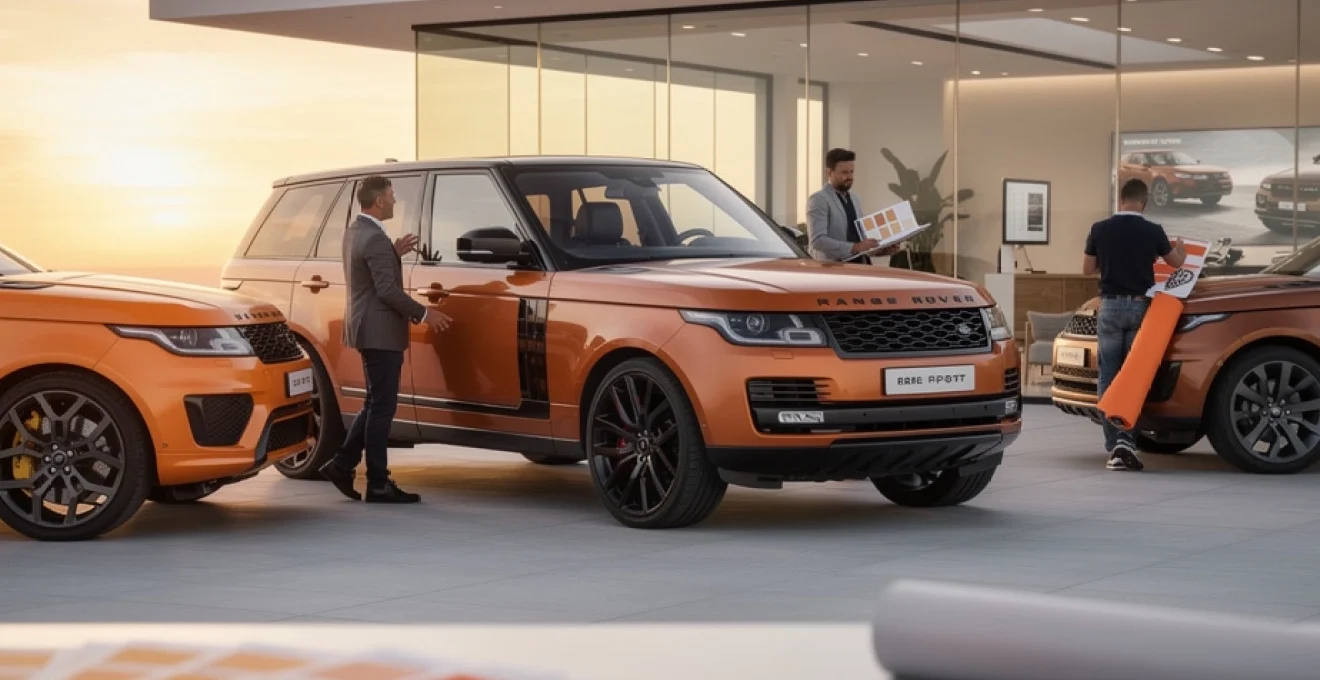
Orange is one of the boldest statements you can make on a luxury SUV, and the Range Rover wears it with unusual confidence. From classic burnt orange finishes to luminous satin oranges from the SV Bespoke palette, the colour transforms the car’s proportions, its presence on the road and, ultimately, how you feel every time you walk up to it. For some buyers, an orange Range Rover is a way to stand out discreetly in a sea of greys; for others, it is a rolling piece of automotive jewellery. Understanding how the factory paints, SV Bespoke options and aftermarket finishes all fit together will help you create a specification that looks intentional rather than improvised.
Factory orange range rover paint codes: OEM colours, model years and trim-level availability
From the factory, Land Rover has never marketed dozens of obvious “orange” codes, yet over the years several hues have sat in that warm spectrum between copper and tangerine. On older models, names such as Tangerine or Phoenix were used on special editions or limited markets. More recently, colours like Lantau Bronze, Sunset Gold and certain SVO oranges effectively occupy the same visual space, even if they are technically classed as bronze or gold metallics. This matters if you want a genuine factory orange Range Rover for collectability, insurance valuations or future resale, where documented OEM codes can carry a premium of 5–10% over undocumented repaints.
Tangerine orange, phoenix orange and valencia orange: decoding historic land rover chromatic references
Earlier Land Rover generations, particularly Classic and early Range Rover Sport, used a small group of vivid tones that enthusiasts now loosely group as “heritage oranges”. Tangerine and Phoenix Orange appeared on some Defender and Discovery models, while a Valencia Orange–style hue echoed through limited-run lifestyle editions in the 2000s. These paints were usually solid or simple metallics, without the complex pearlescent or tri-coat structures seen today. Think of them as the analogue era of colour: strong, flat and instantly recognisable, but less layered and less forgiving of poor maintenance compared with modern ceramic-enhanced finishes.
Burnt orange, sunset gold and lantau bronze: metallic and pearlescent finishes in current range rover catalogues
Contemporary catalogues tend to avoid the literal word “orange” in mainstream brochures, instead positioning these tones as sophisticated bronze or copper shades. Lantau Bronze, mentioned alongside other metallics like Eiger Grey and Portofino Blue, sits visually between burnt orange and champagne, especially in strong sunlight. Sunset Gold and copper-inspired options in the SVO palette push further toward an orange glow, especially in satin form where reflections are softer. On Pinterest and social media, these paints are often tagged as “burnt orange Range Rover” even when the official label uses bronze, which can cause confusion when searching for touch-up paint or verifying originality.
Differences in orange palettes across range rover, range rover sport, velar and evoque line-ups
Orange and orange-adjacent colours tend to appear more often on the dynamic models in the family. Range Rover Sport and Evoque have historically offered bolder shades, aimed at younger or more design-led buyers. Velar sits between the two, with a restrained palette but strong uptake of copper and bronze options in markets like the UK and Germany, where individualisation is prized. The full-size Range Rover, especially in Autobiography or SV guise, usually reserves obvious bright oranges for SVO or SV Bespoke, steering regular catalogue colours towards warm bronzes and golds. This staggered approach lets you choose how extrovert you want the car to be, without leaving the Land Rover ecosystem.
Reading land rover paint code plates and VIN data to confirm genuine factory orange finishes
If you are assessing a used orange Range Rover, checking authenticity is essential. Land Rover paint codes are usually found on a small body plate in the driver’s door jamb or under the bonnet. The code itself is typically three characters – for example, 820 or LRC plus digits – and can be cross-referenced with official documentation or specialist databases. The VIN (Vehicle Identification Number) does not store the full colour name, but dealer systems can decode the original build spec from the VIN, confirming whether the orange or bronze tone you see is factory-applied. This is particularly important in countries where 20–30% of luxury SUVs in strong colours are wrapped or resprayed after delivery.
SV bespoke and special vehicle operations: commissioning a custom orange range rover from the factory
For buyers wanting a truly unique orange shade, SV Bespoke and Special Vehicle Operations (SVO) unlock a premium palette far beyond the standard catalogue. While the core Range Rover paint range talks about Fuji White, Santorini Black, Silicon Silver or Carpathian Grey, the SVO department adds tri-coat Ultra Metallic paints and Special Effect finishes, including dramatic oranges. Names like Madagascar Orange, Sanguinello Orange or Sunset Gold in SVO gloss and satin are often seen on social networks precisely because they are rare and expensive. Across the UK and EU, such bespoke paints account for a small but fast-growing slice of orders, reflecting a wider luxury trend towards customisation rather than simple option ticking.
Commissioning an SV Bespoke orange Range Rover turns the car from a specification into a signature, with paint technology and craftsmanship that go far beyond mainstream automotive standards.
SV bespoke premium palette oranges: satin versus gloss clearcoat technologies
A key decision for many enthusiasts is whether to choose a high-gloss or satin clearcoat over their chosen orange. Gloss clearcoat maximises reflections and depth, giving colours like Madagascar Orange a liquid, almost wet appearance. Satin absorbs more light, muting reflections and making the surface look like finely brushed metal, especially on the Range Rover’s big, flat panels. Technically, both finishes use multi-layer systems with advanced UV inhibitors and ceramic resins, but satin demands more precise washing and detailing because swirl marks show differently. In practice, gloss suits buyers who want a more traditional luxury look, while satin emphasises the concept-car feel often seen on motor show vehicles.
Two‑tone configurations: narvik black roof with custom orange body on range rover autobiography and SV
Two-tone configurations can dramatically alter the proportions of an orange Range Rover. A common approach is an orange or copper body with a Narvik Black or Santorini Black contrast roof on Autobiography or SV models. The roof, mirrors and sometimes the upper body above the waistline are finished in black, visually lowering the car and giving it a floating-roof effect. On the LWB SVAutobiography, DuoTone options even allow combinations where black sits above a more exotic Ultra Metallic or Special Effect colour beneath. This is especially effective on bright orange tones, adding just enough formality to balance the extrovert body colour.
Interior–exterior colour harmonisation: pairing orange exteriors with ebony, caraway and perlino cabins
An orange exterior interacts strongly with interior colour choices, especially when doors are open or the panoramic roof lets light flood in. Dark Ebony interiors create a dramatic contrast that many buyers prefer, as the cabin becomes a calm, monochrome counterpoint to the vivid paint. Warmer interiors such as Caraway or Perlino (on newer models) bring a more yacht-like or fashion-inspired aesthetic, echoing the copper tones outside. A practical rule: the brighter and more saturated the exterior orange, the more restrained the interior should be. Conversely, softer bronze-oranges pair beautifully with richer leathers and open-pore woods, creating a cohesive, tailored feel rather than visual overload.
Choosing an interior for an orange Range Rover is less about matching colours perfectly and more about balancing temperature, contrast and long-term liveability.
Ordering process, lead times and pricing tiers for SV bespoke orange commissions in the UK and EU
Commissioning an SV Bespoke orange in the UK or Europe follows a structured process. After selecting a base model (often Autobiography or SV), you work with a specialist consultant who guides you through the Premium Palette or fully bespoke options. Ultra Metallic paints typically add several thousand pounds, while Special Effect or Chromaflair-type oranges with “flip” characteristics can cost more than some entry-level hatchbacks. Lead times are longer than standard builds; an additional 6–12 weeks is common due to paint shop scheduling and quality checks. If you are ordering a Range Rover in orange as a company or fleet vehicle, factor in this extended timing when planning delivery or plate dates.
Aftermarket orange finishes: respray, vinyl wrapping and PPF options for new and used range rovers
Not every buyer wants – or can access – an expensive factory SVO orange. In the UK and EU, a significant share of brightly coloured Range Rovers achieve their look through aftermarket means: full-body resprays, vinyl wraps or coloured paint protection film (PPF). Each method carries different implications for cost, durability and residual values. A high-quality repaint might start from a mid-four-figure sum, while a premium wrap or PPF installation can be similar or higher depending on material. The crucial point is preparation and documentation: if you choose an orange transformation outside the factory, detailed invoices and photo records help protect you when insuring, servicing or eventually selling the car on.
Full-body resprays in custom orange: prep work, OEM‑spec paint systems and corrosion protection
A proper full-body respray in a custom orange is a major undertaking. The process usually involves removing trim, lights, handles and sometimes even glass to reach all visible edges. Panels are sanded, imperfections filled and primed before colour and clearcoat layers are applied. Using OEM-spec systems – such as waterborne basecoats and high-solids clear – is important to maintain a factory-like look and avoid compatibility issues with aluminium or mixed-metal panels. On modern Range Rovers, corrosion protection is already strong, but care must be taken around seams, wheel arches and underbody components to avoid compromising factory sealants. Skipping these details might save money initially but risks paint failure or corrosion later.
Vinyl wrap finishes: gloss, satin and chrome orange films from 3M, avery dennison and hexis
Vinyl wrapping has become the go-to solution for many orange Range Rover builds, largely because it is reversible. Major brands such as 3M, Avery Dennison and Hexis offer an array of gloss orange wrap, satin copper and even chrome orange films. When installed correctly, a wrap can last 3–5 years in typical European climates, with good resistance to washing chemicals and UV light. Another advantage is the ability to combine finishes; for example, a gloss orange body with satin black roof and mirror caps, all done in film. From a distance, a high-quality wrap can be almost indistinguishable from paint, although trained eyes will spot differences around door shuts and panel gaps.
Coloured paint protection film (PPF): combining orange tint, stone‑chip resistance and self‑healing topcoats
Coloured PPF is a relatively new option that blends the aesthetic flexibility of a wrap with the protective qualities of traditional clear PPF. These films are thicker than vinyl, incorporating self-healing topcoats that can recover from light scratches when warmed. An orange-tinted PPF can be applied over a neutral base colour, effectively turning a Santorini Black or Fuji White Range Rover into an orange one while preserving the original paint underneath. For high-mileage or motorway use, this can be particularly effective, as PPF resists stone chips and sandblasting far better than thin vinyl. The trade-off is cost; a full-body coloured PPF on a large SUV often sits at the top of the price ladder.
Cost comparison and resale implications of wrapping versus repainting an orange range rover
Choosing between wrapping and repainting an orange Range Rover involves more than upfront cost. A quality wrap is generally cheaper than a full OEM-standard repaint and has the advantage of being removable, returning the car to its original colour if needed. This is significant for resale: in some markets, buyers are cautious about non-factory paint, whereas a well-documented wrap is seen as reversible personalisation. On the other hand, a properly executed custom orange respray can look more integrated and is easier to repair panel by panel. If you intend to keep the car long term, a repaint might make sense; if you plan to change cars every few years, a wrap or coloured PPF offers flexibility and protects residual value.
| Option | Typical Cost Range (UK/EU) | Reversibility | Impact on Resale |
|---|---|---|---|
| Factory SVO orange | £4,500–£15,000+ added to list price | No | Often positive on niche market |
| Full-body respray | £5,000–£12,000 | No | Depends on quality and documentation |
| Vinyl wrap | £2,500–£5,000 | Yes | Neutral to positive if documented |
| Coloured PPF | £4,000–£8,000 | Yes | Positive due to paint protection |
Design and styling packages: contrasting accents, alloys and lighting for orange range rover builds
An orange Range Rover is only as successful as the details around it. Factory styling packs, wheel designs and exterior trim choices can either enhance the drama or dilute it. When configuring a new build, or planning an aftermarket makeover, think of the car as an outfit: the paint is the suit, but the wheels, trims and lights are the shoes, belt and watch. The current trend across the UK and Europe leans towards blacked-out details with orange or bronze bodywork, but there is still room for polished metals and subtle chrome where a more classic luxury flavour is desired. Your personal style and typical usage should guide how far to push the contrast.
Black pack, shadow pack and bronze pack: how factory styling packs interact with orange paintwork
Land Rover’s various packs – often named Black Pack, Shadow Pack or Bronze Pack depending on model year – change the finish of grilles, vents, badging and window surrounds. On an orange Range Rover, a Black Pack is usually the most visually coherent choice, tying the contrast roof, privacy glass and wheel centres together. Shadow or bronze-themed packs can also work, especially with warmer oranges like Sunset Gold or Lantau Bronze, where a dark bronze grille echoes the paint’s undertone. Mixing a bright chrome pack with a saturated orange is technically possible but tends to look busier, so it suits buyers aiming for a more vintage or retro luxury feel rather than a contemporary, stealthy aesthetic.
Wheel design and finishes: 22‑inch gloss black, diamond‑turned and satin dark grey alloys on orange cars
Wheels are one of the strongest visual tools available when styling an orange SUV. Large 22‑inch gloss black alloys create a motorsport-inspired look, especially on Range Rover Sport or SV models, visually shrinking the tyre sidewall and making the car appear planted. Diamond‑turned wheels, with their contrasting bright faces and darker inner sections, introduce more light play and can help if you want a slightly more traditional luxury feel. Satin dark grey alloys sit between the two, offering a softer contrast that photographs well and hides brake dust better than pure black. As a practical note, remember that heavily polished or diamond-turned finishes require more careful cleaning to avoid micro-scratches.
Caliper colours (red, yellow, black) and brake hardware visual impact with bright orange bodywork
Brake caliper colour is a small choice that makes a surprisingly large difference on an orange body. Red calipers telegraph performance and pair well with gloss black wheels, creating a tri-colour palette of orange, black and red that feels energetic. Yellow calipers are bolder still, often seen on high-performance SUVs and supercars; they can clash with certain oranges if the hue mismatch is too great, so sample swatches together where possible. Black or dark grey calipers are the understated option, letting the paint and wheels dominate. On a full-size Range Rover with an SV Bespoke orange, a restrained caliper often keeps the overall look more elegant and less “tuner” inspired.
Exterior detailing: de‑chroming, smoked lights and privacy glass on orange range rover configurations
Subtle exterior details can help an orange Range Rover feel unified rather than chaotic. De‑chroming – replacing bright chrome window trims and badges with gloss black or dark satin equivalents – is very popular, especially with orange wraps and SVO paints. Light smoking of rear lamps, when done within legal limits, can tie them visually into a black tailgate finisher or bumper inserts, while factory privacy glass completes the look side-on. Think of chrome as a highlight; a little can lift the design, but too much around an already bright orange body can feel overdone. Many owners choose to keep a single bright element, such as the front grille surround, as a subtle nod to traditional luxury.
| Styling Choice | Effect on Orange Range Rover | Best For |
|---|---|---|
| Black Pack + gloss black wheels | Strong contrast, sporty and modern | Range Rover Sport, SV, urban use |
| Bronze Pack + diamond‑turned wheels | Warmer, more classic luxury look | Full‑size Range Rover, long‑distance touring |
| Smoked lights + privacy glass | Stealthy rear three‑quarter view | Wrap or SVO satin paints |
Market trends and demand for orange range rovers in the UK and europe
Across the UK and Europe, orange remains a niche but visible choice for luxury SUVs. Industry registration data indicates that greys, blacks and whites still account for roughly 70–75% of large premium SUV sales, yet demand for “expressive” colours, including oranges and bronzes, has been rising steadily post‑2020. Part of this shift comes from the influence of social media: high-impact colours photograph better and generate more engagement, which in turn encourages manufacturers to promote bold configurations in marketing material. On the used market, a well-specified orange Range Rover can either linger or sell quickly depending on region; in fashion-forward cities or affluent coastal areas it often attracts dedicated buyers willing to pay a small premium, while in conservative markets it may take longer to find the right home.
Another noteworthy trend is the growing proportion of orange vehicles created after initial registration. Wrap and PPF installers across major European capitals report that 10–20% of their large SUV projects now involve orange, copper or bronze tones. This suggests that buyers sometimes choose a safe factory colour for residual values, then personalise the car later with reversible finishes. If you plan to follow this route, choosing a neutral base colour like Fuji White or Santorini Black makes future colour changes easier and generally more convincing, as panel gaps and door shuts remain visually consistent with a wide range of overlays.
In the current European luxury SUV market, orange is less about mass appeal and more about making a confident, personal statement that stands out without sacrificing refinement.
Colour psychology and brand image: how orange transforms range rover road presence and perceived luxury
Colour psychology plays a subtle but powerful role in how an orange Range Rover is perceived. Orange, sitting between red and yellow on the spectrum, conveys energy, optimism and creativity. On a Range Rover, this can soften the vehicle’s inherent gravitas, making it feel more like a lifestyle accessory than a formal limousine. For some owners this is exactly the point: the car becomes an extension of personal style, akin to a statement watch or tailored coat. Fleet and corporate users, by contrast, often stick to greys and blacks because these colours project authority and neutrality, especially in chauffeur or executive transport roles.
The interplay between orange and the Range Rover brand is particularly interesting. Land Rover has built its identity on a mixture of rugged capability and understated British luxury. An orange or copper finish brings out the adventurous side of that story, hinting at sunsets over desert dunes or autumnal forests rather than glass-fronted boardrooms. At the same time, the clean surfacing and minimal badging of the latest generation prevent bright colours from tipping into vulgarity, provided the rest of the specification is carefully balanced. Think of a well-executed orange Range Rover as the automotive equivalent of a sharply cut navy suit lined with a vivid patterned silk: from a distance it is elegant, yet up close it reveals personality.
If you are considering an orange Range Rover, a useful exercise is to picture where the car will spend most of its time. On rural lanes and coastal roads, the colour will read as warm and almost natural, reflecting the environment. In dense urban centres, especially in northern Europe, it will stand out against muted architecture and overcast skies, acting as a moving focal point. Neither scenario is inherently better, but being conscious of this context helps you choose the right shade, finish and styling details so that the car feels harmoniously placed rather than out of step with its surroundings.