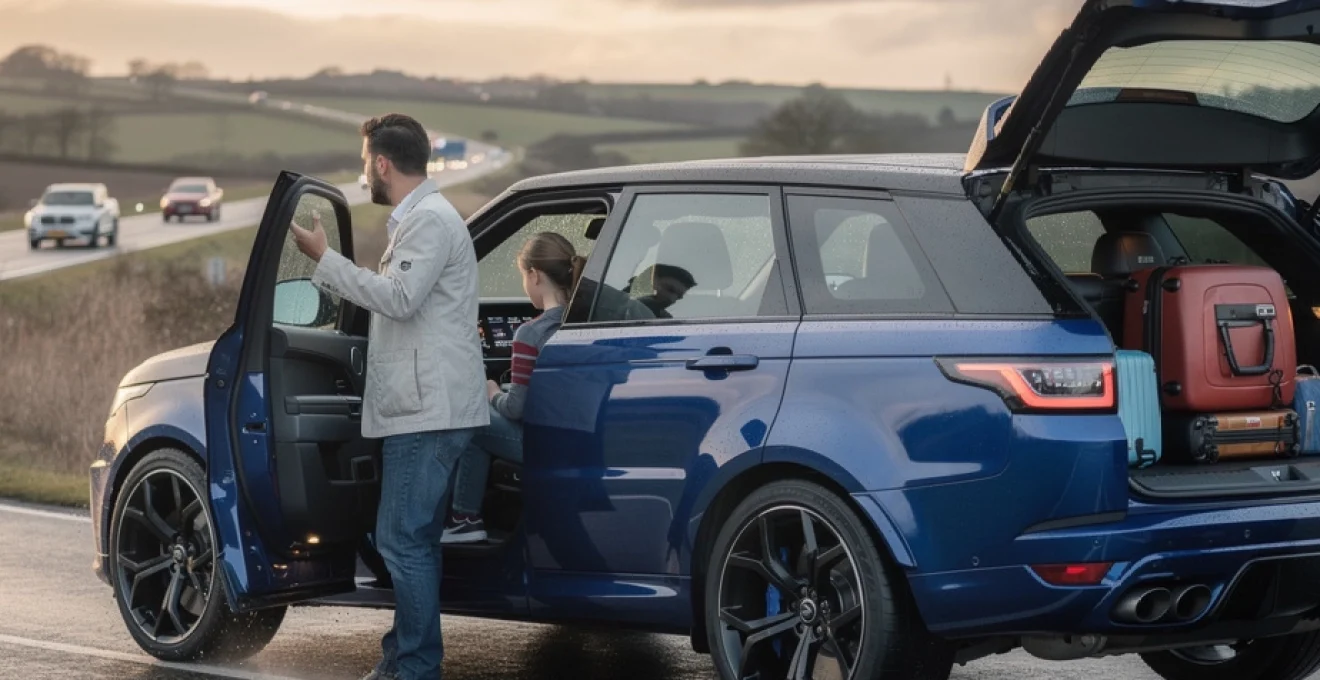
The 2022 Range Rover Sport SVR sits at an interesting crossroads. On one side, it is a 2.3‑tonne luxury SUV with space for the family, a big boot and genuine off‑road ability. On the other, it is a supercharged V8 hot rod capable of embarrassing sports cars away from the lights while broadcasting one of the loudest soundtracks on the road. For buyers who still want a genuinely emotional combustion‑engined performance SUV before electrification takes over completely, the SVR is one of the last of the old school. Understanding what this car really offers means looking past the drama to the engineering underneath, and asking whether the performance, comfort and cost stack up for daily life in the UK and Europe.
Range rover SVR 2022 drivetrain architecture and powertrain calibration
5.0‑litre supercharged V8 (AJ133) output, torque curve and euro 6d-ISC-FCM compliance
Under the bonnet sits the familiar AJ133 5.0‑litre supercharged V8, one of the defining features of the 2022 Range Rover SVR. In its later form it develops 567 bhp and 700 Nm (517 lb ft) of torque, up from the original 542 bhp, with peak torque delivered from roughly 2,500 rpm. That relatively flat torque curve is what makes the SVR feel so effortless in real‑world overtakes; you rarely need to explore the upper reaches of the rev counter to access serious pace. Despite its size and character, the engine has been calibrated to meet Euro 6d‑ISC‑FCM requirements, with revised injectors, improved charge cooling and more precise spark control. CO₂ emissions officially sit around 281–289 g/km on WLTP, putting the SVR at the very top of the tax bands, but still acceptable for owners prioritising performance over environmental scores.
Compared with newer mild‑hybrid 4.4‑litre twin‑turbo units in the latest SV, the old‑school supercharged V8 is less efficient but more immediate. There is no turbo lag, just linear response and a hard‑edged growl that many enthusiasts still prefer. If you value classic V8 character over cutting‑edge efficiency, this engine is a large part of the SVR’s lasting appeal.
ZF 8HP70 eight‑speed automatic gearbox mapping, shift logic and launch control strategy
The SVR uses the well‑proven ZF 8HP70 eight‑speed automatic gearbox, tuned specifically for performance use. In Comfort mode it slurs unobtrusively through the ratios, which you will appreciate in stop‑start urban traffic or on gentle motorway cruises. Select Dynamic and the mapping changes noticeably: upshifts become faster and more assertive, downshifts snap through with throttle blips, and the gearbox will hold lower gears for longer when it senses enthusiastic driving. Manual mode via the steering‑wheel paddles offers the tightest control, and the ’box is responsive enough that you rarely feel the need to second‑guess it.
Launch control in the SVR is more subtle than track‑focused systems in sports cars, but the strategy is there. Engage Dynamic mode, disable certain traction thresholds and the control unit allows a higher initial torque load against the brakes, then carefully manages wheelspin as you release. The result is a consistent 0–62 mph in around 4.5 seconds for facelift cars, extremely rapid for an SUV that weighs roughly 2,310 kg. The calibration prioritises repeatable performance over dramatic tyre smoke, which is exactly what you want on a damp UK road.
Intelligent All-Wheel drive (iAWD), active centre differential and torque biasing behaviour
The 2022 Range Rover SVR runs an intelligent all‑wheel‑drive system with an electronically controlled multi‑plate centre differential. In normal driving, the torque split is slightly rear‑biased to preserve some traditional performance‑car feel, but the system can move the balance front or rear in milliseconds if slip is detected. Under hard acceleration out of a tight junction in the wet, you can feel the rear tyres work first, then the front axle hooks up to stabilise the car as the supercharged V8 pours on torque.
A locking rear differential (depending on specification) further sharpens traction, especially out of slower corners. The calibration is deliberately conservative compared with the drift‑friendly logic in something like a BMW X5 M Competition; the SVR wants to push you forward, not sideways. For drivers who favour secure, predictable grip over tail‑out theatrics, that makes a lot of sense, particularly on broken B‑roads or greasy motorway slip roads.
Dynamic response active anti‑roll system and electronically controlled dampers tuning
Instead of the newest 6D hydraulically interlinked system used on the latest SV, the SVR relies on Land Rover’s earlier Dynamic Response active anti‑roll bars and adaptive dampers. The anti‑roll system uses hydraulic actuators to stiffen or soften the bars according to cornering load. On a motorway, the bars can relax slightly to allow better ride comfort; turn into a fast roundabout and they firm up quickly to control roll, making the SVR feel more like a big sports estate than a traditional off‑roader.
The dampers have SVR‑specific software and firmer baseline tuning compared with a standard Range Rover Sport. That brings sharper body control, but also a more restless ride on poor surfaces. On 22‑inch wheels you will notice sharp edges and potholes more than in non‑SVR trims, especially at low speed. Many owners report that staying on the standard 21‑inch wheels with slightly taller tyre sidewalls offers a useful real‑world compromise between precision and comfort.
Exhaust system acoustics, active valves and SVR‑specific sound engineering
One of the defining traits of the 2022 Range Rover SVR is its exhaust system. Quad tailpipes, active valves and model‑specific sound tuning give the car a truly distinctive voice. In normal driving, the valves stay mostly closed, keeping the cabin refined and meeting drive‑by noise limits. Switch to Dynamic and push the revs, and the soundtrack transforms into a bellowing, motorsport‑like roar, complete with crackles and pops on the overrun.
The SVR’s V8 exhaust note is unapologetically extrovert, and forms a significant part of its emotional appeal compared with more muted turbocharged rivals.
From a technical standpoint, engineers used internal resonators and valve timing to tune out undesirable boom while exaggerating the harmonics enthusiasts enjoy. It is worth noting that some late‑production cars are slightly quieter than early SVRs due to tightening noise regulations, but if you are coming from a modern turbocharged or hybrid SUV, the level of drama will still feel substantial.
On-road performance metrics: acceleration, braking and real‑world fuel economy
0–62 mph, in‑gear acceleration and overtaking performance versus BMW X5 M and Mercedes‑AMG GLE 63 S
Objectively, the 2022 Range Rover SVR is extremely fast. Official figures quote 0–60 mph in 4.3 seconds and 0–62 mph in 4.5 seconds, with a top speed of 174 mph. In independent tests, in‑gear acceleration is just as impressive: 30–70 mph takes roughly 4.0–4.2 seconds, making short work of A‑road overtakes. Against key rivals, the BMW X5 M Competition and Mercedes‑AMG GLE 63 S are marginally quicker on paper, dipping into the sub‑4‑second bracket, but the difference on the road is negligible.
Where the SVR feels particularly strong is rolling performance. With the supercharger already spinning, response in the 40–80 mph window is instant, which is what you will appreciate most on motorways and dual carriageways. If you care more about how an SUV feels in everyday overtakes than drag‑strip bragging rights, the SVR’s accessible torque band plays to your advantage.
High‑speed stability, body control and steering feedback on UK b‑roads and motorways
High‑speed stability has always been a Range Rover Sport strength, and the SVR builds on that with tighter body control. At 70–80 mph the car feels planted, with minimal float or vertical movement, even over undulations. Crosswinds are handled confidently thanks to the wide track and aerodynamic tweaks, and the steering naturally self‑centres without feeling nervous. On a long motorway run, that calmness reduces fatigue more than performance figures might suggest.
On typical UK B‑roads, the SVR’s mass and size are more apparent. The front end is keen to turn and the steering is fairly direct, but you remain aware of the width on narrow lanes and around tight village corners. Body roll is contained, yet not eliminated; there is still some natural movement, which actually helps communicate grip levels. Push harder and physics reminds you that this is still a heavy SUV, not a hot hatch, so the fastest cross‑country pace comes from smooth, measured inputs rather than aggressive, late‑braking heroics.
Brembo braking hardware, fade resistance and stopping distances from 70 mph
Braking hardware in the 2022 Range Rover SVR is suitably substantial. Up front, 380 mm ventilated discs are clamped by multi‑piston Brembo calipers, with 365 mm ventilated discs at the rear. From 70 mph, independent tests show stopping distances in the low‑to‑mid 40‑metre range on dry tarmac, comparable with rivals like the Porsche Cayenne Turbo of the same era. Pedal feel is firm with a progressive bite point, making it easy to modulate braking even when carrying passengers and luggage.
Repeated hard stops from motorway speeds show impressive fade resistance for such a heavy SUV, provided the braking system is in good condition and tyres are appropriate.
As with any high‑performance SUV, consumables matter. Budget tyres or neglected pads and discs will quickly undermine the impressive factory specification. If you plan regular spirited driving or occasional track sessions, budgeting for more frequent pad and tyre changes is wise. For most owners using the car for fast road work and family duties, the standard Brembo set‑up offers ample safety margin.
WLTP fuel consumption, CO₂ emissions and real‑world mpg in mixed urban/extra‑urban use
WLTP fuel consumption for the 2022 Range Rover SVR is officially 18.9–22.0 mpg, depending on wheel size and exact spec, with CO₂ at roughly 281–289 g/km. Those numbers place the car firmly in the highest UK VED and company car BIK brackets. Real‑world reports from owners tend to show:
| Driving scenario | Typical real‑world mpg |
|---|---|
| Urban / short trips | 12–15 mpg |
| Mixed urban / extra‑urban | 17–20 mpg |
| Steady motorway (70 mph) | 22–25 mpg |
If you drive mainly in cities or enjoy the V8 soundtrack frequently, expect consumption in the low‑teens. For higher‑mileage motorway users with a light right foot, achieving mid‑20s is realistic. The key question is less whether the fuel economy is good – it is not – and more whether you are comfortable with that running cost in exchange for the SVR’s performance and character.
SVR chassis tuning, suspension geometry and dynamic drive modes
Aluminium-intensive monocoque rigidity, kerb weight distribution and centre of gravity
The second‑generation Range Rover Sport platform uses an aluminium‑intensive monocoque, cutting weight by up to 420 kg versus the previous steel‑based architecture. Even so, the SVR still tips the scales at around 2,310 kg, depending on equipment. The aluminium structure brings strong torsional rigidity, which in turn allows the suspension to be tuned more precisely. The chassis no longer has to compensate for flex, so engineers can define damper and bush rates more accurately for both comfort and control.
Kerb weight distribution is slightly front‑biased due to the large V8 and front‑mounted transmission, but the fuel tank and rear differential help balance things out. The centre of gravity sits lower than on a full‑size Range Rover, contributing to more agile responses. On a twisty road, the SVR never feels light, yet it does feel more composed and eager than its size suggests, especially if you are coming from a previous‑generation large SUV.
Adaptive air suspension versus coil set‑up, spring rates and damper valving in SVR trim
All 2022 Range Rover Sport SVR models ride on height‑adjustable air suspension with adaptive dampers, rather than traditional coils. SVR‑specific spring rates are higher than on regular models to reduce pitch and roll, and the damper valving has been recalibrated for faster response to body movements. Think of the suspension as wearing a stiffer, sportier “shoe” while still using the same fundamentally sophisticated air platform.
The ride character changes noticeably with mode selection. In Comfort, the system prioritises vertical compliance, softening initial responses to bumps while still keeping roll within acceptable limits. In Dynamic, the air springs lower the body slightly and the dampers stiffen up, giving you tighter control, more immediate responses and greater confidence at speed. For UK roads, many drivers find Auto mode – where the car chooses its own settings based on driving style – to be the best long‑term compromise.
Terrain response 2 drive modes, dynamic mode calibration and ESC intervention thresholds
One of the SVR’s party tricks is that it retains Land Rover’s full Terrain Response 2 system. This means you still have dedicated programmes for Grass/Gravel/Snow, Mud and Ruts, Sand and Rock Crawl, on top of the on‑road Comfort and Dynamic profiles. Each mode adjusts throttle response, gearbox mapping, centre diff behaviour and traction control thresholds to suit the surface. In low‑traction conditions, the SVR remains immensely capable, even on its road‑biased tyres.
Dynamic mode raises the ESC intervention thresholds, allowing a little more slip before the electronics step in. You will feel some gentle yaw in fast corners and light traction‑control trimming on bumpy exits, but the software never allows truly wild angles on dry tarmac. For most drivers, that balance between fun and security is ideal. If you want a lairier SUV with more rear‑biased antics, the market offers alternatives, but very few can still climb wet fields or cope with a snowy Alpine pass as confidently as the SVR.
Tyre specifications, wheel sizes and grip levels: pirelli P zero vs michelin latitude sport 3
Tyres play a crucial role in how the 2022 Range Rover SVR behaves. Most examples run 21‑ or 22‑inch alloys shod in high‑performance SUV rubber such as Pirelli P Zero or Michelin Latitude Sport 3. P Zeros typically offer sharper turn‑in and slightly more immediate steering feedback in the dry, while the Michelins often provide better wet‑weather consistency and marginally lower noise levels. Both deliver high grip levels – enough to generate lateral forces that feel almost surreal in a tall SUV.
If you use the SVR year‑round in the UK, considering an all‑season performance tyre is sensible, even if ultimate dry‑grip figures drop slightly. You trade some razor‑edge feel for improved cold‑weather traction and reduced aquaplaning risk, qualities that matter more on a dark, wet January commute than the last tenth around a summer roundabout.
Everyday practicality: cabin packaging, seating, boot space and towing capability
Front and rear sports seats, ISOFIX points and long‑distance comfort for five occupants
Despite the focus on performance, the Range Rover SVR remains a practical family SUV. Front occupants sit in deeply bolstered sports seats that are slimmer and around 30 kg lighter than early SVR chairs, yet still offer electric adjustment, heating and often cooling. They hold you in place during hard cornering without feeling pinched on longer journeys, although very broad‑shouldered drivers may prefer to test them first. The driving position is classic Range Rover: high, commanding and with excellent visibility.
In the rear, the SVR loses the optional third‑row seats offered on some Range Rover Sports, effectively making it a strict five‑seater. The outer two rear positions have more pronounced bolstering, which improves comfort for adults but leaves the centre seat narrower and less appealing for long trips. ISOFIX points are fitted on the outer rear seats, and the high hip‑point makes it easy to load child seats without bending awkwardly. For family motorway runs, the combination of space, refinement and seat comfort is one of the SVR’s strongest assets.
Load bay volume, seat folding layout (60:40 / 40:20:40) and powered tailgate usability
Boot space in the SVR matches the standard Range Rover Sport: roughly 522 litres with the rear seats in place, expanding to around 1,686 litres with them folded. The rear backrests typically split 60:40, though some markets and trims offer a 40:20:40 layout that lets you carry longer items such as skis while still accommodating two rear passengers. The load floor is broad and flat, with minimal intrusion from wheel arches, making it easy to slide in pushchairs, golf bags or large suitcases.
A powered tailgate is standard on most SVRs, and many cars include gesture or key‑fob operation. The tailgate opening height can be adjusted in the settings – handy if you regularly park in low‑ceiling car parks. Coupled with the air suspension’s load‑lowering function, which can drop the rear slightly, loading heavier items becomes less of a strain than in some rival performance SUVs.
Braked towing capacity, trailer stability assist and caravan use in the UK context
Few high‑performance SUVs can tow as confidently as a Range Rover Sport SVR. Braked towing capacity typically reaches 3,000–3,500 kg (check the specific VIN plate), enough for most large caravans, horseboxes or car trailers. The long wheelbase, strong torque output and integrated Trailer Stability Assist system give reassuring control when towing at motorway speeds. For UK caravan owners who also want a fast, luxurious daily driver, the SVR remains one of the most flexible options.
If you plan to tow regularly, paying close attention to nose‑weight limits and tyre pressures is essential. Using the correct dedicated towbar wiring also ensures that safety systems such as rear parking sensors and blind‑spot monitoring adapt appropriately when a trailer is attached, reducing false alerts and improving overall stability.
Ingress, egress and child‑friendly ergonomics in urban, school‑run and supermarket scenarios
Day‑to‑day usability is often where performance SUVs show their compromises; the SVR manages to stay surprisingly civilised. The air suspension’s access height function drops the body when parked, making ingress and egress easier for children, older relatives or anyone less mobile. Wide‑opening rear doors help with fitting child seats or buckling in toddlers. You will notice the higher step‑in compared with a regular estate car, but most owners adjust quickly.
In tight car parks and supermarket bays, width is the main challenge rather than length. Front and rear parking sensors, a reversing camera and (on many cars) a 360‑degree surround‑view system help you judge gaps accurately. For school runs, the combination of raised seating for kids, excellent outward visibility and strong low‑speed refinement makes the SVR feel more like a luxury family SUV than a track refugee, despite the badge and exhaust pipes.
Interior technology, infotainment stack and ADAS in the 2022 range rover sport SVR
Pivi pro infotainment system, dual‑screen configuration and meridian surround sound analysis
Later 2022 Range Rover Sport SVR models use JLR’s newer Pivi Pro infotainment, while earlier cars run the Touch Pro Duo dual‑screen layout. Pivi Pro, with its curved 13.1‑inch central touchscreen in the latest Range Rover Sport SV, has been praised for speed and clarity, though the SVR’s twin 10‑inch Touch Pro Duo still looks modern if the software is kept updated. The upper screen handles navigation, media and telephony; the lower manages climate, seat functions and off‑road modes.
Audio quality is a highlight. Many SVRs come with a Meridian Surround Sound system offering 825 W or more through 19 speakers. Clarity, bass depth and staging are all at a level that matches the car’s luxury positioning, and high‑quality streaming or lossless sources really demonstrate what the system can do. For long‑distance cruising, the combination of strong noise insulation and high‑end audio turns the SVR into a very comfortable rolling listening room.
Digital instrument cluster, head‑up display and custom SVR performance telemetry
A fully digital instrument cluster allows you to choose between classic twin‑dial views, a full‑screen map or more performance‑oriented layouts. In SVR‑specific screens, you can access oil and coolant temperatures, G‑meter readings and gear‑selection indicators, which appeal if you occasionally drive more enthusiastically. The graphics are clear and the refresh rate is high enough that lag is rarely noticeable.
Optional head‑up display projects speed, navigation prompts and driver‑assistance cues onto the windscreen. Once you get used to it, you will likely rely on it more than the main dials for speed awareness, especially in average‑speed camera zones. While the SVR does not offer the track telemetry depth of dedicated sports cars, the combination of digital tools gives enough performance information without overwhelming you.
Driver assistance suite: adaptive cruise control, lane keep assist and blind spot monitoring
Driver assistance systems in the 2022 SVR reflect broader trends across the Range Rover Sport line‑up. Adaptive cruise control with stop‑and‑go capability, lane keep assist, traffic sign recognition, blind‑spot monitoring and rear cross‑traffic alert are all commonly specified. These features turn the SVR into a more relaxing companion on congested motorways or busy ring roads, letting you enjoy the comfort side of the car when the performance is not needed.
When set up sensitively, modern ADAS systems enhance safety and reduce fatigue without constantly nagging or overriding the driver.
Some drivers prefer to tone down lane‑keeping nudges or steering assists, which can feel intrusive on narrow country roads. Thankfully, settings menus allow customisation, so you can prioritise systems that genuinely help – such as blind‑spot alerts on multi‑lane roads – while dialling back those that interfere with personal driving style.
Connectivity features: apple CarPlay, android auto, online updates and remote app controls
Later SVR models support both wired and wireless Apple CarPlay and Android Auto, making it simple to mirror navigation, messaging and music apps from a smartphone. Over‑the‑air software updates for navigation data and some infotainment functions help keep the system current without time‑consuming dealer visits. Online services can provide live traffic, weather and parking information, useful when planning weekend trips or negotiating unfamiliar city centres.
A companion smartphone app typically allows remote locking/unlocking, fuel‑level checks and, on some models, pre‑conditioning of the climate system. That last feature is particularly helpful on frosty mornings or during summer heatwaves, letting you step into a cabin already cooled or warmed to preference. As digital ecosystems continue to expand, these connectivity tools are increasingly important differentiators in the premium SUV segment, and the SVR keeps pace well for a model launched in this era.
Ownership costs, reliability considerations and residual value projections
Servicing intervals, dealer network support and extended warranty options in the UK
Servicing intervals for the 5.0‑litre V8 SVR are typically every 12 months or around 16,000 miles, whichever comes first. Given the performance on tap and the stresses involved, many specialists advise annual servicing regardless of mileage, especially if you drive enthusiastically. Official Land Rover dealers offer fixed‑price service plans and the peace of genuine parts, while reputable independents can reduce labour costs significantly once the factory warranty has expired.
Standard warranty on a UK‑supplied Range Rover Sport was three years with unlimited mileage, and Land Rover offers extended warranty packages for up to six years in total. Considering the complexity of systems such as Dynamic Response, air suspension and advanced infotainment, extended cover makes strong financial sense for many owners, particularly if you prefer to avoid unexpected four‑figure repair bills.
Insurance group rating, VED (road tax) band and company car BIK implications
The 2022 Range Rover SVR sits in insurance group 50, the highest possible in the UK. Premiums will vary significantly based on age, location and driving history, but you should expect costs in line with other £100k‑plus high‑performance SUVs. High theft rates for premium SUVs also influence pricing, so investing in secure parking and additional tracking systems can reduce both risk and premiums.
For VED, the SVR’s CO₂ rating puts it in the top band. Post‑April 2017 registrations pay the standard annual rate (currently £195) plus the luxury car supplement of £410 per year for five years from the second year, meaning a combined annual tax close to £600 in that period. Company car Benefit‑in‑Kind percentages for such a high‑emission petrol model are at the upper end of the scale (37% in recent UK tables), making the SVR a costly choice as a company vehicle compared with plug‑in hybrids or EVs. For most buyers, private purchase or limited company ownership with careful tax planning proves more sensible.
Known issues, technical service bulletins and recall history for the 5.0 V8 SVR platform
From a mechanical standpoint, the supercharged 5.0 V8 has a generally solid reputation when maintained correctly, but no complex performance engine is completely trouble‑free. Common topics among specialists include potential timing chain wear, supercharger nose‑cone noise and coolant leaks from plastic fittings as cars age. Early detection and proactive replacement of vulnerable components dramatically reduce the risk of major failures, which is why a thorough pre‑purchase inspection is essential if you are buying used.
Electrics and infotainment glitches are more frequent talking points than core drivetrain failures. Owners report occasional warning lights related to air suspension, parking sensors or driver‑assistance systems, sometimes traced to simple sensor issues or low battery voltage. Checking that all software updates and technical service bulletins have been applied by a main dealer is a wise step; many minor issues are addressed by revised firmware or revised parts.
Depreciation trends, used market demand and comparison with porsche cayenne turbo
Like all large premium SUVs, the Range Rover SVR depreciates, but demand for late, well‑specified cars remains strong. Early high‑mileage SVRs now start around £30,000–£35,000, while low‑mileage 2022 examples can still command £65,000–£75,000 depending on colour, options and history. That means a drop of roughly 30–40% from original list over three to four years, broadly in line with German rivals.
Compared with a Porsche Cayenne Turbo of the same age, the SVR often starts slightly cheaper used and continues to shed value at a comparable pace. The Cayenne may hold a small edge in perceived reliability and on‑road sharpness, but the Range Rover counters with stronger off‑road credibility, a more theatrical engine note and a distinct brand image that many buyers actively seek. For you as a used‑market buyer, that mix translates into strong choice and the ability to pick a car that fits personal priorities, whether those centre on badge, dynamics, comfort or specification.
Range rover SVR 2022 versus rivals: market positioning and buyer profile
Performance SUV benchmark comparison: BMW X5 M competition, audi RS Q8 and lamborghini urus
The 2022 Range Rover Sport SVR competes in a crowded high‑performance SUV segment. The BMW X5 M Competition brings razor‑sharp handling, more advanced four‑wheel‑drive torque vectoring and a devastating twin‑turbo V8, but lacks the SVR’s off‑road breadth and upright, imperious driving position. Audi’s RS Q8 adds mild‑hybrid efficiency and a cabin that arguably feels more modern, yet the sound and character of its turbocharged engine are more restrained.
Move up to the Lamborghini Urus and performance takes another leap, with sub‑3.5‑second 0–62 mph times and an image that screams supercar on stilts. The Urus, however, is priced well beyond the SVR and is less discrete for everyday family use or professional environments. The Range Rover positions itself as the more rounded choice: fast enough to be exciting, luxurious enough to rival Bentayga‑level comfort, and still able to tackle rough tracks or winter conditions without flinching.
Ride comfort, NVH refinement and luxury feel versus non‑SVR range rover sport trims
Compared with a non‑SVR Range Rover Sport – particularly a diesel D300 or plug‑in P460e – the SVR feels clearly firmer and more alert, but not harsh. Road noise is higher on the big performance tyres, and the V8 is always present if you use the throttle, yet wind noise remains low and long‑journey refinement is still excellent by class standards. For many owners, the SVR hits a sweet spot: lively enough to feel special every time you start it, yet calm enough that you can cover 400 miles in a day without arriving exhausted.
Cabin materials and build quality are at the upper end of the premium SUV segment. Soft leathers, metal trim, optional carbon‑fibre accents and SVR‑specific details like branded seats lift the sense of occasion above mainstream models. If a floaty, limousine‑like ride is the priority, a standard Range Rover or a lower‑spec Range Rover Sport on smaller wheels will suit better. If you want something that still feels like a proper Range Rover but with added muscle, the SVR makes a compelling case.
Target buyer demographics, usage patterns and lifestyle positioning in the UK and europe
Typical Range Rover SVR 2022 buyers in the UK and Europe fall into a few clear groups. There are enthusiasts upgrading from performance saloons or coupes who now need space for children, yet refuse to give up engaging engines and strong acceleration. There are business owners who want a vehicle that serves as both a daily driver and a statement piece, capable of navigating city centres one day and mountain roads or rural estates the next. There is also a growing cohort of buyers choosing an SVR as a final combustion‑engined indulgence before switching to electric in a few years’ time.
Usage patterns reflect that versatility. Many SVRs spend weekdays on commutes, school runs and client visits, then shift to towing duties, European road trips or spirited weekend drives. If you recognise yourself in that description and accept that fuel, tax and insurance will be high, the 2022 Range Rover Sport SVR offers a rare blend of theatre, practicality and all‑weather ability that few other performance SUVs can match. For drivers who still want to feel a supercharged V8 come alive under their right foot while carrying family, pets and luggage in genuine comfort, the SVR remains a uniquely compelling choice.