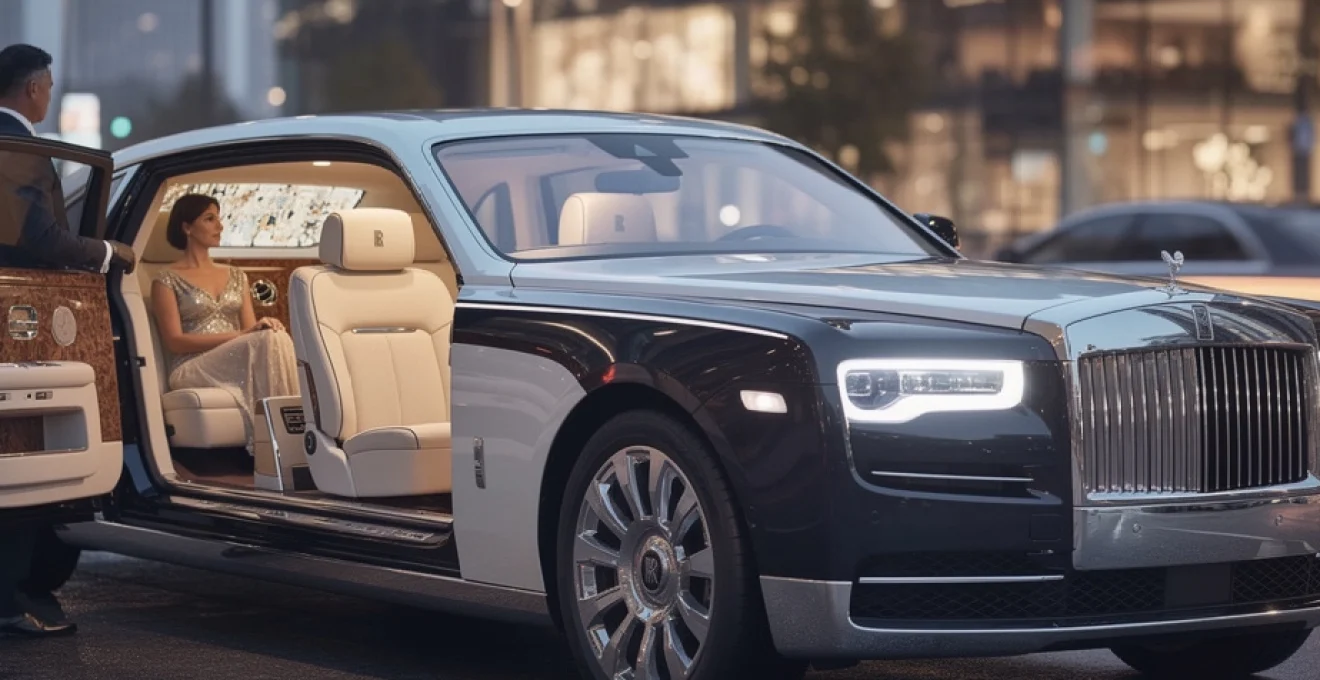
The Rolls‑Royce Phantom VIII occupies a unique space in 2025: more than a luxury limousine, it is a moving sanctuary and a highly personal statement of taste. In a market increasingly shaped by electrification, digitalisation and automated production, the Phantom persists as an unapologetically hand‑built V12 flagship. For you as a buyer, consultant or chauffeur‑operator, it represents the benchmark for what hyper‑luxury can be when cost is secondary to craftsmanship, comfort and quietness. One hundred years after the first Phantom, the eighth generation still serves as the “icon of icons”, setting the reference point by which other super‑luxury sedans, limousines and even SUVs are quietly judged.
Rolls‑royce phantom VIII in 2025: model range, series II update and bespoke commissions
Standard wheelbase vs extended wheelbase phantom VIII: dimensions, rear cabin architecture and use cases
The 2025 Rolls‑Royce Phantom VIII range is built around two core body styles: the standard wheelbase and the Extended Wheelbase (EWB). Both share the same 6.75‑litre twin‑turbo V12, rear‑wheel drive architecture and Architecture of Luxury aluminium platform, yet they respond to different use cases. The standard Phantom is often chosen by owners who like to drive themselves occasionally, need to manoeuvre in dense city centres and prefer a slightly more compact footprint without sacrificing rear comfort. The Extended Wheelbase, by contrast, stretches the wheelbase by around 220 mm, turning the rear compartment into a true lounge with limousine‑grade legroom and enhanced privacy options.
Rear cabin architecture is where the difference becomes tangible for you and your passengers. In the Extended model, the doors are longer, the C‑pillar is more substantial and the floor space is optimised to allow fully reclined, massaging individual seats with elevating footrests. The extra length also enables more sophisticated centre console arrangements, with options such as a refrigerated drinks cabinet, crystal glasses and dedicated storage for bespoke accessories. For high‑profile clients who are almost exclusively chauffeur‑driven, the Phantom Extended Wheelbase becomes less a car and more a mobile suite, particularly in markets such as China, the Middle East and the US West Coast.
Phantom series II 2022–2025: design refresh, engineering carry‑over and market positioning
The Phantom VIII Series II, introduced in 2022 and continuing through the 2025 model year, is best described as an evolution rather than a revolution. Core engineering such as the spaceframe, V12 powertrain and Planar Suspension System has been carried over deliberately, because clients valued the existing refinement. Instead, changes target visual presence, lighting technology and connectivity, subtly refreshing the silhouette without compromising the Phantom’s instantly recognisable profile. In industry terms, it is a “heavy facelift”, refocusing attention on the car at a time of intense competition from ultra‑luxury EVs and plug‑in hybrids.
Market positioning remains unashamedly at the top: in the ultra‑luxury sedan segment, base pricing in many regions surpasses £360,000 before Bespoke work, with transaction prices frequently exceeding £500,000 once commissions are included. A key strategic role of the Series II is therefore to maintain the Phantom as the preferred choice of state leaders, cultural icons and ultra‑high‑net‑worth individuals at a moment when some might be tempted toward silent electric limousines. By combining enhanced digital interfaces, fresh exterior cues and the enduring character of the V12, the Series II Phantom VIII secures its role as the “pinnacle Rolls‑Royce” while the brand’s all‑electric future gradually unfolds.
Rolls‑royce bespoke collective: fully bespoke commissions, coachbuild projects and one‑off phantoms
Every 2025 Phantom VIII is, in a sense, a bespoke car. The Bespoke Collective—a multi‑disciplinary team of designers, engineers, craftspeople and materials specialists—treats each build as a client‑specific project rather than a configuration exercise. At one end of the spectrum, you might choose unique colourways, custom piping and personalised monograms. At the other end stand fully Bespoke commissions and Coachbuild projects, where the Phantom acts as a blank canvas for one‑off creations, from haute couture‑inspired interiors (as with Phantom Syntopia) to culturally specific themes such as the Phantom Extended “Year of the Dragon”.
For clients seeking a one‑off Phantom, the level of involvement goes far beyond ticking options. Expect design consultations, clay models, materials sampling and sign‑off stages more akin to commissioning a yacht or a piece of architecture. This is one of the major reasons Phantom residual values tend to be resilient: properly documented Bespoke and Coachbuild cars often become collectible assets rather than depreciating assets, especially when produced in single or extremely limited numbers.
Black badge phantom VIII: powertrain calibration, dynamic character and visual signature
Although the document does not elaborate in detail on the Black Badge Phantom VIII, its role within the 2025 line‑up is significant. Black Badge variants across the Rolls‑Royce range focus on a slightly more assertive character, both visually and dynamically. On the Phantom, this manifests as a re‑calibrated version of the 6.75‑litre V12 with a more responsive throttle map, subtly adjusted shift logic in the 8‑speed automatic and a firmer, though still supremely compliant, chassis tune. For you as a driver, the result is not a sports sedan in the conventional sense but a Phantom that feels more immediate in its responses.
The visual signature of Black Badge Phantom VIII is defined by darker chrome, including a darkened Pantheon Grille, blacked‑out Spirit of Ecstasy and unique wheel designs that emphasise depth and contrast. Interior treatments often centre on technical carbon or composite veneers, deep monochrome leather schemes and vivid accent colours that stand out against an otherwise restrained environment. For clients who view the Phantom as a statement of personal rebellion rather than mere status, the Black Badge specification provides a curated way to subvert traditional luxury without sacrificing the underlying serenity.
Exterior design and aerodynamics: pantheon grille, “architecture of luxury” and signature lighting
Aluminium “architecture of luxury” platform: torsional rigidity, NVH isolation and weight management
The Phantom VIII is the first Rolls‑Royce to fully realise the dedicated aluminium Architecture of Luxury platform, a structure that now underpins Ghost, Cullinan and the Spectre EV as well. Compared with the previous spaceframe, Rolls‑Royce cites a 30% increase in torsional rigidity, with even greater gains around the suspension and transmission mounting points. In practical terms, this extra stiffness allows the suspension to work more precisely and the NVH (noise, vibration and harshness) team to target specific frequencies, especially in the low‑frequency range where tyre and road noise can intrude.
Weight management is handled in a characteristically Rolls‑Royce way: the Phantom Series II remains a heavy car, with kerbweights around 2,560 kg for the standard model and approximately 2,610 kg for the Extended version. However, weight is distributed intelligently to promote stability and isolation. Double‑skin alloy sections in the floor and bulkheads house layers of foam and felt, contributing to more than 130 kg of sound‑deadening material. For you as a passenger, the effect is an almost eerie calm, described by some testers as “library quiet” even at motorway speeds.
Pantheon grille, spirit of ecstasy and illuminated grille treatment in the phantom series II
The front of the Phantom Series II is dominated by the Pantheon Grille, a modern reinterpretation of the classical Rolls‑Royce motif. In the latest iteration, the grille is not merely a static design element: its slats, proportions and vertical stance are part of a carefully balanced aerodynamic and cooling package. The Spirit of Ecstasy mascot has been subtly remodelled in recent years to reduce drag and improve laminar airflow over the bonnet, an evolutionary refinement that preserves tradition while acknowledging efficiency demands.
An important visual innovation for 2025 is the illuminated grille treatment, where discreet LEDs light the inner surfaces of the Pantheon slats to give the Phantom a distinctive presence at night. This effect is more restrained than on some mass‑market cars, yet it transforms the way you perceive the vehicle in low‑light environments, particularly in urban settings where light pollution can wash out conventional DRLs. Combined with the understated running lights, the illuminated grille serves as a luminous signature, reinforcing the Phantom’s status as a moving piece of architecture rather than a standard automobile.
Laser and matrix LED headlamps: light distribution, adaptive high‑beam and night‑time visibility
The 2025 Phantom VIII employs advanced Matrix LED and, in some markets, laser high‑beam technology to deliver broad, bright and intelligently shaped illumination. The system continuously analyses traffic and environmental conditions to shade out other road users while maintaining maximum high‑beam coverage elsewhere. For you as a driver, this means less fatigue on long night journeys and greater confidence on unlit rural roads. The laser component extends effective visibility beyond 500 metres in suitable conditions, which is particularly valuable for chauffeur‑operated cars travelling at motorway speeds.
Equally important is how the lighting integrates with the car’s design language. The headlamp clusters incorporate intricate laser‑etched detailing and, on Series II cars, a subtle starlight‑style graphic that echoes the famed Starlight Headliner inside. This kind of aesthetic integration matters at the Phantom level: high‑net‑worth clients often notice whether technical features feel bolted on or genuinely harmonised with the car’s identity. The Phantom’s lamps belong firmly in the latter category, reinforcing both safety and style.
Aerodynamic optimisation: underbody airflow, drag reduction and high‑speed stability
Despite its upright proportions and monumental presence, the Phantom VIII benefits from targeted aerodynamic optimisation. Underbody panels manage airflow around the exhaust system, suspension components and drivetrain to reduce turbulence, while careful shaping of the rear bumper and bootlid minimises wake separation. The goal is not to chase sports‑car drag coefficients but to ensure high‑speed stability and refined highway cruising. That matters when the car is expected to carry heads of state and VIPs at sustained autobahn speeds in absolute comfort.
Tyre design plays a surprisingly large role in perceived aerodynamics and rolling refinement. Specially developed Continental tyres incorporate around 2 kg of sound‑absorbing foam in each carcass, suppressing cavity resonance that would otherwise be transmitted into the cabin. Combined with 6 mm thick dual‑layer glazing, the result is an acoustic bubble that isolates you from wind roar and road roar to a degree few competitors can match. Even at 120 km/h, normal conversation is possible at a whisper, which is precisely the point for many Phantom clients.
Powertrain, chassis and ride refinement: 6.75‑litre V12, magic carpet ride and chassis electronics
6.75‑litre twin‑turbocharged V12 (N74B68): torque curve, thermal management and emissions strategy
At the heart of the Phantom VIII is the 6.75‑litre twin‑turbocharged V12, known internally as N74B68. In 2025 guise it produces around 563 hp and 664 lb‑ft of torque, with the latter available from very low engine speeds. The torque curve is deliberately flat, creating the impression of effortless, almost electric thrust rather than dramatic surges. Zero‑to‑60 mph times of approximately 4.5 seconds for the standard wheelbase and 4.6 seconds for the Extended model highlight just how quickly this 2.6‑tonne limousine can move when required.
Thermal management is crucial in such a powerful yet refined engine. Multiple cooling circuits, sophisticated oil temperature control and carefully managed turbocharger heat shielding ensure stable performance even under high ambient temperatures and prolonged idling—conditions very common for chauffeur‑driven cars in cities like Dubai or Los Angeles. Emissions remain relatively high by compact‑car standards, with WLTP combined CO₂ figures quoted between 351 and 365 g/km and fuel consumption around 15.5–16.2 l/100 km, but that is consistent with the Phantom’s role. The emissions strategy relies on advanced catalytic converters, particulate filters and precise fuel injection, but it consciously prioritises smoothness and noise suppression over aggressive cylinder deactivation or hybridisation.
ZF 8‑speed satellite‑aided transmission: GPS‑linked shift logic and driveline smoothness
The transmission is a ZF‑supplied 8‑speed automatic, but Rolls‑Royce integrates a satellite‑aided control layer on top of the base software. This system uses GPS data and navigation mapping to anticipate terrain and driving conditions, proactively selecting the optimal gear ahead of time. Approaching a roundabout, for example, the gearbox will downshift in advance to ensure immediate torque delivery, while on a sweeping motorway climb it will hold a higher gear to avoid unnecessary shifts. You sense the effect as an uncanny absence of indecision; the car always seems to be in the right gear without drawing attention to the process.
Driveline smoothness is further enhanced by carefully tuned engine mounts, prop shaft isolators and differential bushings. The aim is to keep torsional vibrations away from the cabin, so that even under hard acceleration, the sensation is of continuous thrust rather than mechanical effort. For clients who are used to private jets and yachts, this level of calibration is critical: any hint of harshness risks breaking the illusion of the famous “Magic Carpet Ride”.
Planar suspension system: air springs, active anti‑roll bars and pre‑emptive damping control
The Phantom’s ride quality is often described as the gold standard in the industry, and the Planar Suspension System is the main reason. The architecture combines large‑volume air springs with adaptive dampers and electronically controlled active anti‑roll bars on a double wishbone front and five‑link rear axle. A stereo camera mounted in the windscreen scans the road ahead, feeding data to the control unit, which then pre‑conditions the dampers and air springs to deal with upcoming bumps or potholes. The result is pre‑emptive, rather than reactive, ride control.
The term “Planar” refers to the way the body remains composed and level even when the wheels are handling significant vertical motion. Imagine a table floating above uneven ground while its legs adjust underneath—that is the kind of analogy many engineers use when explaining the system. For you and your passengers, the effect is a feeling of gliding, with very little pitch, dive or body roll, even when the driver needs to brake or change direction decisively.
Rear‑axle steering and variable‑ratio steering: manoeuvrability versus chauffeur‑driven stability
Given its size, manoeuvrability is a legitimate concern for potential Phantom buyers and chauffeurs. Rear‑axle steering addresses this directly by turning the rear wheels up to around three degrees opposite to the front wheels at low speeds. This shortens the effective wheelbase, making tight city streets, hotel entrances and parking garages far less intimidating. At higher speeds, the rear wheels steer in phase with the fronts, enhancing stability during lane changes and sweeping bends, which is especially important in an Extended Wheelbase model approaching 6 metres in length.
The front steering system uses a variable‑ratio rack for lighter, more agile response at low speeds and a calmer, more relaxed feel on the motorway. The aim is not sporty feedback but natural, predictable weighting that allows the chauffeur to position the car precisely. Taken together, these systems mean you can experience the commanding presence of a large limousine without enduring the usual compromises associated with such dimensions.
Acoustic engineering: double‑glazed glazing, sound deadening and tyre cavity noise suppression
Rolls‑Royce devotes an extraordinary amount of engineering effort to acoustic comfort in the Phantom. Dual‑pane, 6 mm thick glazing surrounds the cabin, while the body‑in‑white incorporates extensive insulation in the roof, doors and boot. The more than 130 kg of sound‑deadening materials—ranging from foam layers to dense barrier mats—target frequencies from low‑frequency tyre rumble to high‑frequency wind hiss around mirrors and pillars. Engineers reportedly experimented with completely silent cabins before deciding that a hint of sound was actually desirable to avoid disorientation.
Tyre cavity resonance, traditionally a troublesome source of booming noise in large cars, is addressed by integrating sound‑absorbing foam into the tyre structure itself. Combined with carefully tuned suspension bushings and bespoke wheel designs, this reduces in‑cabin noise to levels often below 60 dB at highway speed, comparable to a quiet living room. For you as an occupant using the rear Theatre screens or conducting confidential conversations, this acoustic environment is both a luxury and a practical advantage.
In the Phantom VIII, silence is engineered as rigorously as performance in a sports car, transforming time spent in traffic into a restorative, almost meditative experience.
Interior craftsmanship and materials: leather, veneers and hand‑finished detailing
Grade‑a leather sourcing, hand‑stitching techniques and custom colourways
The interior of the 2025 Rolls‑Royce Phantom VIII showcases leatherwork at a level few industries can match. Hides are sourced from regions where cattle live free from barbed wire and biting insects, reducing imperfections. Each car can require over 250 individual leather pieces, all cut, matched and hand‑stitched by craftspeople whose experience often exceeds a decade. Stitching patterns, perforation layouts and piping details are all configurable, allowing you to echo personal motifs, family crests or corporate identities.
Colour choice is where personalisation becomes almost limitless. Rolls‑Royce maintains a palette of thousands of pre‑developed tones, but the Bespoke Collective will colour‑match to anything from a lipstick shade to a piece of artwork. Multi‑tone interiors, contrast stitching and even hand‑embroidered motifs—aligned to within 0.1 mm—are routine. For clients used to mass‑market “premium” cabins, the Phantom’s leather environment feels closer to a bespoke piece of furniture than to automotive upholstery.
Open‑pore and high‑gloss veneers: bookmatching, marquetry and bespoke inlays
Wood veneers in the Phantom are more than decorative trim; they are a tangible expression of lineage and craftsmanship. Depending on preference, you can specify open‑pore finishes for a contemporary, tactile feel or deep high‑gloss lacquers for a classic yacht‑like sheen. Bookmatching—where mirror‑image veneer pieces are laid side by side to create symmetrical grain patterns—is standard, and the artisans often extend these patterns across the dashboard, doors and rear picnic tables as if composing a single visual story.
Marquetry, the art of inlaying delicate pieces of wood, metal or even mother‑of‑pearl, enables highly bespoke imagery. Past commissions have included landscapes, city skylines and abstract geometric designs that weave around the cabin. Such work demands painstaking attention and can add hundreds of hours to build time, but the result is an interior that reflects you as clearly as a tailored suit or commissioned painting.
Metals, knurling and switchgear: tactile engineering for rotary controllers and organ‑stop vents
Metalwork in the Phantom VIII might appear subtle at first glance, yet its tactile quality is critical to the overall impression of solidity. Rotary controllers, audio knobs and the famous organ‑stop ventilation pulls are machined from solid metal, then finished with fine knurling for a sure, pleasant grip. Even frequently touched parts such as door handles and seat controls carry a precise, cool‑to‑the‑touch feel that differentiates them from plastic imitations.
This attention to tactile feedback extends to the iDrive‑derived Rotary Controller, whose resistance and detents are tuned to give a sense of deliberate, measured interaction. While this may seem a small detail, you notice it every time you adjust settings or navigate menus. In a car designed for long journeys and frequent use by chauffeurs and passengers alike, such micro‑experiences accumulate into a powerful perception of quality.
Rear lounge configuration: individual seats, centre console options and folding tables
For most Phantom clients, the rear compartment is the primary environment. Options range from a traditional three‑seat rear bench to the more popular individual “lounge” seats with extensive adjustability, heating, cooling and massage functions. In the Extended Wheelbase, these can recline deeply, with powered leg rests that create a near‑bedlike posture for long‑distance travel. Upholstery patterns can echo front‑cabin themes or diverge entirely, depending on whether you view the rear as a continuation of the driver’s environment or a separate sanctuary.
Centre console choices significantly shape the character of the rear cabin. You may opt for a full‑length console with refrigerated drinks cabinet, glassware, storage for digital devices and integrated fold‑out tables, or a more open layout prioritising cross‑cabin interaction. Electrically deployed picnic tables and rear Theatre screens are harmonised so that a single touch can prepare the space for work, dining or relaxation. For corporate users and diplomats, this flexibility is a major practical advantage, turning the car into a rolling meeting room when required.
Viewed as a piece of interior architecture, the Phantom’s rear compartment bridges the roles of office, lounge and private jet cabin, depending on how you choose to specify it.
The gallery and bespoke art integration: curated artwork in the phantom VIII fascia
Designing the gallery: structural glazing, demist strategy and safety homologation
The Gallery is one of the Phantom VIII’s most distinctive features: a full‑width glass enclosure across the fascia within which artworks, sculptures or intricate panels can be installed. From an engineering perspective, it is far more complex than a decorative panel. The glass must meet stringent crash‑safety and airbag deployment requirements, resist UV‑related discolouration and integrate demist strategies so that visibility and appearance remain pristine in varying climates. Structural mounts allow art pieces to be secured robustly yet removed if future restoration or replacement is required.
For you as a client, The Gallery transforms the cabin into a personal gallery space, turning everyday journeys into encounters with curated art. Instead of a conventional wood or metal dashboard trim, you can live with a piece commissioned from a favourite artist, studio or artisan. This approach aligns the Phantom more closely with the worlds of fine art and interior design than with conventional automotive customisation.
Art collaborations: examples with nymphenburg porcelain, helen amy murray and contemporary artists
Since launch, The Gallery has hosted collaborations with renowned creators, illustrating what is possible when craftsmanship and technology intersect. Past examples include hand‑sculpted Nymphenburg porcelain installations, textile‑based reliefs by Helen Amy Murray and intricate metal works by contemporary artists. Each project stretches the capabilities of the Bespoke Collective, demanding new methods for mounting, lighting and protecting delicate materials against vibration, temperature changes and UV exposure.
These collaborations also send a message to the wider luxury market: the Phantom is not merely personalisable, it is curatable. For art collectors and cultural patrons, the ability to carry a unique piece commissioned specifically for a car creates an emotional connection that goes far beyond paint colour or trim level. It also has implications for collectability, as certain Gallery pieces may become historically significant in their own right.
Custom commissions: 3d‑printed artefacts, hand‑painted panels and precious metal sculptures
Beyond named collaborations, The Gallery welcomes fully custom commissions guided by client imagination. Techniques range from 3D‑printed lattices and topographical maps to hand‑painted panoramas and precious metal sculptures. In some cases, the art may reference a favourite place, a company history or even a scientific concept, expressed via complex geometry and layered materials. The engineering challenge is to ensure that these works remain stable, silent and visually flawless under all driving conditions.
As additive manufacturing and new composite materials advance, expect future Phantom Galleries to showcase even more ambitious pieces. For you, this opens the door to integrating personal narratives—heritage, achievements, passions—into a car that already reflects a great deal about lifestyle and taste. In a world saturated with digital customisation, the tactile, three‑dimensional nature of The Gallery stands out.
Workflow from design brief to finished gallery installation for ultra‑high‑net‑worth clients
The process of creating a bespoke Gallery typically follows a structured workflow tailored to ultra‑high‑net‑worth clients who may be commissioning multiple projects simultaneously. A typical sequence looks like this:
- Initial brief and mood‑board session to understand your aesthetic preferences, references and intended narrative.
- Concept development with sketches, digital renders and, where necessary, small‑scale maquettes or material samples.
- Technical feasibility studies to address weight, mounting points, thermal behaviour and regulatory constraints.
- Final design sign‑off, followed by fabrication, quality control and pre‑installation testing for durability and NVH.
- Installation at Goodwood and a final client viewing to ensure every detail aligns with the original vision.
Lead times can range from several months to over a year depending on complexity, and costs are highly variable, often reaching six figures for the most intricate works. For clients who view the Phantom as a life milestone or legacy project, this level of engagement is part of the appeal rather than an obstacle.
In‑car technology, infotainment and rear‑seat connectivity in the 2025 phantom VIII
Bmw‑derived idrive architecture: rotary controller, touch surfaces and digital instrument cluster
Underneath the bespoke interface, the Phantom’s infotainment and vehicle control systems leverage a proven BMW‑derived iDrive architecture. A 10.3‑inch central display sits behind the glass fascia, controlled via a Rotary Controller and touch inputs where appropriate. The digital instrument cluster blends traditional Rolls‑Royce aesthetics with configurable displays, ensuring you receive key information without overwhelming the calm visual environment. Compared with earlier generations, the 2025 version offers faster responses, higher‑resolution graphics and improved voice recognition.
The decision to conceal the central display behind glass preserves the clean, gallery‑like appearance of the dashboard. When the screen is not in use, it recedes visually, allowing materials and artwork to take priority. This approach contrasts with many competitors that dominate the cabin with large, tablet‑style screens—an intentional stance aimed at preserving the Phantom’s timeless character while still delivering modern functionality.
Rear theatre configuration: dual HD screens, HDMI streaming and media sources
In the rear, the optional Theatre configuration provides two 10.25‑inch HD screens that deploy from the front seatbacks at the touch of a button. These displays mirror navigation information, manage media and can support various streaming or connected devices via HDMI or wireless interfaces, depending on market specifications. For you as a rear passenger, this turns the Phantom into a productive space during the day and an entertainment lounge at night.
Control interfaces are deliberately intuitive, with physical controllers and touchpads integrated into the rear centre armrest or console. This blend of tactile and digital control respects the fact that many Phantom clients prefer a more analogue feel even when engaging with high‑end technology. Integration with the front infotainment system means content can be shared or separated between zones as needed, a key benefit for families, executives or security‑sensitive occupants.
Audio engineering with bespoke audio: speaker placement, cabin tuning and low‑frequency isolation
The Bespoke Audio system in the Phantom VIII is often described as a “sound studio on wheels”. With around 18 speakers and power output of up to 1,300 watts, the system uses the rigid body structure and carefully damped cabin as an acoustic shell. Engineers treat the interior like a concert hall, tuning speaker placement, frequency response and time alignment to create a cohesive soundstage for all occupants, not just those in specific seats.
Low‑frequency performance is particularly noteworthy because the car’s extensive sound insulation creates a very quiet noise floor. This allows subtle details in recordings—reverb tails, micro‑dynamics, spatial cues—to emerge more clearly than in noisier environments. If you care about music, podcasts or even the intelligibility of conference calls, the Bespoke Audio experience significantly enhances time spent on the move.
Connectivity suite: 4G/5G telematics, smartphone mirroring and over‑the‑air updates
Behind the scenes, the Phantom’s connectivity suite keeps the car in step with digital expectations for 2025. Depending on region, 4G or 5G modules support live traffic data, online search and connected services. Smartphone mirroring via Apple CarPlay and Android Auto is available, helping you bring familiar apps into the car’s interface securely. Over‑the‑air updates can refine software functions and, in some cases, add new capabilities during the car’s life cycle without the need for a dealership visit.
For operators managing fleets of Phantoms for hotel, corporate or VIP services, connected telematics also provide useful insights into utilisation, maintenance schedules and location, enhancing operational efficiency. The key point is that, despite the Phantom’s classically‑oriented design, its underlying electronics are fully up to contemporary expectations, ensuring the car remains viable in a technologically fast‑moving decade.
Rolls‑royce phantom VIII vs rivals in 2025: Mercedes‑Maybach S‑Class, bentley flying spur and EQS SUV
Chauffeur‑driven experience: rear‑seat ergonomics, ingress/egress and privacy options
Comparing the 2025 Phantom VIII with rivals such as the Mercedes‑Maybach S‑Class, Bentley Flying Spur and high‑end electric SUVs like the Mercedes‑Benz EQS SUV or Cadillac Celestiq highlights different philosophies. While many competitors focus on rear comfort, the Phantom adds a ceremonial dimension. Rear‑hinged “coach doors” provide a wide opening for dignified ingress and egress, supported by power‑assisted closing and integrated umbrellas. For you as a VIP occupant, the act of entering or leaving the car becomes an event rather than a routine movement.
Rear‑seat ergonomics prioritise relaxed postures over aggressively reclined “showcase” positions. Deep‑pile carpets, adjustable footrests and extensive seat articulation allow you to find a tailored seating position with minimal effort. Privacy options such as electro‑chromic glass, thick curtains and acoustic lamination outpace many rivals, contributing to a sense of seclusion that is especially valued in high‑security or celebrity use cases.
Craftsmanship comparison: hand‑built processes versus semi‑industrial luxury production
One of the most significant differentiators between the Phantom and its competition is the degree of hand craftsmanship involved. While Bentley and Mercedes‑Maybach also employ artisanal skills, their production volumes and processes are closer to the upper end of industrial manufacturing. The Phantom remains, in many respects, a hand‑built object, with extensive manual work in body finishing, paint, leather and wood. Build times are correspondingly longer, and client interactions more akin to commissioning than ordering.
A simplified comparison of key attributes can be summarised as follows:
| Model (2025) | Base powertrain | Indicative starting price | Primary focus |
|---|---|---|---|
| Rolls‑Royce Phantom VIII | 6.75‑litre twin‑turbo V12 | ~£360,000–£520,000+ | Ultimate comfort, Bespoke craftsmanship |
| Mercedes‑Maybach S‑Class | V8 / V12 | ~£230,000+ | Tech‑heavy luxury, corporate image |
| Bentley Flying Spur | V8 / hybrid | ~£250,000+ | Driver engagement, sporting luxury |
| High‑end EV limousines (e.g. EQS / Celestiq) | All‑electric | £300,000–£400,000+ | Electric innovation, design experimentation |
For buyers who value hand‑craftsmanship and long‑term collectability as much as day‑to‑day comfort, the Phantom still feels like the “endgame” luxury sedan in 2025.
Powertrain philosophies: V12 ICE refinement versus hybrid and fully electric competitors
Powertrain philosophy is another major point of divergence. While the industry increasingly moves towards hybrids and full EVs, the 2025 Phantom steadfastly uses a large displacement V12. For many clients, this is part of the attraction: the near‑silent, turbine‑like character of a well‑insulated V12 remains unmatched in emotional terms, even by exceptionally refined electric drivetrains. That said, EV rivals offer instant torque, zero local emissions and lower running costs, which may appeal if you prioritise sustainability narratives.
From a strategic standpoint, Rolls‑Royce is already rolling out all‑electric models such as Spectre, yet the Phantom serves as a sort of final chapter for the internal‑combustion flagship. If you are considering a Phantom VIII, part of the appeal may lie precisely in this rarity: a peak expression of combustion‑powered luxury at the moment when the world is transitioning toward electricity. As a result, demand for the last V12 Phantoms may remain strong among collectors and connoisseurs for decades.
In a market where silence and instant torque are no longer exclusive to V12s, the Phantom’s powertrain stands as a carefully curated experience rather than a mere specification.
Residual values, customisation depth and long‑term collectability in the ultra‑luxury segment
Residual values in the ultra‑luxury segment are influenced by several intertwined factors: brand heritage, production volumes, specification quality and the desirability of bespoke elements. Historically, well‑maintained Phantoms, especially with low mileage and documented Bespoke features, have shown stronger residual performance than many rivals. Limited‑run or one‑off commissions, such as centenary editions or culturally significant themes, can appreciate or at least maintain value over long periods, particularly when associated with notable first owners.
For you as a buyer thinking beyond immediate enjoyment, a few practical tips can help safeguard long‑term value:
- Favour timeless exterior and interior colour schemes, adding personality through reversible details rather than extreme permanent choices.
- Document Bespoke work thoroughly, including design sketches, material samples and invoices, to support future provenance.
- Maintain a consistent servicing history with authorised facilities, as this reassures future custodians in a niche market.
The Phantom VIII in 2025 sits at the intersection of tradition and transformation: a celebration of century‑long excellence and a final flourish of internal‑combustion opulence. For those able to commission one, it offers not only extraordinary daily comfort but also the possibility of creating a rolling artwork that may fascinate collectors, enthusiasts and design historians well into the second century of the Phantom nameplate.