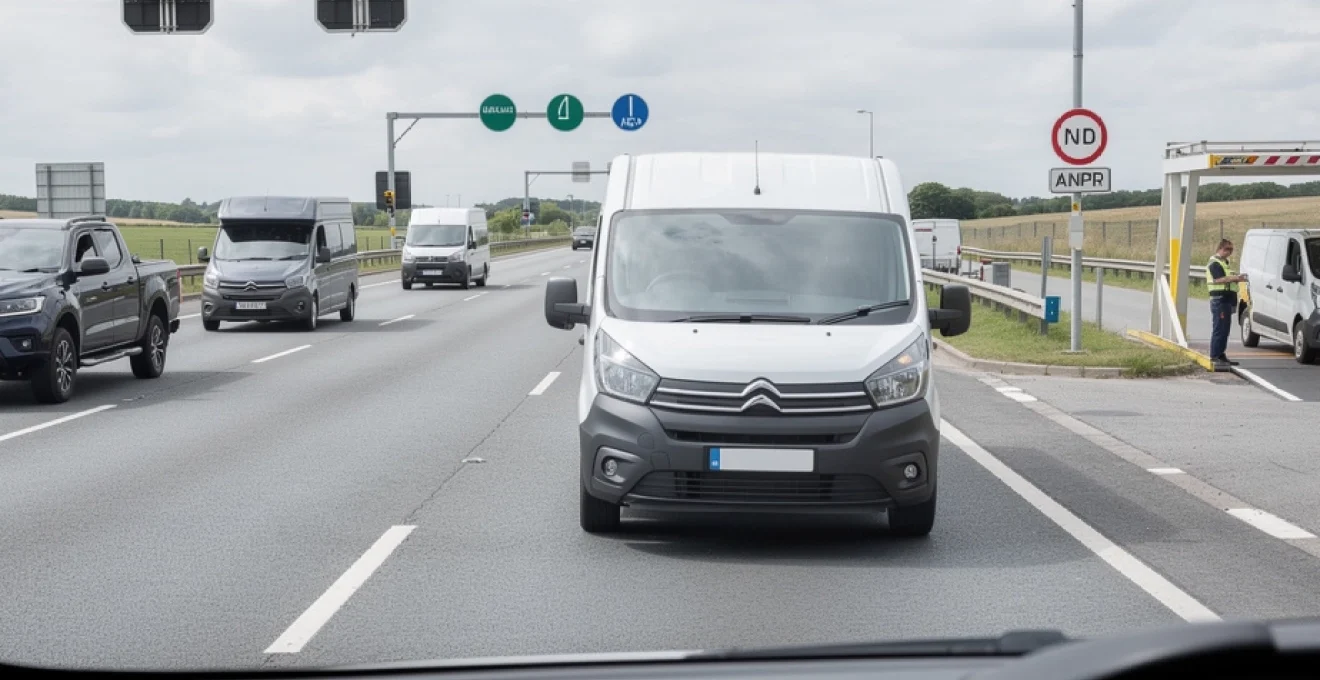
Many van and light commercial vehicle drivers assume that if a road sign says 70 mph, that is the limit for every vehicle. For type N1 vans, that assumption is often wrong. The speed you are legally allowed to travel can change depending on how the vehicle is classified, how much it weighs, how it has been converted and even which country of the UK or EU you are driving in. Understanding how N1 classification interacts with national speed limit rules helps you protect your licence, control running costs and manage risk for your business or fleet.
If you drive a Ford Transit, Mercedes Sprinter, Volkswagen Crafter, double‑cab pick-up or a converted camper based on a panel van, your vehicle almost certainly sits somewhere in the N1 landscape. Knowing whether your van should be treated as a goods vehicle, dual‑purpose vehicle or motor caravan in law is more than a technicality; it directly affects speed limits, MOT class, tax, insurance and what happens if an ANPR or average speed camera records you above a threshold intended for commercial vehicles.
Legal definition of vehicle category N1 under EU type-approval and UK construction and use regulations
UNECE and EU framework: regulation (EU) 2018/858 and UNECE category N classifications
At European level, the starting point is the UNECE vehicle categorisation system. Category N covers power‑driven vehicles with at least four wheels that are designed and constructed for the carriage of goods. Within this, N1 means vehicles used for the carriage of goods and having a maximum mass not exceeding 3.5 tonnes. This definition is carried through in EU type‑approval rules such as Regulation (EU) 2018/858, which replaced Directive 2007/46/EC as the framework for whole‑vehicle approval.
In practice, N1 takes in most light commercial vehicles (LCVs): panel vans like the Transit Custom, mid‑size vans such as the VW Transporter and crew vans and pick‑ups configured primarily for payload rather than passengers. These vehicles are approved to technical standards that assume commercial use, including specific braking, safety and emissions requirements distinct from passenger category M1. When a base vehicle leaves the factory, it already carries an N1 or M1 designation in its European Certificate of Conformity, which later influences UK registration, speed limits and how ANPR systems interpret your van on the road.
UK adoption of N1 within the road vehicles (construction and use) regulations 1986
In the UK, N1 is recognised through a combination of type‑approval regulations and the long‑standing Road Vehicles (Construction and Use) Regulations 1986. These regulations underpin how vehicles may be used on public roads, including the rules on weights, dimensions and the use of speed limiters on heavier goods vehicles. For modern LCVs, the UK essentially adopts the EU/UNECE definitions, so an N1 van at type‑approval remains an N1 van when registered with the DVLA.
This alignment is important because UK speed limit law, derived from the Road Traffic Regulation Act 1984 and associated orders, uses vehicle type and weight to distinguish between car‑like limits and goods‑vehicle limits. When your logbook (V5C) shows N1 and the taxation class is light goods vehicle, enforcement systems and the police treat the vehicle as a goods vehicle for the purposes of national speed limits. Even where the DVLA body type says something slightly different – for example “van with windows” or “light 4×4 utility” – the underlying N1 classification usually still points to goods‑vehicle rules.
Technical criteria for N1 classification: MAM threshold, bodywork types and design intent
The core technical criterion for N1 classification is the maximum authorised mass (MAM) or gross vehicle weight (GVW) not exceeding 3,500 kg. MAM is the legal maximum the vehicle is allowed to weigh when fully loaded, shown on the manufacturer’s plate or ministry plate. If the same basic chassis is offered in 3.5 t and 4.0 t versions, the former is N1 and the latter moves into N2, even if visually identical. From a design perspective, regulators look at whether the primary purpose is to carry goods or passengers, and how the bodywork supports that purpose.
Common N1 bodywork types include panel vans, chassis cabs, dropsides, tippers and many double‑cab pick‑ups. A vehicle with seats behind the driver can still be N1 if the load area is significant and the construction is clearly oriented towards goods carriage. That is why two vehicles that look similar – such as an MPV and a crew van – can end up in different categories: the MPV as M1, the crew van as N1. This design‑intent test becomes highly relevant once conversions or adaptations like racking, extra seats or camper equipment are added.
Borderline cases: double-cab pick-ups, car-derived vans and crew vans assessed as N1
Borderline vehicles blur the line between car and van. Double‑cab pick‑ups like the Ford Ranger or Toyota Hilux often meet the definition of N1 because they are designed for goods, have a sizeable open load bed and a MAM under 3.5 t. Car‑derived vans such as the Ford Fiesta Van start life as passenger cars but, once the rear seats and windows are deleted, become N1 in type‑approval terms, yet may qualify as “car‑derived vans” with car speed limits under separate UK guidance.
Crew vans and Kombi‑style models like the VW Transporter Kombi or Transit Custom Double Cab challenge drivers further. One version may be approved as M1 (dual‑purpose passenger vehicle) and another as N1, despite an almost identical profile. If your V5C shows M1 you are treated as a passenger vehicle for speed limits; if it shows N1, goods‑vehicle speed restrictions apply even if the interior feels more like a family car than a work van.
Standard speed limits for N1 vehicles on UK roads: national and devolved regimes compared
Default national speed limits for N1 on motorways, dual carriageways and single carriageways
Under current UK rules, most N1 goods vehicles up to 7,500 kg GVW share the same default national speed limits as other light goods vehicles. These are:
- 30 mph in built‑up areas (20 mph in most Welsh urban zones)
- 50 mph on single carriageways (compared with 60 mph for cars and M1 vehicles)
- 60 mph on dual carriageways (compared with 70 mph for cars)
- 70 mph on motorways (reduced to 60 mph when towing a trailer)
This 10 mph difference on single and dual carriageways catches many drivers out. National speed limit signs do not specify different figures for different categories; the assumption is that you know whether your vehicle is treated as an N1 van or an M1 passenger car. For N1 vans towing caravans or trailers, the limits drop to 50 mph on single carriageways, 60 mph on dual carriageways and 60 mph on motorways, mirroring other light goods vehicles towing trailers.
Differences between car limits and N1 limits for vans such as ford transit and mercedes sprinter
Two vehicles of roughly the same size can face different limits purely because one is M1 and the other N1. A Transit Custom Kombi registered as M1 is legally allowed 60 mph on single carriageways and 70 mph on dual carriageways. The same model registered as an N1 crew van is limited to 50 mph and 60 mph on the same roads. A long‑wheelbase Mercedes Sprinter 3.5 t panel van is N1 and must observe goods‑vehicle limits, whereas a large luxury MPV of similar footprint enjoys car speed limits everywhere except where locally lowered.
For drivers covering high mileages on A‑roads and dual carriageways, that 10 mph difference can materially affect journey times and fuel use. From an enforcement angle, being recorded at 68 mph in a 70 mph zone may be lawful in a car but prosecutable in an N1 van if the camera system is keyed to goods‑vehicle thresholds. Many fleet managers now use telematics alerts specifically tuned to N1 speed limits on single and dual carriageways to prevent repeat offences by courier and parcel drivers.
Variations in signed local limits: urban 20 mph zones, 50 mph limits and traffic-calmed areas
Local authorities across the UK increasingly apply lower posted limits than the national defaults, especially in urban areas and on higher‑risk rural stretches. A 20 mph limit on a residential street in Wales, for example, applies equally to cars, N1 vans, motorcycles and buses unless a specific order says otherwise. The speed limit on the sign always overrides the general national limit for that class of road, regardless of vehicle category.
On certain rural A‑roads, councils may sign a 50 mph limit even though the national limit would be 60 mph for cars. In that case, an N1 van is restricted to 50 mph as well, because the lower signed limit applies to all vehicles. The complexity arises when a dual carriageway remains at the national limit: a car driver can lawfully travel at 70 mph, while an N1 van must not exceed 60 mph—yet both will only see the same black‑and‑white national limit sign.
Devolved nation specifics: scotland, wales and northern ireland enforcement practice for N1
While the underlying classifications for N1 are consistent across the UK, enforcement culture varies between Scotland, Wales, England and Northern Ireland. Wales, for example, has moved most urban areas to 20 mph, and speed camera partnerships there report a growing focus on compliance by commercial and delivery vehicles. Scotland applies the same N1‑based limits but has additional 40 and 50 mph zones on rural trunk roads where heavy commercial traffic mixes with tourism and local traffic.
Northern Ireland follows broadly similar rules but administers road traffic law separately. For cross‑border operators between Northern Ireland and the Republic of Ireland, understanding differences between UK N1 rules and Irish light goods vehicle limits is essential. Regardless of these nuances, your UK‑registered N1 van is generally treated based on the information held by the DVLA and equivalent devolved agencies, which is then fed into fixed, mobile and average speed camera systems.
Interactions between N1 speed limits, gross vehicle weight (GVW) and maximum authorised mass (MAM)
Thresholds at 2.0 t and 3.5 t MAM and their impact on applicable speed limits
The 3.5 t MAM threshold marks the upper boundary of N1 classification, but there is also a practical break‑point at around 2.0 t laden weight for “car‑derived vans” and dual‑purpose vehicles. UK guidance states that vehicles under 2 tonnes laden that are based on a passenger car platform and adapted for goods may have the same speed limits as cars, even though they are technically N1. Above this, most N1 vehicles fall fully into the goods‑vehicle regime with lower single and dual carriageway limits.
For drivers, the key numbers to know are the unladen weight, laden weight and MAM. The unladen weight influences whether a motor caravan counts as a car or a heavier vehicle; the laden weight is critical at weighbridge checks; and the MAM determines whether the vehicle is N1 or N2. Exceeding MAM not only risks prohibition and fines but can also shift the theoretical speed category, although enforcement tends to focus on the plated figure rather than the overloaded reality when calculating the applicable limit.
Single-axle vs twin-axle N1 configurations and implications for classification and limits
Within the N1 band, some vans use a single rear axle and others adopt twin‑wheel rear axles to improve payload and stability. From a legal standpoint, the number of axles does not change the speed limit regime as long as MAM remains at or below 3.5 t. A single‑rear‑wheel Transit and a twin‑rear‑wheel Iveco Daily plated at 3.5 t both fall under N1 and share the same national speed limits.
Twin‑axle layouts become more significant when MAM creeps over 3.5 t. Many heavy‑duty LCVs can be ordered in 3.5 t, 4.0 t and 4.25 t versions on essentially the same chassis. Once above 3.5 t, they switch to N2 and, in the UK, must have speed limiters set to 56 mph on motorways and dual carriageways, in addition to being subject to lower goods‑vehicle limits. For fleet operators, carefully choosing between single‑ and twin‑axle configurations at order time can therefore have a long‑term impact on compliance overheads and driver training needs.
Effect of down-plating and uprating N1 vehicles on speed limit obligations
Down‑plating is the process of reducing the legal MAM of a vehicle, often by issuing a new plate and paperwork to match a lower figure, for example from 3,800 kg to 3,500 kg. Uprating does the opposite, lifting a 3.5 t vehicle to 3.8 or 4.0 t to increase payload. For borderline vans and chassis cabs, down‑plating can move a vehicle from N2 back into N1, changing the speed limiter requirements and sometimes the licence category needed to drive it.
From a speed limit perspective, an uprated van that crosses into N2 becomes subject not only to tighter speed limits but also to mandatory speed limiters. Down‑plating may allow operation under the more flexible N1 rules, but it does not magically turn a goods vehicle into a car. Drivers must still observe the N1 speed limits on single and dual carriageways. If you are considering uprating or down‑plating, factoring in long‑term route profiles and enforcement hotspots is just as important as the short‑term payload gain.
Examples: volkswagen crafter 3.5 t vs 4.0 t, iveco daily panel van and chassis cab variants
The Volkswagen Crafter offers a textbook illustration. A Crafter long‑wheelbase panel van plated at 3.5 t is an N1 light commercial, allowed 50 mph on single carriageways and 60 mph on dual carriageways, with no requirement for a speed limiter. A near‑identical Crafter uprated to 4.0 t moves into N2; it now requires a limiter and falls squarely into the heavy goods vehicle regime. Yet to the casual observer, both vehicles look like “the same van”.
Iveco Daily models complicate things further because they are frequently built as chassis cabs for tippers, lutons and box bodies. A 3.5 t Daily tipper is N1 and follows light goods vehicle limits. A 5.2 t Daily box van is N2 and subject to lower limits and limiter rules. For fleet managers running mixed Daily fleets, accurate driver briefings become critical so that a driver jumping from an N1 chassis cab to an N2 box body does not casually continue using car‑like speeds on higher‑speed roads.
Special N1 configurations: car-derived vans, pick-ups and campervan conversions
Car-derived vans (e.g. vauxhall corsa van, ford fiesta van) and their alignment with car speed limits
Car‑derived vans occupy a special niche. These are vehicles based on passenger car platforms, typically under 2 tonnes laden, where the rear seats and side windows have been removed to create a small load area. Classic examples include the Vauxhall Corsa Van and Ford Fiesta Van. Type‑approval usually marks them as N1, but UK guidance treats them, for speed limit purposes, in line with cars and passenger vehicles rather than larger goods vans.
For you as a driver, the practical effect is that a Corsa Van or Fiesta Van can typically follow standard car limits: 60 mph on single carriageways and 70 mph on dual carriageways, unless a lower limit is posted. However, this only applies where the vehicle meets the strict criteria of being car‑derived and under the 2‑tonne threshold. A slightly larger small van, such as some compact Transits or Caddy‑sized vehicles, can fall outside this definition even if they feel car‑like, leaving the driver bound by N1 limits instead.
Double-cab pick-ups (e.g. toyota hilux, ford ranger) and HMRC/ DVLA tests for N1 vs passenger status
Double‑cab pick‑ups generate recurring debate because different agencies assess them for different purposes. HMRC looks at payload, seating and construction to decide whether a double‑cab counts as a commercial vehicle or company car for Benefit‑in‑Kind tax. The DVLA records the vehicle category and body type for registration, which in turn informs speed limit rules. A Toyota Hilux or Ford Ranger with a payload over 1,000 kg is typically treated as a commercial vehicle, aligning closely with N1 goods‑vehicle status.
Some lifestyle‑oriented pick‑ups blur the boundary; leather interiors, high levels of equipment and hardtops make them feel closer to SUVs. Legally, though, most are still N1. That means goods‑vehicle limits on single and dual carriageways, even if used more for family holidays than site work. If your V5C shows N1 and the taxation class is light goods, assume N1 speed limits apply unless a specialist adviser confirms dual‑purpose passenger status based on detailed HMRC and DVLA criteria.
Motor caravans built on N1 bases (e.g. fiat ducato, peugeot boxer) and reclassification effects on limits
Large motorhomes and campervans based on N1 panel vans such as the Fiat Ducato or Peugeot Boxer introduce another layer of complexity. The base vehicle typically leaves the factory as N1, but the completed motor caravan may be registered as a motor caravan body type and classed functionally as a passenger vehicle. UK rules draw an important distinction between motor caravans under 3,050 kg unladen weight and those above that threshold.
Motor caravans under 3,050 kg unladen are generally treated as cars for speed limit purposes, even if they started life as N1 panel vans. This allows 60 mph on single carriageways and 70 mph on dual carriageways, bringing them into line with typical campervan expectations. Heavier motorhomes above 3,050 kg unladen face reduced limits similar to goods vehicles. There is also a separate issue that the DVLA has sometimes declined to reclassify smaller van‑based conversions as motor caravans, leaving them recorded as “van with windows” despite meeting the legal definition of a motor caravan under type‑approval regulations.
Grey-area modifications: racking, extra seats and windows altering N1 categorisation
Many N1 vans are modified after first registration, either with racking and shelving for trades, additional rear seats for crews or side windows for shuttle use. Individually, these changes rarely alter the underlying N1 classification, but they may affect whether the vehicle is considered a dual‑purpose vehicle, a minibus or a motor caravan. The DVLA requires updates to the V5C if seating capacity, body type or weight changes significantly, and can request inspection where classification is unclear.
For speed limit enforcement, the critical factor is how your vehicle is officially recorded. If a crew‑cab van gains extra seats but remains N1 in the DVLA record, goods‑vehicle limits still apply. If a full camper conversion meets the type‑approval definition of a motor caravan, it may be eligible for car‑equivalent limits despite the logbook lagging behind. From an operator’s perspective, keeping conversion documentation such as Certificates of Conformity and converter plates easily accessible makes it simpler to demonstrate the correct status at roadside stops or after receiving a Notice of Intended Prosecution.
EU and international speed limit frameworks for N1 vehicles: germany, france and other key markets
Autobahn and bundesstrasse limits for N1 in germany under StVO and vehicle class N
Outside the UK, N1 vans encounter different but related frameworks. In Germany, the Strassenverkehrs‑Ordnung (StVO) sets general limits of 100 km/h on rural roads and 130 km/h as a recommended maximum on sections of Autobahn without a posted limit. For light commercial vehicles under 3.5 t, including N1 vans, the default is generally 100 km/h on rural roads and 130 km/h on motorways, but specific restrictions can apply if the vehicle pulls a trailer or passes into a higher weight band.
German enforcement authorities rely heavily on vehicle registration data and on‑the‑spot assessments of plated weight. Many N1 vans driving on the Autobahn in practice stay around 120 km/h even where no posted limit exists, partly because of manufacturer speed recommendations and partly due to loading and stability. If you operate cross‑border from the UK into Germany, ensuring that driver briefings cover the differences between UK N1 limits and German StVO expectations reduces the risk of on‑the‑spot fines.
French N1 speed regimes on autoroutes, routes nationales and routes départementales
In France, speed limits for vehicles under 3.5 t—including most N1 vans—are generally aligned with passenger vehicles, but weather and driver experience can introduce additional caps. Typical limits include 50 km/h in built‑up areas, 80 or 90 km/h on rural roads, 110 km/h on dual carriageways and 130 km/h on autoroutes in dry conditions, reducing to 110 km/h in rain. For newly qualified drivers, further restrictions apply regardless of vehicle category.
The key distinction for N1 operators is that, unlike the UK, France does not impose a blanket 10 mph (approximately 16 km/h) reduction on single and dual carriageways for light goods vehicles under 3.5 t. However, weight‑related rules tighten once you cross the 3.5 t limit and move into N2 territory. Frequent cross‑Channel operators often adapt telematics profiles to recognise that a van limited to 60 mph on a UK dual carriageway may legally travel faster on an equivalent French route, subject to local signage and conditions.
Comparison across EU27: italy, spain and the netherlands speed limits for light commercial vehicles
Across the wider EU27, N1 vans face a patchwork of regimes. Italy generally aligns N1 limits below 3.5 t with passenger cars, subject to 50 km/h in towns, 90 km/h on rural roads, 110 km/h on main extra‑urban roads and 130 km/h on motorways, with lower limits in bad weather. Spain follows a similar pattern but with 90 km/h limits on conventional roads and 120 km/h on autopistas for light vehicles under 3.5 t.
The Netherlands sets 50 km/h in built‑up areas and 80 km/h on most rural roads, with 100–130 km/h on motorways depending on time of day and section. For light commercial vehicles under 3.5 t, the limits mostly mirror those for passenger cars, but strict enforcement using average speed cameras means that even minor breaches can lead to significant fines. Fleet operators sending UK‑registered N1 vans into these markets benefit from concise country‑by‑country briefing sheets so that drivers do not unconsciously apply UK goods‑vehicle rules where higher or lower limits actually apply.
Cross-border operations: implications for UK-registered N1 vans in EU road transport
For UK‑registered N1 vans operating internationally, two principles apply: each country’s domestic road traffic law governs the applicable speed limits on its territory, and enforcement bodies rely on the vehicle category and plated weight, not on the driver’s home‑country habits. A van treated as a restricted‑speed goods vehicle in the UK may enjoy more generous limits abroad, but exceeding posted limits or breaking local rules on trailers, weather‑related reductions or learner‑driver restrictions still attracts penalties.
Professional practice is moving towards integrated telematics profiles that switch automatically when a vehicle crosses a border, applying the local light commercial vehicle limits for each jurisdiction. This level of sophistication may seem excessive for occasional continental trips, but for parcel networks and logistics providers it increasingly becomes standard practice to manage risk and maintain an unblemished compliance record across multiple legal systems.
Enforcement of N1 speed limits: ANPR, average speed cameras and tachograph data
How DVLA vehicle class data triggers n1-specific thresholds in SPECS and HADECS cameras
Automated enforcement systems such as ANPR‑linked fixed cameras, average speed systems (for example SPECS) and motorway HADECS devices determine which threshold to apply based partly on DVLA data. When an N1 van’s registration is captured, back‑end systems query the vehicle record to establish whether it is a car, light goods vehicle or heavier HGV. The threshold for triggering a violation is then set according to the relevant limit for that vehicle type on that class of road.
As a result, you could be recorded at 65 mph on a dual carriageway signposted at the national limit and still receive a Notice of Intended Prosecution if the system correctly recognises your van as N1 with a 60 mph cap. Conversely, a mis‑recorded body type or incorrect taxation class may occasionally generate disputes over which threshold should have applied. In borderline cases—such as motor caravans and dual‑purpose vehicles—supporting documentation like Certificates of Conformity and converter plates can prove invaluable in challenging an incorrectly applied N1 limit.
Role of tachographs and telematics (e.g. webfleet, verizon connect) in evidencing speed compliance
Although EU rules do not generally require tachographs in N1 vehicles, some border‑case vans and uprated models fall into tachograph territory. Where fitted, tachograph records provide a detailed, tamper‑resistant log of speed and distance that enforcement agencies can cross‑check against roadside observations or camera data. Even without tachographs, modern telematics platforms such as Webfleet and Verizon Connect collect granular speed and location information, often down to a few seconds’ resolution.
For fleets, telematics serves a dual role. It encourages compliant behaviour through real‑time alerts when drivers exceed N1‑specific limits on single and dual carriageways, and it supplies evidence if an alleged offence appears inconsistent with route and speed‑profile data. Used intelligently, this data can also highlight problematic routes where lower van limits are frequently breached and prompt route planning changes, driver coaching or revised delivery time windows.
Police roadside checks, weighbridge inspections and VOSA-style enforcement for light commercials
While cameras handle a large share of enforcement, traditional roadside checks remain common, particularly for vans and light goods vehicles. Police and DVSA‑style officers regularly carry out combined speed, weight and roadworthiness checks on strategic routes. At a weighbridge, an overloaded N1 van may be prohibited from continuing its journey and the driver interviewed about both loading practices and recent speeds, especially if the vehicle would effectively fall into the next weight category when overloaded.
Officers frequently focus on courier and parcel vans because of the high mileages and tight schedules involved. An N1 van stopped after being clocked at car‑like speeds on a dual carriageway may lead to a closer examination of the V5C, converter plates, tyre ratings and load security. Being able to clearly explain the classification of the vehicle, present up‑to‑date documentation and show evidence of structured driver training on N1 speed limits can influence the tone and outcome of these encounters.
Common prosecution scenarios: courier vans, parcel delivery fleets and motorway offences
The most common prosecution scenario for N1 vehicles involves medium‑sized panel vans on high‑speed roads. A driver used to car limits sets cruise control at 70 mph on a dual carriageway, unaware that the N1 limit is 60 mph; an average speed camera system records the entire journey and a notice arrives days later. Similar patterns occur on single carriageway A‑roads, where 55–60 mph vans sit in flows of 60–65 mph car traffic but face lower legal caps.
Parcel delivery fleets are also prone to offences on motorways where variable limits apply. A temporary 50 mph speed limit displayed on overhead gantries applies equally to cars and N1 vans, but some drivers misinterpret the situation and maintain higher speeds, assuming only heavy goods vehicles will be targeted. For fleet operators, building explicit N1‑specific speed rules into driver handbooks, induction training and telematics scorecards is one of the most reliable ways of reducing these avoidable infringements and protecting both drivers’ licences and company reputations.