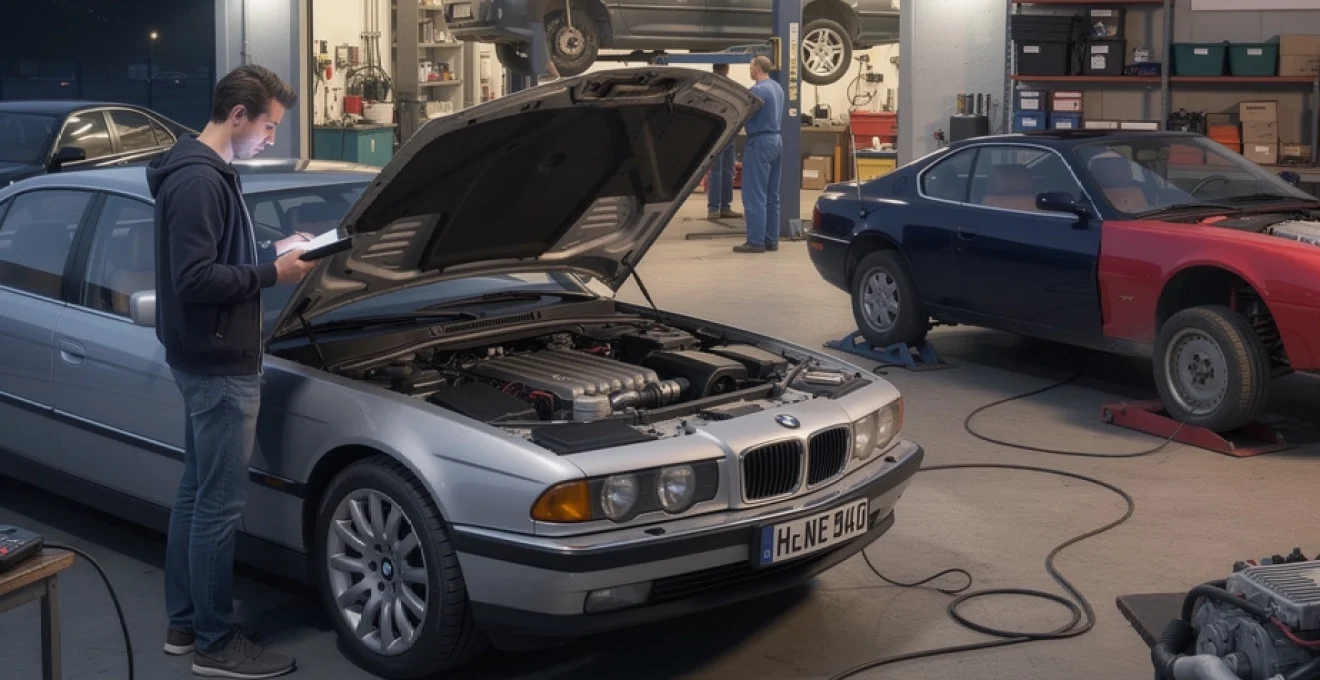
A cheap V12 sounds like fantasy: the kind of late‑night classifieds search you carry out knowing full well it could end in financial ruin. Yet depreciation, fuel prices and complex electronics mean twelve‑cylinder luxury cars often lose 80–90% of their original value within 15–20 years. That creates a strange but fascinating niche where you can buy cars that once rivalled private jets for less than the cost of a new supermini. The catch is that purchase price is only the opening bid. To enjoy a V12 on a realistic budget, you need to understand how these engines age, how the surrounding electronics fail, and where the real costs hide.
Approached with clear eyes and proper research, a “cheap” V12 can give you an experience that no four‑cylinder hybrid ever will: a smooth, silk‑like surge of torque and a sense of mechanical indulgence that belongs to another era. The trick is knowing which models sit at the bottom of the curve, which ones to avoid entirely and how to stack the odds in your favour before you hand over the money.
Defining “cheap” V12 cars: price brackets, depreciation curves and real-world running costs
Analysing V12 market segments: sub-£10k, £10k–£20k and £20k–£30k entry points
For realistic shoppers, “cheap” V12 ownership splits into three main brackets. At the very bottom, sub‑£10,000 V12 cars tend to be older Jaguar XJ12 saloons, early BMW 750i (E32) and tired Mercedes S600 or CL600 examples. These are often high‑mileage, poorly maintained and bought as projects. Expect to spend the purchase price again within two years if you want a truly road‑ready car.
The £10,000–£20,000 bracket is where the most interesting bargains sit: E38 750iL, Toyota Century G50, Audi A8 W12 D3, tidy Mercedes CL600 C215 and R230 SL600s, plus driver‑grade Aston Martin DB7 V12 Vantage. At this level, you can find cars with sensible history and 80–130k miles that are “used but loved”.
Between £20,000 and £30,000, depreciation brings early Ferrari 456 GTs, nicer DB7s, clean BMW E31 850i/850Ci and early DB9s into view. These are still very much prestige assets and tend to be owned by enthusiasts rather than bargain hunters, but they are no longer out‑of‑reach exotica. In each band, you trade capital outlay against future workshop bills; going one band higher often saves several thousand pounds in remedial work.
How depreciation affects V12 exotics versus executive saloons and GT coupés
Depreciation hits V12 cars unevenly. Executive saloons and big GT coupés like the BMW 7 Series, Mercedes S/CL/SL and Audi A8 W12 usually lose value fastest. A W220 S600 that cost over £100,000 new can now appear for under £10,000, meaning a drop of around 90% in two decades. By contrast, Ferrari and Lamborghini V12s bottom out much higher because of limited production and collector demand.
Another factor is perceived reliability. Models with horror‑story reputations—E65 760Li, early W220 S600, or first‑generation DB9 with gearbox and electrical gremlins—depreciate harder because buyers fear unknown costs. Conversely, relatively robust engines like the Toyota 1GZ‑FE or Ferrari F133 in the 550 Maranello hold values better.
Market sentiment also shifts with legislation. In some European cities, tightening emissions zones are already depressing values of older petrol V12s, especially heavy saloons. That can help you today, but may affect resale if new low‑emission regulations expand over the next 5–10 years.
Insurance, road tax and fuel consumption modelling for ageing V12 engines
Running costs are where a cheap V12 stops being cheap. In the UK, pre‑2006 V12s typically sit in the highest VED band based on CO₂, often over £600 per year. Insurance for a high‑performance or luxury V12 can be surprisingly sensible if you use a classic or limited‑mileage policy, but quotes still rise sharply if you are young or live in a high‑risk postcode.
Fuel is the biggest ongoing expense you feel daily. A heavy V12 saloon averaging 18–20 mpg over mixed driving will use about 2,250 litres of petrol per 10,000 miles. At £1.50 per litre, that is roughly £3,375 per year on fuel alone. Performance Ferraris and Lamborghinis often deliver 12–16 mpg, pushing the annual fuel bill nearer £4,000 if you actually use the car.
For planning, it is wise to model total yearly costs: purchase price amortised over three years, plus realistic fuel, tax, insurance and a maintenance buffer. Many owners find that setting aside £2,000–£3,000 per year for repairs on a German V12, and more for Italian exotics, prevents nasty surprises.
Evaluating total cost of ownership versus initial purchase price for budget buyers
A cheap purchase price can be a trap if you ignore whole‑life cost. A £7,000 BMW 760Li that needs £5,000 of suspension, cooling and electrical work in year one is not better value than a £13,000 example with a thick folder of invoices. Treat the car like an old house: the cheap one usually needs a new roof.
One practical approach is to calculate a notional “cost per year of V12 experience”. Add expected repairs, fuel and standing costs over three years, then divide by three. Often a more expensive but well‑maintained car ends up within £500 per year of a bargain‑basement one, yet delivers far more reliability and enjoyment.
Depreciation at this age is slower. Many fully depreciated V12s lose only £1,000–£2,000 over three years if you buy sensibly. That makes the running costs the dominant factor; choosing the right example and investing in preventative maintenance matters more than shaving £1,500 off the initial deal.
Iconic german V12 bargains: BMW, Mercedes-Benz and audi models under £20,000
BMW 7 series V12 (E32 750i/750il, E38 750il): M70/M73 engine reliability and common faults
The BMW E32 and E38 7 Series V12s are often touted as the classic way into cheap twelve‑cylinder ownership. The M70 5.0‑litre and M73 5.4‑litre units are essentially two straight‑six engines sharing a crank, and when serviced correctly they are tough. Oil leaks from cam covers and timing covers are common but manageable. Cooling systems are the real weak point: radiators, plastic expansion tanks and water pumps age poorly, and overheating can kill head gaskets.
Electrical issues also follow these cars as the looms and earth points age. Twin ECUs, twin throttle bodies and complex 1990s electronics mean methodical diagnosis is vital. Rust on E32s around arches and sills, and rear subframe corrosion on E38s, deserves a close look. A well‑sorted E38 750iL offers an outstanding blend of comfort, discreet style and that distinctive V12 hum for £6,000–£15,000 depending on condition.
BMW 8 series V12 (E31 850i/850Ci/850CSi): market pricing, nikasil issues and electrical gremlins
The E31 8 Series has moved from unloved GT to modern classic, and values reflect that. The V12 850i/850Ci usually sits in the £18,000–£30,000 zone for decent examples, with the 850CSi in a completely different, far higher league. Early M70 cars largely sidestepped the much‑discussed Nikasil bore wear that plagued some 1990s BMW V8s, though a detailed compression test remains wise on any 30‑year‑old engine.
Electrical gremlins are a bigger headache: ageing relays, window regulators, pop‑up headlamp mechanisms and the complex Check Control system can all misbehave. The 8 Series also hides a vast amount of wiring under its dashboard. Any sign of water leaks into the cabin or boot is a red flag, as moisture kills connectors. A sound 850i is a sublime long‑distance machine, but buying cheap and trying to rescue an abused car will fast outstrip the cost of a better example.
Mercedes-benz S-Class and CL V12 (W140 S600, W220 S600, C215 CL600): M120 vs M275 ownership realities
Mercedes offers two very different V12 ownership experiences. The older M120 6.0‑litre in the W140 S600 and C140 coupé is a naturally aspirated masterpiece, famed for smoothness and longevity. These engines often exceed 250,000 miles with proper servicing. The downside is the complexity of the S‑Class chassis: double glazing, soft‑close doors and 1990s ECUs bring a long list of potential niggles, while parts like wiring harnesses and distributor caps are not cheap.
The later twin‑turbo M275 in the W220 S600 and C215 CL600 delivers monstrous torque but lives in a far more fragile body. Biodegradable wiring, ABC hydraulic suspension and corroding brake lines haunt neglected examples. Coil packs are a notorious weak point at £1,000+ each fitted. If you choose carefully and focus on a car with extensive receipts for ABC, coil packs and cooling work, you gain obscene performance for five‑figure outlay. Buy blindly and you inherit every cost the last owner ran away from.
Mercedes-benz SL600 R129 and R230: folding roof hydraulics, ABC suspension and rust hotspots
The R129 SL600 combines 1990s Mercedes over‑engineering with a sonorous V12, and prices for solid cars have risen accordingly, often £20,000–£30,000. The big risks centre on roof hydraulics and ageing wiring. There are more than a dozen hydraulic rams for the folding roof and roll‑over bar; when the seals fail, fluid leaks into the boot or cabin. Replacing every ram and line can exceed £3,000, so evidence of recent repairs is extremely valuable.
The later R230 SL600 initially felt like a huge bargain, but owners quickly learned the hard way about ABC suspension failures, rust around wheel arches and subframes, and failures of roof pumps and seals. Budget for at least £2,000 as a contingency fund on top of purchase. However, if you find a rust‑free, enthusiast‑owned R230 with ABC repairs and a thick history file, you gain 493 bhp, 0–60 mph in around 4.5 seconds and a truly effortless GT for mid‑teens money.
Audi A8 6.0 W12 D3: W12 architecture, timing chain service costs and parts availability
The Audi A8 W12 (D3) offers a different twist: a compact W12 engine derived from two narrow‑angle VR6 units. It produces around 443 bhp and drives all four wheels through a six‑speed Tiptronic gearbox. The aluminium ASF body means corrosion is rarely structural, but accident repairs are costly and require a bodyshop experienced with bonded aluminium.
Timing chains sit at the gearbox end of the engine, and while not a scheduled service item, chain or tensioner issues are extremely labour‑intensive to fix. Many cars share components with V8 A8s, but W12‑specific parts like exhausts, cooling pipes and engine ancillaries can involve long lead times. On the plus side, a well‑used W12 is often cheaper than a newer diesel A8, and the discreet looks mean you can enjoy a 12‑cylinder limousine without shouting about it.
Affordable british V12 legends: jaguar and aston martin models that undercut italian exotics
Jaguar XJ-S and XJS V12: HE 5.3-litre and 6.0-litre engines, lucas injection and cooling upgrades
The Jaguar XJ‑S (later XJS) V12 is one of the cheapest classic routes into a twelve‑cylinder GT. Early 5.3‑litre HE engines use high‑efficiency cylinder heads and a Lucas fuel‑injection system that, when correctly maintained, is capable and reliable. Heat is the persistent enemy. The V12 fills the engine bay, and any weakness in radiators, fans, hoses or thermostats shows up quickly in traffic.
Many long‑term owners upgrade cooling with alloy radiators, modern fans and improved coolant pipes. Fuel consumption can dip into single digits around town, so an XJS V12 is best treated as a weekend or touring car. Later 6.0‑litre cars add torque and slightly better electronics, but parts prices for specific V12 components—especially if an engine rebuild is needed—are eye‑watering. Buying on condition and history matters far more than chasing a particular year.
Jaguar XJ12 and daimler double six (series III, XJ40, X300): corrosion, wiring looms and LPG conversions
Jaguar XJ12 and Daimler Double Six saloons offer incredible value compared to sports‑car siblings. Series III cars deliver the most traditional look but rust aggressively: sills, wheel arches, rear valance and screen surrounds must be checked thoroughly. XJ40‑based XJ81 V12s are comparatively rare and benefit from a stiffer shell and better suspension, but wiring looms and earth points suffer with age.
The X300‑era XJ12 and Double Six often represent the sweet spot of refinement and price. Owners sometimes fit LPG conversions to tame fuel costs; a well‑installed system with current certification can be a benefit, but a poorly executed conversion risks valve seat damage and backfires. As with all cheap V12s, the best car is the one with a thick folder of receipts, regular coolant changes and evidence that oil leaks have been resolved, not simply ignored.
Aston martin DB7 V12 vantage: ford-era underpinnings, exhaust manifolds and clutch longevity
The Aston Martin DB7 V12 Vantage turned a pretty but modestly powered GT into a genuine 420 bhp sports tourer. Underneath, the chassis owes much to the Jaguar XJ‑S, and the 5.9‑litre V12 was developed under Ford ownership with significant Cosworth input. That relative parts‑bin heritage actually helps a budget owner; many service items cross‑reference to Ford or Jaguar components, trimming costs.
Two known pain points are exhaust manifolds and clutches. Cracked manifolds are labour‑intensive to replace due to tight engine bay clearance, and manual clutches can wear quickly if used heavily in town. Many cars are automatic, which suits the DB7’s character and avoids clutch bills, though the auto can feel dated. A pre‑purchase inspection by an Aston specialist is essential, but a sorted DB7 Vantage remains one of the cheapest ways to enjoy an Aston Martin V12 soundtrack.
Aston martin vanquish and early DB9 market: SMG-style gearbox servicing and bonded aluminium chassis checks
Early Vanquish and DB9 models sit at the upper end of the “cheap V12” spectrum, but fall dramatically below original list prices. The first‑generation Vanquish uses an automated manual gearbox—often referred to as an SMG‑style system—which depends on regular clutch and actuator adjustment. Neglect leads to jerky shifts and very short clutch life; budget several thousand pounds for a clutch on a badly driven car.
Both Vanquish and DB9 use bonded aluminium chassis technology. This delivers lightness and rigidity, but repairs after accident damage must be carried out correctly. Inspect for any evidence of poorly repaired front or rear impacts, misaligned panels or corrosion where aluminium meets steel fixings. When right, these cars feel like genuine modern exotics; when wrong, they can become unsellable money pits.
Budget italian v12s: ferrari and lamborghini models at the bottom of the price curve
Ferrari 400i, 412 and 456 GT: colombo vs tipo F116 engines, timing belt service intervals and sticky switches
Ferrari 400i and 412 models are still among the most accessible twelve‑cylinder Ferraris. They use an evolution of the classic Colombo V12 with fuel injection, coupled to either a manual or GM automatic gearbox. Timing belts need changing roughly every five years or 30,000 miles, and while the engine does not always have to come out, labour hours still add up.
The later 456 GT introduced the new Tipo F116 5.5‑litre V12 and brought Ferrari firmly into the modern GT era. Early 456s now sit close to the £40,000 mark in many markets, but needy examples can be cheaper—with corresponding risk. Electrical issues such as pop‑up headlamp motors and notorious “sticky” switches and interior plastics are common. Sorting these details is time‑consuming but transforms how the car feels.
Ferrari 550 maranello and 575M: F133 V12 robustness, F1 gearbox risk analysis and cam belt access
The Ferrari 550 Maranello and its evolution, the 575M, sit above the £50,000 mark but are worth mentioning because they demonstrate how a robust F133 V12 can stabilise values. The engine itself is famously strong if serviced on time, with many cars running well past 100,000 miles. Buyers fear timing belt costs, but on these models the engine can stay in situ, keeping labour to dozens rather than hundreds of hours.
The real split is between manual and F1‑gearbox cars. F1 pump and actuator failures on 575M models can run into five figures, whereas the gated manual linkage, while not cheap to rebuild, is simpler and more robust. If you ever stretch to this level, budget properly for annual servicing and use a specialist who understands preventive work rather than waiting for failures.
Ferrari 612 scaglietti early cars: chassis corrosion points, interior shrinkage and clutch life
Early Ferrari 612 Scaglietti examples are creeping into “attainable” territory. Aluminium construction reduces traditional rust worries, but corrosion can still appear at panel joins, around the rear subframe and at steel fasteners. A detailed inspection on a lift is non‑negotiable. Interiors suffer from leather shrinkage on dashboards and rear shelves, which is expensive to retrim correctly.
Clutch life on automated manual versions strongly depends on driving style. Gentle use can see 30,000+ miles; abusive stop‑start driving can kill a clutch in under 10,000 miles. Any service history should note remaining clutch life, often expressible as a percentage from diagnostic reads. Ignoring this figure can lead to an immediate £4,000–£6,000 bill after purchase.
Lamborghini diablo and murciélago high-mileage examples: e‑gear vs manual, clutch and cooling system budgets
High‑mileage Lamborghini Diablo and early Murciélago examples theoretically sink towards the “cheaper V12” pond, but total cost of ownership remains extreme. Manual cars are generally more desirable and mechanically simpler, but clutch replacement is still costly due to labour. E‑gear automated manuals in later cars add expensive pumps and actuators to the bill.
Cooling systems are critical on these tightly packaged V12s; radiators, fans and coolant pipes must all function perfectly to avoid overheating. Any sign of temperature creep in traffic deserves immediate investigation. A cheap Murciélago may attract you from a headline price perspective, but an honest budget must include five‑figure contingency sums if you intend to use the car with any regularity.
Japanese and niche-brand V12 options: toyota century, aston lagonda taraf and other outliers
Toyota century G50 and GZG50: 1GZ‑FE V12 tuning potential, JDM import procedures and parts sourcing
The Toyota Century G50 is perhaps the most rational V12 for someone who values reliability over outright performance. Its 1GZ‑FE 5.0‑litre V12 is under‑stressed, making around 276 bhp but delivering a smooth, torque‑rich character. Tuning potential exists—twin‑turbo conversions are not unheard of—but most owners enjoy the serene, stock experience, complete with lace curtains and ultra‑soft suspension.
Importing a JDM Century requires understanding auction grading, shipping, registration and potential rust from coastal Japanese climates. Parts for the engine are still available from Toyota, but some trim pieces and electronic modules may need to be ordered from Japan with long lead times. For a buyer bored by German saloons, the Century offers genuine limousine luxury and a V12 badge with far fewer horror stories.
Used aston martin lagonda taraf and rapide S V12: ultra-low-volume risks and dealer-only diagnostics
At the more exotic end of “niche” sit the Aston Martin Lagonda Taraf and Rapide S. Neither is cheap in absolute terms, but both illustrate issues with ultra‑low‑volume V12 cars. Parts specific to the Taraf’s body and interior are scarce and priced accordingly. Diagnostics and coding often require dealer‑grade tools and online access to factory servers, making independent support harder.
The Rapide S, sharing much with other VH‑platform Astons, is a safer bet if you want a four‑door V12 Aston on a budget relative to new price. Even so, it remains essential to budget for big‑ticket items such as ceramic brake replacement on some models, and to verify that software updates and recall work have been performed.
Rare coachbuilt and tuner v12s: brabus 7.3, alpina B12 and novelty factor versus maintenance overhead
Coachbuilt and tuner specials like the Brabus 7.3, Alpina B12 and various AMG‑tuned V12s bring a different risk profile. Their engines usually start from robust OEM bases—often M120 or M70/M73 units—but with capacity increases, uprated internals and bespoke ECUs. Power outputs of 450–580 bhp are common, and the novelty factor is huge.
The challenge appears when something unique breaks. Custom exhaust manifolds, rare ECUs or model‑specific body panels may only be repairable by sending items back to the original tuner or commissioning one‑off fabrication. Labour times are often longer because even experienced mechanics see these cars rarely. Anyone buying such a car cheaply should do so for long‑term enjoyment rather than quick profit, and be prepared for detective work when sourcing parts.
Pre-purchase inspection checklist for cheap V12 cars: engine, drivetrain and electronics
Compression testing, leak-down analysis and borescope inspection on ageing V12 blocks
A thorough mechanical inspection is essential before committing to any cheap V12. A basic compression test across all cylinders gives a first look at engine health; readings should be even, with no single pot significantly lower. For deeper insight, a leak‑down test identifies whether losses come from valves, rings or head gaskets.
On engines with known bore wear risks or suspected scoring, a borescope inspection through the spark plug holes can reveal scoring, carbon build‑up or signs of coolant ingress. While these steps add several hundred pounds to pre‑purchase costs, they are trivial compared with the price of a V12 rebuild, which can easily exceed the value of the entire car.
Automatic gearbox and clutch diagnostics: ZF 5HP/6HP, mercedes 5G‑Tronic and graziano transaxles
Gearboxes on V12 cars work hard and are often under‑maintained. ZF 5HP and 6HP automatics in BMWs and some Jaguars suffer from worn torque converters and valve bodies if the fluid is never changed. Look for smooth shifts, no flare between gears and no shudder under light throttle. Fresh fluid and a new filter can revive a tired box, but internal wear means a rebuild may be looming.
Mercedes 5G‑Tronic units are generally robust but dislike neglect and overheated fluid, especially behind twin‑turbo V12s. In Ferraris and Lamborghinis with Graziano or similar transaxles, clutch engagement quality is key. Judder when pulling away, difficulty selecting reverse or a slipping clutch at high revs all point towards imminent expense. Reading clutch wear values via diagnostics is strongly advised where available.
High-pressure hydraulic and air suspension checks: ABC, airmatic, EDC and self-levelling systems
Many V12 luxury cars rely on complex suspension systems to keep two tonnes of metal under control. Mercedes ABC and Airmatic, BMW EDC and various self‑levelling setups all use pumps, accumulators, valves and sensors that age. A sagging corner after parking overnight, warning lights on the dash or a harsh, crashy ride are tell‑tale signs of trouble.
On ABC in particular, it is worth checking fluid colour (it should be clean and green), inspecting pipes for leaks and listening for pumps running excessively. Replacing a full ABC system can exceed the value of the car; however, careful diagnosis can sometimes isolate faults to a single strut or valve block. Airbags on Airmatic suspensions also perish with age, so listen for hissing and look for cracked rubber.
CAN bus, multiplex wiring and ECU fault code scanning on 1990s–2000s luxury platforms
Electronics are the invisible web that holds modern V12s together. 1990s and 2000s luxury platforms make extensive use of CAN bus and multiplex wiring; a corroded connector or failing module can cause bizarre cross‑system symptoms. A full fault‑code scan with manufacturer‑specific software is non‑negotiable before purchase.
Look for historic codes that repeat, even if currently cleared, and be wary of cars with multiple modules reporting low voltage; this can indicate long‑term battery issues and stressed electronics. Water ingress into ECU boxes, sunroof drains or boot wells is common on some models and can silently destroy wiring looms. Simple checks with a hosepipe and visual inspection can save you from inheriting someone else’s electrical nightmare.
Corrosion assessment on subframes, rear arches and structural chassis sections
Even if the engine and electronics pass muster, corrosion can write off a cheap V12. Pay particular attention to front and rear subframes, suspension pick‑up points and inner sills. On Jaguars and older BMWs, rear arches and the area around fuel filler necks often hide bubbling rust.
Using a lift or inspection pit is ideal; photographs in adverts rarely show trouble spots. Light surface corrosion is manageable, but flaking, perforated metal near structural areas will require welding that can exceed the value of a cheap car. Aluminium‑bodied cars like the Audi A8 D3 or Ferrari 612 are not immune; galvanic corrosion where steel meets aluminium is a specific concern.
Running a V12 on a budget: DIY maintenance, specialist independents and parts cross-compatibility
Identifying shared components: using BMW, mercedes and ford parts bins to cut costs
One of the smartest ways to run a V12 cheaply is to exploit shared components. Many Aston Martin V12s use ignition coils, sensors and ancillary parts derived from Ford or Volvo catalogues; cross‑referencing part numbers with OEM suppliers can cut costs by 50% or more. Similarly, BMW and Mercedes V12s share numerous components with their V8 siblings, from filters to suspension arms.
Online parts catalogues and enthusiast forums often list equivalencies, allowing you to order a OEM‑equivalent part without the exotic price tag. The caution is to avoid ultra‑cheap, no‑name items for critical systems like brakes, cooling and suspension. A good rule of thumb is: buy genuine or high‑quality OEM brands for anything that can strand you or cause further damage if it fails.
Routine servicing tasks suitable for home mechanics: ignition, fluids, belts and cooling systems
DIY servicing can make a substantial dent in yearly costs if you are comfortable with spanners and follow workshop manuals carefully. Spark plug changes on a V12 are more time‑consuming but conceptually straightforward. Oil, coolant, brake and transmission fluid changes follow the same principles as on any other car, just with bigger quantities.
Regular coolant inspection is particularly important; catching a minor leak early prevents overheating episodes that kill head gaskets. Auxiliary belts and tensioners are also worth renewing preventively, especially on high‑revving Italian engines where a snapped belt can cause collateral damage. Treat routine maintenance as sacred, not optional, and the car is far less likely to present you with catastrophic failures.
Leveraging independent marque specialists and remanufactured components for major repairs
For jobs beyond home capability, a good independent specialist is worth their weight in gold. Labour rates are often 30–50% lower than main dealers, and experience with known failure patterns allows quicker diagnosis. Many independents also have access to remanufactured components such as steering racks, hydraulic pumps and ECUs, which can halve major repair bills.
Building a relationship with a trusted specialist pays off long‑term. They can help prioritise work, advising which items are critical and which can safely wait. On some platforms, software updates and coding still require dealer involvement, but a hybrid approach—indie for mechanicals, dealer for rare software tasks—keeps the overall budget realistic while ensuring the car remains correctly configured.
Fuel system optimisation, LPG conversions and ECU remapping strategies for heavy V12 fuel consumption
There is no escaping that a twelve‑cylinder engine is thirsty, but sensible optimisation can soften the blow. Ensuring the fuel system is healthy—clean injectors, functioning oxygen sensors, no vacuum leaks—helps the ECU maintain the right mixtures and can reclaim several mpg. Tyre pressures, alignment and driving style make a noticeable difference on a two‑tonne V12; gentle throttle inputs and anticipation transform range between fill‑ups.
Some owners pursue LPG conversions on Jaguars, BMWs and even Mercedes V12s. When executed to a high standard, LPG can halve fuel cost per mile, but adds complexity and requires specialist tuning. On certain engines, mild ECU remapping can broaden the torque curve and improve part‑throttle efficiency, though chasing peak power usually increases consumption. For a budget‑conscious V12 owner, the most effective strategy combines a well‑maintained fuel and ignition system with relaxed driving, limited annual mileage and a realistic view of what a cheap V12 lifestyle truly costs.