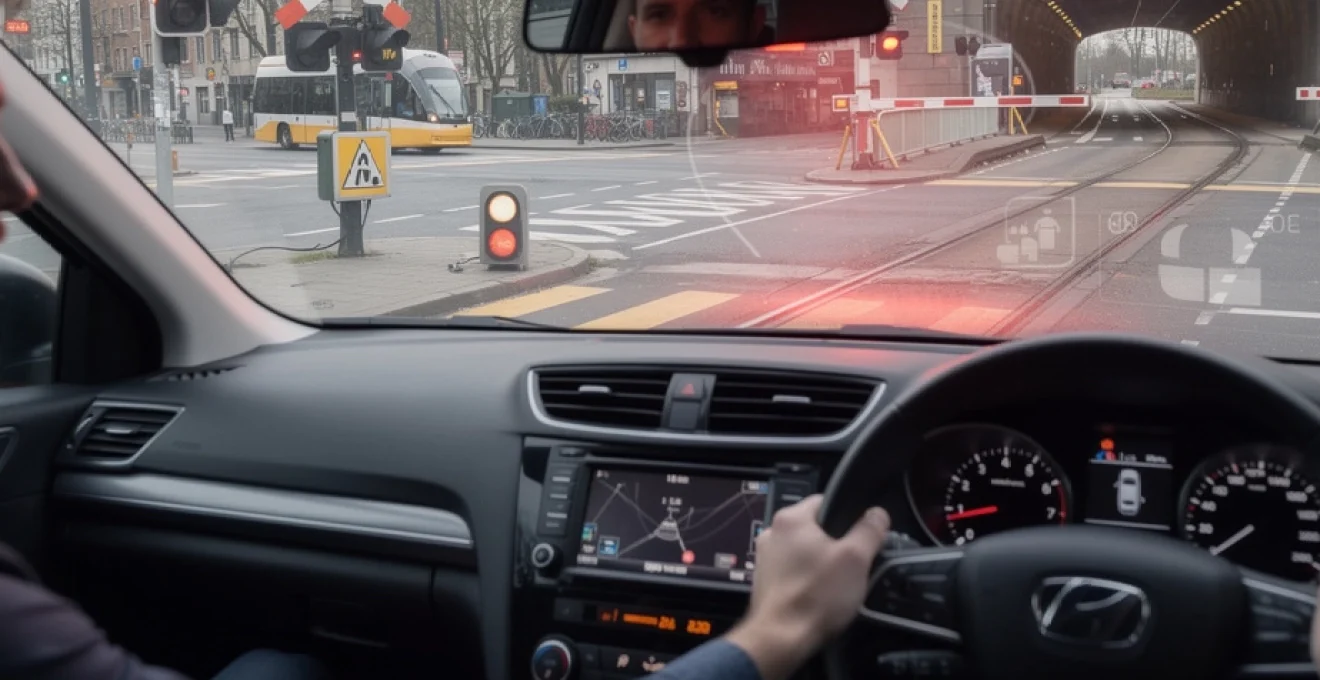
For most drivers, light signals, markings and signs are familiar parts of the daily commute. Yet one element of the UK road environment often gets less attention: roadway warning bells. Those short bursts of sound at a level crossing, the clang before a bridge lifts, the chime at a tramway junction — each carries a precise meaning, and misunderstanding them can have serious safety consequences. As road networks become more complex, and vehicles quieter and more insulated, understanding how audible warnings work, and what you are expected to do when you hear them, becomes essential for safe, confident driving.
How roadway warning bells integrate into modern traffic control systems for drivers
Roadway warning bells sit within a wider ecosystem of traffic control that includes traffic signals, barriers, sensors and control centres. In the UK, audible warnings are designed to complement visual cues such as red wig‑wag lights, amber signals and barrier movements, never to replace them. The aim is redundancy: if one channel is missed — perhaps you are briefly distracted, or sunlight obscures a signal — another channel still warns you. Modern traffic engineering treats these systems as part of an integrated safety envelope, especially in high‑risk locations where vehicle–train, vehicle–tram or vehicle–pedestrian conflicts can be severe.
Audible warning devices within UK traffic signs manual chapter 3 and TSRGD regulations
Audible road warnings are shaped by standards such as the UK Traffic Signs Manual Chapter 3 and the Traffic Signs Regulations and General Directions (TSRGD). These documents specify how road traffic signals, warning devices and signs must be installed, sequenced and maintained. Bells and electronic sounders at level crossings, movable bridges and certain pedestrian crossings are treated as part of the signal installation, not as add‑ons. This means the audible device must operate in a predictable way whenever the associated red lights or barriers operate, and must fail in a safe state if a fault is detected.
Under these regulations, warning bells are calibrated so that drivers and pedestrians receive a clear, unambiguous message that control of the junction has changed. For example, when flashing red lights begin at a level crossing, the bell confirms that you must stop, even if your view of the lights is partially blocked. Regulatory guidance also emphasises consistency: you should be able to interpret similar bell patterns the same way wherever you drive in Great Britain, reducing confusion and reaction time.
Interface between warning bells, flashing beacons and traffic signal controllers (MOVA, SCOOT, UTC)
Behind the scenes, warning bells interface with traffic signal controllers such as MOVA (Microprocessor Optimised Vehicle Actuation), SCOOT (Split Cycle Offset Optimisation Technique) and wider UTC (Urban Traffic Control) systems. At complex junctions and crossings, these controllers decide when to change signal aspects, taking into account queues, demand and safety interlocks. When a crossing sequence is triggered — for example by a train detection system — the controller activates the amber and red lights, lowers barriers and starts the audible alarm in a tightly controlled order.
This integration prevents unsafe overlaps. At some tramway intersections, for instance, the central controller ensures that road traffic signals remain on red and bells continue sounding until the tram has fully cleared the conflict zone. If communication with the detection system fails, the default is conservative: the system may lock signals on red and keep the audible warning active, prompting you to stop and wait until the fault is cleared by an operator.
Signal priority logic for trams, level crossings and emergency vehicles using acoustic alerts
Signal priority logic gives trams and trains precedence at many crossings, and audible warnings are the driver‑facing expression of that priority. At level crossings, train detection systems can trigger warnings up to 27 seconds or more before the train arrives, depending on line speed, to guarantee a safe clearance time. For tram systems, the priority phase may shorten side‑road green times and extend tram greens, while bells or gongs alert road users and pedestrians that a tram has the right of way.
Emergency vehicles usually rely on sirens rather than fixed bells, but at some older movable bridges and tunnel portals, fixed bells are still used alongside red signals to indicate that a route has been closed to let emergency or priority traffic through another path. From a driver’s point of view, any fixed bell in the roadway environment is a cue that normal priority has changed; your task is to treat it as an instruction to reassess the junction, not as mere background noise.
Comparison of roadside warning bells with in-vehicle alerts from ADAS and ecall systems
Modern vehicles carry their own acoustic ecosystem: lane departure warnings, front collision alerts, reversing sensors and eCall crash notifications. These in‑vehicle alarms are designed to grab your attention inside the cabin, whereas roadside warning bells are designed to cut through outside noise and reach many road users at once. The interaction between the two is becoming more important. For example, an Automatic Emergency Braking system might activate just as you hear a level crossing bell, creating a layered warning.
One practical challenge is auditory overload: if a vehicle constantly beeps for minor issues, there is a risk that you tune out an external bell when it matters most. Manufacturers are starting to harmonise in‑cabin alert tones so they are distinguishable from external safety bells. As advanced driver‑assistance systems (ADAS) improve, expect more vehicles to reference external infrastructure — via V2X communication — to display on‑screen prompts when an audible roadside bell is associated with an approaching train, tram or bridge lift ahead.
Key locations where drivers encounter roadway warning bells in the UK and europe
Warning bells tend to appear where the price of a missed signal is high: places where high‑mass vehicles like trains or ships intersect with road traffic, or where pedestrians and vulnerable users are prioritised. If you drive regularly across Europe, the patterns will feel familiar, although sound types and volumes may vary slightly by country. The principle is constant: when you hear a bell in the roadway environment, assume a high‑risk manoeuvre is about to happen nearby and prepare to stop or yield.
Level crossings on network rail and eurotunnel approaches using audible alarms
Level crossings are the most recognisable environment for warning bells. In the UK, automatic half‑barrier crossings use amber lights, an audible warning and then flashing red lights as a train approaches. The bell usually starts with the first red flash and may continue until the barriers are fully down. According to Network Rail data, roughly 95% of trains pass a crossing within 3 minutes of the warning sequence starting, though some locations can take longer due to signalling and multiple trains.
If the red lights flash for more than 3 minutes with no train visible at a crossing without full barriers, guidance instructs drivers to use the trackside telephone to contact the signal operator. The bell and lights remain your primary cue: you must stop when the red wig‑wags flash, even if you think the train has already passed, because another may be approaching from the opposite direction. This pattern is particularly critical on routes serving Eurotunnel approaches, where high‑frequency shuttle movements demand strict protection.
Tramway intersections in cities such as manchester metrolink, croydon tramlink and sheffield supertram
Tramway intersections combine road‑like speeds with rail‑like priority. In systems such as Manchester Metrolink, Croydon Tramlink and Sheffield Supertram, warning gongs or electronic chimes often accompany tram signals when a tram crosses a pedestrian route or mixed‑traffic junction. For drivers, the visual element is usually a dedicated tram signal face plus standard traffic lights. The bell or gong helps pedestrians and cyclists detect a tram that may be moving faster, and more quietly, than a bus.
Where tramways cross side roads at shallow angles, bells are especially important because trams cannot swerve if someone pulls out unexpectedly. You might also notice that bells at tram stops or crossings are sometimes directional, aimed at footways rather than the carriageway. Even then, if you hear them while driving, treat them as an early indication that tram movements are active and that signals may change unexpectedly in your phase.
Movable bridges, tidal causeways and ferry ramps with bell-based closure warnings
Movable bridges and tidal causeways use warning bells to signal that the safe passage window is closing. Before a lifting bridge raises, for example, a sequence typically starts with amber lights, then steady or oscillating bells, then red lights and barriers lowering. Statistics from several UK harbour authorities indicate that bridge strikes and near‑misses drop significantly — often by more than 50% — when audible warnings are well maintained and clearly audible at 70–80 dB(A) within vehicles.
On tidal causeways and ferry ramps, bells may supplement or replace barriers. A bell sequence might indicate that water is encroaching on the roadway or that a ramp is about to move. As a driver, the key rule is simple but vital: if a bell sounds in combination with a red light, do not attempt to “beat the barrier” or squeeze through. Water levels and moving structures can change faster than they appear, and emergency services regularly report rescues of drivers who ignored audible closure warnings.
Tunnel portals and underground road sections with acoustic evacuation and closure bells
Tunnel portals and underground road sections increasingly use acoustic alarms to warn of closures, smoke events or over‑height vehicles. In many European tunnels, a distinctive bell or siren is paired with red cross signals over each lane. If you hear this sort of bell in or near a tunnel, the expectation is that you prepare to stop, move to a signed evacuation route, or follow dynamic lane guidance as indicated by matrix signs and red/green arrows.
Some systems use graduated sound patterns — for example, a short intermittent chime for height checks, and a continuous alarm for full tunnel closure. Research on tunnel safety shows that clear, unambiguous audible alarms, combined with simple pictograms, can reduce evacuation times by 20–30%. For a driver, the best response is to avoid hesitation: respond to the bell and visual signals immediately, rather than trying to interpret the cause while still moving at speed.
School safety zones and pedestrian priority crossings with audible pre‑warning systems
School safety zones and pedestrian priority crossings sometimes employ short bell or chime patterns as a pre‑warning before lights change or a crossing becomes active. These systems are designed to protect children, older pedestrians and people with visual impairments in areas where traffic speeds are low but conflicts are frequent. Sound levels are often lower than at a railway crossing, yet still sufficient to be heard through a slightly open window or in a slow‑moving queue.
If you regularly drive through such zones, it helps to treat any audible pre‑warning as a hint to ease off the accelerator and cover the brake. Combined with flashing amber school warning signs or 20 mph limits, bells indicate that pedestrian activity is likely to increase in the next few seconds. That proactive response — anticipating instead of merely reacting — is one of the simplest ways you can reduce risk around schools and residential streets.
Decoding roadway warning bell patterns: what different sounds instruct drivers to do
Not all bells are equal. Continuous ringing, intermittent chimes and complex electronic tones each carry different connotations. If you learn to decode these patterns, you can react more quickly and confidently. Think of them as the audible equivalent of different signal aspects: just as solid red, flashing red and amber mean different things at traffic lights, the timing and persistence of bells tell you how urgently to act and how long the hazard is likely to last.
Continuous bells vs. intermittent chimes and their prescribed driver responses
Continuous bells usually signal that a crossing or structure is actively in a closed or closing state. At level crossings, for example, the bell typically runs continuously from the onset of red flashing lights until barriers are down and sometimes until the first train has passed. In that period, your duty is to stop behind the stop line and remain there, regardless of whether you can see the train yet. Attempting to cross while the continuous bell is active conflicts directly with Highway Code requirements.
Intermittent chimes, by contrast, often act as pre‑warnings. They might sound briefly before pedestrian priority engages, before a bridge begins to lift, or as a lane control system changes state. In those situations, you are not always required to stop immediately, but you are expected to prepare for a change — for instance, by reducing speed and avoiding overtaking. Treat intermittent chimes as a “get ready” instruction, in the same way a steady amber advises you that red will appear next.
Bell cadence, frequency and sound pressure level (dB(A)) as defined in EN 457 and BS 5839
The acoustic characteristics of roadway bells are shaped by standards such as EN 457 (Audible danger signals) and BS 5839 (Fire detection and fire alarm systems). These standards specify parameters like frequency, cadence and minimum sound pressure levels to ensure that alarms are clearly distinguishable from background noise and from each other. For example, many transport warning bells operate in the 500–2000 Hz range, where human hearing is particularly sensitive, and are designed to produce at least 65 dB(A) inside a typical vehicle with windows closed near the hazard.
Why does this matter for you? Because as vehicles become quieter and better insulated, designers must increase external alarm levels or use more piercing frequencies to cut through engine, ventilation and entertainment noise. Some recent research indicates that drivers in modern EVs may experience up to 10 dB(A) more attenuation of outside sound compared with older vehicles. That makes the careful selection of cadence and frequency essential so that you still notice the bell, even with music or speech systems active.
Sequencing of bells with wig‑wag flashing red lights at level crossings and barriers
At level crossings, the sequencing of bells with wig‑wag flashing red lights follows a strict safety script. First, an amber light appears, instructing drivers to stop unless it is unsafe to do so. As the amber extinguishes, red lights begin to flash alternately, and the bell sounds in synchrony. Barriers then start to descend. This sequence gives you a clear temporal cue: by the time the bell has been ringing for a second or two, the window for safely continuing across the crossing has closed, and stopping is mandatory.
If another train is approaching immediately after the first, the barriers may remain down, and red lights continue to flash. In many cases, the audible warning may change tone or stop briefly then restart. The key rule is unchanged: flashing red lights always mean stop, and bells reinforce that message. You should only proceed once the lights have stopped flashing and, where barriers are present, they have fully risen; the absence of a bell alone is not permission to move off.
Fail‑safe behaviours: what drivers must do when bells sound without visible hazards
Occasionally, you may encounter bells sounding with no obvious hazard — for instance, no train in sight, no barrier movement, or an empty bridge. From a system design perspective, this is intentional: warning systems are constructed to fail “loud” rather than fail silently. If a sensor, relay or controller experiences a fault, the default is often to activate warnings or lock the installation in a safe state until a technician attends.
When an audible roadway warning activates, treat it as a command to prioritise safety, even if the reason is not immediately visible.
In practice, this means you should stop at the appropriate line or sign, check for other instructions — such as a telephone, an information plate or a manually operated signal — and follow that guidance. At many UK level crossings, signs instruct drivers to use the provided telephone to speak directly with the signaller if lights or bells appear to be stuck. Attempting to “second‑guess” the system because nothing looks wrong is a recurring factor in near‑miss reports and enforcement cases.
Human factors, driver perception and reaction times to roadway warning bells
Even the best‑engineered warning bell is only effective if drivers can hear it, interpret it correctly and respond in time. Human factors — from hearing ability and attentional load to stress and familiarity — play a major role in how you process audible road warnings. Modern vehicles with thick glazing, active noise cancellation and loud infotainment systems can inadvertently undermine the original design assumptions behind many bell installations, which were specified decades ago around noisier cabins and open windows.
Auditory masking inside modern vehicles with soundproofing, music and phone calls
Auditory masking occurs when one sound makes it difficult to hear another. Inside a well‑insulated SUV or EV, a combination of music, hands‑free calls and ventilation noise can mask external bells, especially at higher speeds. Studies in driver behaviour labs show that reaction times to external alarms can increase by 200–500 ms when drivers are engaged in phone conversations, even with legal, hands‑free setups. That might not sound much, but at 50 mph it adds 4–11 metres to stopping distance.
As a driver, there are simple ways to reduce this risk around known high‑risk locations. Lower audio volume when approaching level crossings or school zones, avoid complex phone discussions in built‑up areas, and open a window slightly in slow‑moving queues near crossings or ferry ramps if external cues are critical. These small habits make it more likely that you will detect a bell in time to respond appropriately.
Driver reaction time benchmarks to acoustic alarms in highway code and DfT research
The Highway Code implicitly assumes a perception–reaction time of around 1–1.5 seconds for an attentive driver, and Department for Transport research often uses similar benchmarks for safety calculations. For auditory warnings, controlled experiments suggest that well‑designed bells can trigger head‑turning or pedal release in as little as 300–600 ms, faster than many visual cues, because sound is detected even when your gaze is elsewhere.
Sound reaches you even when you are not looking in the right direction, making bells particularly valuable where hazards can approach from out of view.
However, that rapid response only holds when the bell is unexpected and distinctive. If you regularly ignore smaller alerts — such as seatbelt chimes or parking sensors — your brain can become desensitised to beeping sounds. Choosing to disable non‑essential in‑car beeps, or adjusting their levels, can help keep your sensitivity to critical external alarms high.
Vulnerable drivers: older motorists, new drivers and those with partial hearing loss
Older motorists and those with partial hearing loss may struggle to detect higher‑frequency bells, especially in noisy environments. Age‑related hearing loss often affects frequencies above 2 kHz first, which overlaps with the range of many transport alarms. New drivers, on the other hand, usually hear bells clearly but may not yet have built the mental “library” of meanings associated with different patterns, so they take longer to decide how to respond.
If you know that your hearing is reduced, regular hearing checks and appropriate hearing aids are as important to road safety as good vision correction. Adjusting driving habits helps too: keeping windows slightly more open in built‑up areas, reducing in‑car volume, and paying particular attention to visual warning signals that accompany bells can compensate for partial hearing loss. For learners and new drivers, spending time revising the Highway Code sections on level crossings, signals and tramways reinforces the link between bell patterns and required actions.
In‑cabin alert design in EVs and hybrids to compensate for reduced external noise cues
EVs and hybrids change the auditory landscape. Because these vehicles are quieter externally at low speeds, regulators have required Acoustic Vehicle Alerting Systems (AVAS) to help pedestrians detect them. Inside, however, cabins are often so quiet that external bells are more attenuated than in older, noisier cars. Some manufacturers are beginning to address this by using selective “through‑glass” sound conduction and by linking external infrastructure into the vehicle’s own alert system via connected car platforms.
From a design standpoint, there is a growing trend to map certain external events — for example, a smart level crossing activating — to specific in‑cabin HUD or cluster warnings. Think of it like subtitles for the roadway: even if you cannot clearly hear the bell, the vehicle can display an icon or message derived from infrastructure signals. As these systems mature, drivers of EVs may receive a richer and more explicit set of prompts than the audible bell alone, though the external warning will remain essential for non‑equipped vehicles and other road users.
Legal duties, highway code rules and penalties linked to ignoring warning bells
Legally, a roadway warning bell is not just background noise; it is part of the authorised signal installation. Ignoring it often means ignoring mandatory visual signals too, which carries specific offences. At level crossings, the Highway Code requires drivers to stop when red lights flash, and courts have treated attempts to cross while bells and red lights are active as dangerously close to — or outright — dangerous driving, depending on circumstances. Penalties can include hefty fines, penalty points, disqualification and, in serious cases, custodial sentences.
Similar obligations apply at movable bridges, ferry ramps and certain tunnel gates. Disobeying a traffic light signal or ignoring a sign such as “Stop when lights show” can lead to fixed penalties or prosecution. Insurers frequently treat such behaviour as gross negligence, which can complicate claims if an incident occurs. From a practical perspective, the cost of waiting for a bell sequence to end is trivial compared with the potential loss of licence or worse. Treat every bell‑backed signal as a bright line: if the system is sounding, assume the law expects you to comply fully until the signal sequence clearly ends.
Future of roadway warning bells in connected and autonomous vehicle environments
Connected and autonomous vehicles (CAVs) are poised to reshape how roadside infrastructure communicates. Yet audible bells are unlikely to vanish soon. Instead, they will become one layer in a multi‑channel dialogue between vehicles, infrastructure and people. Many European trials already use V2X (vehicle‑to‑everything) beacons at level crossings that broadcast their status digitally. A future autonomous vehicle might “know” a crossing is active long before any human would hear a bell, adjusting its approach speed accordingly while still allowing the external bell to warn cyclists and pedestrians.
As automated driving systems advance, one key design challenge will be ensuring that human occupants remain able to take over when required, especially in mixed‑traffic scenarios where some warnings are still primarily acoustic. One likely direction is context‑aware in‑cabin prompts that explicitly reference external signals: an on‑screen message such as “Level crossing alarms active ahead — system slowing” backed by a unique chime that does not compete with the infrastructure bell. For human drivers, the core advice remains stable: learn the meanings of roadway warning bells, keep cabin conditions conducive to hearing them, and treat them as authoritative cues about the traffic environment, even as smarter digital systems gradually surround them.