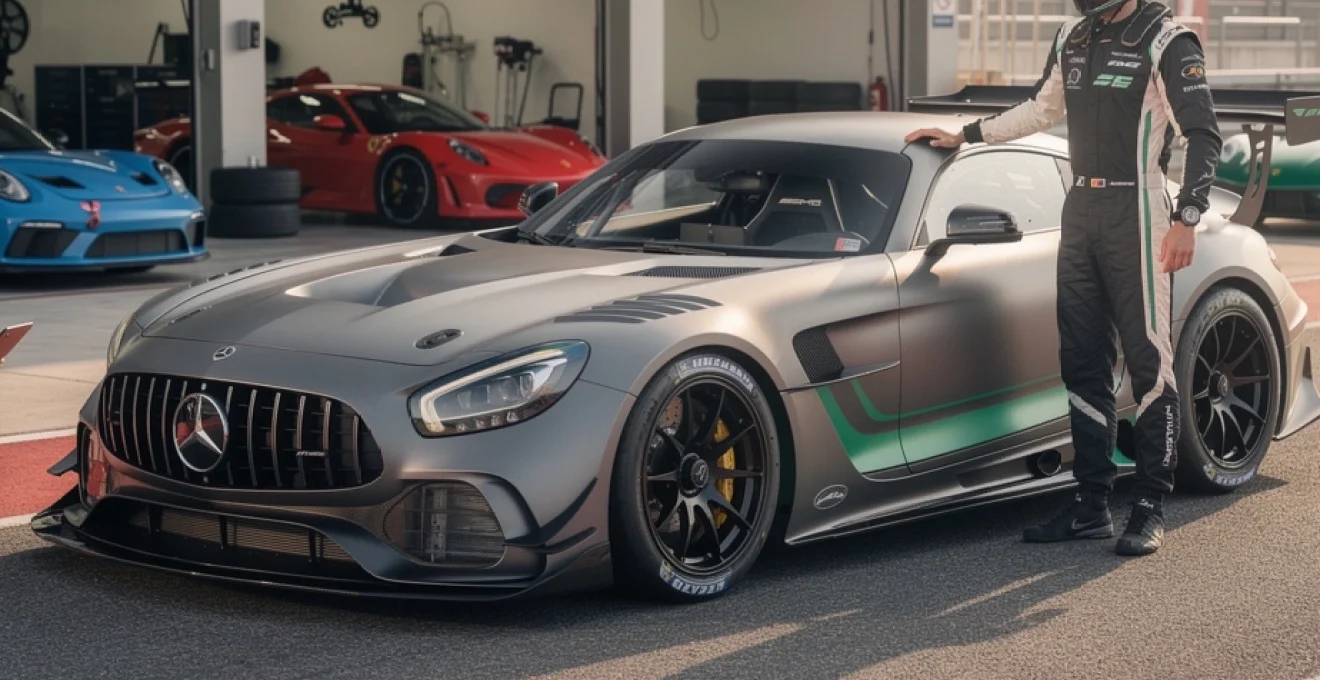
The Mercedes‑AMG GT XX concept represents a radical pivot point for Affalterbach: a fully electric, four‑door hyper‑coupé that promises over 1,000 kW of power, 850 kW charging capability and genuine long‑distance durability. Instead of a hand‑built V8, the GT XX relies on three compact axial flux motors and a Formula 1‑inspired high‑performance battery to deliver repeatable, megawatt‑level performance. For you as an enthusiast or prospective buyer, it signals how AMG intends to translate decades of combustion‑engine know‑how into a new era of electric performance and track capability. The car has already set distance and charging records at Nardò and previewed technology destined for production models on the dedicated AMG.EA architecture, making it highly relevant if you are tracking the future of ultra‑high‑performance EVs.
Mercedes‑amg GT XX overview: position in the AMG GT lineage and relationship to the black series and GT R pro
Within the AMG GT family tree, the GT XX effectively takes the role once occupied by the GT R Pro and GT Black Series: the most extreme, track‑focussed expression of the brand’s engineering. Where those cars evolved the 4.0‑litre biturbo V8 and front‑engined, rear‑drive layout, the GT XX embraces a clean‑sheet, all‑electric platform while preserving the same obsession with lap times, downforce and durability. Think of it as the spiritual successor to the Black Series, but recast around a tri‑motor, all‑wheel‑drive electric drivetrain rather than a single, front‑mounted combustion engine.
The GT XX concept is also the first clear window into the upcoming standalone AMG EV on the high‑performance AMG.EA architecture. That future four‑door model will in effect replace the current AMG GT 4‑Door Coupé and sit alongside cars like the Porsche Taycan Turbo GT and Ferrari’s next‑generation performance hybrids. Where earlier EQ‑badged models were criticised for being too soft, the GT XX technology programme is unapologetically focussed on high‑speed endurance, with verified runs such as 5,479 km in 24 hours and an “around‑the‑world” 40,075 km drive completed in just over seven and a half days.
Linking it back to icons such as the 300 SL, C111 prototypes, AMG GT and AMG ONE, the GT XX is designed as a brand halo. For you, that means the axial flux motors, advanced cooling and ultra‑fast charging demonstrated here are not theoretical show‑car attributes, but production‑ready components that will influence multiple AMG performance cars in the coming decade.
Engine, powertrain and drivetrain architecture of the Mercedes‑AMG GT XX
AMG 4.0‑litre M178 V8 configuration, twin‑turbocharging layout and charge‑air cooling
Traditional AMG GT models such as the GT R Pro and GT Black Series used the celebrated 4.0‑litre M178 V8 with a ‘hot‑inside‑V’ twin‑turbo layout and sophisticated charge‑air cooling. In the GT XX concept, that combustion heart is replaced by three ultra‑compact axial flux electric motors developed with YASA, a wholly owned Mercedes‑Benz subsidiary. Each motor is shaped like a thin disc rather than a cylinder, allowing the electromagnetic flux to run parallel to the axis of rotation instead of perpendicular, as in a conventional radial‑flux motor.
Two of these motors are packaged in a rear High Performance Electric Drive Unit (HP.EDU) together with planetary gearsets and individual inverters, all oil‑cooled to manage enormous, sustained power levels. A third motor sits in a front HP.EDU with a spur‑gear transmission and inverter. While the vocabulary has changed, the philosophy remains similar to AMG’s historic turbocharging strategy: compact packaging, extremely high power density and intensive thermal management to allow long high‑load runs without derating.
Projected power and torque figures compared with AMG GT black series and AMG one
The headline figure for the Mercedes‑AMG GT XX is a peak output of more than 1,000 kW, equivalent to over 1,360 hp. That comfortably eclipses the AMG GT Black Series (730 hp) and even surpasses the 782 hp combined output of the road‑going AMG ONE. Top speed is quoted at over 360 km/h (around 223 mph), again ahead of the AMG ONE’s 352 km/h maximum. Official torque data is not yet published, but given the architecture and motor count, system torque is realistically in four‑figure territory.
To illustrate the performance hierarchy for you at a glance, consider the following comparison:
| Model | Power output | Top speed | Powertrain |
|---|---|---|---|
| AMG GT Black Series | 730 hp (537 kW) | 325 km/h | 4.0‑litre V8, twin‑turbo |
| AMG ONE | 782 hp (574 kW) | 352 km/h | 1.6‑litre V6 hybrid + e‑motors |
| Concept AMG GT XX | >1,360 hp (>1,000 kW) | >360 km/h | Tri‑motor axial flux EV |
Where this electric hyper‑coupé becomes particularly interesting for a track‑day driver is not only peak power, but sustained performance. During record attempts at Nardò, the GT XX repeatedly accelerated back to 300 km/h after each ultra‑fast charging stop, running day and night for over a week. That level of endurance is rare even among combustion‑engined track specials.
Wet‑sump vs dry‑sump lubrication, internal component upgrades and thermal management
On previous AMG GT halo models, wet‑sump versus dry‑sump lubrication was a defining technical point. Dry‑sump systems enabled lower engine placement and greater lateral grip without starvation under high g‑loads. In the GT XX, the critical fluid is not engine oil but the combination of coolant, dielectric oil for direct battery cell cooling and lubricant for the electric drive units. The rear HP.EDU uses oil cooling for both the motors and planetary transmissions, while the inverters are water‑cooled using high‑conductivity silicon‑carbide power electronics.
The high‑voltage battery employs cylindrical cells housed in laser‑welded aluminium modules, with electrically non‑conductive oil circulating directly around each cell. This direct‑cell cooling keeps temperatures within an optimum window even under repeated hard acceleration and 850 kW fast charging. In practice, that means you can complete multiple flat‑out stints, recharge in around five minutes for roughly 400 km of WLTP range, and immediately access full power again without thermal derating—something very few EVs currently offer.
Rear‑wheel drive vs 4MATIC+ all‑wheel drive considerations for track‑focused applications
Earlier track‑focussed AMGs such as the GT R Pro were resolutely rear‑wheel drive, prioritising throttle adjustability and drifting capability. The tri‑motor GT XX concept, by contrast, behaves more like a highly advanced 4MATIC+ system, with the rear axle doing most of the work and the front HP.EDU acting as a boost motor. A disconnect unit (DCU) decouples the front axle during steady‑state cruising or low‑load conditions to reduce drag losses, only engaging when additional traction or power is needed.
For a circuit‑oriented driver, this layout allows instant, software‑controlled torque vectoring and repeatable traction out of slow corners, especially on marginal surfaces. Expect a very different driving feel compared with a traditional rear‑drive GT3‑style car, but one that still allows playful modes such as drift settings, just managed through algorithms rather than mechanical differentials alone. The balance between efficiency and grip is a central theme, and one that you will notice when transitioning from motorway to track.
Transmission choice: AMG SPEEDSHIFT multi‑clutch gearbox ratios, launch control and shift logic
Instead of an AMG SPEEDSHIFT multi‑clutch gearbox with defined ratios, the GT XX uses dedicated reduction gearsets integrated into each electric drive unit. Electric motors deliver peak torque from zero rpm, eliminating the need for complex multi‑ratio transmissions to stay in the power band. The rear HP.EDU’s planetary gearsets and the front unit’s spur gear transmission are optimised for ultra‑high‑speed running well beyond 300 km/h.
Launch control in an EV context is handled entirely by software: the system can pre‑condition the battery for maximum power, set an ideal torque distribution front‑to‑rear, and then manage each motor’s output on a millisecond timescale to avoid wheelspin. For you as a driver, that should translate into near‑repeatable, sub‑3‑second 0–100 km/h runs on road‑legal tyres, without the variability associated with clutch temperatures or shift timing in traditional multi‑clutch gearboxes. It is a different philosophy, but with the same obsessive focus on repeatable, brutal acceleration.
Track‑focussed chassis, suspension and braking systems in the Mercedes‑AMG GT XX
Adaptive coilover suspension, adjustable damping and track geometry (camber, toe, caster)
The GT XX concept sits on an advanced multi‑material platform combining steel, aluminium and carbon composites, designed from the outset to accommodate the underfloor battery and tri‑motor layout. Adaptive coilover suspension is expected, blending electronically adjustable damping with physical height and preload adjustment. For track use, you will likely be able to dial in more aggressive camber and toe settings, much as you would on a 911 GT3 RS.
Given the car’s Nürburgring ambitions, expect negative camber values in the region of ‑2.5 to ‑3.0 degrees at the front on track settings, with carefully tuned caster to preserve steering feel despite steer‑by‑wire hardware. The combination of precise geometry and a low centre of gravity (thanks to the battery pack) should deliver exceptional lateral grip and stability in high‑speed corners, while still allowing road‑use compliance in less extreme suspension modes.
Active aerodynamics: front splitter, rear diffuser and rear wing design derived from GT3 race cars
A drag coefficient of just 0.20 makes the Mercedes‑AMG GT XX one of the most aerodynamically efficient high‑performance cars ever conceived, even beating the AMG ONE. Yet it still delivers substantial downforce through a mix of active and passive aero devices. At the front, a prominent splitter wraps into side air curtains, channelling air along the flanks and reducing turbulence around the wheelarches. Underneath, carefully sculpted vanes and Venturi tunnels generate negative pressure, effectively acting as an upside‑down wing to suck the car onto the track.
Instead of a towering rear wing, the GT XX relies more on its underfloor diffuser and an active rear air brake for stability at 300 km/h and beyond. Around the back, six circular tail‑lights and an LED panel with 700 programmable RGB diodes highlight how aerodynamics, lighting and communication can blend. For you on circuit days, the active aero’s main benefit is consistent balance across varying speeds and corners, giving a more predictable, confidence‑inspiring experience.
Lightweight construction: aluminium spaceframe, carbon fibre body panels and torsional rigidity
Although the GT XX carries the mass penalty of a large battery pack and three motors, significant effort has gone into reducing weight elsewhere. The mixed‑material structure uses aluminium for the core spaceframe, extensive carbon‑fibre body panels and lightweight composite cross‑members to raise torsional rigidity. That stiffness is critical for suspension fidelity; it ensures that when you dial in a click of rebound damping or additional camber, the chassis responds as intended.
To put this in context, think of the GT XX’s platform as a bridge: higher torsional rigidity means less flex under load, so the “bridge” deforms less when force is applied. That stability allows finer tuning of both comfort‑oriented and track‑oriented set‑ups. The payoff you will feel is sharper turn‑in, more consistent feedback through fast direction changes, and fewer creaks or resonances over years of use, even with stiff track geometry.
High‑performance braking system: carbon‑ceramic discs, multi‑piston callipers and brake cooling ducts
With over 1,000 kW of power and verified 300 km/h cruising, braking hardware on the GT XX concept must match the immense pace. Expect large‑diameter carbon‑ceramic discs with multi‑piston callipers front and rear, similar in spirit to the systems on the AMG ONE and GT Black Series but tuned for the additional regenerative braking available from the electric motors. Cooling is managed both passively, via carefully shaped ducts in the front fascia and underbody, and actively through wheel‑mounted aero blades that can open to direct more air over the discs when temperatures rise.
Regenerative braking will shoulder a significant part of the deceleration load, particularly in endurance stints, converting kinetic energy back into electrical energy and reducing wear on the physical brakes. For you, this means both lower operating costs on track days and the possibility of customising brake feel by adjusting the balance between mechanical and regenerative braking via drive modes.
Tyre and wheel package: michelin pilot sport cup 2 R, wheel widths and track‑optimised alignment
Although the GT XX concept uses 21‑inch active aero wheels, the production derivative is likely to offer a range of forged wheel options optimised for unsprung mass and cooling. A tyre of the calibre of the Michelin Pilot Sport Cup 2 R or similar semi‑slick is a natural fit given the car’s performance bracket. Expect staggered wheel widths with a very wide rear axle to harness the tri‑motor output, combined with track‑biased alignment to maximise contact patch under load.
The concept’s wheels incorporate movable blades controlled by an actuator in the hub. When brake temperatures demand additional cooling, the blades open, effectively scooping air into the wheel and over the discs. Each actuator even includes a miniature generator to harvest a small amount of electrical energy from the wheel’s rotation. It is a good example of how marginal gains—fractions of a degree cooler brakes, a few watts recovered—add up when you are lapping hard for hours.
Interior, ergonomics and motorsport‑grade safety equipment of the Mercedes‑AMG GT XX
AMG performance bucket seats, harnesses and FIA‑inspired roll‑over protection
Climb into the GT XX concept and the motorsport influence is immediate. Carbon‑fibre bucket seats with 3D‑printed padding provide a snug, anatomically accurate fit, similar in ethos to a custom race seat moulded to a driver. The seat material, called Labfiber, is a biotech textile that upcycles used racing tyres and uses vegetable‑based proteins to mimic the look and feel of leather while remaining biodegradable.
Behind the occupants, an integral cross‑beam and reinforced safety cell take inspiration from FIA‑approved roll‑over structures, albeit integrated more seamlessly into the cabin architecture. For you, that means a much higher margin of passive safety should the worst happen on circuit, without reverting to a stripped‑out, cage‑only environment. Provision for multi‑point harnesses is expected in track packages, allowing a safe transition from road‑legal three‑point belts to race‑ready restraint systems.
Driver interface: AMG steering wheel, programmable rotary dials and track‑mode displays
The steering interface borrows heavily from the AMG ONE: a compact, rectangular yoke rather than a traditional circular rim, paired with steer‑by‑wire technology. There is no physical steering column; instead, sensors interpret your input and actuators move the front wheels accordingly. Adaptive resistance and variable steering ratios can be programmed, allowing everything from light, fast steering for tight circuits to heavier, calmer responses for Autobahn‑style cruising.
Programmable rotary dials on the wheel give instant access to powertrain and chassis modes: you might set one dial for power levels (from efficiency‑biased to full megawatt output) and another for suspension, traction control or sound profile. Instrumentation focuses on lap‑relevant data such as tyre temperatures, battery state‑of‑charge, predicted remaining laps at current pace and energy flow, so you can manage stints like a professional endurance driver rather than guessing from a simple range readout.
Data logging, telemetry and integration with Mercedes‑AMG track pace and onboard cameras
For serious track work, data is as valuable as raw performance. The GT XX concept showcases a high level of integration between vehicle systems, onboard cameras and telemetry tools reminiscent of Track Pace systems in existing AMG models. Expect lap timing, sector analysis, g‑meter traces and perhaps even over‑the‑air coaching functions that compare your laps with reference data to highlight braking points, throttle application and steering traces.
Onboard cameras can overlay this information on video footage, allowing you to review driving technique between sessions or share high‑quality content. If you are accustomed to aftermarket data loggers, the advantage here is a single, factory‑calibrated system that already knows every nuance of the car’s sensors, without messy wiring or suction‑cup mounts. Over time, software updates may add new circuits, analytical tools and even remote engineering support.
Weight reduction measures: sound insulation deletion, lightweight trim and minimalistic cabin layout
Despite the emphasis on technology, the GT XX interior takes a deliberately minimalistic approach to unnecessary mass. Sound insulation is reduced compared with mainstream EVs, allowing more direct feedback from tyres and motors. Trim materials favour lightweight composites over heavy metals or thick leathers, while door pulls are simple fabric loops rather than bulky handles—again echoing GT3 and Cup‑car practice.
The visual design highlights “visible technology”: exposed cross‑members, high‑voltage cabling and a crackle‑effect finish on the centre console that mirrors coatings used on AMG engines. The effect is a cabin that feels more like a prototype racer than a plush limo, yet still recognisably premium. If you value feedback and focus over hushed isolation, this direction will feel more authentic and engaging than many current luxury EVs.
Comparing the Mercedes‑AMG GT XX with rivals: porsche 911 GT3 RS, ferrari 296 GTB and McLaren artura
The natural benchmark for the GT XX on track is the Porsche 911 GT3 RS, arguably the reference for road‑legal circuit cars. The GT3 RS uses a 4.0‑litre naturally aspirated flat‑six with around 525 hp, rear‑wheel drive and ultra‑aggressive aero. Its strength lies in feedback, weight control (around 1,450 kg) and lap‑ready consistency. The AMG concept, by contrast, brings more than double the power, all‑wheel‑drive traction and an entirely different sound and response profile from its electric motors. If you prioritise purity and mechanical feel, the Porsche will still have appeal; if you want brutal speed and tech, the GT XX is in another league.
Ferrari’s 296 GTB and McLaren’s Artura show how plug‑in hybrid technology can deliver both electric autonomy and intense performance. The 296 GTB’s V6 hybrid system produces around 830 hp, while the Artura offers roughly 680 hp from its twin‑turbo V6 plus e‑motor. Both cars strike a balance between engine character and electric torque fill. Yet neither currently approaches the AMG’s quoted 1,000 kW peak or its 850 kW charging capability. For you as a buyer cross‑shopping these cars, the choice will come down to emotional connection to engines versus the sheer novelty and future‑proofing of a megawatt‑class EV coupé.
Another key difference is the GT XX’s proven long‑distance EV performance: covering an average of over 5,300 km per day during record runs demonstrates a level of fast‑charging endurance that hybrids simply do not need to address. If your use case involves both track days and genuine cross‑continent driving with minimal stops, that capability changes the equation compared with traditional supercars that rely on frequent fuel stops and tyre changes under similar loads.
Production numbers, pricing strategy and collector appeal of the Mercedes‑AMG GT XX in the UK and europe
While official production numbers for the GT XX‑derived road car have not been confirmed, history suggests a relatively limited run compared with mainstream AMG models. The GT Black Series, for instance, was built in four‑figure numbers, yet has already attracted significant collector interest and strong residuals. An all‑electric halo AMG, especially one that has already set multiple long‑distance and charging records, is likely to be positioned as an even more exclusive proposition in the UK and Europe.
Pricing will almost certainly reflect the sophistication of the battery and axial flux motors. Expect list prices comfortably into the high six‑figure range in pounds and euros, overlapping or even surpassing the AMG ONE depending on final specification. For collectors, the car’s status as the first standalone AMG EV on AMG.EA, and as a bridge between combustion icons and a new electric era, will be significant. Early cars often become reference points in future collections, especially if linked to motorsport or record‑breaking activity.
For you as a potential customer, several factors will influence long‑term value: production volume, special editions (for example, track packs or Nürburgring‑tuned variants), and how successfully AMG leverages the platform into motorsport or one‑make series. The use of more than 30 patent‑pending production processes for the motors, many of them world firsts in Berlin‑Marienfelde, also underlines the car’s technological importance, which tends to resonate with knowledgeable buyers.
On‑track performance expectations: nürburgring lap time targets, acceleration, top speed and handling characteristics
Given the GT XX’s specification, Nürburgring Nordschleife performance is expected to be at least in the realm of the current lap‑record‑holding EVs, and potentially on par with combustion flagships like the GT Black Series and Porsche 911 GT2 RS. With over 1,360 hp, all‑wheel drive and advanced aero, theoretical lap times comfortably under the seven‑minute mark are plausible, assuming tyres and suspension are tuned accordingly. The concept’s demonstrated ability to sustain 300 km/h for extended periods indicates that high‑speed sections such as Döttinger Höhe will be dispatched with ease.
Acceleration metrics will likely redefine what you expect from a four‑door coupé. A 0–200 km/h time around five seconds has been suggested, putting the car squarely into Koenigsegg Jesko territory. For context, many current super‑sedans hover around 10 seconds for the same benchmark. Top speed north of 360 km/h not only makes for strong headline numbers but also ensures that on fast circuits like Spa‑Francorchamps or Paul Ricard, the GT XX will be among the quickest road‑legal cars on the straights.
Handling characteristics will inevitably differ from a rear‑engined 911 or mid‑engined Ferrari. The underfloor battery gives the GT XX a very low centre of gravity and near‑ideal weight distribution, which should deliver immense mid‑corner stability and traction out of slow bends. Torque vectoring via the tri‑motor set‑up can subtly over‑speed individual wheels, rotating the car without the need for big steering inputs. For you as a driver, that may feel like the car is “shrinking” around you, reacting instantly and neutrally, especially in high‑speed transitions where traditional heavy GTs can feel cumbersome.
The main challenge for owners will be learning to exploit that performance responsibly: managing energy and tyre temperatures over a session, understanding how different modes affect balance, and using ultra‑fast charging infrastructure effectively between stints. Approached with the same discipline that current GT3 RS or GT4 owners bring to their track days—monitoring data, adjusting pressures, refining lines—the Mercedes‑AMG GT XX offers a new template for electric high‑performance driving that combines brutal straight‑line speed with the repeatability and endurance normally associated with long‑distance racing prototypes.