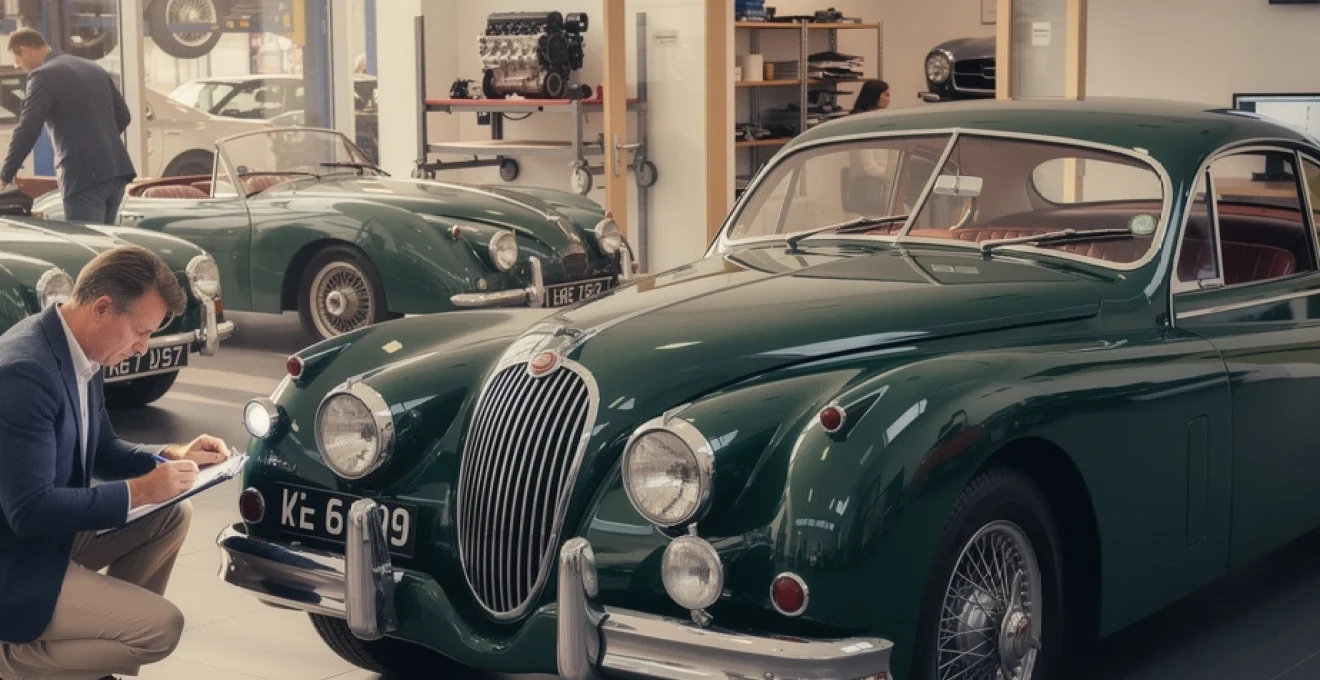
The hunt for a Jaguar XK140 coupé is rarely a casual search. Whether you have been captivated by the graceful Fixed Head Coupé roofline or the usability of a Drophead, the right XK140 can be both a deeply satisfying driver’s car and a sound long-term investment. Values have risen over the last decade, yet good cars still trade quietly between knowledgeable enthusiasts, dealers and clubs. Understanding where to look, how to decode the adverts and what separates a genuine, well-restored XK140 from a shiny money-pit gives you a crucial advantage in a market where supply is tight and demand is truly global.
Understanding jaguar XK140 coupe variants, chassis numbers and market availability
Production of the Jaguar XK140 ran from late 1954 to 1957 and totalled roughly 8,900 cars, of which a significant proportion went to the USA. Within that number, true Fixed Head Coupés are much rarer than Roadsters and Dropheads. Most current ads you see for a “Jaguar XK140 coupe for sale” actually refer to both FHC and DHC, so you need to read the details carefully. The XK140 combined the 3.4-litre twin-cam engine with improved steering, stronger suspension and more cabin space than the XK120, making it particularly attractive as a long-distance grand tourer in FHC form. Today, a solid, matching-numbers coupé with strong history can command a premium of 20–40% over a scruffy project car.
Decoding jaguar XK140 FHC vs DHC vs OTS body styles and their impact on coupe listings
Jaguar offered three XK140 body styles: FHC (Fixed Head Coupé), DHC (Drophead Coupé) and OTS (Open Two Seater, often called a Roadster). Only the FHC is a true fixed-roof coupé, with a slightly raised roofline over the XK120 and a small rear seat, making it the most practical of the range. DHCs feature a lined folding roof and wind-up windows, so many adverts generically describe them as “coupes”, which can confuse searches. OTS models, with simple hood and side screens, are the most overtly sporting and tend to attract track and event-focused buyers, especially those chasing Mille Miglia-style eligibility.
Because market demand is strong for all three configurations, some sellers stretch the term “coupe” to attract more clicks. When you refine searches for “Jaguar XK140 coupe for sale in the UK” or “XK140 SE coupe”, look for clear photographic evidence of the roof style and interior layout rather than trusting the headline.
Reading XK140 chassis numbers (e.g. 804xxx, 815xxx) to verify genuine fixed head coupé models
Chassis numbers provide your best defence against misdescribed cars. XK140 FHC chassis numbers for right-hand drive cars often start around 804xxx, while left-hand drive FHC examples commonly sit in the 815xxx range and beyond, though there are variations by market and specification. Jaguar used prefixes such as 804 or 805 to denote body style and steering position, and an “S” prefix (for example S804693DN) often indicates Special Equipment specification and overdrive.
When you see a coupé advertised, ask the seller for the full chassis number and cross-check it with the Jaguar Heritage Trust archive. If the number pattern suggests a Roadster or Drophead, yet the car carries a fixed roof, that is a red flag for a body conversion or identity swap. Genuine, documented FHCs with correct chassis sequences tend to achieve higher prices at auction and attract more interest from serious collectors.
Differentiating XK140 SE and MC (special equipment, c-type head) coupes in current sale adverts
The XK140 was offered in standard form and as Special Equipment, usually badged “SE” in Europe and “MC” in North America. These SE / MC cars gained the higher-performance C-type cylinder head, twin exhausts and often wire wheels and fog lamps. From a driving point of view, a real XK140 SE coupé feels noticeably stronger, especially on fast A-roads or autobahns. As a result, price premiums of 15–25% over an equivalent standard car are common in the current market.
Some adverts loosely apply the SE label to any XK140 with wire wheels or cosmetic upgrades. To verify a true SE or MC, look for the appropriate engine number and cylinder head markings in the documentation and match them against the Heritage certificate. A non-genuine upgrade can still be enjoyable, but originality matters if you are targeting long-term value growth or historic competition events.
Assessing left-hand drive vs right-hand drive XK140 coupes for UK and EU buyers
More than half of XK140 production went to the US, so left-hand drive cars (LHD) are more plentiful worldwide. In the UK, a well-presented LHD XK140 FHC often sells for 10–20% less than an equivalent right-hand drive example, reflecting demand and convenience. However, for buyers in continental Europe, LHD is a natural fit and can even be a positive when touring modern traffic conditions. Conversion from LHD to RHD is possible, especially as the XK140 introduced rack-and-pinion steering, but the cost can run into five figures when executed properly.
From a purist viewpoint, a car that retains its original steering position and specification is usually more desirable. If you intend to use the car frequently on UK B-roads, RHD improves sightlines for overtakes and junctions. If the goal is to secure a high-quality XK140 coupé at a more accessible price, a documented LHD car with sound structure and matching numbers might be the smartest choice.
Where to find jaguar XK140 coupes for sale through specialist classic car dealers
Specialist dealers remain one of the most reliable routes to a quality XK140 coupé, particularly if you value preparation standards and aftersales support. Across the UK and Europe, a small number of firms consistently handle the best stock, including cars with complete restoration histories and concours-level finishes. Dealer cars may carry an apparent premium over private listings, yet the difference often reflects fresh servicing, rectification work and detailed inspections that would cost a private buyer several thousand pounds to organise independently.
Targeting UK XK140 coupe inventories at firms like JD classics, hexagon classics and classic motor cars (CMC)
Within the UK, established names such as JD Classics, Hexagon Classics and Classic Motor Cars (CMC) regularly hold Jaguar XK140 FHC and DHC examples in stock. Their inventories usually include cars that have benefitted from bare-metal restorations, upgraded cooling systems and discreet usability improvements such as alternator conversions. A typical UK-supplied, matching-numbers XK140 DHC or FHC in fully restored condition can trade in the £120,000–£150,000 range, while exceptional provenance or competition history may push values higher.
These firms also maintain extensive client lists, so if you enquire about a particular specification, your details may be logged for upcoming cars before public advertising. For buyers seeking a specific combination of colours, SE specification and overdrive, that early access can be invaluable.
Searching continental dealers such as movendi (germany), the gallery brummen (netherlands) and E-Type UK
Continental Europe offers a rich hunting ground for XK140 coupés, especially via long-established dealers such as Movendi in Germany or The Gallery Brummen in the Netherlands. Many cars originally delivered to the USA were re-imported to Europe during the classic boom of the 1980s and 1990s and have since undergone high-quality restorations. European dealers frequently supply detailed photo sets and inspection reports, reflecting a strong, export-driven client base.
Although E-Type UK is best known for later Jaguars, its network often includes XK140s taken in part-exchange or sold on behalf of clients. Strong Eurozone demand has supported prices, with well-restored LHD XK140 FHC models currently advertised in the region of €120,000–€150,000, while exceptional SE Dropheads can reach €180,000 and higher.
Evaluating dealer provenance, in-house restoration capabilities and post-sale support for XK140 buyers
Dealer reputation matters just as much as the individual car. A business with in-house restoration, bodywork and engine-building facilities can offer continuity of care after the sale, which is priceless if you plan to tour extensively. Look for evidence of previous Jaguar XK140 restorations, ideally with photographic case studies and customer testimonials. A dealer that can show multiple completed projects over 10–20 years indicates both technical competence and financial stability.
Post-sale support is not only about warranty. Good specialists will help you fine-tune suspension settings, advise on modern radial tyres versus period crossplies, and schedule preventative maintenance. That level of engagement reduces the risk of small issues snowballing into large bills, especially in the first 12–18 months of ownership while you get used to the car.
Negotiating dealer-commissioned pre-purchase inspections and compression tests on XK140 3.4 engines
Even when buying from a respected dealer, an independent pre-purchase inspection is healthy practice. A typical XK140 inspection should include a full chassis check on a lift, photographs of key corrosion points and a formal written report. Crucially, a compression test on the 3.4-litre twin-cam engine reveals the health of the bores and valves; readings within 10% across all cylinders are a strong sign of a sound unit.
Many dealers will either host your chosen inspector or commission a trusted specialist themselves. Agree in advance which items will be rectified before delivery and which will be reflected in the price. It is often better to negotiate softer on price and insist on specific mechanical jobs being completed to the dealer’s workshop standard, especially when it comes to cooling systems, brakes and ignition components.
Using online classic car marketplaces to locate jaguar XK140 coupes worldwide
Online marketplaces have transformed how you can find a Jaguar XK140 coupe for sale, especially across borders. Global platforms now host hundreds of classic Jaguar listings at any given moment, though XK140 coupés remain a relatively small subset. Accurate filtering, careful reading of descriptions and interrogation of photographs are essential to separating the worthwhile cars from the hastily restored or misdescribed examples. Think of these portals as a powerful radar rather than a replacement for good inspection practice.
Advanced search filters for XK140 coupés on classic driver, classic trader, car & classic and mobile.de
Sites such as Classic Driver, Classic Trader, Car & Classic and Mobile.de allow granular searches by make, model, year, body style, location and even steering position. When targeting an XK140 FHC or DHC, use “coupe” or “coupé” in the body style filter and then manually confirm against photos to avoid roadsters mis-tagged as coupés. Filtering by year (1954–1957) helps exclude later XK150s and replica builds using XK running gear.
To maximise your chances of finding an unusual specification, set wide geographic parameters—searching “worldwide” rather than just one country—then refine via price, mileage and restoration status. You will often find cars in smaller markets, such as Portugal or South Africa, that offer excellent condition and lower purchase prices, even after shipping and taxes.
Monitoring bring a trailer, collecting cars and the market by bonhams for XK140 coupe auction listings
Online auction platforms such as Bring a Trailer in the US, Collecting Cars in the UK and Europe, and The Market by Bonhams have become significant players in the XK140 scene. Each year, multiple XK140 FHC and DHC examples appear with extensive photo galleries and transparent bidder commentary. Sell-through rates for well-presented classic Jaguars on these platforms often sit above 70%, with strong prices achieved for rare specifications.
Auction timelines are tight, usually 7–14 days, so preparation is key. Have funds, insurance quotes and potential shipping costs lined up in advance. If a car looks promising, commission a rapid local inspection during the auction window; many professional inspectors are now familiar with the pace of online sales.
Screening XK140 ads on hemmings, ebay motors and PistonHeads for authenticity and misdescribed cars
Classified platforms such as Hemmings, eBay Motors and PistonHeads remain fertile ground for finding XK140s in varying conditions, from barn finds to restored show cars. The flip side is a higher incidence of optimistic descriptions and occasionally inaccurate claims about specification or provenance. Treat vague language—“believed to be”, “looks like SE”, “probably matching numbers”—as an invitation for deeper questioning rather than a deal-breaker.
Request images of the chassis plate, engine number stamping and any documentation. Genuine sellers will typically respond quickly and helpfully. When mileage claims seem unrealistic for a 1950s car, prioritise evidence of recent mechanical work over odometer readings; an XK140 with 80,000 miles but a documented engine rebuild can be a better bet than a “30,000-mile” car with no paperwork.
Setting up keyword alerts and saved searches for “jaguar XK140 FHC” and “XK140 SE coupe”
Because supply is limited, the best XK140 coupés often sell within days of appearing online. Setting up email alerts and saved searches for long-tail keywords such as “Jaguar XK140 FHC for sale”, “XK140 SE coupe matching numbers” and “1956 XK140 Drophead coupe overdrive” keeps you ahead of the crowd. Many marketplaces allow alerts by price range, so you can track how values evolve over six to twelve months.
A practical tactic is to run parallel alerts for generic “Jaguar XK140” and more specific “Jaguar XK140 Fixed Head Coupe”. Some sellers will not use precise terminology, so the broader net can catch overlooked opportunities, especially private listings and small regional dealers new to the online space.
Contacting jaguar clubs, registers and marque specialists to uncover off-market XK140 coupes
Some of the best Jaguar XK140 coupés never reach public advertising at all. Instead, they change hands quietly via marque clubs, registers and specialist restorers who know which owners are thinking of selling. Tapping into these networks requires a little patience and face-to-face engagement, but the reward is access to “off-market” cars with unusually rich histories and long-term custodianship.
Leveraging the jaguar drivers’ club and jaguar enthusiasts’ club registers for unadvertised XK140 cars
The Jaguar Drivers’ Club (JDC) and Jaguar Enthusiasts’ Club (JEC) both maintain model registers that track surviving XK120s, XK140s and XK150s by chassis number, colour and condition. Register keepers often know which members are contemplating a sale or downsizing collections, particularly after major life events or restorations. A polite enquiry, backed by evidence of serious intent, can put you in touch with owners before they approach dealers.
Clubs also publish monthly magazines and online forums where discreet “car wanted” adverts still work well. A well-worded request, stating preference for an XK140 FHC or DHC, RHD or LHD, and budget range, demonstrates that you are a committed buyer rather than a casual dreamer.
Using the XK club and XK register networks to access owners considering private XK140 coupe sales
Dedicated organisations such as the XK Club and the XK Register attract owners who are deeply engaged with the model. Many have owned their cars for decades and have overseen complete restorations, engine rebuilds or rally preparations. When such an owner considers selling, a personal recommendation from a fellow member can carry more weight than a public ad.
Attending club runs, technical seminars and annual dinners allows you to build trust and show that you understand what caring for a 1950s Jaguar entails. Personal observation: sellers are far more likely to part with a cherished XK140 coupé to someone they have met, who appreciates the car’s history and plans to use it sympathetically.
Consulting specialist restorers such as twyford moors and lynx for client cars quietly for sale
Specialist XK restorers, including firms like Twyford Moors or Lynx, maintain long-term relationships with their clients. When an owner retires from driving or decides to move into a different classic, the restorer is often the first to hear. These shops may know of XK140 coupés that are “available if the right buyer appears” long before any public announcement.
From a buyer’s perspective, cars emerging from such workshops often come with detailed photo records, dyno sheets and invoices covering every stage of the work. The labour invested in a full XK140 restoration can exceed £150,000 at current rates, so finding a car where that money has already been spent—and documented—can be financially astute.
Attending NEC classic motor show, goodwood revival and salon privé to meet XK140 sellers face to face
Major events such as the NEC Classic Motor Show, Goodwood Revival and Salon Privé act as magnets for high-quality Jaguar XK140s. Dealers often bring headline cars, while club stands display members’ pride and joy. A surprising number of XK140 sales begin as casual conversations beside a car on a stand, with more formal negotiations following afterwards.
These events also offer a chance to see several XK140 coupés side by side, helping you calibrate expectations on panel fit, paint quality and interior detailing. Observing how an XK140 starts from cold after sitting all day at a show can reveal more than any brochure—a well-sorted car should fire willingly and idle steadily within a short time.
Evaluating the condition, originality and documentation of a jaguar XK140 coupe before purchase
Once you locate a promising Jaguar XK140 coupe for sale, due diligence becomes critical. Condition, originality and paperwork collectively determine whether the asking price is realistic and how the car will perform as an investment and driving companion. Think of this stage as conducting an audit: checking the structural integrity, verifying the mechanical heart, and confirming the paper trail all align with the story the seller is telling you.
Inspecting XK140 steel chassis rails, outriggers and bulkhead for corrosion and structural repairs
The XK140 rides on a steel box-section chassis with welded-on outriggers and a steel bulkhead, all of which are vulnerable to rust. Key areas to examine include the chassis rails around the front suspension mounts, the rear spring hangers, and the outriggers supporting the sills. Previous “patch repairs” in these areas can hide deeper corrosion, so an inspection on a lift with a bright lamp is essential.
If extensive chassis repairs have been carried out, assess the quality of welding, alignment and any documentation. Professional, jig-based chassis repairs are not a problem and can even suggest careful long-term stewardship, while crude plating is a signal to walk away or budget heavily for future work.
Verifying matching-numbers engine, cylinder head and gearbox with jaguar heritage trust certificates
For investment-grade XK140 coupés, matching numbers carry real weight. That means the engine block, cylinder head and gearbox numbers all correspond to the original factory records for that chassis. Obtaining a Jaguar Heritage Trust certificate is the simplest way to verify this, as it lists original engine and body details. A car retaining its original 3.4-litre engine and C-type head, if originally so equipped, is significantly more desirable than one with an undocumented replacement.
Non-matching components are not inherently bad, especially if replaced long ago with correct XK units, but you should expect to pay less. For competition use, some buyers even prefer upgraded engines with modern internals, but only if the work is fully documented and professionally executed.
Assessing XK140 bodywork, panel gaps and signs of aluminium vs steel panel replacement
Body condition heavily influences both driving enjoyment and long-term costs. Examine panel gaps along the doors, bootlid and bonnet; even, consistent gaps indicate careful restoration and sound structure beneath. Uneven or tight gaps, particularly near the scuttle and A-pillars, may hint at previous accident damage or chassis distortion. Use a small magnet to check for excessive filler in lower arches and sills.
Some restorations replace original steel panels with aluminium equivalents for weight saving, especially in competition-oriented cars. While this can enhance performance, it slightly deviates from factory specification. Decide whether originality or improved dynamics matters more to you and ensure the materials used are clearly recorded in the history file.
Checking moss gearbox operation, laycock overdrive, cooling system and SU carburettor set-up
The XK140 typically uses a four-speed Moss gearbox with or without Laycock overdrive. On test drive, expect a firm but positive shift, especially from first to second; excessive crunching or reluctance to engage gears may signal worn synchros or poor linkage adjustment. Overdrive should engage cleanly in the higher gears without slipping or unexpected disengagement.
The cooling system deserves particular attention: the temperature gauge should stabilise once warm, even in traffic. Look for upgraded radiators, electric fans such as a Kenlowe, and evidence of recent coolant changes. Properly tuned SU carburettors should deliver smooth idle, clean pick-up and minimal hesitation; black smoke or fuel smells suggest an over-rich mixture and potential bore wash over time.
Auditing history files, FIVA identity cards, restoration photo records and historic FIA papers
Comprehensive documentation transforms an attractive XK140 into a highly credible one. A strong file typically includes old logbooks, invoices, restoration photo albums and, in some cases, FIVA identity cards or historic FIA papers for competition. These documents not only support the car’s authenticity but also provide a roadmap of what has been renewed, upgraded or left original.
If you are contemplating high-profile events or rallies, check whether the car has previously participated in recognised tours or races. Participation in events such as the Mille Miglia or major European regularities usually demands detailed scrutiny by organisers, which indirectly validates the car’s specification and reliability.
Budgeting and pricing strategies when buying a jaguar XK140 coupe in the UK and overseas
Budgeting for an XK140 coupé purchase goes well beyond the asking price. Taxes, shipping, registration, insurance and the inevitable “sorting out” period all add to the total cost of acquisition. Approaching the purchase like a mini project—allocating funds for contingency and future upgrades—helps maintain financial control and avoids the classic trap of buying a cheap car that becomes expensive once reality bites.
Comparing market values for driver-quality, concours-restored and barn-find XK140 coupes
Values vary significantly based on condition, originality and specification. Broadly, the current market (late 2020s) often falls into three tiers for XK140 coupés:
| Condition | Typical Price Range (FHC/DHC) | Description |
|---|---|---|
| Driver-quality | £70,000–£110,000 | Usable, older restoration, some patina, generally solid mechanics |
| Concours-restored | £120,000–£180,000+ | Nut-and-bolt restoration, matching numbers, strong history and SE spec |
| Barn-find / project | £40,000–£70,000 | Needing extensive structural and mechanical work, often incomplete |
Personal observation: for most buyers, a well-sorted driver-quality car offers the best blend of enjoyment and value. Concours examples excel as showpieces, but you may hesitate to use them in everyday conditions, while projects almost always cost more to restore than buying a finished car.
Factoring import duties, VAT, shipping and NOVA registration for XK140s from the US and EU
Buying abroad can unlock better choice or lower entry prices, but hidden costs mount quickly. Importing an XK140 from the US to the UK typically involves ocean freight (£2,000–£3,000), marine insurance, port handling fees and import duties. For historic vehicles over 30 years old that meet certain originality criteria, reduced or zero VAT tariffs may apply, but precise rules evolve, so professional customs advice is wise.
Upon arrival in the UK, the car must be declared under the NOVA (Notification of Vehicle Arrivals) system before DVLA registration. Delays or errors in NOVA submissions can stall registration for weeks or months. Intra-EU purchases remain simpler but can still trigger VAT considerations depending on whether the seller is a private individual or a business.
Estimating XK140 restoration costs: bare-metal resprays, ash frame repairs and engine rebuilds
Full restorations of Jaguar XK140 coupés have become substantially more expensive over the past decade due to labour and material costs. A proper bare-metal respray with body repairs can easily exceed £30,000–£40,000, particularly if corrosion around the sills and lower wings is extensive. Structural timber within the body, such as the ash frame elements in the door and roof surrounds, may also require attention, adding further labour.
A comprehensive engine rebuild on the 3.4 XK unit, including machining, new pistons, valves, timing chains and balanced assembly, typically runs in the £10,000–£20,000 bracket at specialist rates. When you factor in suspension, brakes, wiring and interior retrim, full restoration costs often surpass £120,000. Those figures explain why a cheap project can become more expensive than a ready-restored car unless you are taking on the work personally.
Structuring pre-purchase surveys, escrow payments and contracts for classic jaguar acquisitions
Protecting yourself legally and financially is as important as choosing the right chassis number. A professionally written pre-purchase survey commissioned from a recognised classic Jaguar specialist provides a baseline condition report and supports fair price negotiations. For high-value deals, especially cross-border transactions, using an escrow service offers additional security: funds are only released once agreed conditions are met, such as satisfactory inspection or proof of shipping.
Clear, written agreements specifying what is included in the sale, which items will be remedied pre-delivery, and what warranties or guarantees apply, reduce scope for misunderstanding and protect both buyer and seller.
Detail every commitment in the contract—spare parts, original wheels, tool kits, even show trophies. In the classic world, seemingly minor items can have significant monetary and historical value, and having them properly itemised ensures the Jaguar XK140 coupé that arrives in your garage matches the one you believed you were buying.