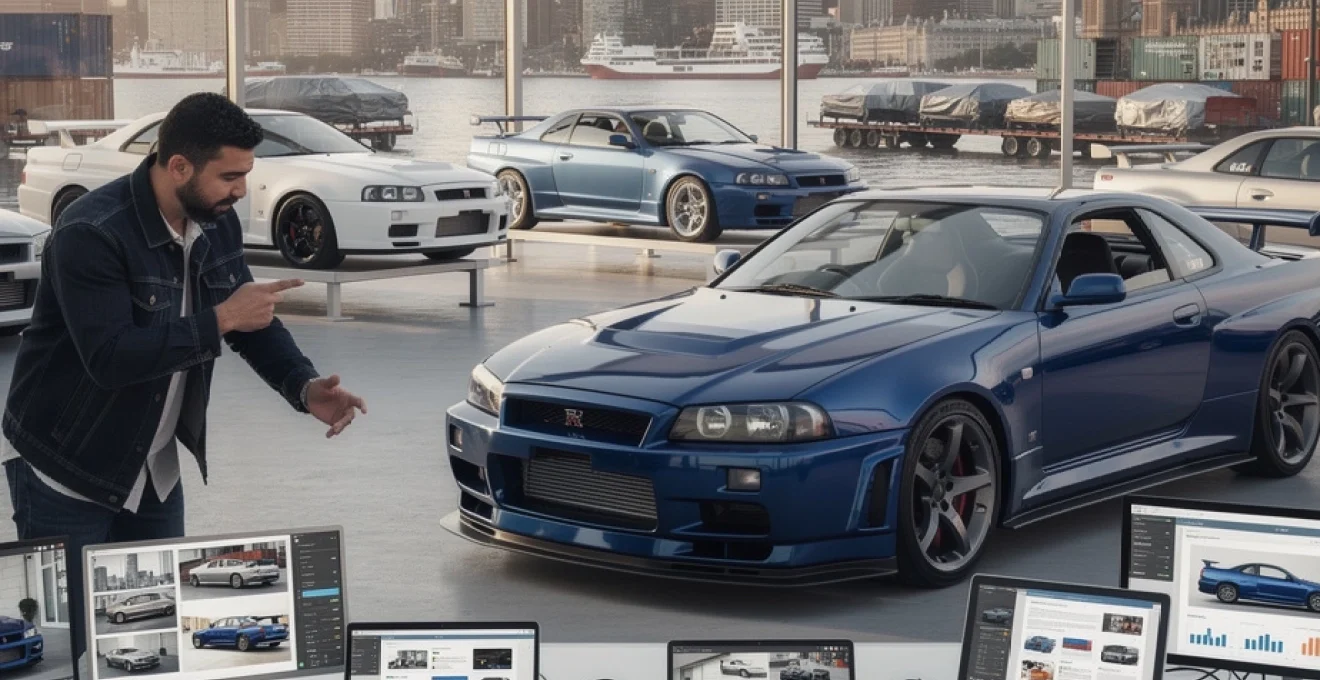
The Nissan Skyline GT‑R R34 has moved from cult hero to blue‑chip collectible, yet it still tempts enthusiasts who want to drive rather than simply display a car. The blend of RB26DETT power, ATTESA all‑wheel drive and four‑wheel steering means a well‑bought R34 GT‑R can feel more advanced than many modern sports cars. Finding a genuine, solid car is now the hard part. Values have surged, supply is thin, and global import rules make the search feel like a maze. With careful research, smart use of online tools and a clear strategy, you can still track down a Nissan Skyline GT‑R R34 for sale that suits both budget and ambition.
Nissan skyline GT‑R R34 buyer’s landscape in 2025: collector demand, price bands and production numbers
The buyer’s landscape for the Nissan Skyline GT‑R R34 in 2025 is shaped by scarcity and global nostalgia. Just over 11,500 BNR34 GT‑R units were produced between 1999 and 2002, with fewer than 1,000 Nür variants in total. That makes the R34 significantly rarer than many European icons from the same era. Since 2020, asking prices for clean, unmodified cars have risen by an estimated 25–40% in most major markets, with special editions climbing even faster. Interest spiked again after several high‑profile auction results above £400,000 for ultra‑low‑mileage examples.
Standard early R34 GT‑R models typically occupy the £120,000–£180,000 band for honest, cared‑for cars with moderate mileage. V‑Spec and V‑Spec II examples often command a 15–30% premium, while M‑Spec Nür and V‑Spec II Nür cars can sit comfortably in the £250,000–£350,000 range depending on provenance. Tuned builds from famous workshops frequently sell based on the reputation of the tuner as much as the chassis itself. As the car continues to appear in games, films and high‑profile collections, demand is unlikely to soften in the short term, especially for original‑paint, matching‑numbers cars.
For many enthusiasts, budget is now the main constraint, rather than availability alone. Projects with previous accident damage or heavy corrosion might appear under £90,000, but restoration costs can quickly close the gap to better cars. The result is a two‑tier market: on one side, pristine collector‑grade R34 GT‑Rs; on the other, usable drivers and track‑focused builds. Deciding which segment you fit into before you start hunting helps prevent compromises that lead to regret later.
Import‑ready markets: where the nissan skyline GT‑R R34 is currently legal to register and drive
Regulation, not just money, determines where you can own and enjoy a Nissan Skyline GT‑R R34. In much of Europe, including the UK, the R34 is old enough to register without special exemptions, although emissions and noise rules vary. The UK, for instance, treats the BNR34 as a used import that must pass IVA or MOT testing, but there is no age‑based prohibition. That has made the country one of the most active hubs for R34 GT‑R stock, from lightly modified street cars to high‑end collector pieces.
Many EU states use local historic‑vehicle rules that can benefit older Japanese imports. Germany’s H‑plate historic registration can reduce tax and insurance if the car is over 30 years old, which the earliest R34 GT‑Rs are approaching. The Netherlands has become a gateway for JDM imports into continental Europe due to relatively straightforward customs handling. Elsewhere, Australia and New Zealand have long welcomed Skyline GT‑Rs under specialist and enthusiast schemes, although compliance with lighting, emissions and left‑hand‑drive bans must still be checked on a state or regional basis.
North America presents a patchwork of restrictions rather than a single clear answer. Canada operates a 15‑year import rule, which means all R34 GT‑Rs are now legal to bring in, although provincial inspection requirements differ. In the United States, only the earliest 1999–2000 cars have recently qualified under the 25‑year import rule, with later models following year by year. Some have entered via the Show or Display exemption, which caps annual mileage and demands strict documentation. State‑level registration can still cause surprises; California, for example, has more stringent emissions requirements than many other states.
Buying a nissan skyline GT‑R R34 in japan: USS tokyo, USS nagoya and aucnet auction access
Japan remains the natural starting point for anyone serious about finding an R34 GT‑R for sale. The largest volume flows through dealer‑only auctions such as USS Tokyo, USS Nagoya and Aucnet. As an individual buyer, direct access is not possible, so you rely on a trusted export agent or broker to inspect cars, translate auction sheets and handle bidding. This can feel opaque at first, but it also opens up a far wider pool of stock than retail forecourts alone.
Auction houses grade vehicles using a numerical system, with overall scores such as R, 3.5 or 4.0 describing condition at a glance. A grade 4.0, B interior car usually indicates a clean, honest example with typical age‑related wear, whereas an R‑grade car has recorded accident repairs or major panel replacement. Because R34 GT‑Rs are now so valuable, many of the best, low‑kilometre cars never make it to open retail listings; they sell through these dealer networks the moment they appear.
Hunting R34 GT‑R stock in the UK: torque GT, harlow jap autos, JM‑Imports and litchfield imports
The UK offers one of the most visible ecosystems for Nissan Skyline GT‑R R34 buyers. Long‑standing importers such as Torque GT, Harlow Jap Autos, JM‑Imports and Litchfield Imports build their reputation on hand‑picked stock and knowledge of Japanese auction channels. Harlow Jap Autos, for example, has handled numerous high‑value R34 sales, including rare Nür and V‑Spec II models, and often works directly with Japanese partners to secure cars before they reach public advertising.
Locating cars through these specialists provides a level of curation that generic used‑car sites rarely match. Many offer pre‑purchase inspections, compression testing and detailed underbody photography. Some, like Litchfield and JM‑Imports, can also provide tuning, restoration and undersealing services, which is particularly valuable for cars that will live in a damp climate. For a first‑time buyer, this blend of sales and workshop expertise significantly reduces risk when stepping into the six‑figure R34 GT‑R marketplace.
Eu‑based sources for R34 GT‑R models: germany, the netherlands and specialist importers
Within the European Union, Germany and the Netherlands have become hotspots for Skyline GT‑R R34 inventory. German dealers often focus on collector‑grade cars with full documentation, while Dutch importers act as clearing houses for vehicles sourced from Japan and the UK. Because of Schengen‑area freedom of movement, a car landed in Rotterdam or Hamburg can relatively easily end up registered in France, Belgium or Scandinavia, provided national technical inspections are met.
Specialist importers in these markets increasingly advertise in English and cooperate with international buyers. Many will arrange third‑party inspections or allow independent Classic Data valuations to support financing or insurance. The trade‑off is that prices often mirror or exceed UK levels, as VAT, shipping and margin are already baked in. For buyers within the EU who wish to avoid post‑Brexit UK import complexity, however, this route can simplify paperwork and timescales.
US and canada import constraints: 25‑year rule, show or display exemptions and state‑level regulations
For enthusiasts in the United States, import timing is critical. The federal 25‑year rule means 1999 R34 GT‑Rs only became fully legal to import in 2024, 2000 models follow in 2025, and so on. Any car brought in before its 25th birthday must use the Show or Display exemption, restricted to models deemed historically or technologically significant and limited to 2,500 miles per year. A small number of special‑edition GT‑Rs, such as the V‑Spec II Nür, have used this path, but it is not an option for every chassis.
Canada’s 15‑year rule has allowed R34 imports for over a decade, leading to a healthy used market, particularly in British Columbia and Ontario. However, some of these cars later make their way south into the US via less‑than‑official channels, which can leave buyers exposed if paperwork is audited. In both countries, state or provincial inspections may demand headlight conversions, tyre upgrades or rust repairs, so factor compliance work into your buying budget from the outset.
How to use online marketplaces and auction platforms to locate a nissan skyline GT‑R R34 for sale
Online marketplaces and enthusiast auction sites have transformed how you can search for a Nissan Skyline GT‑R R34. Instead of relying on local classifieds, it is now possible to monitor live listings in multiple countries and compare specification, mileage and price within minutes. This transparency has supported rising values but also made it harder for poorly presented cars to hide. A patient buyer who tracks trends across platforms for several months will quickly build a mental benchmark of fair pricing for different R34 variants.
Specialist auction platforms focused on enthusiast cars tend to attract better‑documented R34 GT‑Rs, with detailed photo sets, service history scans and seller Q&A. Traditional classifieds still play a role, particularly for long‑term owners who are not active in the online scene, but a growing proportion of high‑value R34s now change hands via timed auctions. For you as a buyer, that means sharpening bidding discipline and understanding fees, payment terms and post‑sale inspection rights before placing a serious offer.
Filtering R34 GT‑R listings on cars & bids, bring a trailer, PistonHeads and auto trader
Using filters intelligently on sites such as Cars & Bids, Bring a Trailer, PistonHeads and Auto Trader can save hours of scrolling. Begin by setting model and keyword searches to include terms like R34 GT‑R, BNR34 and V‑Spec II. On UK‑focused platforms, narrowing by year (1999–2002), body type (coupe) and fuel (petrol) removes many false positives. Some sites allow you to save searches and enable alerts, ensuring you see new Nissan Skyline GT‑R R34 for sale listings quickly.
Photos and descriptions are just as important as the filters themselves. Strong listings provide clear engine bay, underbody and interior shots along with a breakdown of service work and modifications. Sparse, low‑effort adverts for a six‑figure car are an early warning sign. When an R34 appears with only a handful of blurry images and limited information, you have likely found a seller who is either testing the market or not prepared for serious scrutiny.
Leveraging japanese auction sheets for R34 GT‑R: grading (R, 3.5, 4.0), mileage verification and repair history
Japanese auction sheets are the closest thing to a medical record for a used JDM import. They summarise exterior and interior condition, document accident history and record the odometer reading at the time of sale. For R34 GT‑Rs, where mileage and originality drive huge price differences, understanding these sheets is vital. Grade 4.0 cars with low kilometres and few panel notes can justify significant premiums, while R‑grade or 3.0‑grade examples may require deeper inspection and price negotiation.
When a seller claims Japanese auction heritage, ask for the original sheet and have it translated if necessary. Cross‑checking the auction mileage with current odometer readings and old export documents helps detect tampering. A professional import agent will typically archive these sheets, so an inability or refusal to provide them should prompt caution. Treat the auction sheet as a starting point rather than the final word, backing it up with compression tests, paint‑depth measurements and chassis inspections where possible.
Identifying genuine R34 GT‑R chassis codes (BNR34) and avoiding ER34/ENR34 lookalike conversions
As values have climbed, so too has the number of Skyline “GT‑R style” builds based on lesser models. While ER34 and ENR34 Skylines can be enjoyable in their own right, they are not BNR34 GT‑Rs and should not be priced as such. The most reliable identifier is the chassis code: a genuine R34 GT‑R will show BNR34 on the VIN plate and in the stamped chassis number. Anything starting with ER34 or ENR34 indicates a rear‑wheel‑drive or four‑door derivative, no matter how convincing the bodykit.
Look‑alike conversions often borrow GT‑R bumpers, wings, badges and even aftermarket RB26 swaps to mimic the real thing. For a newcomer, this can be persuasive, especially in online photos. Request close‑up shots of the VIN plate, firewall stamping and build plate, and compare them against known GT‑R formats. Checking the drivetrain layout and ATTESA hardware underneath the car also provides clues; the cost of retrofitting all‑wheel drive usually outweighs any benefit, so most clones remain rear‑wheel drive beneath the cosmetics.
Using historical sale data (BH auction, RM sotheby’s, bonhams) to benchmark R34 GT‑R pricing
Historic sale data from high‑end auction houses offers a reality check when evaluating asking prices. BH Auction in Japan, RM Sotheby’s and Bonhams have all hammered significant R34 GT‑R sales in recent years, including ultra‑low‑mileage V‑Spec II Nürs and tuner‑built cars from legendary workshops. Monitoring these results helps you understand how rarity, mileage, colour and specification influence value at the top end of the market.
Bear in mind that headline prices often include buyer’s premiums and can be skewed by unique provenance or celebrity ownership. A one‑owner, sub‑5,000km Bayside Blue V‑Spec II Nür will not directly compare to a 120,000km, track‑modified standard GT‑R, even if both share the BNR34 code. Use auction data as a benchmark range, then adjust expectations based on condition, originality and regional demand. If a seller’s price exceeds comparable global results by a large margin, there should be a clear reason explained in the history file.
Specialist GT‑R dealers and tuners: where to find curated nissan skyline GT‑R R34 inventory
Specialist GT‑R dealers and tuning houses play a crucial role in today’s R34 market. Their business model centres on knowing which cars to buy, how to inspect them and how to support them long term. For you, that can mean paying a premium over private sales, but in exchange you gain access to vetted inventory, workshop backup and often a network of previous owners. As the cars age and restoration needs increase, buying from someone who also knows how to rebuild an RB26DETT becomes increasingly attractive.
These specialists also act as hubs for rare parts, from genuine Nismo clusters to LM GT4 wheels and discontinued aero. Many maintain waiting lists of buyers for specific R34 variants, particularly V‑Spec II Nür and M‑Spec Nür cars. If you have a clear brief and a realistic budget, introducing yourself to these dealers early often leads to opportunities that never reach public advertising. In a market where the best cars are traded quietly, relationships matter as much as search tools.
UK and european GT‑R specialists: litchfield, BHP imports, JDM expo europe and auto torque
The UK and broader European region host several respected GT‑R specialists with regular R34 stock. Litchfield has decades of experience with Skyline and later R35 GT‑R models, providing everything from basic servicing to full engine builds. BHP Imports focuses on sourcing clean, rust‑free cars directly from Japan, often accompanied by detailed auction documentation. JDM Expo Europe and Auto Torque further expand the pool of curated inventory, each bringing workshop facilities and parts access.
When dealing with these companies, ask how the car was sourced, what inspection processes were used and what remedial work has been carried out since arrival. A professional outfit will happily share underbody photos, compression readings and alignment reports. Some offer in‑house geometry setups and ATTESA servicing, which is crucial for keeping the car’s handling sharp. If you plan to upgrade power, brakes or suspension, choosing a seller who can also execute and warrant that work simplifies future plans.
Japanese exporters with R34 GT‑R focus: JDM expo, pacific coast auto, brave auto international
Japanese‑based exporters such as JDM Expo, Pacific Coast Auto and Brave Auto International have built strong reputations among overseas Skyline buyers. These companies act as your eyes on the ground in Japan, attending auctions, inspecting dealer stock and arranging shipping. Many offer walk‑around videos, detailed photo sets and third‑party pre‑auction checks to reduce uncertainty. Because they purchase at source, overall pricing can be competitive even after adding shipping and tax, especially for buyers in markets with high local mark‑ups.
Working with an exporter requires trust, so research past customer reviews, forum feedback and social‑media presence. Consistent transparency is a positive sign: exporters who willingly share both successes and problem cases tend to be more reliable. A good agent will also advise against bidding on marginal cars, even if that delays your purchase. Treat the relationship as a long‑term partnership rather than a one‑off transaction; a patient search often uncovers a better R34 GT‑R than rushing at the first matching colour and spec.
Workshop‑backed R34 GT‑R sales through tuning houses such as mine’s, top secret and nismo omori factory
At the highest level of the market, R34 GT‑Rs associated with famous tuning houses command a special premium. Cars built or maintained by Mine’s, Top Secret, Nismo Omori Factory or similar names offer more than just parts lists; they embody decades of development knowledge. Buying directly from such workshops, or through their official resale programmes, provides a degree of authenticity and traceability that generic tuned cars cannot match.
Many of these tuning houses maintain internal records of work completed, dyno sheets and component upgrades. That documentation becomes a key part of the car’s story, especially as time passes and successive owners change. Think of these workshop‑backed sales as a curated subset of the R34 ecosystem, much like factory‑authorised restorations for European classics. For some buyers, owning a Mine’s‑tuned BNR34 or Nismo Omori‑refreshed GT‑R is the ultimate endgame, blending collectability with thrilling on‑road performance.
Consignment sales via GT‑R owners’ clubs and forums (GTROC, skylines australia, NicoClub)
Owner communities remain one of the most powerful ways to find honest R34 GT‑Rs. Clubs and forums such as GTROC, Skylines Australia and NicoClub feature classified sections where long‑term owners list cars with extensive history. Because these sales happen within a community where reputation matters, descriptions tend to be more accurate and questions receive detailed responses. For many, this is where the most cherished and well‑maintained examples appear first.
Consignment sales arranged through club contacts combine private‑sale pricing with some of the structure of dealer transactions. A club representative may help vet documentation, organise inspections or mediate negotiations. Joining these communities before actively searching helps you understand typical issues, recommended workshops and realistic pricing. When a suitable Nissan Skyline GT‑R R34 for sale pops up, you are then better placed to assess it quickly and decide whether to proceed.
Verifying authenticity and specification when you find an R34 GT‑R for sale
Authentication is the single most important step once you have located a promising car. Rising values have attracted not only passionate restorers but also opportunists and, occasionally, outright fraudsters. A thorough verification process protects you from paying GT‑R money for a rebadged Skyline or a heavily compromised shell. Think of this stage as forensic work: cross‑checking chassis numbers, options, parts and paperwork until every detail aligns.
At a practical level, this means decoding the VIN and model codes, inspecting key mechanical components and combing through service history. Digital photos and video calls help if you are buying remotely, but nothing replaces an in‑person inspection by someone familiar with R34 GT‑Rs. Paying for an expert to travel and spend a day with the car can easily save five‑figure sums by revealing hidden accident damage or rust. A cautious buyer treats any gaps in the story as questions to resolve, not inconveniences to overlook.
Decoding BNR34 VINs, model codes and option packages (V‑Spec, V‑Spec II, nür, M‑Spec)
The chassis code BNR34 confirms that a car is a genuine R34 GT‑R, but understanding its full specification requires reading the VIN and model codes carefully. Each GT‑R variant—V‑Spec, V‑Spec II, M‑Spec, V‑Spec II Nür and M‑Spec Nür—was defined by factory options such as suspension tuning, aero parts, interior trim and, in the case of Nür models, upgraded engine internals. Using factory option code tables, you can confirm whether an advertised V‑Spec II Nür genuinely left the factory as such or started life as a different trim.
Colour codes also matter. Certain paints, like Bayside Blue (TV2) and Millennium Jade (JW0), are strongly associated with specific editions and can influence value. Cross‑checking the paint code on the build plate with the current exterior appearance helps detect colour changes or resprays. While a high‑quality colour change does not automatically ruin a car’s value, collectors typically favour original colours, and that preference is reflected in pricing.
Confirming genuine nismo parts: LM GT4 wheels, Z‑Tune aero, N1 engine blocks and nismo cluster
The R34 GT‑R’s appeal is closely tied to the Nismo upgrade ecosystem, from subtle LM GT4 wheels to full Z‑Tune‑inspired bodywork. Genuine parts carry their own desirability and, in some cases, significant value. Unfortunately, the popularity of Nismo components has led to a flood of replicas. When a seller advertises expensive upgrades such as an N1 engine block, Nismo cluster or authentic Z‑Tune front bumper, independent verification is essential.
Many genuine parts have specific casting marks, holographic stickers or part numbers that can be compared against Nismo catalogues. On Nismo instrument clusters, for example, the font, redline marking and illumination differ from aftermarket copies. LM GT4 wheels have distinctive machining and stamping around the hub area. If you are paying a premium for an extensive Nismo parts package, request close‑up photos and, where possible, invoices or certificates from the original purchase.
Assessing engine originality: RB26DETT stampings, N1 turbos, twin‑turbo vs single‑turbo conversions
Engine originality is a major dividing line in the R34 market. Some buyers want a matching‑numbers RB26DETT with factory twin turbos, while others seek high‑power builds with uprated internals and single‑turbo conversions. An original engine block should show the correct RB26DETT stampings and align with the car’s chassis records. Replacement N1 blocks or crate engines from Nismo can add desirability if documented, but undocumented swaps raise questions about the car’s history and prior failures.
Turbochargers also deserve attention. Factory‑style twin‑turbo setups use ceramic or steel internals depending on the specific model and upgrades, while common aftermarket conversions use larger single turbos with custom manifolds and external wastegates. Assessing these components helps gauge how hard the engine may have been used. A highly stressed, 700bhp build can be exhilarating, but only if supported by sufficient cooling, fuelling and drivetrain upgrades—and backed by a pile of invoices rather than vague verbal claims.
Spotting grey‑market pitfalls: tampered odometers, accident repairs and corrosion on imported R34 GT‑R shells
Grey‑market imports carry particular risks, especially when documentation is patchy. Odometer tampering remains an issue in some trade channels, with reductions of 40–60,000km not unheard of. Comparing auction‑sheet mileage with later export certificates, service stamps and MOT histories (where available) helps expose inconsistencies. If the numbers do not line up, assume the higher figure and adjust your price expectation accordingly.
Corrosion is another key concern, particularly for R34 GT‑Rs that have spent time in snowy regions or countries that use road salt. Check chassis rails, rear arches, sills and suspension mounting points for bubbling, repairs or overspray. Accident repairs can be harder to detect, so use paint‑depth gauges, look for uneven panel gaps and inspect inner wings for signs of replacement. A car with honest, documented repairs may still be worth buying, but only at the right discount and with a clear understanding of repair quality.
Pricing tiers and market segments for nissan skyline GT‑R R34 models
The R34 GT‑R market now naturally splits into distinct tiers, each serving different buyer profiles. At the entry level, project cars and high‑mileage examples often sit in the £80,000–£110,000 range. These may have R‑grade auction history, visible rust or extensive modifications carried out to mixed standards. For a skilled enthusiast with access to a good workshop, such cars can be attractive—think of them as rough diamonds that can be brought back to life. However, restoration costs for paint, engine rebuilding and chassis corrosion often exceed initial estimates by 30–50%.
Mid‑tier cars, perhaps the sweet spot for most buyers who want to drive regularly, sit around £120,000–£180,000. Here you find honest, mostly standard examples with 80–130,000km, clean history and sensible upgrades such as refreshed suspension or mild ECU tuning. This segment is where diligent searching and flexible expectations around colour and minor mods often pay dividends. Above this lies the high‑tier and collector segment: limited editions, sub‑50,000km examples and tuner‑built icons. These can extend from £200,000 toward £400,000 and beyond, depending on specification and provenance. For these cars, originality, documentation and brand associations become as important as the mechanical condition.
To put the landscape into perspective, the table below summarises typical price bands as of 2025 (noting that individual cars may sit outside these ranges):
| Segment | Typical Price (GBP) | Mileage / Condition |
|---|---|---|
| Project / High‑mileage | £80,000–£110,000 | 100,000km+, R‑grade or visible rust |
| Usable driver | £120,000–£180,000 | 80–130,000km, clean history, light mods |
| Low‑mileage / Special edition | £200,000–£350,000 | <80,000km, V‑Spec / V‑Spec II / M‑Spec |
| Top‑tier collector / Tuner icon | £350,000+ | Nür variants, famous tuner builds, sub‑30,000km |
Market data from 2022–2024 shows a clear trend: while the top 5–10% of cars continue to set record prices, the mid‑tier has stabilised, with annual increases of 5–10% rather than the explosive growth seen earlier in the decade. That stabilisation can work to your advantage, allowing time for careful research rather than forcing knee‑jerk decisions in a rapidly rising market. Tracking sale prices rather than just asking prices gives a more grounded sense of what buyers are actually paying.
Due diligence, escrow and logistics when buying a nissan skyline GT‑R R34 remotely
Remote purchases are now standard for R34 GT‑R buyers, especially when sourcing cars from Japan, Europe or across a large country. Effective due diligence is therefore non‑negotiable. A structured approach typically involves: obtaining all available documentation, commissioning an independent inspection, using secure payment mechanisms and planning transport with reputable shippers. Think of the process as similar to buying a small property: the asset is valuable, complex and vulnerable to hidden defects, so legal and logistical precision matter.
One practical way to structure the transaction is to use an escrow service or solicitor‑controlled client account for funds transfer. This allows payment to be released only once agreed conditions—such as receipt of original documents, successful inspection or export clearance—are met. For cars purchased via auction platforms, pay close attention to buyer’s fees, payment deadlines and any arbitration processes in case of undisclosed issues. A rushed bank transfer under time pressure is exactly what scammers rely on, so give yourself enough breathing room to check every detail.
When buying a high‑value Skyline GT‑R R34 remotely, every missing document and unanswered question should reduce the price or delay the purchase, never the other way around.
Shipping and logistics deserve equal attention. For intercontinental moves, insist on enclosed or at least containerised transport rather than roll‑on/roll‑off, especially for six‑figure cars. Verify marine insurance coverage based on the full agreed value of the vehicle, not just shipping costs. Once the car arrives, factor in customs duty, VAT or sales tax, port handling charges and local registration fees. In some cases, these on‑top costs can represent 20–30% of the purchase price. Planning ahead prevents unwelcome budget shocks long after the excitement of winning the auction or signing the bill of sale.
Buying a Nissan Skyline GT‑R R34 is as much a project in research and planning as it is an automotive purchase, and the most rewarding ownership experiences begin long before the keys change hands.