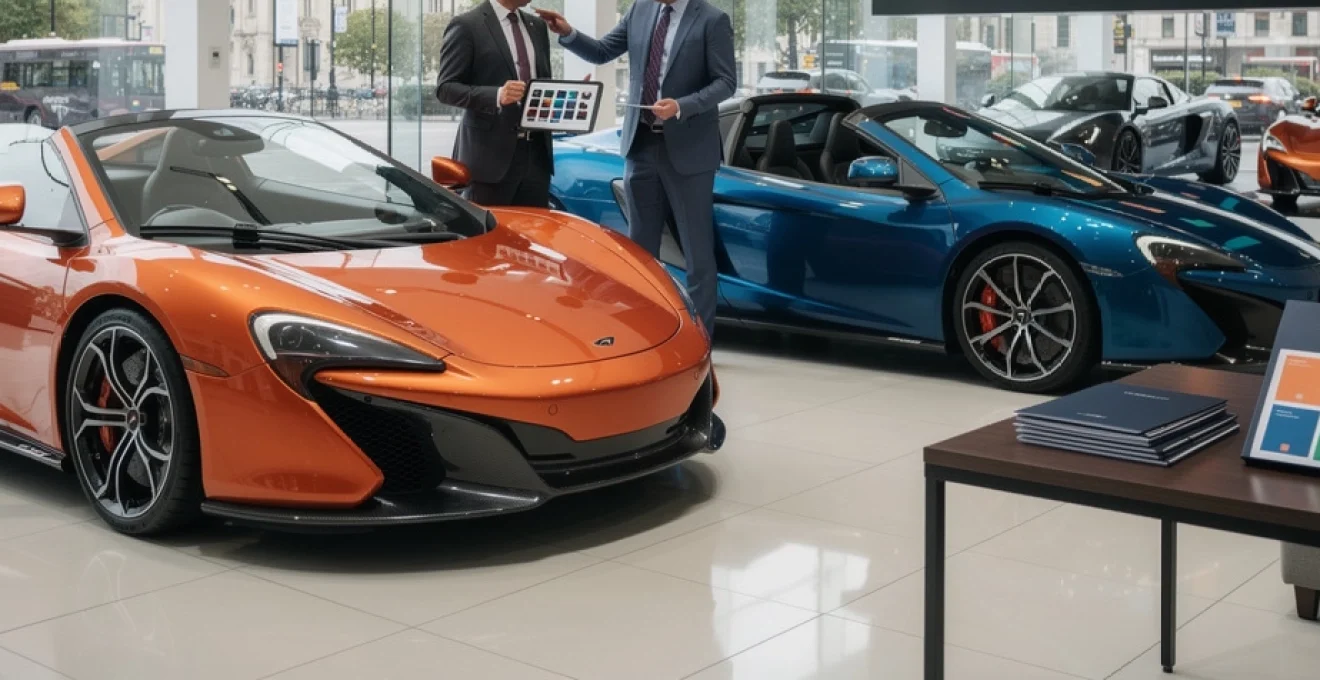
The McLaren 650S has moved from cutting-edge new supercar to modern classic territory in barely a decade. Values have stabilised, choice on the used market is strong, and buyers now benefit from years of real-world ownership data. Whether you are stepping up from a fast Porsche or adding to an established collection, a carefully chosen 650S can deliver hypercar performance with surprising usability. Understanding where to find the best examples for sale in the UK, how to interpret specs, history and pricing, and how to avoid costly mistakes makes the difference between a dream purchase and an expensive learning curve.
Prices currently range from around £70,000 for higher-mileage coupés to well over £150,000 for rare MSO or Le Mans Edition cars with perfect provenance. Supply is limited – globally fewer than many mainstream supercar rivals – so the best cars often change hands off-market. With the right strategy, you can identify those opportunities, benchmark them against the wider McLaren 650S market, and buy with confidence.
Understanding the McLaren 650S market: coupé vs spider, model years and spec tiers
Key differences between 650S coupé and 650S spider in pricing, rigidity and resale value
The McLaren 650S was offered as both a Coupé and Spider, and the market treats them quite differently. The 650S Spider typically commands a £10,000–£20,000 premium like-for-like, reflecting demand for open-top supercars and the clever retractable hard top. On UK forecourts, you are likely to see Spider asking prices starting around £80,000, with rarer, low-mile cars stretching beyond £150,000.
From a technical standpoint, the carbon MonoCell chassis means the Spider loses very little rigidity compared to the coupé. Unlike many aluminium-based convertibles, there is no significant “scuttle shake” and track performance remains highly credible. That said, for buyers who value maximum precision on circuit days, the Coupé still holds a marginal edge and can offer slightly sharper steering feedback.
Resale value often favours the Spider in the UK, particularly for sub‑20k‑mile cars with strong specifications. Coupés can represent better value as an entry into McLaren ownership, especially if you prioritise driver focus over top-down cruising. For long-term holding, both body styles remain desirable; the key is matching mileage, colour and options to what the next owner will want in three to five years.
2014–2017 production run, pre-facelift vs late cars and the transition to 720S
The McLaren 650S was introduced at the 2014 Geneva Motor Show as a heavily updated evolution of the MP4‑12C. Power rose to 641 bhp (650 PS), torque jumped to around 500 lb ft, and styling took heavy inspiration from the P1, particularly the front end and curved LED headlights. Production ran from 2014 through to the arrival of the 720S in 2017, when the 650S effectively bowed out.
Early 2014 cars can be identified by launch colours and slightly simpler option mixes, whereas later 2016–2017 examples often feature more desirable factory upgrades, better IRIS infotainment revisions and incremental quality tweaks. On the UK used market, late cars can command a 10–15% premium over an equivalently specced early car, especially if mileage sits in the “sweet spot” of 10,000–25,000 miles.
There was no formal “facelift” in the traditional sense, because the 650S itself was the facelifted 12C. However, software updates, suspension calibrations and feature changes were applied over time. As the 720S arrived and list prices jumped, many buyers shifted focus to nearly new 650S stock, helping to underpin used values. That halo effect is still evident today in the way late, well-kept cars hold their price.
Comparing standard 650S, le mans edition and bespoke MSO builds on the used market
Most McLaren 650S models on UK roads are standard Coupé or Spider variants, but there are two notable tiers above that: the 650S Le Mans Edition and bespoke MSO (McLaren Special Operations) builds. Standard cars already feel special, with Alcantara interiors, active aerodynamics and the Proactive Chassis Control system, yet the upper tiers can transform both driving experience and collectability.
The 650S Le Mans Edition, limited in number, includes unique wheels, styling tweaks and a roof snorkel reminiscent of the F1 GTR. On the used market these cars routinely sit at the top of the price spectrum, sometimes 25–40% above regular 650S equivalents. Bespoke MSO builds, featuring unique paints, extended carbon fibre and one-off interior details, also carry strong premiums when documented properly.
For most buyers, a well-optioned standard 650S offers the best blend of value and equipment. However, if the goal is long-term collection and potential appreciation, Le Mans and stand-out MSO examples deserve close attention. These cars often have fastidious owners and impeccable history, both of which are critical in a complex supercar.
Carbon fibre options, clubsport packs and high-value factory upgrades to prioritise
Specification has a direct impact on desirability and residuals. High-value factory options to prioritise on a McLaren 650S for sale include carbon fibre exterior packs, carbon ceramic brakes, lightweight forged wheels and the more supportive fixed-back bucket seats. These features do not only add drama; they also enhance performance and, crucially, future marketability.
Clubsport or track-oriented packs typically bundle in features such as carbon interior trims, harness-ready seats and sometimes upgraded brake cooling. For buyers intending occasional track days, such packs are extremely attractive, particularly when combined with sensible mileage and a complete Digital Service Record. They also make a car stand out amid a sea of more “standard” specs.
Paint colour matters as well. Bold hues like orange, yellow or special MSO finishes tend to be easier to sell on than certain greys or browns, provided they match the car’s character. Even subtle details, such as contrasting brake calipers or carbon side blades, can influence how quickly a car finds its next home and at what price point.
Where to find McLaren 650S for sale in the UK: franchise dealers, independents and private listings
Approved McLaren retailers (london, manchester, birmingham, ascot, glasgow) and their used 650S stock
Approved McLaren retailers remain the most straightforward source for a used McLaren 650S in the UK. Franchised locations in London, Manchester, Birmingham, Ascot and Glasgow often carry a mix of 650S Coupé and Spider examples, sometimes under the official McLaren Qualified Pre‑Owned programme. Stock levels fluctuate, but buyers typically benefit from factory-backed warranties and full provenance checks.
A McLaren 650S sourced from an authorised retailer usually includes at least 12 months of cover, roadside assistance and a comprehensive inspection. For many first-time McLaren buyers, that peace of mind outweighs the slight premium over independent dealer pricing. Franchise cars also tend to have up-to-date McLaren Digital Service Records, which are crucial for long-term reliability and resale.
Because supply is limited, especially for rare colours or MSO builds, high-quality examples can sell quickly. Staying in regular contact with sales teams and being prepared to leave a holding deposit can help secure desirable cars before they reach online listings or wider marketing channels.
Specialist supercar dealers such as romans international, tom hartley and amari supercars
Specialist independent supercar dealers occupy a sweet spot between franchise dealers and private sellers. Established names such as Romans International, Tom Hartley and Amari Supercars often stock multiple McLaren 650S examples and have deep experience in the marque. Their knowledge of typical wear points, option values and buyer expectations is a major asset.
Pricing at top-tier independents is usually competitive with, or slightly below, franchised dealers, yet still reflects the cost of proper preparation, warranties and detailed inspections. Many of these businesses offer tailored finance, part-exchanges and nationwide delivery, which can be particularly helpful if you live far from a major city.
When considering a 650S from a specialist, pay close attention to how transparently the dealer discusses known issues, common maintenance and service records. A dealer that proactively explains the Proactive Chassis Control system, carbon tub checks and IRIS quirks is more likely to have prepared the car correctly.
Online classified platforms: auto trader, PistonHeads, CarGurus and ebay motors UK
Online classified platforms provide the broadest overview of McLaren 650S cars for sale nationwide. Sites like Auto Trader, PistonHeads, CarGurus and eBay Motors UK allow you to filter by mileage, price, body style and dealer type, making it easier to benchmark value and spot outliers. At any one time, UK platforms typically show around 5–15 650S listings, reflecting the car’s relative rarity.
These portals are especially useful for tracking depreciation curves and identifying whether a particular example is priced as a “super deal” or at the very top of retail. Historic asking prices and price-reduction notifications give insight into seller motivation, which can support negotiations. However, not every car listed online has been rigorously prepared.
Due diligence is essential. A well-presented listing with detailed photographs, service history scans and clear ownership information is a much better starting point than a vague advert with minimal detail. Treat online ads as a gateway to further investigation, not a substitute for physical inspections and professional diagnostics.
Supercar broker networks, WhatsApp groups and invite-only dealer-to-dealer channels
A significant proportion of high-quality McLaren 650S cars never reach public adverts. Instead, they change hands via broker networks, WhatsApp groups and invite-only dealer-to-dealer channels. These off-market opportunities often involve cars from collectors or long-term owners who prefer discretion and quick, hassle-free transactions.
If you are serious about finding a top-tier 650S – perhaps a low-mile MSO Spider in a rare colour – building relationships with trusted brokers can be invaluable. Such intermediaries have direct lines to owners and can source specific cars on request, albeit usually for a flat fee or small percentage of the sale price. Think of them as personal shoppers for supercars.
Using these networks demands clear communication about budget, specification and timescales. The more precise you are, the easier it becomes for a broker to match you with the right car before it becomes widely available and attracts competing buyers.
Buying privately via owners’ clubs, McLaren life forums and UK supercar facebook groups
Private sales can provide compelling value when searching for a McLaren 650S for sale, particularly if you are comfortable handling inspections and paperwork personally. Owners’ Clubs, enthusiast forums such as McLaren Life, and UK supercar Facebook groups often host cars that are already well-known within the community, with documented history threads and event attendance.
Private sellers sometimes price more keenly than dealers because there is no retail margin. On the other hand, there is no built-in warranty or comeback, so factory inspections and independent pre-purchase checks become non-negotiable. For experienced buyers, this trade-off is acceptable; for first-timers, it may feel daunting.
When engaging privately, insist on seeing the full Digital Service Record, invoices for major work, MOT history and any warranty transfer documentation. A seller willing to share detailed photos, videos and diagnostic printouts is usually more trustworthy than one who offers only basic information.
Evaluating mileage, service history and warranty when sourcing a McLaren 650S
Optimal mileage bands for 650S ownership: sub-10k, 10–25k and high-mile examples
Mileage on a McLaren 650S is not just a number; it affects price, reliability assumptions and future resale. Sub‑10k‑mile cars often command a noticeable premium – sometimes 15–20% more than similar 20k‑mile examples – due to perceived “collector” status. However, ultra-low mileage does not automatically equal better.
Many specialists consider 10,000–25,000 miles the optimal band for a McLaren 650S. At this level, the car has been driven often enough to avoid long-term storage issues, yet remains relatively fresh and tight. High-mile cars (40,000 miles and above) can still be excellent buys if all maintenance is fully documented and major wear items (such as brake discs and dampers) have been addressed.
Buying solely on mileage can be a trap. A 30k‑mile 650S with impeccable history, gentle use and recent big-ticket work can be a safer choice than a 7k‑mile car with patchy servicing and long storage gaps. The key is context: how the car has been used and cared for matters more than the odometer alone.
Verifying McLaren digital service records (DSR) and main dealer vs specialist stamps
The McLaren Digital Service Record, or DSR, is the backbone of provenance for any 650S. Unlike older paper booklets, the DSR is held centrally and can be accessed by authorised dealers and many recognised specialists. Always ask for a printout and cross-check dates, mileage and the nature of work carried out.
Main dealer stamps carry weight when it comes to warranty eligibility and future resale, but high-quality independent specialists are increasingly respected within the McLaren ecosystem. The ideal history pattern alternates sensibly between authorised retailers and well-known independents, with no unexplained gaps or long periods without servicing.
Annual services typically cost in the £800–£1,500 range, with big-ticket items potentially pushing totals higher. A suspiciously cheap service history may indicate corners have been cut, particularly on crucial elements like brake fluid, gearbox oil or PCC system checks.
Mclaren extended warranty, third-party policies and common exclusion clauses
A McLaren 650S backed by a valid McLaren Extended Warranty or qualified pre-owned warranty is vastly easier to live with. These factory-backed policies tend to cover major mechanical and electrical systems, including the engine, gearbox, PCC and many electronic modules. Term lengths typically run 12–24 months and can sometimes be extended at renewal, subject to age and mileage thresholds.
Third-party warranties can be more affordable but often come with tighter exclusions and claim limits. Common exclusion clauses involve wear-and-tear suspension components, infotainment glitches and “pre-existing conditions.” Careful reading of the small print is essential, particularly around labour rates and franchise versus independent repairers.
When assessing a car with expired warranty, factor in the cost of re-qualifying for McLaren coverage if desired. This may require a paid inspection and remedial work to bring the car up to standard. The extra outlay can still be worthwhile if it protects against rare but expensive failures.
Reading and interpreting health checks, over-rev reports and diagnostic printouts
Professional inspections generate a wealth of data: health check sheets, over-rev reports and diagnostic printouts. Learning how to interpret these documents gives you a strong advantage when comparing multiple McLaren 650S examples. Over-rev reports, in particular, highlight whether the engine has been pushed beyond safe RPM thresholds, usually categorised into different ranges.
Minor over-rev events at low categories are not necessarily a deal-breaker, especially if they occurred early in the car’s life and have not recurred. However, sustained high-range over-revs may indicate previous abuse and should prompt closer scrutiny or negotiation. Diagnostic logs can also reveal intermittent faults, sensor errors or module issues that have not yet manifested as dashboard warnings.
Health checks commonly flag suspension bush wear, brake measurements, tyre tread depths and small leaks. Treated as a snapshot in time, they allow you to budget realistically for the next 12–24 months and to distinguish genuinely well-prepared cars from those merely cleaned for sale.
Technical pre-purchase checks specific to the McLaren 650S
Carbon MonoCell tub inspection, accident damage detection and structural integrity tests
The McLaren 650S uses a carbon fibre MonoCell tub that is both incredibly strong and expensive to repair. Any hint of accident damage to this structure warrants extreme caution. Visual inspection alone is rarely sufficient; a specialist should examine bonding points, suspension pick-up areas and alignment measurements to confirm structural integrity.
Tell-tale signs of past impact include uneven panel gaps, overspray in hidden areas, non-original fasteners and unusual tyre wear patterns. Laser alignment reports and geometry checks can reveal if the car is tracking correctly. Because a properly repaired minor cosmetic incident is very different from an undetected tub compromise, thorough documentation of any past work is vital.
A clean, verifiable history backed by insurance records and detailed invoices is usually acceptable, but ambiguous stories or incomplete paperwork should trigger either a sharp discount or a decision to walk away entirely. The cost and complexity of tub repairs simply leave little room for risk-taking.
Engine and transmission diagnostics on the M838T V8 and 7-speed SSG dual-clutch gearbox
The 3.8‑litre twin-turbocharged M838T V8 is shared with other McLaren models and has proven robust when maintained correctly. Pre-purchase diagnostics should include cold and hot start assessments, leak-down or compression tests if warranted, and close analysis of turbocharger behaviour. Smoke on overrun, unusual noises or inconsistent boost delivery demand further investigation.
The 7‑speed SSG dual-clutch gearbox generally shifts quickly and smoothly; any hesitation, clunks or slipping sensations can point to software or hardware issues. A detailed scan for gearbox fault codes, temperature readings and adaptation values helps build a picture of its health. Mechatronic units and clutches are not cheap, so clarity here protects your budget.
Regular fluid changes, adherence to service intervals and appropriate warm-up habits significantly extend drivetrain life. Asking a seller about how the car was used – frequent track days, mainly motorway runs, or occasional weekend drives – provides useful context alongside the electronic data.
Proactive chassis control (PCC), adaptive dampers and suspension bush wear patterns
McLaren’s Proactive Chassis Control system is one of the 650S’s defining technologies, allowing the car to be both remarkably compliant on poor roads and razor-sharp on track. The system links adaptive dampers hydraulically, with different stiffness modes selectable via the Active Dynamics Panel. During inspection, each mode should operate distinctly, without warning lights or harshness.
Over time, suspension bushes, top mounts and ball joints can wear, particularly on cars used extensively on bumpy roads or circuits. Clunks, knocks or imprecise steering feedback during a test drive may point to impending refresh costs. Given the performance envelope, addressing these components proactively keeps the car feeling as McLaren intended.
Specialists can run pressure tests and visual checks on the PCC system, looking for leaks, corrosion or sensor issues. While outright failures are not common, refurbishing or replacing components is a specialised job, so documentation of previous work in this area is reassuring.
Carbon ceramic brake wear, disc measurements and caliper refurbishment costs
Most McLaren 650S cars are equipped with carbon ceramic brakes, a high-performance setup that offers strong stopping power and impressive fade resistance. These discs can last an extremely long time on the road, but track-heavy use can accelerate wear. A pre-purchase inspection should include minimum thickness measurements and a visual assessment for cracks or excessive lip formation.
Replacing a full set of carbon ceramic discs and pads can run into five figures, so understanding remaining life is central to any buying decision. Caliper condition also matters: seized pistons, flaking paint or fluid leaks not only affect braking feel but also add to refurbishment costs. Painted calipers in vibrant colours are particularly prone to stone-chip cosmetically, though this is largely an aesthetic concern.
Brake fluid age and specification should be confirmed via invoices. For spirited driving or occasional track days, fresh high-temperature fluid provides a big margin of safety and confidence, and is relatively inexpensive compared to other maintenance items.
Infotainment, IRIS system quirks and electrical reliability issues to investigate
The 650S’s IRIS infotainment system is often criticised for being slower and less intuitive than modern setups, but understanding typical quirks helps separate normal behaviour from genuine faults. Laggy responses, occasional freezes and Bluetooth pairing frustrations are widely reported. However, complete blackouts, persistent error messages or frequent reboots justify deeper diagnostics.
Electrical reliability extends beyond IRIS. Window regulators, parking sensors, reversing cameras and folding mirrors should all be tested repeatedly during a viewing. Battery health is another key factor; supercars that sit for long periods can develop low-voltage gremlins. A fresh, high-quality battery and regular use of a conditioner dramatically reduce such issues.
Software updates from McLaren and reputable specialists have improved IRIS stability over time. Confirming that these updates have been applied, where available, is another positive tick in a 650S’s favour and hints at an owner committed to keeping the car current.
Price benchmarks and depreciation curves for the McLaren 650S in the UK
Historic price trends since 2014 and the impact of the 720S and artura on 650S values
New, the McLaren 650S cost in the region of £195,000–£220,000 in the UK, depending on options and body style. Early depreciation was typically steep, with some cars dropping into the £130,000–£150,000 band within three years. Since then, the curve has flattened, and prices have become more sensitive to mileage, spec and provenance than simple age.
The arrival of the 720S in 2017 created an expected downward pressure on 650S values, but also reinforced the 650S’s status as a “classic” of the earlier McLaren era. The more recent McLaren Artura, with hybrid V6 power, has not dramatically changed 650S pricing; instead, it has broadened the range and pushed buyers to choose between pure-combustion and hybrid futures.
As of now, asking prices for used McLaren 650S models in the UK commonly span £72,500 to £159,995, with an average around the low‑£90,000s. This band has remained broadly stable over the last couple of years, suggesting that depreciation is now slower and more predictable.
Price variance between high-spec MSO cars, launch-spec examples and base configurations
Specification can introduce significant variance even among cars of similar age and mileage. High-spec MSO builds, Le Mans Editions and fully loaded Spiders occupy the top of the market, often exceeding £140,000 if mileage remains under 15,000. In contrast, early launch-spec coupés with moderate options and 30,000+ miles may sit £40,000–£60,000 lower.
Base configurations without carbon fibre packs, with standard brakes and less desirable colours tend to linger longer on the market, encouraging stronger negotiation. For many buyers, paying a modest premium for a well-specced example makes sense, as those options remain attractive at resale and can compress the ultimate cost of ownership.
The table below illustrates broad price tiers for UK McLaren 650S cars, assuming clean history and sensible mileage:
| Category | Typical Price Range (£) | Typical Mileage |
|---|---|---|
| Early Coupé, average spec | 72,500 – 90,000 | 25,000 – 45,000 |
| Spider, strong spec | 85,000 – 130,000 | 10,000 – 35,000 |
| Late MSO / Le Mans | 130,000 – 160,000+ | < 20,000 |
Seasonal demand patterns, auction results and trade vs retail price spreads
Seasonality still plays a role in supercar pricing. Spring and early summer typically bring stronger demand for open-top 650S Spiders, tightening supply and firming prices. Autumn and winter, by contrast, can see slightly softer demand and more willingness from sellers to negotiate, especially for cars that have been in stock for several months.
Auction results, both physical and online, provide useful benchmarks but must be interpreted carefully. Hammer prices usually exclude buyer’s premiums and do not necessarily reflect the preparation costs a retail buyer would expect a dealer to undertake. Trade bids are often 10–15% below what a smart retail buyer might reasonably pay for a similar car in top condition.
The trade vs retail spread essentially represents the value of preparation, warranty and margin. Understanding this gap helps you avoid overpaying while still recognising that the very cheapest 650S on the market is unlikely to be the best overall prospect.
Forecasting future residuals using comparable models like 12C and 600LT
Forecasting future residuals for the McLaren 650S benefits from examining patterns in related models. The MP4‑12C, effectively the 650S’s predecessor, appears to have found a price floor, with tidy examples rarely dipping below around £60,000. At the other end, the more track-focused 600LT has held values strongly, supported by limited numbers and enthusiast demand.
The 650S sits neatly between them: more advanced and desirable than the 12C for many buyers, but less overtly exclusive than the 600LT. This suggests a relatively shallow future depreciation curve, with condition and history increasingly driving individual outcomes. Over five years, a well-chosen 650S could realistically lose far less, in absolute terms, than many brand-new performance cars.
From a longer-term perspective, the 650S’s blend of P1-inspired styling, pure internal combustion powertrain and carbon tub places it well for eventual “modern classic” appreciation, particularly for rare specifications. Buying the best car you can comfortably afford remains the most reliable strategy for strong residuals.
Importing a McLaren 650S into the UK from europe, the US or the middle east
EU import procedures, VAT, NOVA registration and V5C documentation
Importing a McLaren 650S from Europe into the UK has become more complex post‑Brexit, but remains viable in certain cases, especially for rare specs or advantageous purchase prices. The key steps involve paying any applicable VAT and duty, completing a Notification of Vehicle Arrival (NOVA) with HMRC, and then registering the car with the DVLA to obtain a V5C logbook.
VAT treatment depends on whether the car qualifies as a “used” vehicle and the circumstances of the sale. Professional advice can save thousands by ensuring the correct regime is applied. Accurate invoices, proof of payment and transport documentation are essential at each stage, and keeping a tidy file makes later resale far easier.
Once in the UK, the car must pass an MOT and comply with local regulations on lighting, emissions and speedometer units. Straightforward EU-spec 650S cars usually require minimal changes, but timing, logistics and paperwork still need careful planning.
Assessing US-spec and GCC-spec 650S cars: lighting, cooling and emissions differences
US-spec and GCC (Gulf Cooperation Council) 650S cars can look tempting on price, but require more detailed assessment. US cars may have different lighting configurations, reflectors and emissions configurations, as well as odometers in miles but speedos calibrated to local rules. Converting these elements to full UK compliance can involve both hardware and software changes.
GCC-spec cars are typically equipped with enhanced cooling systems to cope with extreme heat, which is positive in one sense. However, prolonged operation in very hot climates can accelerate wear on rubber components, electronics and interior materials. Sand and dust exposure is another consideration, particularly for radiators and moving parts.
Before committing to a non-European car, obtain a chassis-number-based specification sheet and confirm exactly how it differs from UK models. Factoring in conversion costs and potential impacts on resale is crucial; a bargain on day one may prove difficult to sell on in a market that heavily favours UK-supplied cars.
Right-hand drive vs left-hand drive considerations for resale and insurance
The UK market overwhelmingly prefers right-hand drive McLaren 650S examples. Left-hand drive cars are often cheaper – sometimes by 10–20% – but that discount is a reflection of narrower demand and potential complications with insurance and everyday use. For occasional touring in Europe or track use, LHD may be acceptable, but mainstream buyers typically shy away.
Insurance premiums and terms can differ for LHD imports, with some providers treating them as higher risk or requiring specialist policies. Parking in tight UK multi-storey car parks or toll booths can also be less convenient in a left-hand drive supercar. If long-term resale flexibility is important, RHD remains the safest bet.
For enthusiasts who plan to keep the car for many years, an LHD 650S can present an opportunity to secure a distinctive spec at a meaningful discount, provided all compliance, registration and insurance aspects are properly handled from day one.
Using specialist import agents and homologation experts for compliance and SVA
Navigating the full import, compliance and registration process alone can be time-consuming, especially with a complex supercar. Specialist import agents and homologation experts exist precisely to manage this journey. They coordinate shipping, insurance-in-transit, customs clearance, NOVA filings and any Individual Vehicle Approval (IVA) or Single Vehicle Approval (SVA) testing required.
While these services come at a cost, they also reduce the risk of administrative errors, delays or costly non-compliance issues later. For a McLaren 650S with high value and intricate technology, engaging professionals is often the most efficient path. Their experience with lighting conversions, emissions documentation and speedometer recalibration directly translates into a smoother route to UK plates.
For anyone considering importing a 650S as an investment or long-term keeper, factoring in these expert fees as part of the project budget provides a realistic picture of total cost, and allows direct comparison with buying an equivalent UK-supplied car already on the market.