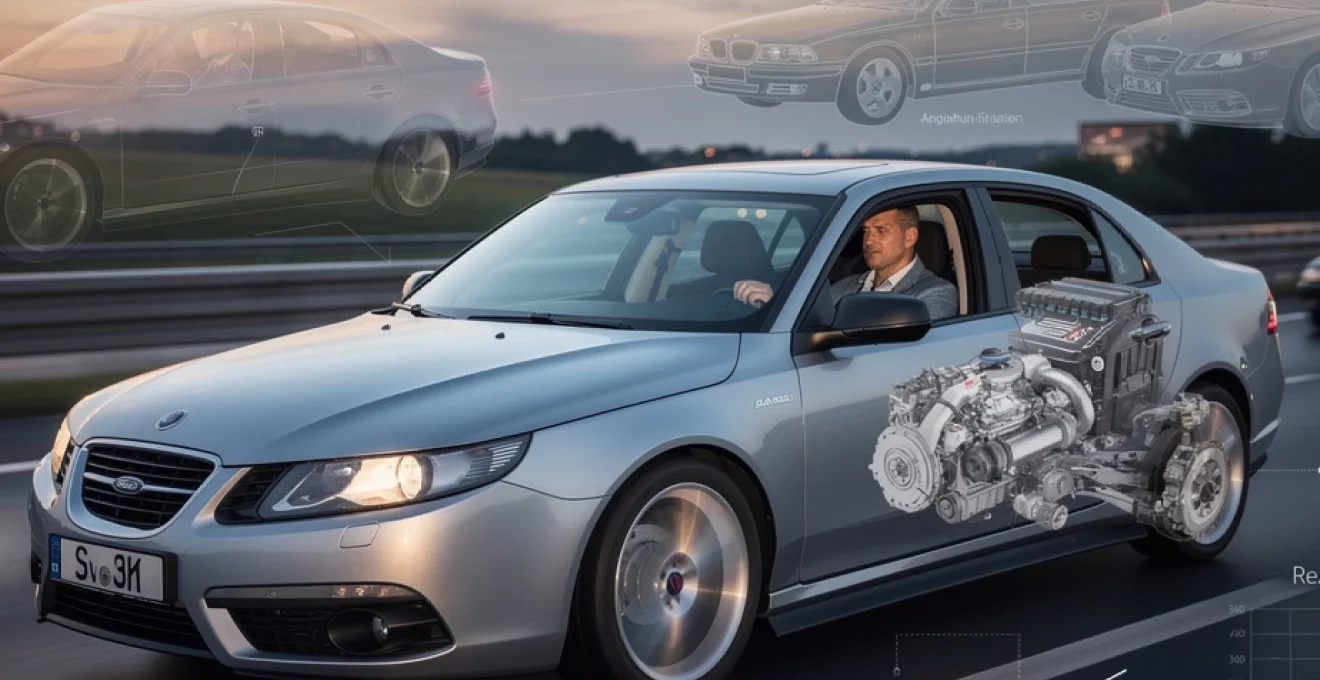
The Saab 9‑5 Aero sits at a fascinating crossroads: the end of Saab as a mainstream manufacturer and the peak of the brand’s turbocharged engineering know‑how. Two decades on, a well‑sorted 9‑5 Aero can still embarrass newer machinery in real‑world driving, carry a family and luggage in comfort, and offer a level of character that many modern executive cars lack. For anyone considering a left‑field performance saloon or estate today, understanding why the 9‑5 Aero still matters helps you judge whether this Swedish outlier deserves space on your driveway and in your budget.
Between its high‑output four‑cylinder engines, clever Trionic management, and safety‑obsessed chassis, the 9‑5 Aero represents a distilled version of Saab’s philosophy. Add in strong support from specialists and enthusiasts and you have a car that remains both usable commuter and future classic. If you are weighing it against yet another German executive, the details of how it drives, how it ages, and how it can be tuned are where the 9‑5 Aero quietly shines.
Saab 9‑5 aero as a late‑era turbocharged performance saloon
B235R and B284R aero engines: high‑output turbo tuning from trollhättan
The core of the 9‑5 Aero’s appeal is its pair of flagship engines: the 2.3‑litre four‑cylinder B235R and, in some markets, the 2.8‑litre V6 B284R. The B235R, used in most European Aeros, produced 230–250 bhp pre‑facelift and 260 bhp in later “HOT Aero” guise, with up to 350 Nm of torque from just above 2000 rpm. For a family saloon launched in the late 1990s, those figures still look strong today and translate into 0–60 mph in the 6.5–7.0 second range for manuals.
The B284R V6 added smoothness and a more modern sound, with similar peak power but a fatter torque band. In both engines, Saab leaned heavily on its knowledge of high specific‑output turbocharging, pairing relatively modest displacement with strong mid‑range boost rather than chasing high‑rev theatrics. If you are coming from naturally aspirated six‑cylinders, the way the Aero surges from 50–80 mph feels more like a small turbocharged diesel locomotive than a traditional petrol executive car.
Mitsubishi TD04 turbocharger, boost control, and factory overboost calibration
Most B235R engines in the 9‑5 Aero use the robust Mitsubishi TD04 turbocharger. Saab’s calibration team allowed peak boost pressures that were quite bold for the period, but carefully managed by the Trionic ECU. Under heavy load in higher gears, the system delivers a short burst of “overboost” before tapering slightly to protect hardware and keep exhaust gas temperatures under control. In practical terms, that gives you a decisive punch for overtakes without the surge spiralling into wheelspin.
This approach to boost control is one reason why even a stock Aero still feels potent on today’s roads. Compared with rivals that relied on larger engines or twin‑turbo setups, Saab extracted similar in‑gear performance using detailed control strategies, including ion‑sensing knock detection, adaptive ignition timing and fine‑grained fuel mapping. For owners chasing more power through remaps, the factory calibration provides a safe baseline and explains why many Stage 1 tunes can push outputs near 300 bhp on standard internals.
Manual vs aisin automatic gearboxes in the 9‑5 aero and their gearing characteristics
Saab offered the 9‑5 Aero with a 5‑speed manual gearbox and Aisin‑Warner 4‑ and later 5‑speed automatics. The manuals tend to feel quicker, partly thanks to lower gearing and reduced drivetrain losses. Factory figures show around 0.5–0.8 seconds advantage to 60 mph, and owners regularly report noticeably stronger mid‑range pull when rowing their own gears. If you value straight‑line performance and driver involvement, a well‑maintained manual Aero remains the enthusiast’s choice.
The Aisin autoboxes, however, suit the car’s brief as a long‑distance cruiser. The 5‑speed’s taller top gear drops motorway revs and can yield 1–2 mpg better fuel economy on steady runs, making 35 mpg on a gentle cruise realistic for a careful driver. Kickdown behaviour is smooth rather than aggressive, aligning with Saab’s preference for understated competence over theatrics. For commuting and mixed driving, the automatic 9‑5 Aero feels closer to a relaxed grand tourer than a hard‑edged sports saloon.
Comparing saab 9‑5 aero performance with BMW E39 530i, volvo S60 T5, and audi A6 2.7T
How does the 9‑5 Aero stack up against its period competitors? On paper, the Aero’s 0–60 mph times and top speed compare directly to cars such as the BMW E39 530i, Volvo S60 T5 and Audi A6 2.7T. While the BMW’s naturally aspirated six offers silkier delivery and the Audi’s quattro traction aids launches, independent tests of the era often found the Saab quickest in 50–70 mph and 50–90 mph in‑gear runs.
Where the Germans focused on balance and rear‑ or all‑wheel drive traction, Saab doubled down on front‑drive torque with sophisticated electronics and carefully tuned suspension. In a world of derestricted Autobahns, the Aero held its own cruising at 120–130 mph, feeling planted and secure. If your priority is real‑world overtaking pace rather than standing‑start sprints, the 9‑5 Aero still feels competitive with many younger turbocharged saloons and estates.
Real‑world performance metrics: in‑gear acceleration, torque curve, and autobahn manners
Period road tests recorded 50–75 mph in fifth gear in around 7 seconds for manual Aeros, with 30–50 mph in third dipping under 3 seconds. Those in‑gear numbers matter more than headline 0–60 times when you are joining fast traffic or making a quick overtake on a single‑carriageway B‑road. The broad torque plateau from roughly 2000–4500 rpm means you rarely need to drop more than one gear to access serious thrust.
On the Autobahn, drivers regularly report stable, confidence‑inspiring behaviour up to the Aero’s electronically limited 155 mph (250 km/h). Wind noise is low, the body resists crosswinds effectively, and the suspension’s primary ride remains supple even at three‑figure speeds. For long‑distance touring across Europe, a 9‑5 Aero estate with luggage and passengers can still feel like a contemporary machine rather than a relic, particularly if tyres and dampers are in good condition.
Turbocharging, trionic engine management, and saab’s engineering legacy
Saab trionic 7 vs trionic 8: ion‑sensing, knock control, and adaptive ignition mapping
The heart of Saab’s turbocharging expertise lies in the Trionic engine management family. Earlier 9‑5 Aeros use Trionic 7, while later V6 cars move to Trionic 8. Both systems employ ion‑sensing technology via the Direct Ignition Cassette, effectively turning each spark plug into a knock sensor. By measuring the ion current after each combustion event, the ECU can fine‑tune ignition timing and boost for each cylinder in real time.
This advanced knock control allows relatively high compression ratios and boost pressures on ordinary unleaded, which is why a stock Aero can deliver strong performance on 95 RON yet unlock extra response on 98 RON fuel. The adaptive ignition mapping also means the engine “learns” your local conditions: altitude, fuel quality and driving style all feed into small adjustments over time. For you as an owner, that translates into robust reliability and consistent performance, even as the car racks up six‑figure mileages.
Saab’s turbocharging philosophy from the 99 turbo to the 9‑5 aero
Saab’s approach to turbocharging stretches back to the iconic 99 Turbo of the late 1970s. Rather than using boost solely for peak power, Saab engineers saw the turbo as a way to deliver diesel‑like torque with petrol smoothness. By the time the 9‑5 Aero arrived, this philosophy had matured into a very usable combination of low‑rpm response and mid‑range shove. Turbo lag is present if you are used to modern variable‑geometry turbos, but it is modest and predictable.
Compared with the brutal on/off character of some 1980s turbos, the Aero’s delivery is more like a well‑controlled surge, building confidence as boost rises. The philosophy is clear: strong, safe overtaking power on real roads rather than headline power for marketing. For drivers who value effortless overtakes at realistic speeds, that old‑school Saab tuning mindset still feels refreshingly honest.
Exhaust, intercooler, and intake design specific to the aero package
The Aero package adds more than just a different ECU file. Saab fitted uprated intercoolers, freer‑flowing exhausts and specific intake plumbing to keep charge temperatures under control at sustained boost. The standard front‑mounted intercooler is sized generously for the stock output, which is one reason simple remaps can add 40–60 bhp without immediately demanding hardware changes.
The exhaust system uses relatively large‑diameter pipework for a 2.3‑litre engine, prioritising low back‑pressure and thermal durability over theatrical sound. If you are used to pops and bangs from modern sports exhausts, the 9‑5 Aero’s note is much more understated, with a muted growl rather than an obvious soundtrack. Owners pursuing Stage 3 power levels often replace the downpipe and cat to further reduce back‑pressure and to complement more aggressive boost targets.
Factory emissions, fuel economy strategies, and euro 3/euro 4 compliance
Despite its performance focus, the 9‑5 Aero had to satisfy tightening Euro 3 and later Euro 4 emissions standards. Saab used strategies such as rapid light‑off of the catalytic converter, closed‑loop lambda control under part load and carefully calibrated over‑run fuel cut. Those measures help explain why motorway fuel economy can reach the mid‑30s mpg if you maintain steady speeds and avoid frequent boost.
Realistically, mixed driving returns around 28–32 mpg for an Aero in good health, with spirited use dropping into the low‑20s. That may sound heavy compared with today’s downsized turbo engines, but for a 250+ bhp petrol saloon of its era, the 9‑5 Aero’s consumption is competitive. Keeping the PCV system updated and the combustion process clean also helps maintain emissions performance over long‑term ownership, reducing the risk of MOT failures on hydrocarbons or lambda readings.
Chassis dynamics and safety engineering in the saab 9‑5 aero
Reaxs rear suspension geometry, front MacPherson struts, and aero‑specific springs
The 9‑5 uses MacPherson struts up front and a multi‑link rear axle with Saab’s ReAxs geometry. ReAxs introduces a small degree of passive rear steer under load, enhancing stability and cornering response without resorting to complex active systems. Aero models receive stiffer springs and dampers, slightly lower ride height and thicker anti‑roll bars, aiming for a blend of body control and comfort rather than outright track sharpness.
Owners and testers often describe the Aero’s chassis as safe, predictable and mildly understeery when pushed. That might sound unexciting, yet on real roads it encourages high average speeds with minimal drama. Replace tired bushes and dampers and the underlying balance becomes more apparent: the car turns in cleanly, rolls modestly and recovers from mid‑corner bumps with composure.
Steering feel, weight distribution, and high‑speed stability on european motorways
Steering feel is a known weak point. The rack is reasonably quick, but feedback around the straight‑ahead is muted, especially on cars with worn suspension or budget tyres. Despite this, the 9‑5 Aero’s high‑speed stability is excellent, helped by a long wheelbase, careful aero development and a front‑biased but well‑managed weight distribution.
On European motorways, that translates into a car that tracks faithfully, resists tramlining and inspires confidence when changing lanes at speed. The relatively soft initial suspension stroke filters out expansion joints and broken surfaces better than some German rivals of the era, which can feel more alert but also more tiring on long stints. If you prioritise arriving relaxed after 500 motorway miles, the Saab chassis philosophy makes a lot of sense.
Saab crash safety structure, saab active head restraints (SAHR), and cabin integrity
Safety was always central to Saab’s identity, and the 9‑5 Aero benefits from the same over‑engineering as more modest trims. The body structure uses extensive high‑strength steel, energy‑absorbing crash boxes and carefully managed deformation paths. Independent Swedish insurance data has repeatedly ranked the 9‑5 at or near the top of its class for real‑world crash outcomes, even as newer models entered the market.
One hallmark feature is SAHR – Saab Active Head Restraints. In a rear‑end impact, the seatback moves in a controlled way to push the head restraint forward and up, significantly reducing whiplash risk. This system has been credited with measurable reductions in neck injuries in fleet studies. Combined with side airbags, curtain airbags and robust door structures, the Aero’s cabin integrity remains impressive even by modern standards.
ABS, ESP, and traction control calibration unique to aero models
Later 9‑5 Aeros gained ESP in addition to ABS and traction control. The calibration is relatively conservative: systems intervene early to quell wheelspin and excessive yaw, particularly on wet or low‑grip surfaces. Some enthusiastic drivers find this intrusive, but for daily mixed‑weather commuting it provides a useful safety net for the Aero’s generous torque output.
The traction control logic on automatics also cooperates with the gearbox to reduce torque during harsh upshifts, extending transmission life. If you are planning to increase power significantly, checking the condition of ABS rings, wheel speed sensors and the brake system overall becomes essential, since the car’s electronic helpers rely on accurate data to manage the extra performance safely.
Interior ergonomics, night panel, and long‑distance usability
Driver‑centric cockpit design, aircraft‑inspired switchgear, and SID display
Open the door of a 9‑5 Aero and the design brief is clear: make the cockpit work for the person at the wheel. The gently curved dashboard wraps around the driver, placing major controls within easy reach. The centre console ignition switch, hooded gauges and toggle‑style switches reference Saab’s aviation links without becoming gimmicky. If you care about intuitive ergonomics, you will appreciate how quickly everything makes sense.
The Saab Information Display (SID) sits high on the dash, providing radio, trip and climate data. Pixel loss is a known issue, but refurb services are inexpensive. Once functioning correctly, the SID’s high placement reduces the time your eyes spend off the road, which was a deliberate safety decision long before modern head‑up displays became fashionable.
Night panel function, instrument cluster logic, and fatigue reduction on night drives
One of the most distinctive features is Night Panel. Pressing the button blacks out all instruments except the speedometer, which itself only illuminates the portion relevant to current speed. Warning lights still appear if required, but unnecessary information is hidden. It is a simple idea derived from aircraft cockpits, designed to reduce visual clutter and driver fatigue on night journeys.
If you regularly drive long distances after dark, this low‑distraction environment makes a noticeable difference. Eyestrain is reduced, and you become more attuned to road and traffic rather than glowing displays. Modern cars with vast touchscreens could learn from this analogue yet highly effective approach to human‑machine interaction.
Aero seats, bolster design, and orthopaedic support for motorway cruising
Saab seats have long been regarded as some of the best in the industry, and the 9‑5 Aero continues that tradition. Deep but not aggressive bolsters support the torso and thighs without pinching broader frames, while long squabs and adjustable lumbar support mimic elements of orthopaedic chairs. Many owners report arriving fresh after 600‑mile days, which is not something every “sports” saloon can claim.
Heated seats are common, and some Aeros feature memory functions and even ventilated leather. The driving position suits a wide range of body types, with ample steering wheel reach and rake. If you are evaluating long‑distance cars for chronic back issues or regular European tours, the Saab’s seating is a compelling reason to shortlist the 9‑5 Aero.
Audio systems (AS2, AS3, harman kardon) and integrated technology of the 2000s
Audio options ranged from the standard AS2 system to the premium AS3 and some Harman Kardon‑branded setups. While interface graphics look dated now, sound quality remains respectable, particularly in estates where the large cabin volume and careful speaker placement create a balanced soundstage. Many owners retrofit Bluetooth or digital modules behind the factory head units to keep the original look while adding modern connectivity.
Compared with today’s fully digital cabins, the 9‑5 Aero’s technology feels simple, but that simplicity aids reliability. Climate control modules, seat heaters and cruise control generally age well if the car has been maintained. For a daily driver, the blend of essential comforts without excessive complexity makes the Aero easier to live with as an ageing performance car.
9‑5 aero tuning ecosystem, reliability engineering, and long‑term ownership
Stage 1–3 ECU remaps from maptun, nordic, hirsch, and BSR: power and torque gains
If you are considering a 9‑5 Aero as a project, the tuning ecosystem is one of its biggest strengths. Reputable tuners offer well‑proven Stage 1–3 remaps for the B235R, typically taking power from 250–260 bhp to 290–320 bhp and torque from around 350 Nm to 430–460 Nm. These gains primarily come from increased boost, adjusted fuel delivery and more aggressive ignition timing made possible by the robust Trionic knock control.
Stage 1 tunes usually work with completely stock hardware and focus on mid‑range shove rather than peak rev power. Stage 2 and 3 packages pair ECU work with upgraded downpipes, less restrictive exhausts and occasionally larger intercoolers. With sensible supporting mods, a 300+ bhp Aero remains tractable, economical when off‑boost and surprisingly civilised as a daily driver.
Common failure points: PCV system, sludge issues, DI cassette, and turbo wear
Like any ageing turbocharged car, the 9‑5 Aero has known weak points. The most infamous issue is oil sludge in early B235 engines, caused by a combination of long service intervals, inadequate PCV design and poor‑quality oil. Saab responded with updated PCV kits and recommendations for fully synthetic oil, but any pre‑2004 car should be checked for evidence of sump cleaning and PCV upgrades.
The Direct Ignition Cassette (DIC) is another consumable item. Genuine units last well, but age and heat eventually cause misfires or no‑start conditions. Many experienced owners keep a spare DIC in the boot; replacement takes minutes and avoids recovery trucks. Turbos can also wear, especially if oil changes were neglected. Watch for blue smoke, whistling noises or sudden loss of boost as signs that a rebuild or replacement may be due.
Preventive maintenance strategies for B235R engines and aisin autobox longevity
Preventive care is the key to enjoying a 9‑5 Aero long term. For the B235R, that means 5000–6000 mile oil changes with high‑quality fully synthetic 5W‑30 or 5W‑40, regular sump inspections on earlier engines and ensuring the latest PCV revision is fitted. Replacing coolant, vacuum hoses and engine mounts before outright failure reduces the risk of secondary damage and keeps the car feeling tight.
For Aisin automatics, periodic fluid changes (every 60–75k miles) using the correct spec oil make a noticeable difference to shift quality and longevity. Although some period documentation suggested “filled for life”, real‑world experience shows that fresh fluid extends service life significantly. When buying, smooth upshifts, prompt kickdown and absence of shudder are good signs; any flare between gears or harsh engagement warrants a careful inspection and potential bargaining leverage.
Suspension refresh, polyurethane bushes, and brake upgrades for spirited driving
By now, almost every 9‑5 Aero benefits from a suspension refresh. New dampers, fresh top mounts, anti‑roll bar bushes and drop links can transform the way the car feels. Polyurethane bushes at key locations (such as the front anti‑roll bar and rear trailing arms) sharpen responses without ruining ride comfort, provided you select reputable brands. Addressing these wear items first is far more rewarding than chasing cosmetic modifications.
Brake upgrades are straightforward: quality pads and discs on the stock calipers already deliver strong performance for road use. For frequent spirited driving or trackdays, uprated pads and braided stainless hoses improve consistency and pedal feel. Given the car’s weight and straight‑line performance, investing in brake maintenance is one of the most cost‑effective ways to enhance safety and enjoyment.
Parts availability, specialist saab garages in the UK, and enthusiast forums (UKSaabs, SaabCentral)
One concern with an orphan brand is parts support, but the 9‑5 Aero is better served than many imagine. A mix of OEM‑equivalent suppliers and used spares keeps most components affordable and accessible. Numerous independent specialists across the UK and Europe still focus on Saab, often staffed by technicians who cut their teeth on these cars when new.
Online communities such as UKSaabs and SaabCentral provide technical guides, troubleshooting help and sourcing tips, making ownership far less daunting for newcomers. If you value a supportive enthusiast network for an ageing performance car, the 9‑5 Aero community offers a depth of shared experience that rivals – and sometimes exceeds – more mainstream brands.
Design, heritage appeal, and collector interest in the saab 9‑5 aero
Pre‑facelift vs dame edna 9‑5 aero styling, body kits, and wheel designs
The 9‑5 Aero went through several aesthetic phases. Early cars wear a clean, understated suit with modest side skirts and small spoilers, giving a subtle “Q‑car” look. The 2002 facelift sharpened the lines, while the later so‑called “Dame Edna” models adopted bolder chrome detailing and more aggressive bumpers. Wheel designs evolved from simple 17‑inch five‑spokes to more intricate multi‑spoke patterns, and some owners retrofit later wheels to earlier cars for a fresher stance.
Preference between early and late styling is subjective. If you like discreet performance, the pre‑facelift Aero’s anonymity is part of the charm. If you want more visual drama, the facelift and Dame Edna versions better telegraph the car’s potential. Either way, the design avoids the generic look that affects many early‑2000s saloons, and the estate’s boxy yet elegant profile remains particularly practical and distinctive.
Special editions: aero HOT, anniversary models, and hirsch‑equipped cars
Within the Aero range, certain editions attract extra interest. “HOT” (High Output Turbo) branding highlighted the top‑spec four‑cylinders with 260 bhp and richer equipment levels. Anniversary and limited‑run models often bundled desirable options such as full leather, premium audio and sunroofs, subtly enhancing desirability today. Factory‑approved Hirsch‑tuned cars add a further layer of appeal, combining tasteful body modifications, wheel designs and calibrated power increases under official warranty when new.
For collectors or enthusiasts seeking a future classic, these variants offer a useful way to narrow the search. However, condition and maintenance history should still trump trim name. A well‑looked‑after standard Aero will almost always be a better ownership proposition than a tired limited edition with neglected mechanicals.
Market values in the UK and europe, rarity, and future classic status
Values for 9‑5 Aeros remain modest, especially considering their performance and equipment. In the UK, usable examples often start around £1500–£2000, with very tidy, low‑owner cars at £3500–£4000. Estates and manuals command a small premium, and genuinely exceptional or heavily documented cars can occasionally push higher, but overall the 9‑5 Aero is still a bargain compared with most German rivals of equivalent pace and spec.
Production numbers were healthy but not enormous, and attrition has already removed many neglected examples. As a result, good cars are slowly becoming harder to find, particularly unmodified manuals. For someone looking for a usable modern classic, the 9‑5 Aero sits at an interesting point: still cheap enough to daily‑drive, but with a clear trajectory towards cult status as numbers dwindle and awareness of its qualities spreads.
Saab brand identity post‑GM, NEVS, and the cult following of the 9‑5 aero
Saab’s turbulent final years under GM, followed by the brief NEVS chapter and eventual factory closure, have only strengthened the brand’s cult image. The 9‑5 Aero, as one of the last true Saab‑engineered models before corporate pressures fully took over, carries particular weight with enthusiasts. Its mixture of offbeat design, serious safety engineering and unapologetic turbocharged grunt encapsulates what many people loved about the marque.
For you as a potential owner, that cult following has tangible benefits: an engaged community, active clubs, specialist meets and a shared determination to keep these cars on the road. Owning a 9‑5 Aero today is less about chasing the latest gadgetry and more about enjoying a distinctive, intelligently engineered performance saloon that still makes sense as an everyday companion.